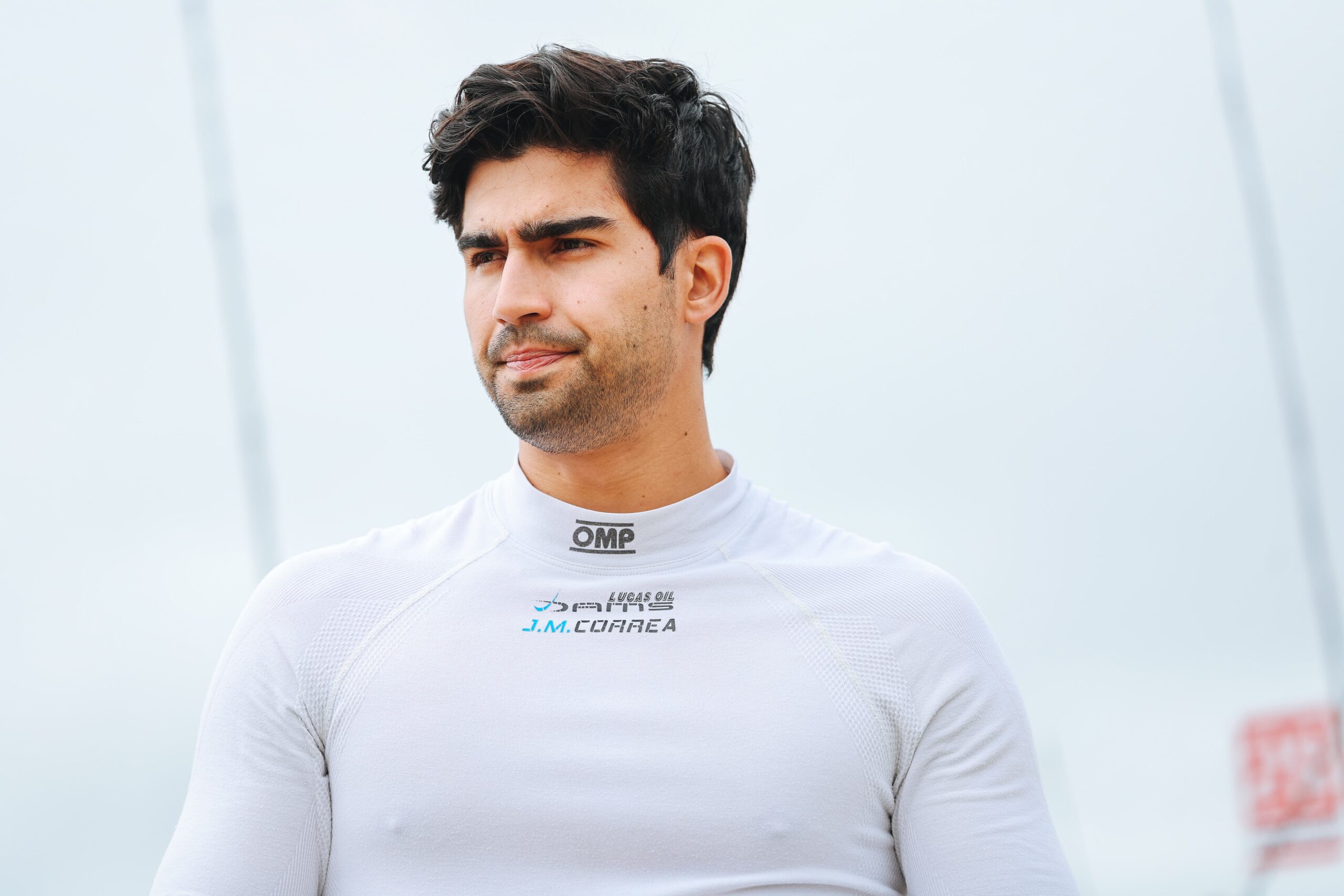
Juan Manuel Correa’s career carries significance beyond his own results. As an Ecuadorian-American driver competing internationally, he represents a region that has produced passionate motorsport fans but relatively few drivers at the highest levels of global racing.
Latin America has long followed Formula 1 closely, while several countries across the region have built strong racing cultures. However, opportunities for young drivers to reach international categories remain limited. For Correa, that gap makes representation especially meaningful, while also highlighting the potential for series such as IndyCar to connect with a larger fan base.
In an exclusive interview with Pit Debrief, Correa discussed what it means to represent Ecuador and Latin America, why he believes IndyCar should race in the region, and how greater visibility could help create the next generation of Latin American talent.
Correa on the honour of representing Ecuador and Latin America
For Correa, representing Ecuador in international motorsport carries real personal meaning. Few Ecuadorian drivers have reached major global racing categories, and that makes his presence in single-seaters even more significant.
“It’s really cool for me. It’s an honour because there’s not many—if any—Ecuadorians in the international motorsports scene. Really, maybe a couple in GTs, but not a lot. I don’t think there’s ever been an Ecuadorian IndyCar driver. There’s definitely never been an Ecuadorian F1 driver. And when we’re talking about Latin America, I think very, very little of us get to go out and make it and race in these categories.”
His comments underline how difficult the pathway remains for many Latin American drivers. Talent exists across the region, but access, funding, infrastructure and exposure often create major barriers. As a result, the drivers who do reach international platforms carry the hopes of a wider community.
That representation matters because it gives young fans and aspiring racers someone to follow. Correa’s journey shows that the route may be difficult, but it can still exist.
Why Correa wants IndyCar to race in Latin America
Correa believes IndyCar has a major opportunity to expand its presence in Latin America. While the series has a strong North American base, he sees the region as an underserved market with an existing motorsport audience.
“What I would love to see is for IndyCar to do some Latin American races. I think the moment IndyCar takes that step, they’re going to find a really incredible and big market that they can be a part of—and a market that is underserviced. There is not enough international racing in Latin America for the fan base that there is.”
For Correa, this is not simply about adding races to the calendar. It is about recognising the scale of racing interest across Latin America. Fans already follow international motorsport, yet they rarely get enough chances to experience major championships in person.
A Latin American IndyCar race could therefore serve several purposes. It could expand the series’ audience, strengthen its international identity and create a closer connection with fans who already care deeply about racing.
Formula 1’s popularity shows the scale of the market
Correa pointed to Formula 1’s popularity as proof of Latin America’s racing appetite. Although Drive to Survive helped Formula 1 grow rapidly in the United States, he believes the sport already held a stronger cultural position in Latin America long before that boom.
“You know, I’ll give an example: after Drive to Survive, everybody in the U.S. knows a lot of F1, right? It’s just become mainstream. Before Drive to Survive, when I was in school here in Miami, my friends didn’t know what Formula 1 was. That was nothing. In Latin America, everybody knew what Formula 1 was. And they still do—even more now with Drive to Survive.”
That comparison highlights a key difference between awareness and access. Latin American fans have long known and followed Formula 1, yet the region still lacks enough international racing events to match that enthusiasm. Correa believes the depth of that fan base should make Latin America an obvious target for growth.
“So, I think there’s probably a higher percentage of racing fans per capita in Latin America than there is maybe anywhere else.”
His view suggests that IndyCar would not need to build interest from scratch. Instead, it could enter a market where motorsport passion already exists and where fans want more direct engagement with major racing series.
Correa on racing in Ecuador, Colombia and the chance to inspire new talent from Latin America
Correa would particularly like to see international racing reach markets such as Ecuador or Colombia. For him, those races could do more than entertain fans. They could help build a stronger motorsport community and create new pathways for young drivers.
“So yeah, I would love to have a race in Ecuador or in Colombia and kind of drive those markets. And that’s also going to bring in talent, because that’s going to get the community involved.”
Visibility plays a powerful role in driver development. When young people see major races in their own region, they can connect more directly with the sport. That connection can inspire them to start karting, seek opportunities and believe that international racing is possible.
Correa sees that as a natural outcome of bringing IndyCar closer to Latin American fans.
“There’s going to be kids that are going to want to get into it, and we’re going to start seeing some more Latin American kids coming out and coming to the U.S. and arriving to IndyCar and becoming professionals.”
That vision links representation with growth. Correa does not only want to be one of the few Latin American drivers competing internationally. He wants more young drivers from the region to follow, develop and reach professional categories.
A wider opportunity for Latin American motorsport
Correa’s reflections show how strongly he values his Ecuadorian and Latin American identity within motorsport. His career represents a rare example of a driver from Ecuador reaching major international single-seater environments, and he understands what that can mean for fans watching from the region.
However, his message also looks forward. Latin America already has the passion, knowledge and fan base to support more international racing. What it needs now is greater access, stronger visibility and more opportunities for young drivers to see a route into the sport.
For Correa, IndyCar could play a major role in that development. By racing in Latin America, the series could reach an underserved market, inspire new fans and help create the next generation of professional drivers from the region.