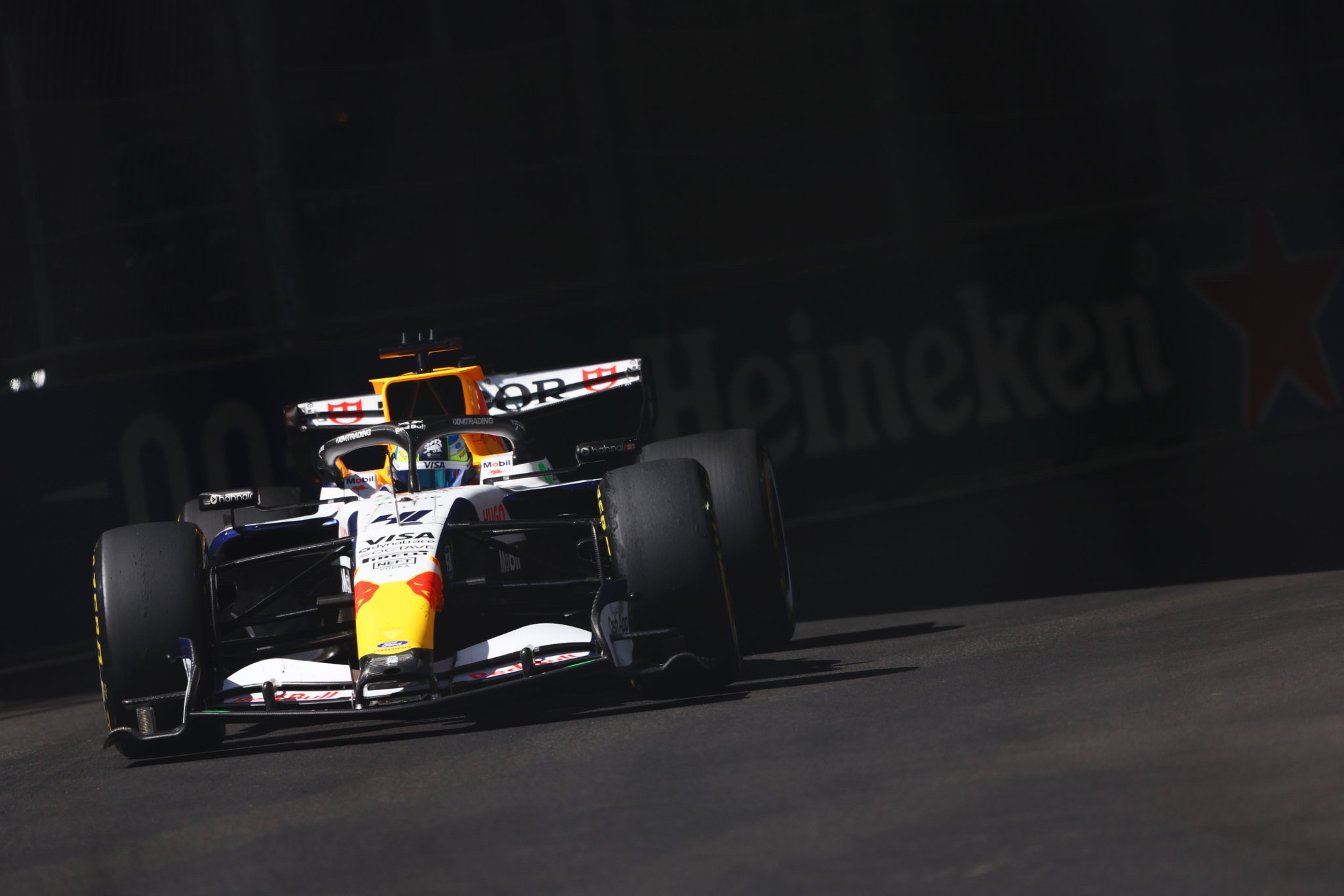
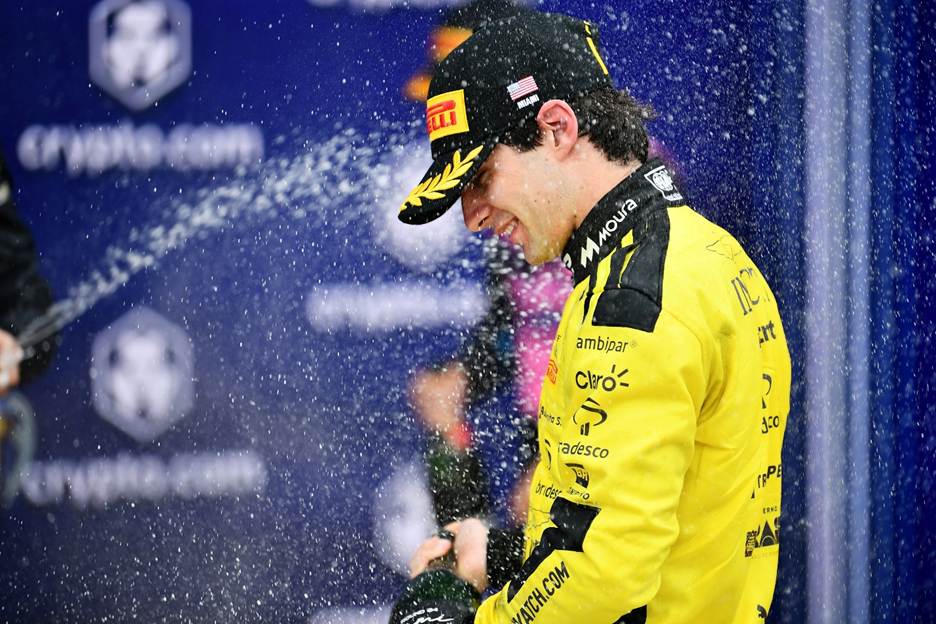
Rafael Câmara left the 2026 F2 Miami Feature Race with a podium that reflected judgment, restraint and adaptability. The Invicta Racing driver did not simply race for third place; he had to manage a difficult start, repeated Safety Car interruptions, changing track conditions, overheating tyres and intense late pressure.
Miami gave the Formula 2 grid a demanding test. Rain complicated the early phase, the circuit evolved lap by lap, and the final laps forced drivers to judge risk with very little grip. Câmara still kept himself in podium contention and turned a difficult afternoon into one of his most valuable results of the season.
While speaking to the media during the post-Feature Race press conference attended by Pit Debrief, the Brazilian did not hide the difficulty of the race. Instead, he explained how each phase created a different challenge, from the opening metres to the final fight.
Câmara explains his podium fight at the 2026 Miami F2 Feature Race
Câmara summed up the race in simple terms. He recognised the result, but he also made clear that the podium came from a difficult and uncomfortable contest rather than a smooth run to third place.
“Yeah, I think it was a tough race. Definitely not easy,” he said when as asked for his perspective of the race.
Câmara explained that as he had not made the start he wanted, he had to shift quickly into recovery and protection mode. Instead of overreacting, he focused on staying close enough before the pit stop phase and keeping his position through the Safety Car interruptions.
“Already at the start, we didn’t manage to get a very good start. And then through the race I was just trying to be there before the pit stops. There were quite a lot of Safety Cars, so I was just trying to keep the position.”
From there, Câmara started to understand the tyre behaviour more clearly. The first stint gave him information for the second, and he tried to use that knowledge to manage the car better once the race developed. However, the situation still demanded constant judgment because the tyres sat close to the overheating window.
“I think the second stint we started quite okay. I knew there was this overheating thing, but I think also on the first stint I was trying to just understand how were the tyres and how they were behaving for the second one to manage in a better way.”
Tyre temperatures and late podium pressure
Then the final Safety Car phase changed the balance again. Câmara felt the rear tyres overheat and could not fully bring them back. At that stage, he had to alter his target. He no longer chased an ideal race; he concentrated on keeping the podium alive.
“I just think it pushed a bit too much there on the second stint, especially the last Safety Car. And then I just went in the overheat with especially the rear. I couldn’t recover really. After that I was just trying to keep the position and I’ll be there at the podium.”
That approach showed maturity. Câmara still had to fight, but he also had to judge how much risk the low-grip surface would allow. He therefore accepted that third place represented the maximum possible result on the day.
“That, I think, was the maximum we could have done today. The fight was very intense. I didn’t want really to crash. But it was not very easy as well to be on track with such a low grip at the end. But yeah, there were some good fights. Luckily no crash and a good podium at the end.”
Low-grip conditions in the final laps
The end of the race brought the most dramatic part of Câmara’s afternoon. As the track dried, the spray reduced and visibility improved. That gave the drivers more confidence to race, but it did not give them the grip they needed to attack freely.
“I mean, in terms of visibility, it was very good at the end. I think it was not a lot of spray. And I think it was some nice fights.”
Even so, the surface still punished small mistakes. Câmara had to judge every braking point carefully because one aggressive input could have locked the tyres, sent the car wide or cost him the podium. His own reference to Turn 1 showed how close the drivers operated to the limit.
“Also, a bit difficult to fight as well because the grip was very low. So even if trying to push a bit more on the brakes, even more on the limits, you could easily do a mistake, probably like I did in T1. “
Nevertheless, Câmara took satisfaction from the race craft on display. He enjoyed the battle, and he also saw those final laps as the kind of racing that can help build confidence for future rounds.
“But, yeah, it was some good fights, good, excited last few laps. And it was a fun race at the end. So hopefully we can get some of that in the next rounds.”
Tyre overheating struggles shape the race
The late fight did not happen in isolation. Câmara’s tyre problems shaped the final stint and limited how much he could attack. As the tyres overheated, he had to search for cooler, damp parts of the track whenever the opportunity appeared.
“Yeah, every time I could I was just trying to be a bit offline to get a bit of water and cool them down a bit. I think just on the driving, even doing that, I just maybe pushed a bit too much and then there was not enough.”
Câmara turns 2026 Miami F2 weekend into a learning round
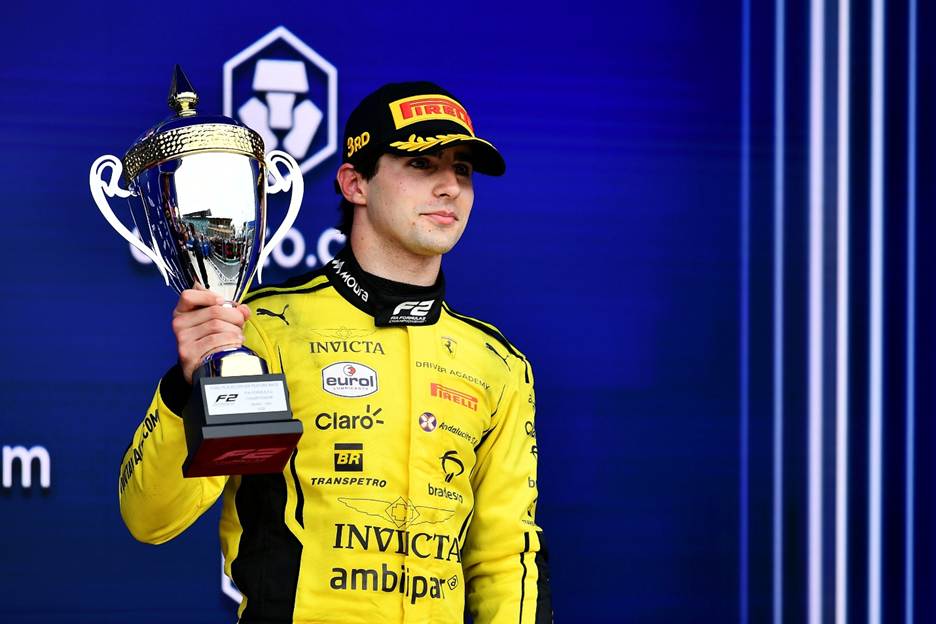
Beyond the result, Câmara saw Miami as a major learning exercise. He had to handle his first wet F2 race experience while still fighting near the front. That made every stint valuable, especially because he could compare his own feel with the data afterwards.
“Yeah, I think it was a lot of things to learn. Like I said, it was the first time on the wet, so I was just trying to maximise the time on the first scenes without really losing any positions. And I think we managed to do a good job until there.”
However, Câmara also identified where he had overreached. He felt he asked too much from the tyres, stressed them too heavily and then had to live with the consequences during the final phase. That honesty matters because it gives the team a clear direction for review.
“I think I just went a bit too much for what the tyres could… just overpushed a bit and then stressed them when they overheated. And, obviously, it was difficult to keep the position. So, I think it was actually a lot of things to learn. Obviously, we don’t know everything yet because I didn’t see any data. But, of course, when I come back with the team, I’ll just look what I could have done better. Also, I said the start wasn’t great.”
Therefore, the podium did not close the story. It opened a detailed review process. Câmara already had several areas to study, from the start to the wet-weather tyre management.
“So, I think it was many things that I can see and improve on the next time when we had the same condition.”
Câmara meets wet conditions with discipline
The rain made Câmara’s task much harder. He faced his first wet race of the year, his first real wet experience with the current F2 car and tyres, and a new circuit at the same time. That combination forced him to rely on discipline as much as pace.
“Yeah, it was definitely not easy,” he summarised when asked how he balanced instinct with alertness during the chaotic race. “First time in the rain this year. And also, for me, it was really first time with this car and these tyres… and also in a new track, so not very ideal.”
Still, he kept the task practical. He searched for braking references, tried to generate tyre energy and focused especially hard after the Safety Cars.
“But it was the same for everyone. Just trying to find out the reference on the braking points. Trying to put some energy on the tyres and make them working from the beginning, especially after the Safety Cars.”
Most importantly, Câmara avoided the kind of costly error that ended or damaged other races. He understood that the wet surface gave drivers very little margin, so he built his race around keeping the car on track.
“And it was like I think everyone saw, and Gabi said as well, that it was very easy to do a mistake. And it was just, I think, a race that I was trying to avoid as many mistakes as possible and keep the car on track. it was a bit tough, but in the end we, I think, managed to do a good job.”
Câmara adapts throughout changing track conditions in the F2 Feature Race at the 2026 Miami GP
As the race progressed, the track kept changing. That meant Câmara could not rely on one fixed line or one set of references. Instead, he had to update his approach lap by lap and use every car around him as a source of information.
“Yeah, I mean, I think both of them [Tsolov and Minì] pretty much said everything. I’ve just been, I think, quite open-minded to try everything and learn [with] every lap what you can do best for the next one. And obviously, just looking at the cars around [at] what are they doing, and in every lap, being able to do something different or what you need at the moment. So, I think you just need to be very open-minded.”
That answer underlined the mental side of his podium. Câmara did not only drive the car; he read the race as it changed. He watched how rivals handled braking zones, grip levels and lines, then adjusted his own decisions in real time.
Addressing late Safety Car confusion
The race also included a procedural complication after the first Safety Car. Câmara later faced questions about the Safety Car going through the pit lane and the timing of the instructions. He explained that the call arrived late and that the cars around him added to the confusion.
“Yeah, also my call was very late, a bit later than what I got. A bit later when I just passed the pit lane, and also, I got a bit confused with what Kush [Maini] and Martinius [Stenshorne] were doing because they were going in and out, in and out. So, yeah, I think we’ll see. I don’t have many comments on that. I just want to look at it with the team and see what will happen.”
Even with that uncertainty, Câmara kept the wider focus on the race itself. The incident added another layer to an already complex afternoon, but it did not define the quality of his podium drive.
Ultimately, he escaped with only a warning as the Stewards determined that while he failed to follow the intended instructions from the Race Director, no driver benefited nor was harmed, and all drivers were in the correct positions with no advantage gained after the Safety Car period. In addition, the Stewards determined that while the regulations were breached, the appropriate penalty was a warning, given the late call and the lack of clarity surrounding the instructions.
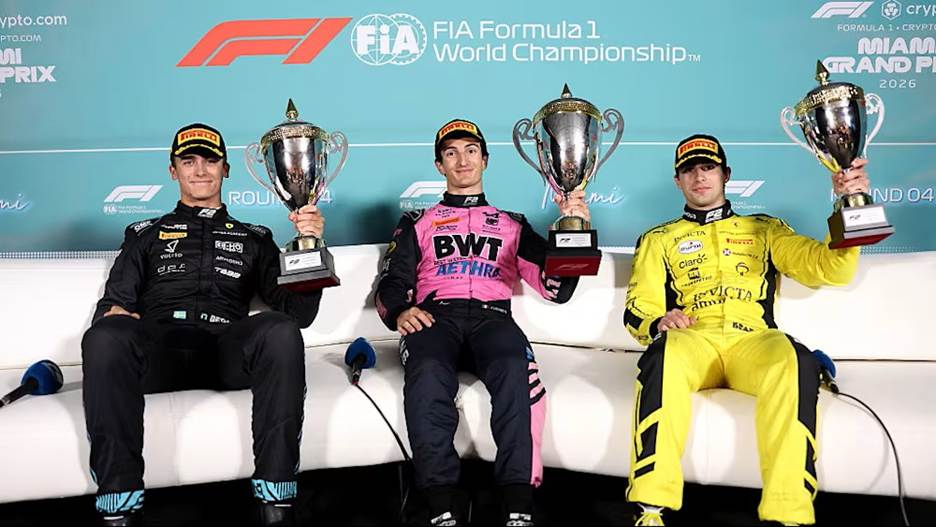
Câmara praises Miami racing after first visit
After analysing his own race, Câmara also gave a wider view of Miami as an F2 venue. He felt the circuit delivered enjoyable racing in both dry and wet conditions, which made the championship’s visit feel worthwhile.
“I mean, I think it is an especially good place. I think, as well the races were very fun, both in the dry and in the wet.”
He then pointed towards the track layout. The long straights, DRS zones and slipstream effect created opportunities to follow and overtake. That mattered in a series where close racing often depends on how well drivers can stay within range.
“I think it has some long straights and there is quite a lot of time that you can actually take the slipstream or also with the DRS, you can easily try and overtake. Also I think slipstream is a big thing. Even in Quali, everyone was looking for that. So you can drive quite close because there’s many high speeds. And even the slow section, if you have, in the moment you have better grip, it’s quite easy to follow.”
For Câmara, those characteristics made Miami an entertaining addition. The track gave drivers chances to race, and it rewarded those who could combine patience with attack.
“So I think this is what makes very fun on the races. I don’t know how it will be next year, but it was very fun this year.”
Brazilian support prominent through weekend
Miami also gave Câmara a personal boost. With family, friends and Brazilian fans present, the weekend carried a different feeling from a standard overseas round. That support helped turn a difficult race weekend into a memorable one.
“Yeah, it was a very nice weekend. All my family is here and also some friends. So it was very nice, especially the time outside of the track. Also, on track, it was very fun here.”
He also described Miami as a place where Brazilian support made him feel close to home. That mattered because the weekend tested him heavily on track, while the atmosphere around the event gave him energy away from it.
“And, yeah, I mean, all the moments here were very special. As you said, here’s a lot of Brazilians. So, you can actually feel a bit that you’re close home. But, yeah, it was nice to be here. We had some fun driving and outside our track as well. So let’s see. Yeah, maybe next time. I don’t know how it will be, but it will be nice to be back here.”
Câmara aiming to carry Miami momentum to Montreal
Finally, Câmara looked ahead. Miami gave him rhythm after a break, and the shorter gap to the next round should help him keep that momentum. He also made clear that the team would use the weekend’s lessons to prepare better.
“Yeah, I think it was good to be back, back on the rhythm, and then not as long as a break for the next race. And, [we will] just look at the things where we experienced this weekend, what we can improve for the next one.”
However, he did not assume that Canada would mirror Miami. Montreal presents a different circuit and a different set of unknowns, so Câmara knows the team must prepare carefully before Free Practice reveals the true picture.
“Obviously, it’s a very different track. So, a bit like Miami before we came here, that we don’t really know what will happen until we start the Free Practice. But, like every race, we just try to prepare in the best way that we can and be prepared for every condition.”
Still, Miami gave him useful experience across a wide range of conditions. That matters for a rookie season, because races like this build a bank of knowledge that drivers can use when similar challenges return.
“So I think, in a way, it was a good weekend that we experienced every condition that we can definitely take some good points to learn for the next one.”
Câmara therefore heads to Montreal with a podium behind him and a clearer understanding of what he can improve. The rhythm of back-to-back race weekends could help him convert those lessons quickly.
“And, obviously, just being back racing and being back on this rhythm of a weekend, of a race weekend, I think definitely will help us to even arrive more prepared ready for Montreal.”
Câmara’s 2026 F2 Miami podium delivered more than points and silverware. It gave him a difficult race to analyse, a set of wet-weather lessons to carry forward and proof that he can stay composed when a Feature Race demands patience, adaptation and controlled aggression.