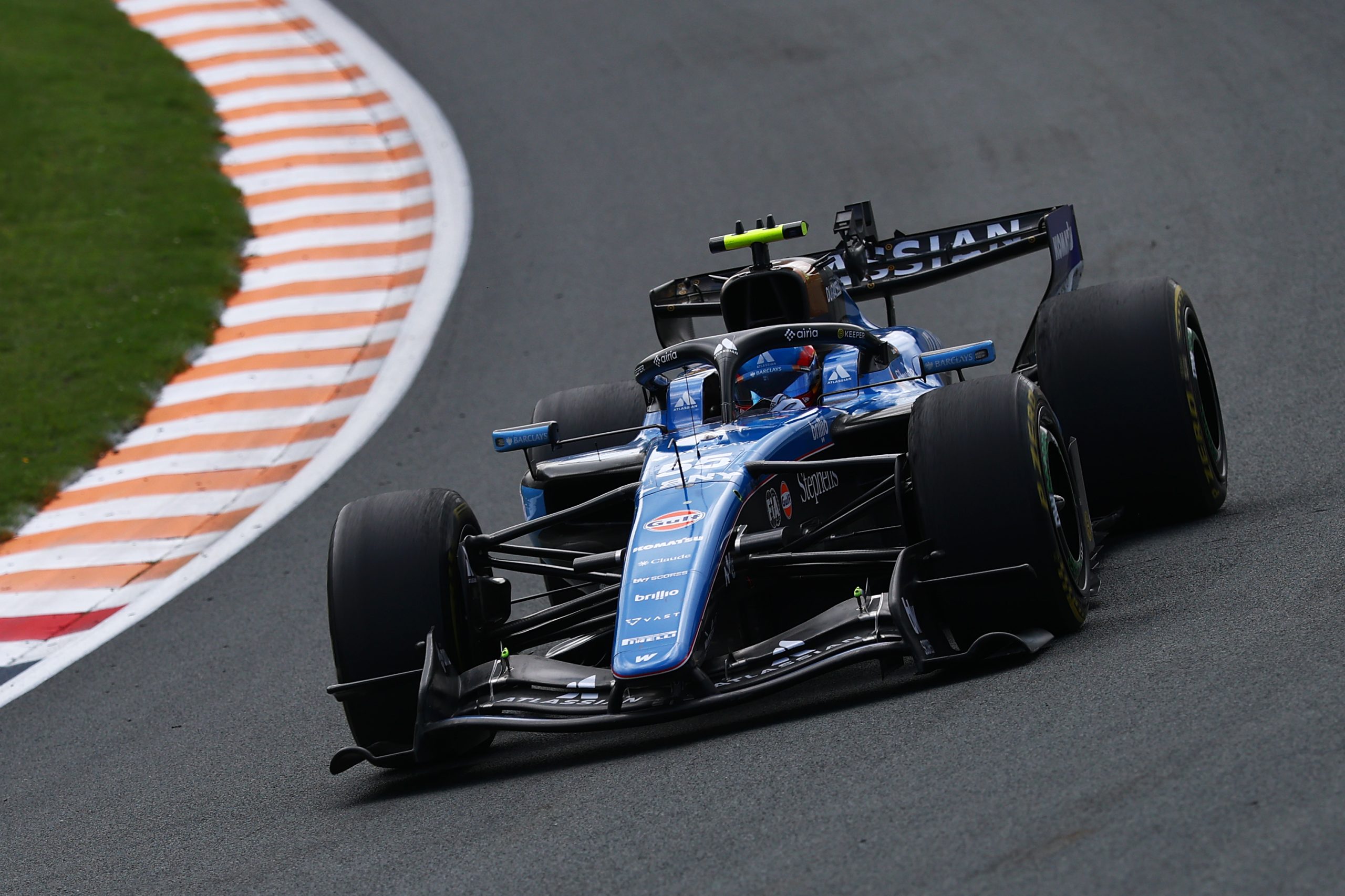
After a difficult start to the 2026 F1 season, Williams Team Principal James Vowles has opened up about the underlying issues that have hindered the team’s development.
The Grove-based team currently sits ninth in the Teams’ Standings after securing only 11 points after 12 rounds. This marks a significant contrast to its 2025 campaign, when Williams completed the season fifth in the standings with 137 points. Alex Albon finished 8th in the standings, while teammate Carlos Sainz finished P9, securing two Grand Prix podium finishes as well as third place in the Austin GP Sprint.
However, Williams entered 2026 on the back foot after missing private testing in Barcelona due to production delays and weight issues with its new FW48 car. While the team later took part in pre-season testing in Bahrain, Williams has continuously struggled to find its way under the new regulations.
Vowles on Williams’ 2026 development struggles
Speaking in a print media session ahead of the 2026 F1 Dutch GP, Vowles explained that Williams’ biggest area of change over the past 12 months has been its approach to car development.
“The biggest one is probably in the production of the car. So, the car… we’re pretty frank about it. The car that we had in Miami was actually the car that was due to be there for Melbourne, except on the weight limit as a result of it. But even the performance items that we have coming to the car now are not the ones we had planned,” he said.
“The car, near enough, is a car that we had designed. The car that I’m talking about right now today was one that we had in the wind tunnel in November. So we’re not getting a like-for-like comparison of us against our peers at this point in time. A lot of that is because we’re trying to catch up from a lot of issues that happened this winter, more significant than perhaps even I had communicated at that stage.”
Thynne brings change to Williams
However, Williams’ efforts to address its issues extend beyond the development of the FW48 itself. Vowles specifically points to the arrival of Piers Thynne as an important part of improving the team’s internal processes.
Thynne joined Williams in August 2026, becoming the Chief Optimisation and Planning Officer after previously serving as McLaren Racing’s Chief Operating Officer.
“So the biggest change, for example, is not all about people, but we have Piers [Thynne] that’s joined us from McLaren,” Vowles said. “Huge asset. He understands what championship level looks like. That’s exactly what he produced there. And he’s able to drive the field forward in that regard.
“And it’s not because we have individuals in design and manufacturing that weren’t working incredibly hard. That’s one thing I have to say about everyone at Williams. I’m eternally thankful to them. They have given me seven days a week and 16 hours a day for what we have today in order for us to turn around. But we’re working inefficiently, and we’re working in a pretty poor way, frankly, in terms of how we should be for our future.”
Vowles continued by outlining the areas Thynne will be working across with the Williams operation:
“And what Piers brings to that is stability, the right way of thinking, the right tools and systems that we should be integrating, the right planning that goes around it. And it’s not just in operations. It’s across really end-to-end from initial concept design in aero all the way through design office all the way through to production. That’s one example.”
Updating its softwares
Vowles also shed light on another major issue within the Williams operation, revealing that outdated software has been slowing down the team’s work behind the scenes.
“The second is that we had, when I joined, no software. But we have software today that not all of it was actually helping. Some of it, I would say, was hindering and slowing down the factory as a result of it.”
The team used the August summer break to make changes to its existing systems, despite the difficulties of carrying out such work during an F1 season.
“Across this August break, we’ve pulled half of it out, which is, if you speak to any team on the grid and say, I’m going to modify your ERP system halfway through the year, they’d close their eyes because it’s not a nice thing to do. We have to in order to get to where we need to be.”
He added: “It’s an example I spoke about just recently. And to give you an idea of the depth of the problems, some of our CAD systems were 15 years out of date. And so you can’t update them in one go. You’re just chunking through the whole business, finding areas that aren’t at the right level, fix them.
“And you just simply, with cost cap especially, you can’t do it all in one go. So you’re just targeting and moving across. But what it means is the amount of time it takes you, if you’re in aerodynamics in my team or design in my team, to do your job is significantly longer than it would be anywhere else in the grid. And we’ve got to fix that because we’re fighting with one arm tied behind our back.”