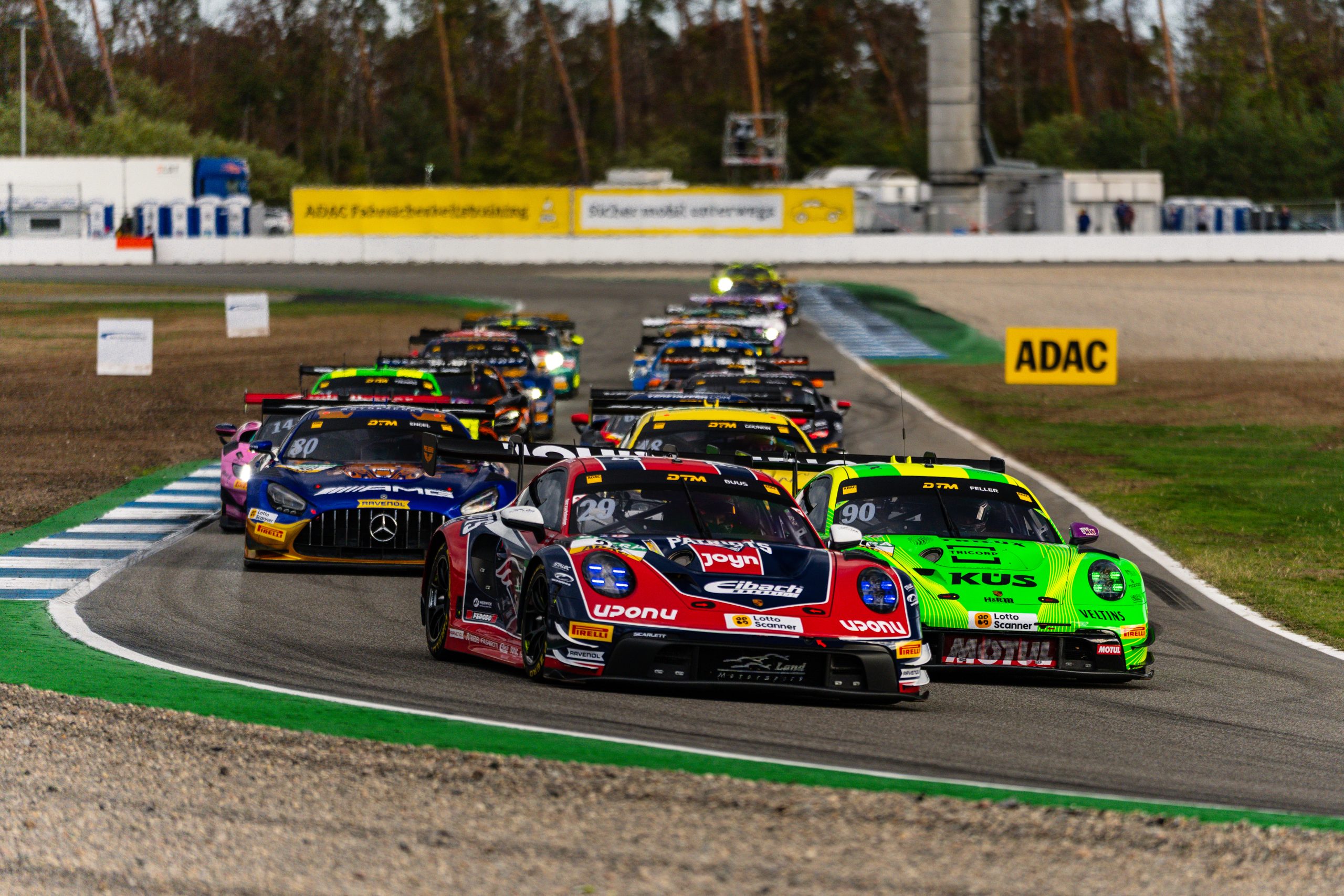
The DTM could introduce a revised qualifying format for the 2027 season as organisers look to improve the spectacle for fans and create more opportunities for television coverage.
Following the conclusion of the 2026 campaign at the Hockenheimring, ADAC Motorsport Director Thomas Voss confirmed that discussions over potential regulatory changes are already underway. Qualifying has emerged as a particular priority, with the current format attracting criticism for its lack of on-track activity during the opening stages.
The ADAC is evaluating several proposals submitted by teams, including the possibility of introducing an elimination-based system similar to Formula 1. However, qualifying is not the only area under consideration, with potential adjustments to pit stop regulations and tyre allocations also on the agenda.
DTM qualifying format faces criticism over lack of action
Since the introduction of Pirelli tyres in 2023, teams have increasingly adopted a strategy that leaves spectators watching an almost empty circuit for much of qualifying. Under the current format, drivers have 20 minutes to set their fastest lap. However, in dry conditions, teams frequently spend approximately half the session preparing their tyres rather than completing timed laps.
Without tyre blankets, drivers rely on a process known as heat soak, which uses the heat generated by the brakes to bring the tyres closer to their optimal operating temperature. Consequently, most drivers only leave the pit lane during the latter stages of the session, giving them approximately two or three opportunities to record competitive lap times. Although this creates a busy conclusion to qualifying, the lack of running during the opening minutes has raised concerns about the format’s entertainment value. Voss believes the current approach presents significant challenges when attempting to attract a wider television audience.
“It’s unattractive for spectators and also so unattractive in terms of marketing and for the media that you basically can’t get it on television,” Voss explained.
At present, fans can watch DTM qualifying through livestreams, while discussions continue over the possibility of bringing the sessions to free-to-air television through broadcasting partner ProSiebenSat.1. However, changes to both the format and scheduling may be necessary to make DTM qualifying in 2027 suitable for television coverage. Moving the sessions closer to the races could form part of those discussions.
Formula 1-style elimination system among potential solutions
Rather than changing the tyre preparation regulations, the ADAC is examining ways to restructure qualifying and encourage more meaningful track activity throughout the session. Tyre blankets, which the DTM banned in 2017, will not return. Their continued absence reflects the championship’s efforts to control costs, particularly since its transition to GT3 machinery.
Instead, attention has shifted towards the structure of qualifying itself. Teams have already presented three proposals during joint meetings, giving the ADAC several options to assess alongside its own ideas. One possibility involves adopting a qualifying system similar to Formula 1, which divides its sessions into three segments and progressively eliminates the slowest drivers before the final battle for pole position.
Such an approach could introduce additional competitive phases and give spectators more action to follow throughout qualifying. However, Voss has not confirmed which proposal the championship favours or whether an elimination format will ultimately receive approval. Nevertheless, he expects the current system to undergo significant changes.
“I firmly expect that it will no longer look the way it has in recent years,” Voss said.
The ADAC could announce its decision before the end of 2026, allowing teams to prepare for any changes in the qualifying format ahead of the 2027 DTM season.
Pit stop regulations and tyre allocations also under review
Beyond qualifying, the ADAC is considering further changes to the sporting regulations that could influence race strategies in 2027. One proposal would introduce a second mandatory pit stop during Saturday’s race, bringing its requirements closer to those currently used on Sundays. At present, Saturday’s race features one mandatory tyre change, while Sunday’s race requires two pit stops. Increasing the number of mandatory stops on Saturdays could create additional strategic opportunities, although the change may also require teams to receive a larger tyre allocation. Organisers must also address the consequences of the current differences between the two races.
During the 2026 season, some teams withdrew their cars early from Saturday’s race to preserve tyres for Sunday, when the additional mandatory stop increased the importance of having sufficient tyres available. The ADAC wants to prevent teams from using this approach in the future, particularly when it results in cars leaving races unnecessarily.
“That is not acceptable. We all owe the spectators something in this regard,” Voss stated.
The championship is therefore considering measures to discourage early retirements motivated primarily by tyre conservation. However, organisers do not intend to rush any decisions, with the consequences of potential rule changes requiring further evaluation.
ADAC rules out additional Balance of Performance monitoring technology
The discussions also extend to the amount of testing teams may undertake during the season, although the ADAC has not yet outlined specific adjustments. Meanwhile, one potential technical change has already been ruled out. Voss does not support introducing torque-measuring driveshafts to monitor the Balance of Performance (BoP), despite the technology’s use in other major sports car championships, including the FIA World Endurance Championship and IMSA.
The system would allow organisers to monitor torque output more closely, providing additional data for evaluating vehicle performance. However, the ADAC considers the additional financial burden too significant to justify its introduction into the DTM. With the 2026 championship now complete and Thomas Preining crowned champion, attention is turning towards preparations for the 2027 campaign.
While several aspects of the regulations remain under discussion, the ADAC’s intention to improve qualifying suggests that fans could see a notably different approach to determining the starting grid next season.