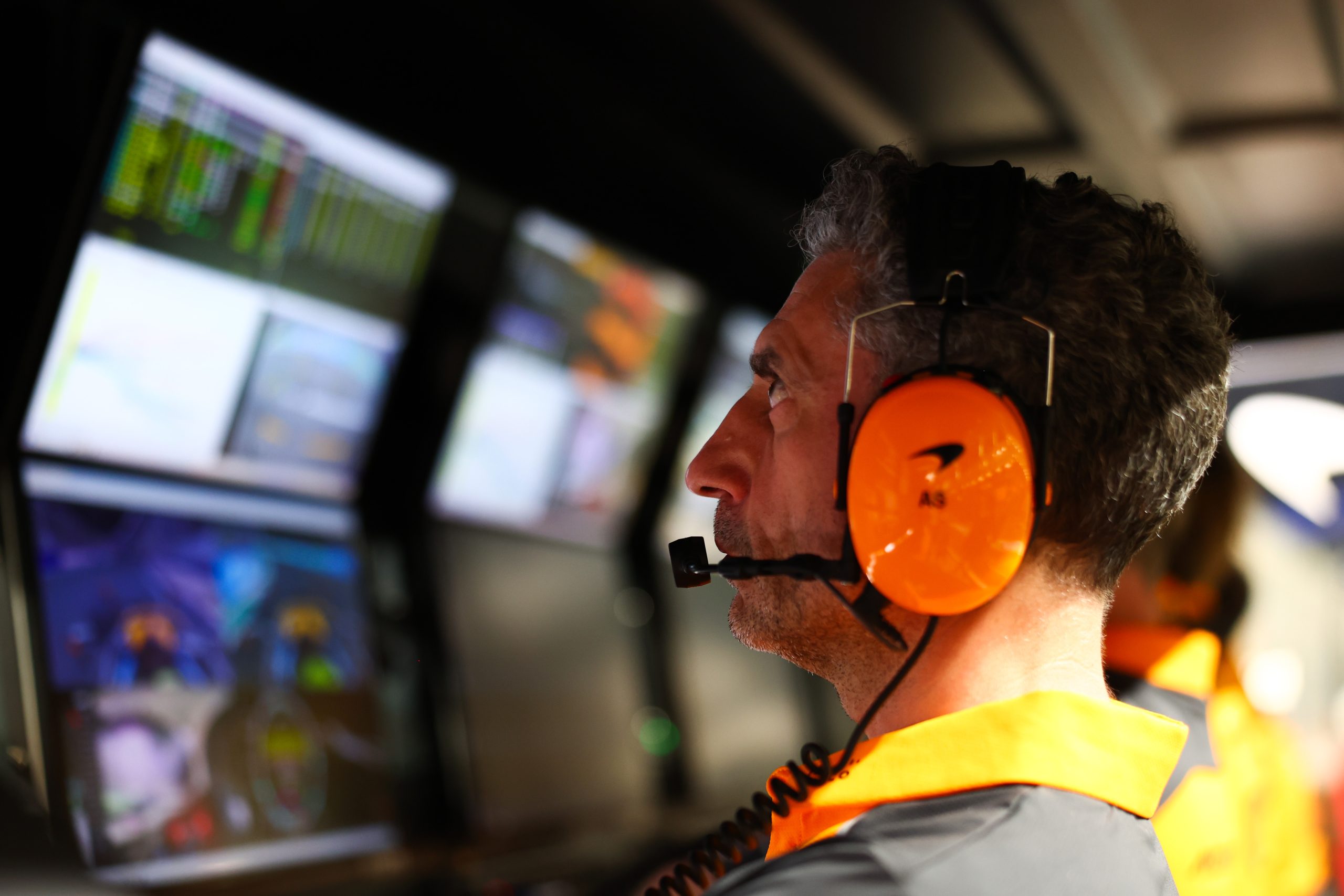
McLaren Team Principal Andrea Stella has explained the difficulties Lando Norris and Oscar Piastri have faced with the MCL40 throughout the 2026 Formula 1 (F1) season, admitting that the car requires a significantly more aggressive driving style than its predecessor. Following the Singapore GP, Stella also addressed McLaren’s recent fluctuations in performance and suggested that more fundamental improvements may not arrive until 2027.
The Singapore GP saw Max Verstappen secure his first victory at the Marina Bay Street Circuit, finishing ahead of Charles Leclerc and championship leader Kimi Antonelli. McLaren’s Norris and Piastri finished fourth and fifth respectively, unable to challenge for the podium despite both drivers running comfortably inside the top six throughout the race.
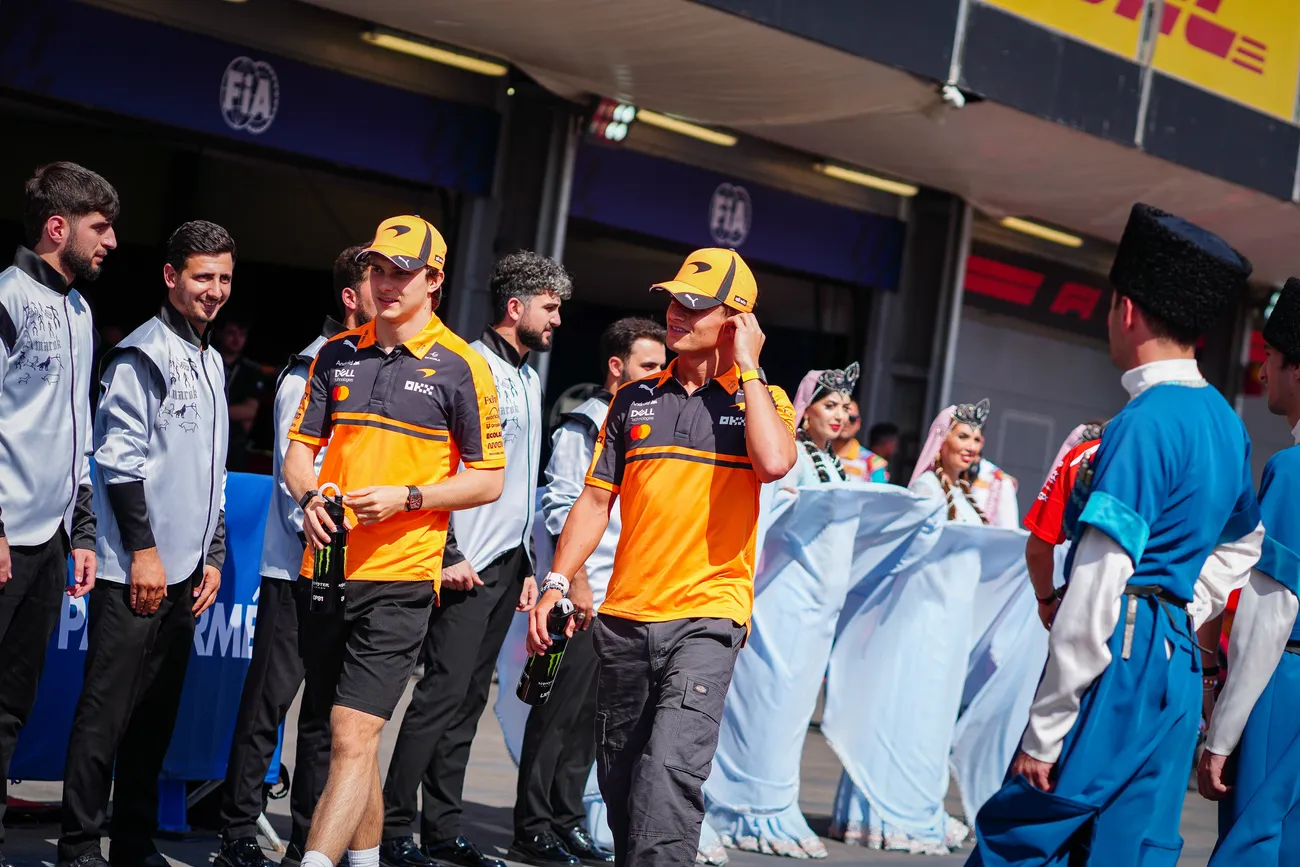
While Norris briefly challenged Lewis Hamilton in the closing stages, Antonelli overtook both drivers before securing third place. Piastri also passed Hamilton late in the race but could not close the gap to his teammate. The result followed two challenging weekends for McLaren in Azerbaijan and Malaysia, raising further questions about the team’s competitiveness against its rivals.
Stella explains why McLaren’s MCL40 requires a different driving approach
Speaking after the F1 Singapore GP, Stella acknowledged that McLaren’s 2026 car demands considerably more effort from its drivers compared to last season. Both Norris and Piastri have had to adapt their driving styles to extract performance from the MCL40, with the characteristics of the car making it particularly difficult to achieve competitive lap times consistently.
“Well, the fact that the car needs quite a lot of effort to deliver lap time, and it requires a level of intensity in the driving input which is much superior to last year. This is something that took some time for the drivers to get comfortable. Well, ‘comfortable’ is wrong, but to get to understand and it’s also one of the reasons why Oscar [Piastri] at some stage he almost lost some of the competitiveness compared to Lando [Norris], and we were here discussing, like, what is happening with Oscar, and I’ve always said that that was a technical matter.”
Stella explained that Piastri’s difficulties stemmed from the need to move away from his traditionally smooth and precise driving style. The Australian previously relied on clean and consistent inputs to produce competitive lap times, but the MCL40 requires a different approach to maximise its performance.
“Oscar just needed to understand how to force the car to do some things and sort of abandon the fact that driving fast will not necessarily mean driving clean, if that makes sense. Which, instead, was probably the signature of Oscar when we have seen him fast in the past, he was clean, he had really good data to see, he was very repeatable, and he was fast.”
McLaren unlikely to resolve handling difficulties before 2027
Although McLaren plans to introduce further upgrades during the remaining races of the 2026 F1 season, Stella does not expect these developments to address the underlying handling characteristics of the MCL40.
The Italian explained that additional downforce alone would not eliminate the difficulties Norris and Piastri currently face. Instead, McLaren needs to make more substantial technical changes, which the team is addressing as part of its longer-term development programme.
“With this car, all these things together, they don’t seem to happen very often, so it’s a lot of work for the drivers. I don’t expect that what’s coming to the car will improve this characteristic. I think we need something more fundamental than simply adding some downforce to the car like it’s happening in the coming races without fundamentally changing some further aspect which we are addressing longer term, and at the earliest, I would say with the MCL41 for 2027.”
Stella’s comments suggest that McLaren may have to manage the current car’s limitations throughout the remainder of the season. While upcoming upgrades could improve outright performance, the team does not expect them to fundamentally change how its drivers must approach the car.
McLaren investigated performance concerns following Baku and Malaysia
McLaren’s recent performances in Azerbaijan and Malaysia prompted questions about whether the team’s latest upgrade package had negatively affected its competitiveness. After showing strong pace at circuits such as Hungary, Zandvoort and Madrid earlier in the season, the team struggled to reproduce those results during the following rounds.
Stella admitted that McLaren initially questioned the effectiveness of its Baku upgrades. With the team introducing the new components on both cars simultaneously, engineers lacked a direct comparison with the previous specification, making it more difficult to assess whether the changes had delivered the intended improvements.
“I think if we take Baku and Malaysia in isolation, we were not very competitive. We had the doubt about the package we introduced in Baku, we never expected it to be a big step from a lap time point of view, but because we upgraded two cars at a single time, we had no comparison. We thought if we made the car slower, at least we were in a condition to clarify that that’s not the case, which is an important question that we were able to answer here in Singapore.”
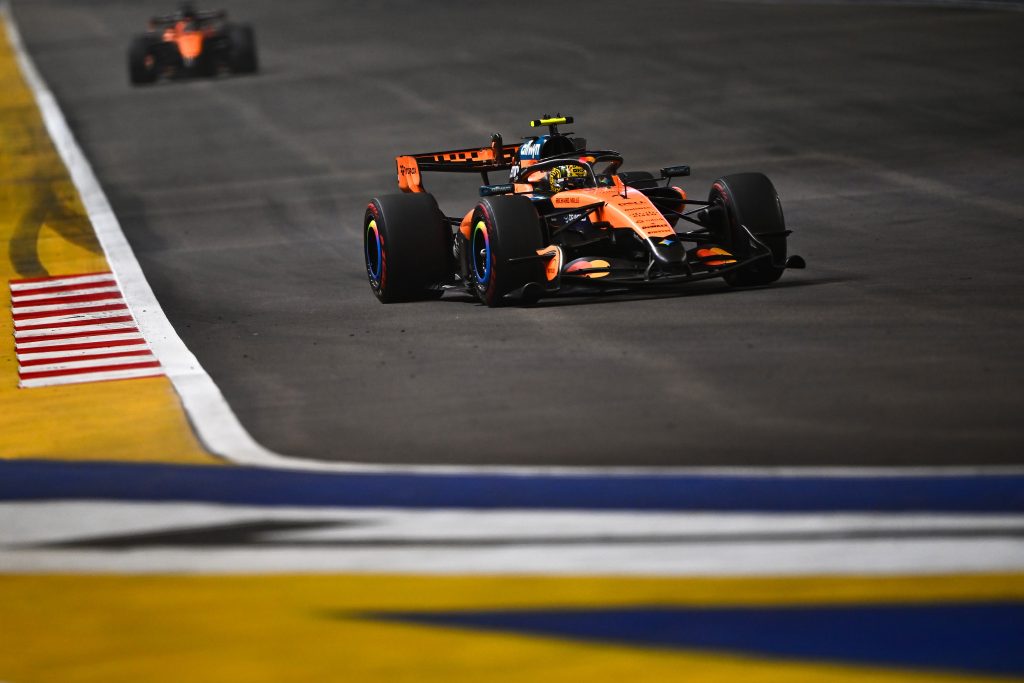
Stella identifies circuit characteristics behind McLaren’s struggles
The McLaren Team Principal also highlighted the different circuit characteristics that contributed to the team’s struggles. While the rough track surface in Malaysia complicated its data analysis, the long straights in Azerbaijan exposed weaknesses related to power unit optimisation and the car’s chassis configuration.
“Going back to a track that is just a little bit more normal than Malaysia, where the track roughness just made the data look very weird, but we understand that it had to do with the track roughness and Baku, in which we think that the power unit optimisation played a significant role in terms of lap time and we know that this is not only power unit optimisation, there’s a few more things on the chassis side that in the long straights penalise McLaren in the current configuration, like the ratios.”
Despite the concerns surrounding the upgrade package, McLaren’s performance in Singapore provided the team with reassurance that its recent developments had not caused a significant deterioration in competitiveness. Although they were fourth quickest at Marina Bay, they were not miles away from Antonelli on the Sunday.
Stella insists McLaren remains competitive against Mercedes
Reflecting on McLaren’s position in the competitive order, Stella rejected the suggestion that the team had previously enjoyed a substantial advantage over its rivals. Although Norris and Piastri have delivered strong performances at different stages of the season, Stella emphasised that the margins separating McLaren from Mercedes have often remained extremely small. He pointed towards the qualifying sessions in Madrid and Hungary, where McLaren secured pole position by only a few milliseconds.
“So we had the doubts for a couple of races, but we welcomed the fact that we were able here to clarify that there’s nothing wrong going on. We are actually pretty much fighting with Mercedes, and even when we were winning races, we were in pole position by a few milliseconds. It was the case in Madrid, it was the case in Hungary. If we think about Zandvoort, during the Sprint we were not very competitive, so it’s not like we’ve had a phase in which McLaren is ahead by a long way.”
Stella highlights the influence of clean air on race performance
Stella also suggested that race circumstances can exaggerate the apparent advantage of a particular team. Running in clean air allows the leading driver to control tyre management more effectively, potentially creating a larger performance gap than the cars’ underlying pace would suggest.
“If anything, this was seen at times in the race, like I think Lando in Hungary was very strong, and in Madrid for a few laps he was very strong, but we have to say as well that when you are in the lead, like we saw today with Verstappen, the clean air, you can manage the tyres, it sort of, I think, amplifies some strengths.”
For McLaren and Stella, the 2026 F1 Singapore GP therefore provided a clearer indication of its current position. Despite finishing behind Verstappen, Leclerc and Antonelli, the team believes it remains competitive with Mercedes rather than having suffered a fundamental loss of performance.
Red Bull’s latest upgrades highlight tight competition in 2026
Stella concluded that McLaren’s Singapore performance largely matched the team’s expectations, while Red Bull’s recent progress demonstrated how quickly the competitive order can change through upgrades. Verstappen dominated the Singapore weekend, winning both the Sprint and the Grand Prix. His victory on Sunday came by more than seven seconds over Leclerc, underlining Red Bull’s improved competitiveness as the season approaches its final rounds.
However, Stella believes the advantage Red Bull currently enjoys remains within the range that a successful development package could overcome. He described the changing competitive order as a consequence of teams introducing upgrades at different stages of the season.
“So overall I think there’s no big surprises, it was good to see that here in Singapore we are where we expected to be. I think Verstappen and Red Bull are just taking advantage of the upgrades that they have delivered, and it’s what we call this season the ping pong. Basically, people come with upgrades. Even if, like in the case of Mercedes, I understand that they have some issues themselves. But people coming with upgrades they can take a little step forward and even if here Red Bull were kind of dominant, compared to us, they had three tenths of a second and three tenths of a second is a range that you can add with an upgrade.”
With several races remaining in the season, McLaren will aim to close the gap to Red Bull and Mercedes through its upcoming developments. However, Stella’s assessment after the 2026 F1 Singapore GP indicates that McLaren must balance its pursuit of immediate performance gains with the more fundamental changes needed to improve the car’s handling characteristics for 2027.