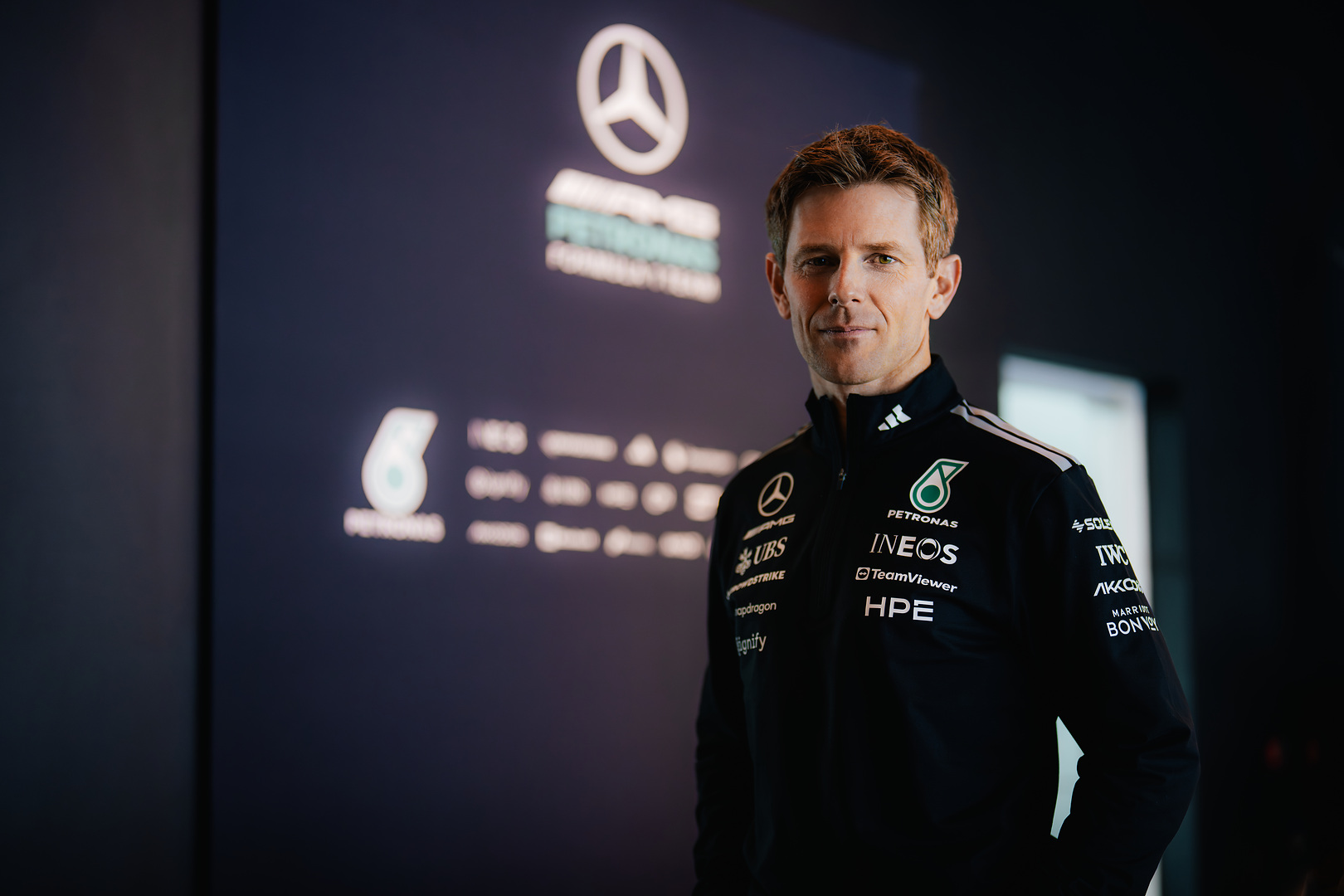
Former F1 driver Anthony Davidson has provided further insight into how the 2026 cars impact driving styles and where it has gone all wrong for George Russell following an illuminating exchange with Mercedes Senior Engineer Marcus Dudley.
The new engines, featuring a near 50-50 split between the internal combustion engine and electrical energy, have a noticeable impact on how drivers navigate a car over a single lap and race distance.
The substantial energy management now required on a flying lap is inherently antithetical to the traditional flat-out approach. With the machine seemingly superseding driver skill, the complex deployment algorithms often punish drivers for pushing in the medium- and high-speed corners, leaving them with suboptimal energy to deploy on the following straight.
The new ruleset sees drivers lift and coast and even experience super clipping over a single lap. Furthermore, it discourages them from taking risks during qualifying since slower yet consistent driving leads to faster lap times.
The cars are so sensitive to the regulatory quirks that even adjusting the throttle in one section of the track can make the hybrid system go haywire, drain the battery at an inconvenient moment, and compromise a lap.
Verstappen and Leclerc have criticised how the 2026 challengers adversely affect qualifying
Since the start of the 2026 F1 season, popular figures like Max Verstappen and Charles Leclerc have been pretty vocal about their distaste for the new ruleset and how it detracts from the best drivers’ abilities.
“In the history of the sport, normally the driver that is the most committed, the latest on the brakes, earlier on throttle, committing in the high speed, they get rewarded, because you just gain that time in the corner,” said the Dutchman in an exclusive interview with the BBC back in September.
“But now you’re constantly thinking about, ‘In this corner I might have to hold in a bit. Go later on throttle. Or brake earlier. Or lift off. And then I have more top speed.’ Stuff like that. It’s so unnatural. It’s so not how it should be.”
“Honestly, I think the thing is, in Q3 or at least it depends which car you have, but with our car in Q3, that’s where you want to get out on the track and try things you’ve never tried before, taking risks that you’ve never taken before, and that’s been rewarding for most of us in all our career,” Leclerc had stated after qualifying fourth at Suzuka earlier in the year.
“And now this is not possible anymore. Every time you go a little bit over the limit, anytime you have a bit of a snap, this is costing energy on the power unit side and then you pay the price more. So, I feel like at the moment consistency is paying off more than being brave.”
Davidson mentions the impact of the 2026 F1 regulations on driving styles and Russell being on the back foot
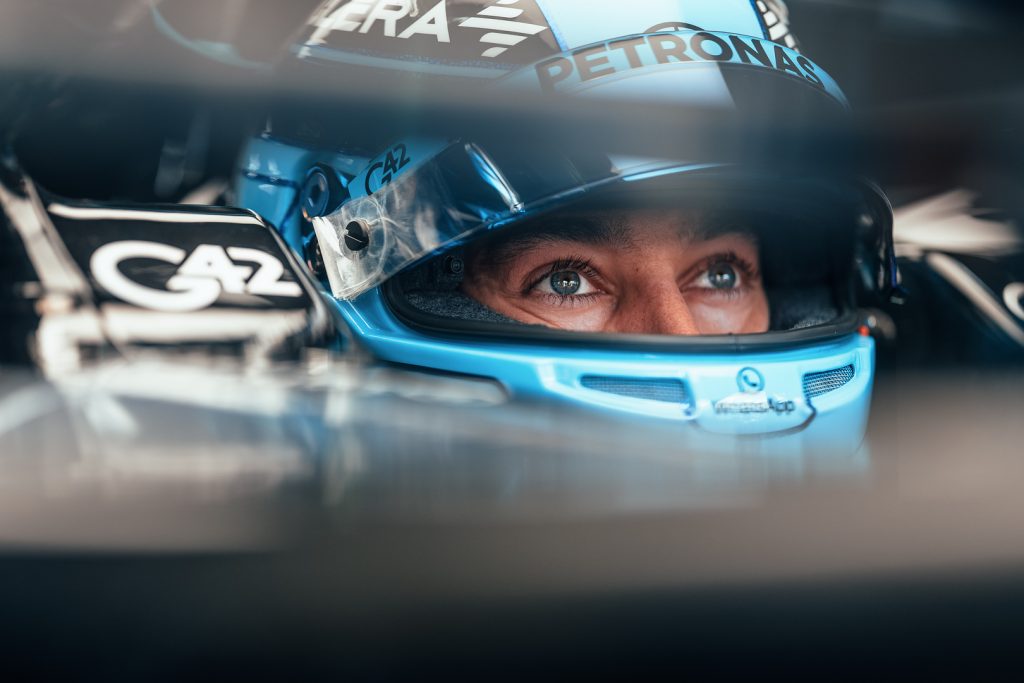
Despite winning the season opener in Melbourne, Russell has failed to maintain his momentum as the campaign progressed. In the next 17 races, he managed to secure only 2 wins, in comparison to his teammate’s 9.
Now, Kimi Antonelli is set to become the youngest-ever F1 Drivers’ Champion, as long as he finishes ninth or higher at the 2026 Mexico City GP. Meanwhile, the battle for second place is tightly contested among four drivers, with just 9 points separating Russell in second and Charles Leclerc in fifth.
Speaking on Sky Sports F1’s podcast after the race in Austin, Anthony Davidson shared his thoughts on how the new regulations and cars are forcing some drivers to change the way they inherently drive and thereby stifling their potential.
Davidson referred to his conversation with Dudley—Russell’s Race Engineer—during the United States GP weekend and used the 28-year-old’s struggles over a flying lap in Q3 as an instance of how the 2026 F1 power units and their increased reliance on electrical power are keeping the drivers on a tight leash.
“I’ll give you an example. So, I spoke to Marcus Dudley before, and they won’t mind me sharing this bit of information. But it will help the fans to understand what’s going on with these cars.
“So, in qualifying, George [Russell] was doing pretty well. [In] Q1, Q2, the lap times were good. In Q3, it all seemed to fall down. So, I asked his engineer, Marcus Dudley, what happened? I was just inquisitive.”
Davidson’s discussion with Dudley about Russell’s struggles in qualifying and why the 2026 F1 cars are frustrating
Anthony Davidson stated that Dudley had explained in detail why Russell had failed to put together a better lap in the final segment of qualifying for the 2026 United States GP.
The 2014 World Endurance Drivers’ Champion revealed how Russell had carried more speed through the Esses and that being on the throttle in those high-speed corners at COTA left him with inadequate energy to deploy going into the Turn 11 hairpin and compromised his braking point.
While the high-speed sections of a track have traditionally required pure bravery and full commitment, the 2026 cars have turned them into power-limited or energy-management zones, which, according to Davidson, can be exasperating for drivers who rely on instinct and enjoy taking risks through the fastest corners in F1.
“And he [Dudley] said, ‘well, what happened was he [Russell] went through the Esses, carried great speed through Turn 5 and particularly Turn 6, where he was more on the throttle. So, he carried the speed there on throttle’.
“But by being on throttle, and instead of being slightly half throttle or off throttle, you’re not now charging the battery. So, if you’re off the throttle more in those high-speed corners, charging the battery there was more advantageous to minimise the super clip down towards Turn 11.
“So, he did a great Esses and then arrived down towards Turn 11 and was hit with this big super clip. That messes with his braking point, turns in too early because he’s going too slow now compared to where you usually are, and sort of messes the apex up of Turn 11.
“And so, you start to understand how annoyingly frustrating these cars can be to drivers that are naturally very fast in high-speed corners.”