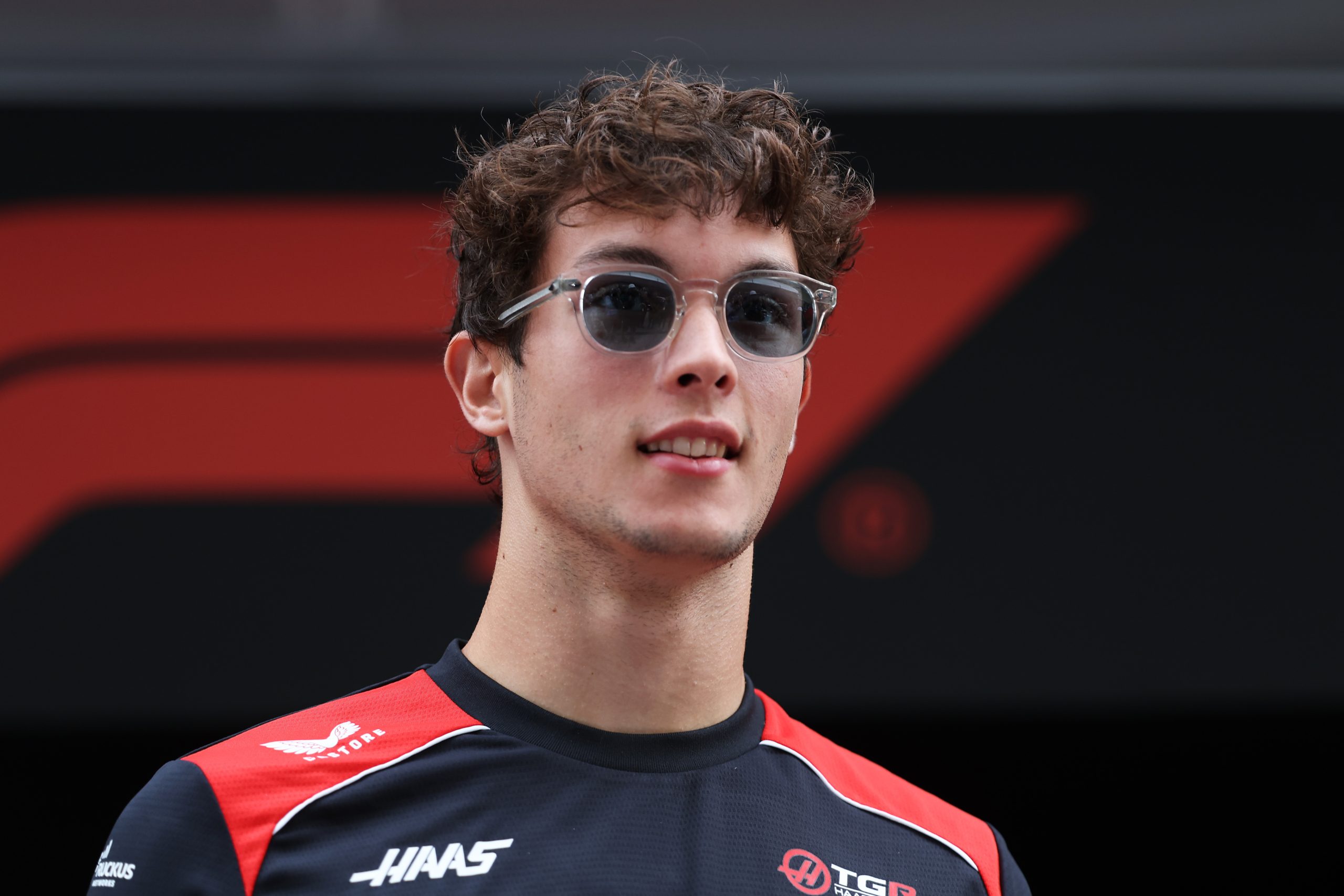
Ollie Bearman has criticised the 10-second penalty he received during the 2026 F1 United States GP, describing the penalty as excessive after a first-lap incident left him with damage that ultimately forced him to retire.
The Haas driver gained positions at the start in Austin but was penalised following contact with Pierre Gasly on Lap 2 into Turn 13. Bearman was left frustrated by the decision, arguing that he had earned the right to space when attempting to overtake the Alpine driver.
Reflecting on the incident in the print media pen following his retirement, Bearman questioned the severity of the penalty and compared it with other incidents that have occurred throughout the season.
“Yeah, I was pretty shocked to be honest. If anything, it was a racing incident. I felt a bit hard done by for it to be a ten second penalty as well, especially given some of the incidents that have happened this year that have gone either unpenalised or five second penalty. Ten seconds for that type of incident seems very excessive in my opinion, given what happened. I had a great start, I had a great first lap, I also had a really good VSC restart to give myself the opportunity to attack on Pierre.
“I went up the inside into 13, I felt like I had enough of my car alongside to justify, or to kind of feel like I earned a bit of space and didn’t really get that space. I was given maybe half a car width, I was climbing up onto the kerb trying to avoid contact, but I simply couldn’t. I couldn’t disappear once I decided to go for the move. I didn’t lock up, I didn’t lose any control, it was just simply I couldn’t disappear at that stage.
“Ten seconds is crazy, given all of those facts. To be honest, the more penalising thing was that I picked up a bit of damage. It was a very small touch, but it loosened basically the floorboard and that slowly vibrated its way off over the next few laps and the car was just deteriorating. I had maybe five laps where I was actually feeling very good and everything was fine and then slowly, step by step, the car was getting worse and then it was game over basically.”
Bearman explains decision to let Ocon through
Although the initial contact at the start of the United States GP with Gasly resulted in a penalty, the damage Bearman sustained proved to be the more significant factor in his race.
The British driver initially remained competitive despite the damage, with the gap to Gasly ahead and his Haas teammate Esteban Ocon behind remaining relatively stable.
However, the situation deteriorated rapidly when part of the car began to come loose, costing Bearman significant time and leaving him unable to continue fighting at the front of the Haas pairing. He quickly dropped from 11th to 14th. Even after boxing, he had no pace.
Explaining his decision to allow Ocon past, Bearman said:
“To be honest, Pierre overtook me and I still felt relatively competitive. The gap was very stable between Pierre in front and Esteban behind, it was just over one second. But then from one lap to the next, we saw something fall off the car and in sector one, I lost something like eight tenths to myself from one lap to the next.
“It was very clear that suddenly I went from having a bit of damage on the car to having a catastrophic amount of damage on the car. I just said, I’m not in this race anymore, I’m going to let Esteban go. He was coming past, I just didn’t want to hold him up because that’s not what I’m racing for. We’re racing as a team to try and beat Audi, so I let him go at the earliest opportunity.”
Bearman stressed that his decision was not prompted by a direct instruction from the team. Instead, he recognised that continuing to defend against Ocon would have served little purpose given the condition of his car and the team’s wider objectives.
“No, they didn’t ask me, but we’re a team. Hence the word. I’m not racing Esteban. We’re fighting together to try and beat our competitors. It was very clear to me that basically if I didn’t make the call, the call would have come one lap later or half a lap later. But that half a lap could have cost Esteban one second or even more, given how bad my car was at that stage. So yeah, it was a very clear call to make.”
Haas driver explains Austin GP retirement
As the damage continued to worsen, Bearman eventually had to bring his race to an end. The deterioration not only affected the car’s performance but also made it increasingly difficult to drive safely.
Asked whether the decision to retire was driven by the worsening condition of the car, Bearman explained:
“It was getting worse, it was getting dangerous. I mean, the car was very unpredictable and on top of that, you know, mileage on the engine and all of the parts are important.”
Bearman’s retirement brought a frustrating end to a race that had initially offered promise following his strong start. While he remained critical of the 10-second penalty, the resulting damage ultimately proved decisive in his afternoon.
With the United States GP behind him, Bearman will be hoping to put the disappointment of Austin aside and return to fighting for points in the remaining rounds of the 2026 F1 season.