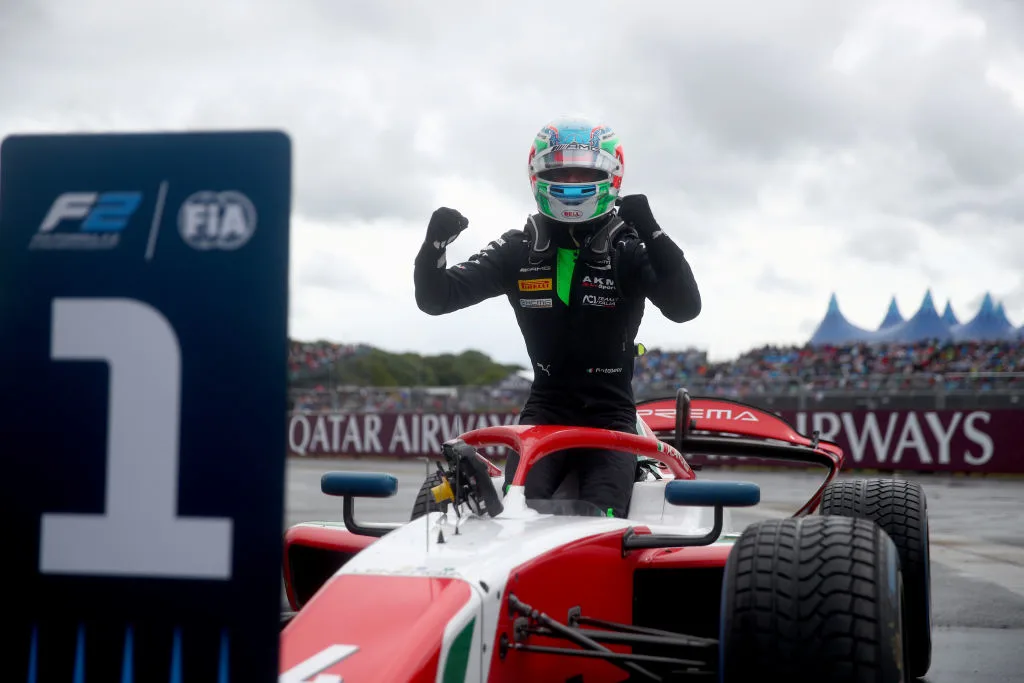
FIA Formula 2 CEO Bruno Michel has praised Kimi Antonelli’s exceptional talent, mental strength and rapid development following the Italian’s historic triumph in the 2026 F1 World Championship. Having watched Antonelli navigate an unconventional route through the junior categories, Michel believes the Mercedes driver’s success highlights the qualities that distinguished him long before he reached the pinnacle of motorsport.
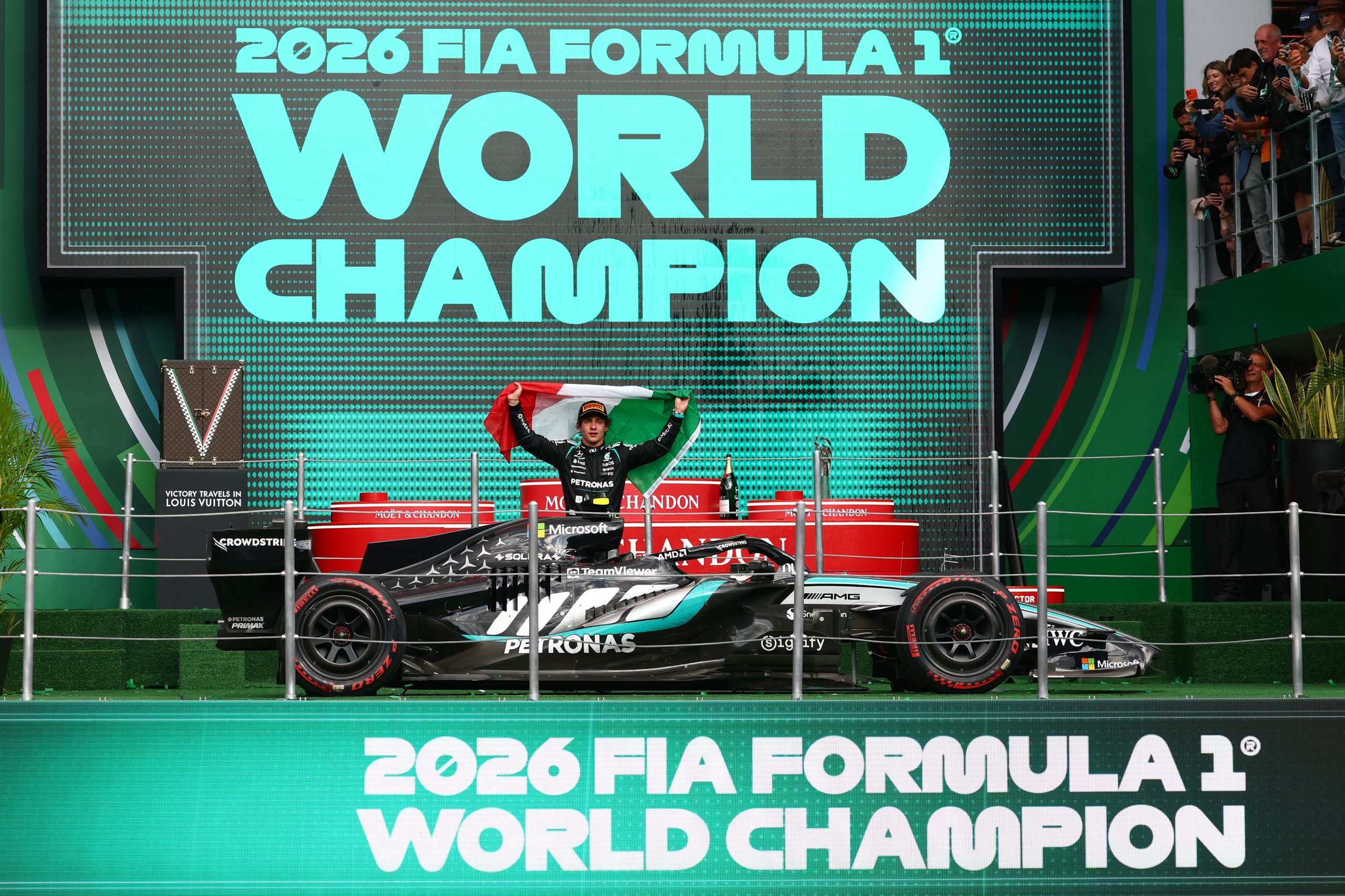
Antonelli became the youngest World Champion in F1 history at the age of 20 after securing third place at the Mexico City GP. His achievement came just two years after he entered F2 with PREMA Racing in 2024, having bypassed FIA Formula 3 entirely. Although his rookie campaign brought considerable challenges, two race victories and several impressive performances demonstrated his potential before Mercedes promoted him to F1 for 2025.
Reflecting on the Italian’s development in an interview with the official F2 website, Michel identified the performances that first revealed Antonelli’s exceptional abilities. He also discussed the pressure surrounding his promotion to Mercedes, the importance of team support and why he expects the young champion to achieve further success.
Silverstone breakthrough revealed Antonelli’s exceptional potential
Antonelli endured a challenging opening half of his debut F2 campaign, but his performance at Silverstone provided a clear indication of his ability. The PREMA driver secured his maiden victory during the rain-affected British GP Sprint Race, overcoming difficult track conditions and multiple interruptions to control proceedings from the front.
His impressive maiden victory at Silverstone marked an important milestone in his development. Michel believes the performance demonstrated the Italian’s natural speed and exceptional car control under conditions that challenged even the most experienced competitors.
“His victory at Silverstone in the wet was impressive. Winning in the wet is always a good sign for a driver. At that point, he hadn’t had a win yet but it was just a question of when, not if.
“I think it was a great achievement, and he did it at Silverstone as well, which is a quite demanding circuit. Winning in the wet requires a lot of control, a lot of speed as well.
“It was probably the first major moment he really had in Formula 2 where people started to understand just how talented this guy was.
Budapest victory demonstrated a different side of Antonelli’s abilities
While Silverstone highlighted Antonelli’s confidence in challenging conditions, his subsequent Feature Race victory at the Hungaroring demonstrated his growing maturity and understanding of race management. The Italian capitalised on PREMA’s strategy to secure his second victory of the season, showing he could combine outright speed with tactical discipline.
Michel considers that contrast particularly significant. Antonelli’s first F2 Feature Race victory in Hungary demanded a different approach from his Silverstone triumph, requiring him to maximise the team’s strategy while maintaining the pace necessary to challenge his rivals.
“It’s always difficult to say how special a driver is going to be, but it’s always easy to see when one has got something that a lot of other drivers don’t have, that’s for sure. And that was the best example.
“His Feature win in Budapest was a smart one. That’s exactly what you expect from a driver as well. It’s always impressive to see this kind of maturity in a race like Budapest. He needed to execute the strategy that his team put together that allowed him to do that. So yes, it was impressive.”
Together, the two victories offered compelling evidence of Antonelli’s versatility. Although he still had considerable experience to gain, his performances demonstrated his ability to adapt his driving to contrasting circumstances.
Daring move at Spa highlighted Antonelli’s confidence
Beyond his victories, Antonelli impressed Michel with his willingness to attempt ambitious overtakes in difficult conditions. His move on Franco Colapinto during the Belgian GP Sprint Race provided one of the most memorable moments of the 2024 F2 season, as the Italian challenged his rival through the demanding Eau Rouge and Raidillon section.
The manoeuvre required exceptional precision, confidence and commitment, particularly given the wet conditions. Antonelli subsequently received the Dallara Award for Best Overtaking Manoeuvre of 2024, further recognising the quality of his performance.
“Eau Rouge separates the good from the great drivers, and that’s exactly what he showed, especially in the wet.
“I’ve seen a few drivers overtaking in Eau Rouge. In those kinds of conditions, it’s true that you need to have very, very strong control of the car, and both drivers need to have confidence in what the other one is doing, because there’s not so much space, the track is not so wide, and you need to be sure that it’s not going to end up in contact.
“It’s quite impressive to do that there. You can always wait until the Kemmel Straight if you’re quicker, but he wanted to do it there. That move on Franco Colapinto was a masterclass.”
Skipping F3 created additional challenges for Antonelli
Despite those standout performances, Michel acknowledged that Antonelli faced significant difficulties during his F2 campaign. Mercedes accelerated the youngster’s development by promoting him directly from Formula Regional, denying him the opportunity to gain experience in F3 before tackling the championship’s more demanding machinery and weekend format.
The decision also coincided with Lewis Hamilton’s announcement that he would leave Mercedes for Ferrari in 2025. With Antonelli already emerging as a potential replacement, his progression attracted considerable attention before he had fully established himself in F2.
“Formula 2 was quite complicated for him. He didn’t do F3, and you can understand why. Toto sent him directly to F2 and there was a good reason for that since Lewis Hamilton had been announced at Ferrari at the beginning of the season.
“But it didn’t help him at all at the beginning of the season, because F3 is the best preparation you can have for F2, and coming directly from a Formula Regional, even if he had won there, was a big step considering the format of the weekend, the tyres, and of course, racing on the F1 weekend.
“If you don’t have this learning process, it makes your life a bit more difficult, even if you’re an extremely talented driver.
Michel’s assessment reflects the substantial adjustment Antonelli faced as he learned to manage more demanding tyres, limited practice time and unfamiliar race strategies while competing against experienced F2 rivals.
Antonelli handled intense expectations surrounding his Mercedes future
Alongside the technical challenges, Antonelli had to manage increasing speculation about his immediate future in F1. Hamilton’s departure created a highly desirable vacancy at Mercedes, and the possibility of placing a relatively inexperienced teenager alongside George Russell generated significant scrutiny.
Antonelli had previously discussed Mercedes’ confidence in his potential, but his performances in F2 inevitably influenced expectations surrounding his promotion. Michel believes his ability to withstand that pressure demonstrated maturity beyond his years.
“For him, having to handle that kind of pressure, people asking ‘is he worth it? Can he go to Mercedes, a team and car not at the back of the grid?’ So there were high expectations on him, and he had to deal with that.
“I must say that at the end of the day, he handled it extremely well. And that showed the confidence he has and the belief he has in himself.
“I’m sure a lot of drivers would have been thrown into a situation like that and not come out the same way. He didn’t win the F2 Championship, he was not the best rookie, but he was up there. And considering the circumstances, it was not an easy situation for him.”
Antonelli ultimately finished sixth in the 2024 Drivers’ Championship with 113 points and two victories. Although Gabriel Bortoleto secured the title, Mercedes recognised Antonelli’s potential and entrusted him with a full-time F1 seat for 2025.
Mercedes’ unwavering support proved crucial to Antonelli’s development
Michel believes Antonelli’s subsequent achievements reflect both his individual ability and the support Mercedes provided throughout his rapid progression. The Italian encountered a succession of unfamiliar challenges as he moved from Formula Regional to F2 and then F1 within a remarkably short period.
However, Michel emphasised that exceptional talent alone cannot guarantee success. He considers a team’s willingness to support a young driver through mistakes and difficult periods equally important, particularly when the driver faces intense public expectations.
“What he has been doing this year is amazing. To move from Regional up to F2, then to F1 in such a short amount of time, a different car, a different team, everything was completely different for him.
“A driver that has this kind of quality can endure going through those challenges, and you need to have the team and the Team Principal behind you saying ‘it doesn’t matter, we trust you, no worries’.
“That’s what happened to Max Verstappen when he got to Formula 1 as well. To earn that full support from the team is not easy, but that’s what you need to do. Considering it’s only his second year, it’s amazing.
Michel admits Antonelli exceeded expectations in F1
Mercedes’ decision to invest in Antonelli has ultimately delivered an extraordinary return, with the Italian securing his maiden F1 World Championship during only his second season. His 2026 campaign has demonstrated how quickly he can translate experience into stronger performances, establishing himself as one of the championship’s leading competitors.
Although Michel recognised Antonelli’s exceptional qualities during his junior career, he admitted that the speed of his progression at the highest level exceeded expectations.
“I’m not going to say we were expecting him to be that fast. Everybody knew that he was special, there was no doubt about that. But to come up to F1 like that…you don’t see a driver like this often, so good for him and good for Mercedes.”
The scale of Antonelli’s achievement became particularly apparent at the Mexico City GP, where the 20-year-old secured the championship with four rounds remaining. Following the race, Antonelli reflected on the significance of his title triumph and the emotional experience of fulfilling a childhood ambition.
For Michel, the result confirmed the exceptional potential he had identified during Antonelli’s relatively brief F2 career.
Antonelli follows Norris in strengthening F2’s reputation
Antonelli’s championship also represents another important milestone for F2, which has now produced consecutive F1 World Champions. Following Lando Norris’ success in 2025, the Italian becomes the latest graduate of the championship to secure motorsport’s highest individual honour.
Michel believes the two achievements reinforce F2’s effectiveness as a development platform. Although several previous champions progressed through different junior categories, the growing success of F2 graduates provides evidence of the championship’s contribution to preparing drivers for F1.
“Well, we should have had a graduate become Champion earlier, but Max didn’t help by winning everything for the last couple of years!
“But these last two years have proven that Formula 2 is a fantastic training ground for Formula 1, and Formula 2 is there to prepare drivers for F1.
“It’s the first mission of Formula 2, before everything else, and to make sure that when those drivers are arriving in Formula 1, they’re ready.
For Michel, the ultimate measure of F2’s success extends beyond the championships its competitors win before graduation. Instead, he places particular importance on whether the series equips drivers with the skills and experience they need to compete successfully in F1.
Michel explains why F2 remains an essential development platform
The structure of the F2 championship plays a significant role in achieving that objective. By racing alongside F1 at many of the same circuits, drivers gain valuable experience of the environments, expectations and challenges they will encounter if they reach the premier category.
Furthermore, the championship’s limited practice sessions demand quick adaptation, while its standardised machinery places considerable emphasis on driver performance. Antonelli recently discussed the lessons he learned during his F2 campaign, illustrating how those experiences contributed to his development.
“The fact that they race in front of Formula 1 on the same tracks, with a limit to track time, with a format that is designed for this preparation, with the same car – there are many, many reasons that make Formula 2 the best preparation for Formula 1. It’s always a pleasure to see that, but it’s not a surprise.
“We’re going to have more and more drivers winning World Championships coming from Formula 2. Formula 2 started in 2017, Lewis was winning at that time, then Max started in 2020s, and those two drivers didn’t come through F2, so that’s why it took a bit of time before Lando Norris arrived, and now Kimi.”
Michel therefore considers the recent achievements of Norris and Antonelli an encouraging indication of what future F2 graduates could accomplish.
Michel predicts further World Championships for Antonelli
Despite Antonelli’s historic achievement, Michel believes the young Italian has only begun to demonstrate his full potential. Having secured his maiden championship at just 20 years old, Antonelli now has an opportunity to build on his success and establish himself among the sport’s most accomplished competitors.
Michel also expects other F2 graduates to follow a similar path, although he acknowledged the difficulty of immediately challenging for the championship after entering F1. He pointed towards Lewis Hamilton’s remarkable rookie campaign in 2007 as an example of how challenging that transition can prove, even for exceptional drivers.
“There will be more titles for Kimi, that’s for sure. I’m sure he’s going to have an incredible career in Formula 1. But there will be, of course, more drivers coming from Formula 2, arriving in Formula 1, and winning the World Championship because that’s what we’re here for.
“Whether they can win in the first year is difficult. Before Kimi, the other one that almost did it was Lewis, coming from GP2 to almost getting the title in the first season in Formula 1, but he couldn’t do it either.
Antonelli’s championship in his second season nevertheless demonstrates how rapidly a young driver can reach the highest level with the right combination of talent, preparation and team support.
FP1 opportunities remain important for the next generation
Looking beyond Antonelli’s achievements, Michel stressed the importance of providing junior drivers with opportunities to experience F1 machinery before they secure permanent seats. Free Practice 1 appearances allow competitors to develop familiarity with F1 procedures and technical requirements while gaining experience of working within established teams.
These opportunities complement the preparation drivers receive in F2, particularly as teams continue to evaluate emerging talent for potential future promotions.
“The fact that a lot of F2 drivers are doing FP1s like at the weekend in Mexico is extremely important, because that’s also the way they start to get prepared for a Formula 1 career. But we are here to get them ready for that step-up with what we do.”
Antonelli’s rise offers an example of what talented drivers can achieve when they combine early opportunities with effective development. Although his decision to bypass F3 presented additional obstacles, his ability to adapt, withstand pressure and continually improve ultimately enabled him to secure F1’s biggest prize.
With Antonelli now holding the record as the youngest F1 World Champion, Michel remains confident that further success awaits the Mercedes driver. Equally, he expects F2 to continue producing talented graduates capable of challenging for championships as the next generation progresses through the motorsport ladder.