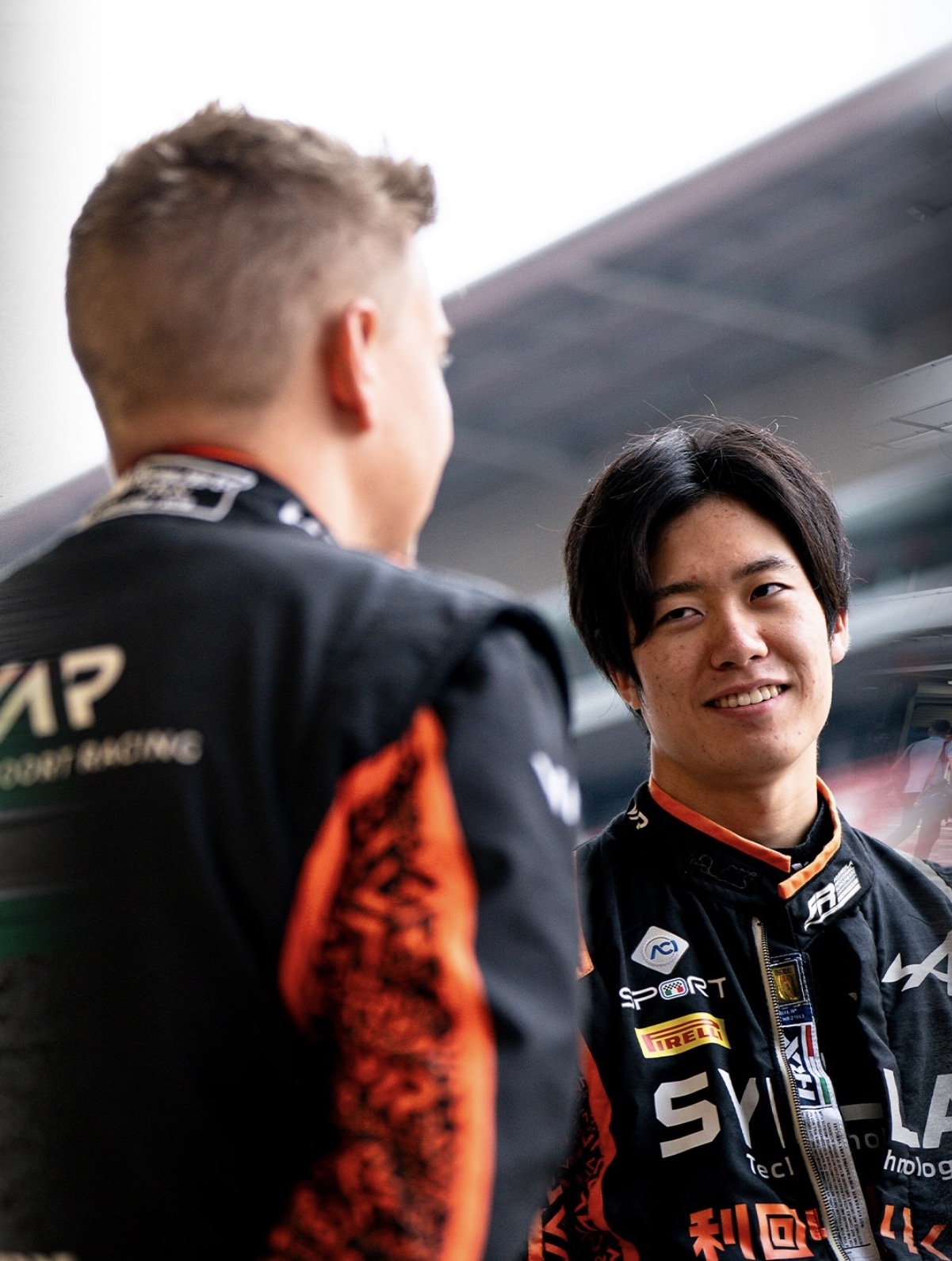
Van Amersfoort Racing’s (VAR) Hiyu Yamakoshi spoke to Pit Debrief about the challenges across the junior categories and the lessons he has learned along the way. The Japanese driver competed in a full Formula Regional European Championship (FREC) campaign with VAR in 2025, before it was confirmed he would remain with the team to step up to FIA Formula 3 for the 2026 season.
After finishing 9th in the Drivers’ Standings with two podiums to his name, Yamakoshi reflected on his journey so far and the level of preparation required from drivers heading into a race weekend.
A busy 2025 season for Yamakoshi
2025 proved to be a busy year for Yamakoshi, who competed across multiple categories including FREC, Super Formula Lights, GB3, Formula Regional Middle East and the prestigious Macau Grand Prix.
Reflecting on his packed schedule, the Japanese driver admitted that balancing racing, travel and personal commitments has been demanding. However, he highlighted that the importance of returning to Japan to reconnect with friends has helped keep the pressure manageable.
“Yeah, it is so busy, especially this summer. I went back to Japan for 10 days or 9 days just for recovery, but actually, recovery is not really fresh. It’s really busy, basically, pushing every day, meeting sponsors, have a meeting, have some fun with my friends, but basically, I drove everywhere. It’s quite hard, but every time back to Japan is quite fun.“
“When I’m at school, I have a lot of friends, so the study is really tough and quite frustrating for me because study is not my favourite part. Fortunately, I have friends. I can talk with them. It’s very difficult to manage my schedule, but still, it’s not much stress for me.”
He explained that competing across different championships requires a constant shift in mindset. While adapting isn’t easy, Yamakoshi noted that once he finds the right routine, managing the transitions become more natural — helped by a relaxed routine that allows him to stay calm and focused amidst the chaos.
“Yeah, just think about FRECA and GB3 different. It’s a different championship, different car. Just need to [change] mindset every time. It’s not really easy, but when I found how to do it, it’s quite easy for me.”
“Chill, let’s say. Not much. When I’m focused, I’m always too nervous every time. It’s going to be tough, so basically, I’m chilling all the time.”
Mental and physical preparation for a race weekend
Yamakoshi shared that race week preparations centres around simulator sessions, where he works closely with his teammates and engineers while building strong relationships with the team. Alongside this, the Japanese driver keeps up with light but focused physical training to ensure his body is race-ready heading into the weekend.
“We have a sim [simulator] prep just in the Monday on the race week and every time basically in the factory. That’s basically prep for the racing, prep for Qualifying, talk with the teammates and talk with engineers. We can make more nice friendships and look forward to winning the championship.”
“Also do some training, you know, like not hard one for myself. It’s not too hard, just right training before the race weekend and just make sure my muscles are ready to race.”
Emphasising on the importance of simulator work, he added: “Especially the new track is so important. Basically, I don’t know what the track is, what’s the specific of this track, where’s the corner, where’s the braking point. That’s really helpful, the teammates always help me.
“I can remember where’s the braking point and what’s the gear there, what I need to do carefully on the track. Also, if it’s only the onboard, which is on the video of the driving, of course not enough because I can remember in the brain, but basically when I’m driving, the body will be moving faster than the brain for me.”
However, winding down after a race weekend for Yamakoshi consist of: lying in bed and watching YouTube or anime.
“My recovery day after the race is lie down the bed, chill, watching YouTube, anime. And the next day, okay, the body is fully recovered. Time to wake up, time to study, time to train. That’s my routine after the race.”
Yamakoshi: The friendships formed off track are important to me
In his life, the 19 year-old shared the importance of friendships in his life. He explained how friends — regardless of language or background — have often offered him support and a listening ear after tough races, adding that a good support system beyond racing have helped him stay grounded at all times.
“Off track, yeah, in my entire life with, I think, the friends. The friend is so important every time. When I have a very bad race and talk with my friend, not even Japanese, even English friends, they can help or they can talk with me and they listen to what I want to say. It’s a really nice time when I have a friend and when my friend is close to me. They understand me, what I’m saying.”
“Yeah, I mean, not only the championship, it’s all the time. I don’t know the other sports players, but for me, yes, the friends, they’re always so important.”