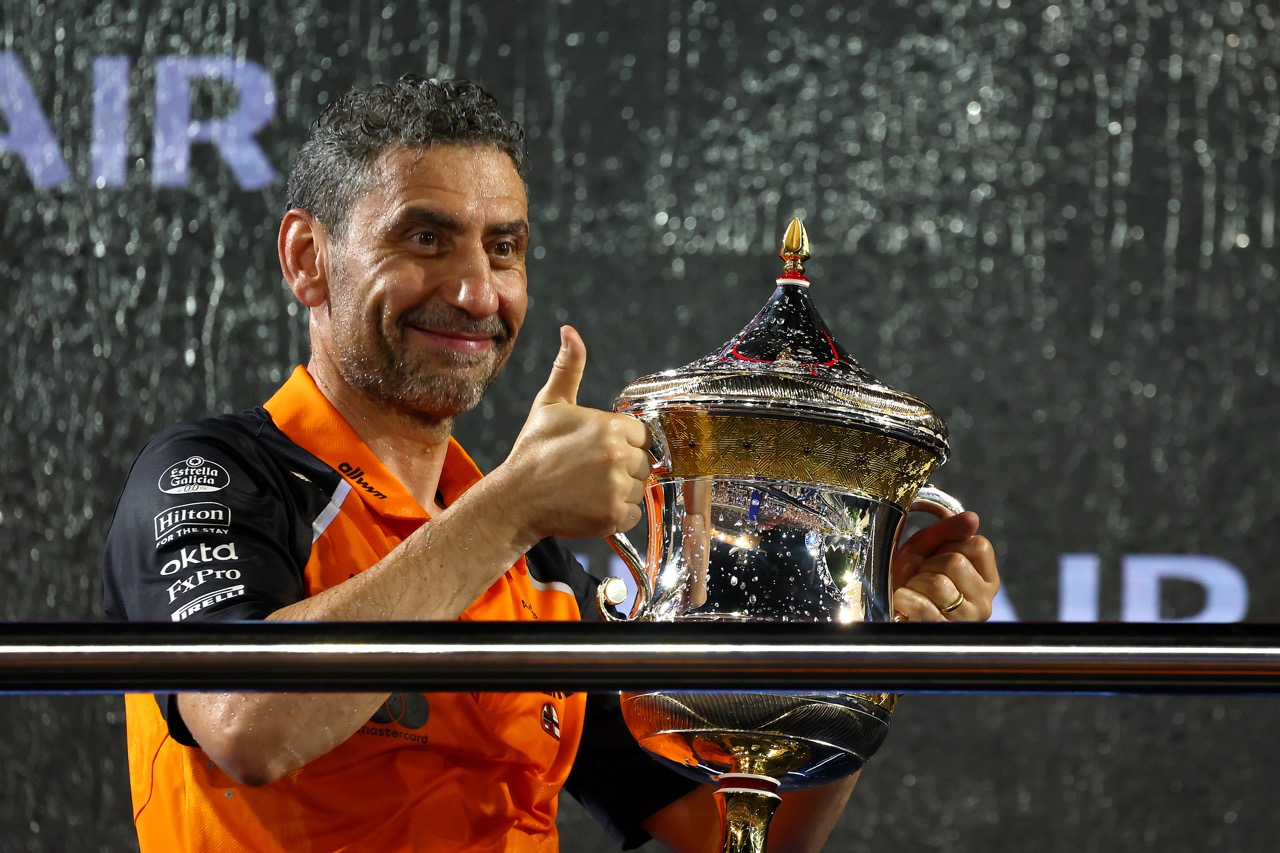
Andrea Stella’s career in Formula 1 stretched across F1 champions, dynasties, and high-pressure rebuilds from Ferrari to McLaren. He moved through some of the sport’s most demanding environments and adapted each time. But McLaren’s rise over the last three years tested him differently. It demanded more than sharp engineering calls. It required leadership, clarity, and long-term conviction.
Speaking on the Chequered Flag Podcaat with BBC Sport, Stella reflected on how that journey compared to his past roles. His answer pointed less to trophies and more to responsibility. The turnaround at McLaren marked a shift in identity. He no longer supported the leaders around him at Ferrari, Stella became one at McLaren.
McLaren’s turnaround ranked among Stella’s proudest F1 achievements, despite working with big names at Ferrari
Stella’s path placed him close to excellence long before he led a team himself. At Ferrari, he worked within a structure built on legacy and relentless standards. He supported operations that revolved around proven winners and experienced decision-makers. Drivers and senior figures shaped the team’s direction, while engineers like Stella translated that direction into performance.
During his time at the Scuderia, he won four championships as a performance engineer with Michael Schumacher and Kimi Räikkönen. He almost won another two as race engineer to Fernando Alonso.
Those years at Ferrari gave Stella a front-row seat to elite F1 leadership before heading to McLaren. They also taught him how influence worked inside a successful organisation. Yet, his role stayed rooted in execution, delivering at the track, managing the details, and operating within a system that already knew how to win.
McLaren changed everything, triggering a rebuild that saw performance dip and confidence fracture along the way. Stella stepped into an environment that demanded transformation rather than fine-tuning. Over three seasons, McLaren shifted from midfield struggle to genuine front-running intent. That climb reshaped Stella’s own perspective. The achievement felt bigger because the responsibility sat directly with him.
“Difficult to kind of, you know, create an order as to… It definitely ranks very high, though. And this is because, I mean, you know, I’m in a different position now. Somehow I’ve been… Before, I was working with a driver. I was with a driver.
“I was in a team with very senior people, like, you know, Ferrari team. It was definitely great leadership there. So I was leading from a race engineering point of view, but kind of following some of these great leaders that we had, including the drivers. You know, the names you made, they also definitely led the team to the success that we had. Here, kind of look above and you say, I’m actually the leader now.”
A shared vision and equal opportunity philosophy for Stella at McLaren, after years with Ferrari
At McLaren, Stella’s leadership depended on alignment. He worked closely with Zak Brown to sharpen the team’s direction and unify its efforts. They pushed for clarity in how the team operated and what it aimed to become. The focus stayed on sustained progress rather than quick fixes.
A major pressure point came from managing two high-potential drivers in the same structure. Lando Norris and Oscar Piastri represented the future. McLaren backed the idea that both could grow with equal support and equal opportunity. Doubt followed that approach, especially in a sport that often leaned towards defined hierarchies. But McLaren held the line.
That decision demanded consistency. It required trust across the garage. It also cost Stella energy because every choice had to protect fairness without weakening competitiveness. Still, the rewards matched the strain. The team built stability. The drivers thrived. Results followed. Two Constructors’ Championships and one Drivers’ Championship in the last couple of seasons have brought the good times back to Woking.
By the end of the rebuild, Stella viewed the turnaround of McLaren F1 as one of the most meaningful accomplishments of his career, despite his time at Ferrari. Not because it looked dramatic from the outside, but because it demanded so much from the inside.
“So Zak [Brown] and myself, just we needed to unite the forces and make sure that we were clear about the vision, clear about how we want to pursue our aspirations. And we talked about the challenges that came with trying to offer Lando [Norris] and Oscar [Piastri] the same opportunities, while certainly, there were opinions that this was not possible. So in the end, you feel like, yeah, I’ve contributed a lot. It has definitely costed a lot of energy, but very rewarding.
“So definitely, I would rank it as one of the most fulfilling and one of the achievements that makes me most proud.”