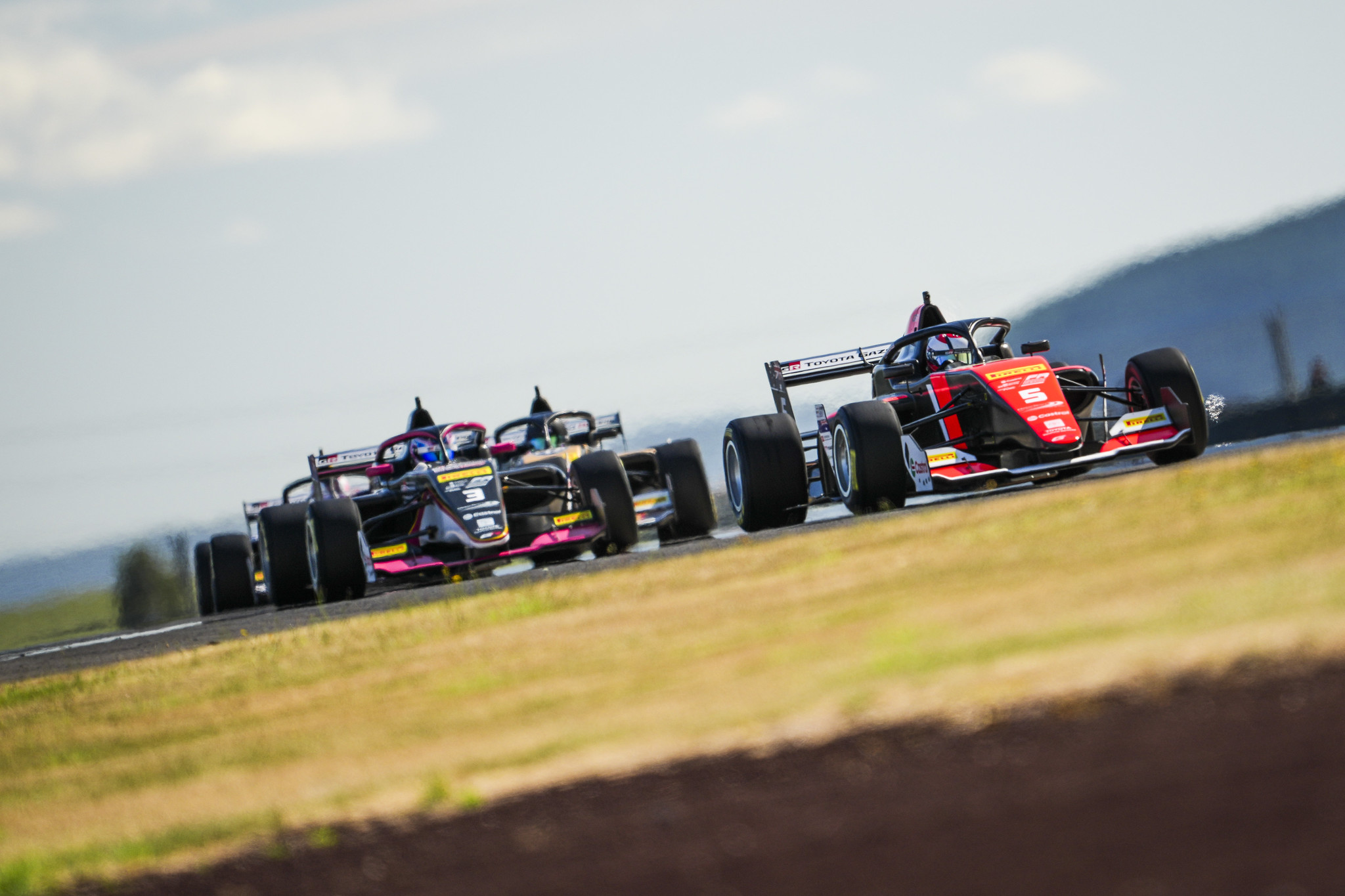
The newly named 2026 Castrol Toyota Formula Regional Oceania Trophy (CTFROT) could attract a record number of rising single-seater stars. As a result, organisers expect increased international interest following a major streamlining of the championship calendar to remove clashes with overseas testing programmes. Moreover, the revised format, which retains the championship’s traditional 15 races but runs them across four weekends instead of five, has received formal approval from the FIA World Council of Motorsport. Consequently, the changes will come into effect for the 2026 season.
FIA introduces Regional Trophy concept
From 2026, the FIA will introduce a Regional Trophy concept across all Formula Regional and Formula 4 categories. Therefore, organisers and promoters now gain unprecedented flexibility when designing their competitions.
Specifically, championships can either follow a traditional format spread over a longer period or adopt a more condensed structure under the ‘Trophy’ title with fewer events. Importantly, this approach preserves the status of FIA-certified championships while supporting the governing body’s wider goals of increasing global participation and improving accessibility in motor sport.
Notably, the New Zealand championship will become the first series worldwide to adopt the new Trophy profile. At the same time, it will retain its FIA Championship status. As a result, the Castrol Toyota Formula Regional Oceania Trophy continues to sit firmly within the global FIA ladder. Furthermore, 2026 will mark the 21st season of New Zealand’s premier single-seater championship. Therefore, the series maintains its long-standing reputation as a major international junior formula, recognised not only by the FIA but also by Formula One and IndyCar teams and driver development programmes.
Calendar designed around global testing
Crucially, the backing of the FIA and its World Council allows the championship to start in early January, following the Christmas and New Year holiday period. Consequently, the season can conclude with the New Zealand Grand Prix without clashing with pre-season testing in the northern hemisphere.
In recent years, clashes with IndyCar, Indy NXT, FIA Formula 2, Formula 3 and other European championships have prevented several top-tier prospects from contesting the full series. Therefore, the FIA worked closely with TOYOTA GAZOO Racing NZ to ensure its flagship winter championship remained accessible to the world’s best emerging drivers.
Explaining the importance of the changes, TGRNZ Motorsport Manager Nicolas Caillol said: “We have long appealed to emerging single seater stars around the world. That’s not only because of the value for money we offer as an international championship, but also because of the testing mileage, the intensity of the qualifying and racing, the variety of highly challenging circuits the drivers experience and the professionalism of the teams involved,”
“Our most recent champion, 2025 winner Arvid Lindblad, is already one step away from Formula One and we like to think that his 2025 season in New Zealand has indeed played its part in that process. With the way now clear for more European drivers, and USA drivers, to come to New Zealand we have no more obstacles preventing the championship becoming even more important as a pathway for the world’s best motorsport prospects.:
“We will announce our 2026 calendar, and the revised format for each weekend imminently.”
Ultimately, the adoption of the FIA Trophy framework positions the CTFROT for further growth. Therefore, with calendar clashes removed and international access improved, the championship looks set to strengthen its status as the premier winter proving ground for the next generation of global single-seater stars.