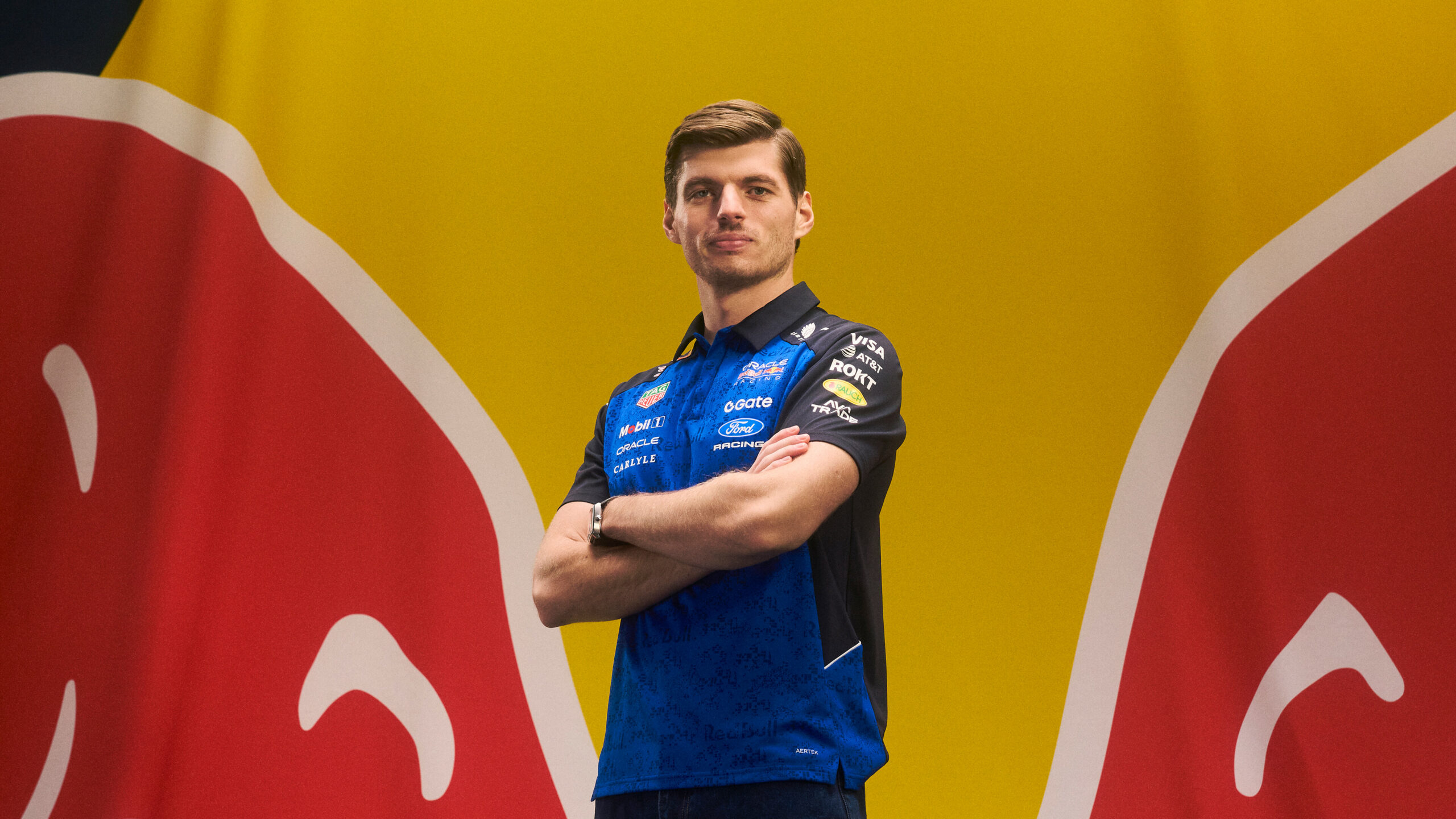
Four-time F1 World Champion Max Verstappen has acknowledged the scale of uncertainty facing Formula 1 as the sport prepares for sweeping technical changes in 2026. Verstappen also emphasised that adaptability will be key when drivers finally take to the track under the new regulations.
Verstappen admitted that much remains unknown about how the next generation of cars will behave, despite extensive preparation behind the scenes. For the Red Bull Racing driver, the priority remains the same: adapting quickly once the car hits the circuit.
Adaptation over anticipation for Max Verstappen ahead of 2026 F1 season
Max Verstappen explained that he has not spent extensive time running the new machinery in the simulator, preferring to reserve judgement until real-world running begins ahead of the 2026 F1 season. Testing starts in Barcelona at the end of the month.
“Honestly, I have no idea. I haven’t even done that many laps in the simulator, so for me, I’ll just see what happens when I sit in the car,” the 71-time race winner said to Bloomberg.
The Dutchman highlighted adaptability as one of the most important traits for any Formula 1 driver, particularly during periods of regulation change.
“What is always very important as a driver is that you can adapt quickly to the situation that you’re in. If that is on a current car that you’ve known for a long time or a completely new car, you just need to be able to adapt quickly,” he exclaimed.
The Red Bull driver also noted that rapid development cycles could define the new era, making continuous learning essential throughout a season.
Development and technical uncertainty
With speculation surrounding potential engine development advantages ahead of the new regulations, Verstappen was careful not to draw conclusions, repeatedly emphasising the unknowns that lie ahead.
“It’s impossible to know. I mean, everyone is just trying everything they can,” he stated.
The four-time World Champion reiterated that his role remains focused on performance behind the wheel, rather than the technical intricacies of engine development.
“From my side, I have to focus on the driving. I’m not there to be the engine technician,” Verstappen said, adding that regulatory matters ultimately sit with the FIA and manufacturers.
Smaller cars, bigger questions
Verstappen also addressed the nibble car concept, though he cautioned that any conclusions about improved racing or overtaking with the 2026 F1 cars would be premature.
“It’s a bit too soon to be able to say that it will be easier to pass. I have no idea. So everything is still unknown,” he explained.
While he admitted the revised proportions could be visually appealing, Verstappen stressed that meaningful understanding will only come once cars are on track.
As F1 edges closer to its next technical chapter in 2026, Verstappen’s calm and pragmatic outlook reflects a driver comfortable with uncertainty— ready to adapt, rather than predict.