
Formula 1 has not yet entered the 2026 season, yet a serious technical dispute already threatens to shape the competitive order of the new era. As reported by The Race, ahead of the 2026 F1 season, Audi has emerged as a vocal manufacturer warning that Mercedes could begin the regulations with a substantial and potentially decisive advantage. At stake is not only outright performance, but also the credibility of a ruleset intended to deliver closer racing and a more level playing field.
The controversy centres on how the FIA defines, measures and enforces engine compression ratios. What began as a technical detail has now escalated into a question of regulatory intent and governance. As discussions have intensified, the issue has moved beyond closed technical forums. Audi, Ferrari and Honda have formally written to the FIA, signalling shared concern that the current situation could undermine fair competition if it remains unresolved.
Understanding compression ratio and its importance
At the heart of the debate sits the internal combustion engine, which retains critical importance despite the increased electrical contribution of the 2026 power units. The compression ratio describes the relationship between the cylinder’s maximum volume, when the piston sits at the bottom of its stroke, and its minimum volume, when the piston reaches the top.
A higher compression ratio allows the engine to extract more energy from each combustion event, improving thermal efficiency. In practical terms, that efficiency either delivers more power from the same fuel or achieves the same performance while using less fuel—an especially valuable gain under strict fuel flow limits.
Previously, F1 permitted a compression ratio of up to 18:1. For 2026, the FIA reduced that limit to 16:1, partly to control costs and partly to lower the barrier for new entrants such as Audi.
However, while the regulations clearly state the 16:1 limit, they also define how compliance must be verified. Officials measure the compression ratio at ambient temperature with the engine disassembled. While seemingly straightforward, this approach has opened a critical loophole.
When an engine runs on track, heat causes metal components to expand. If engineers design these components to expand in a controlled manner, the piston can move closer to the cylinder head at operating temperature than it does during static tests. As a result, the effective compression ratio rises while the engine runs at speed, even though it remains legal when measured cold.
Rivals believe Mercedes, along with Red Bull Powertrains, may have identified how to exploit this distinction between static testing and real-world operation.
Why the performance gain raises alarm
The potential advantage is far from marginal. Estimates suggest gains of 10 to 15 horsepower, translating to roughly three to four tenths of a second per lap—a margin that could reshape the competitive order.
Under 2026 rules, fuel flow remains restricted, and the FIA controls electrical harvesting and deployment based on circuit characteristics. This amplifies the importance of extracting every possible gain from the internal combustion engine. Any advantage in efficiency or output can therefore have a disproportionately large effect on competitiveness.
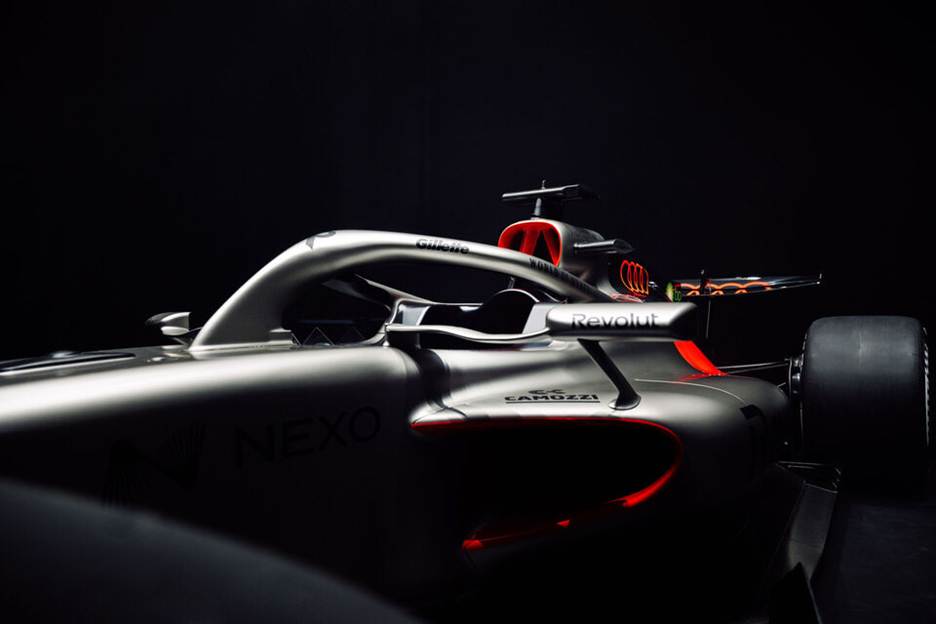
Binotto highlights the competitive risk as Audi launched 2026 F1 challenger
As F1 approaches the 2026 reset, Audi chief operating officer Mattia Binotto has emphasised why the matter has become urgent. For Audi, entering as a full works manufacturer, the interpretation of the compression ratio rule directly affects whether the new era begins with parity or with a built-in advantage.
Binotto explained: “If it’s real, it is certainly a significant gap in terms of performance and lap time, and that would make a difference when we come to competition.”
He warned that with power unit homologation approaching, once designs are frozen, teams cannot respond mid-season. A narrow interpretation of the regulations could therefore determine the outcome of an entire season.
Key calls for clear action from the FIA
While Binotto highlighted competitive implications, Audi technical director James Key framed the issue as one of regulatory intent rather than technical ingenuity. Key emphasised that the debate is not about clever engineering, but whether the designs align with the rules’ original purpose.
“I think if it’s sort of bypassing the intent of the regulations, then it has to be in some way controlled,” he said.
He also highlighted the stakes under frozen power unit regulations: “We trust the FIA to do that, because no one wants to sit a season out if you’ve got a blatant advantage that you can do nothing [about] with a homologated power unit.”
“I think for us, hopefully, the FIA will make the right decisions.”
Key compared the compression-ratio situation to previous aerodynamic disputes, where clever interpretations forced FIA intervention to maintain fairness. He sees no reason to treat engines differently.
“You’ve got to have a level playing field,” he said. “If someone comes up with a clever diffuser, and you said it’s not the right thing to do, no one else can have it, but you can have it for the rest of the year, it doesn’t make sense. We would never accept that.”
Binotto expects no immediate rule change despite concerns
Despite mounting pressure, Binotto downplayed expectations of a rapid FIA ruling. A meeting with engine manufacturers is scheduled, but Audi views it as part of a longer technical process rather than a decisive moment.
“I don’t think there will be clarity or compromise,” he explained.
He expects the discussion to focus on future enforcement rather than rewriting the rules:
“The meeting, which has been set for the 22nd of January, is more to continue to discuss how can we improve or develop a methodology for the future to measure the compression ratios in operating conditions.”
He highlighted a core weakness in enforcement: static checks at ambient temperature fail to reflect on-track performance. While Bionotte emphasised that Audi supports the development of a methodology to improve real-time monitoring, he tempered his short term expectations, noting that any practical implementation remained some ways off.
“Today we are doing it [measuring] in cool conditions with the engine disassembled – so you may wait until the end of the season to know if you are compliant.
“It’s simply we are trying, all together, to really develop a methodology where we can measure it in real time while the car is running.
“My hope in that meeting is not clarity on the regulation itself, but more to define a methodology for the future.”
Protests remain a blunt instrument
While speculation has arisen that teams like Audi could force the issue via protest at the upcoming 2026 F1 Australian GP, Binotto dismissed this option as impractical without solid evidence.
“You can protest if you know what you’re protesting,” he said.
Until the FIA clarifies how it interprets and enforces compression ratios under real operating conditions, certainty remains elusive. F1 now faces a pivotal moment, with the governing body tasked with ensuring the 2026 regulations deliver innovation and fairness from the first race.