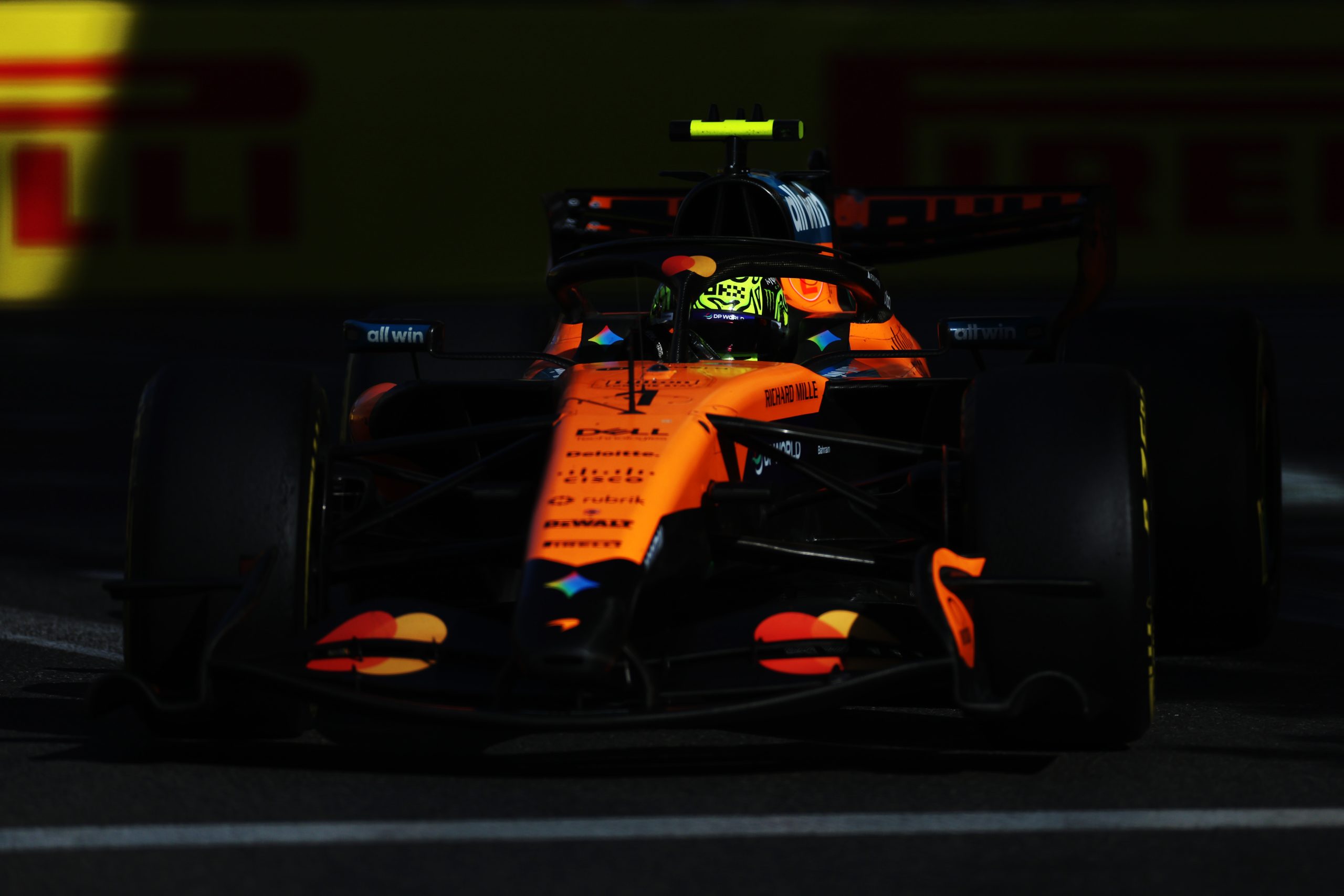
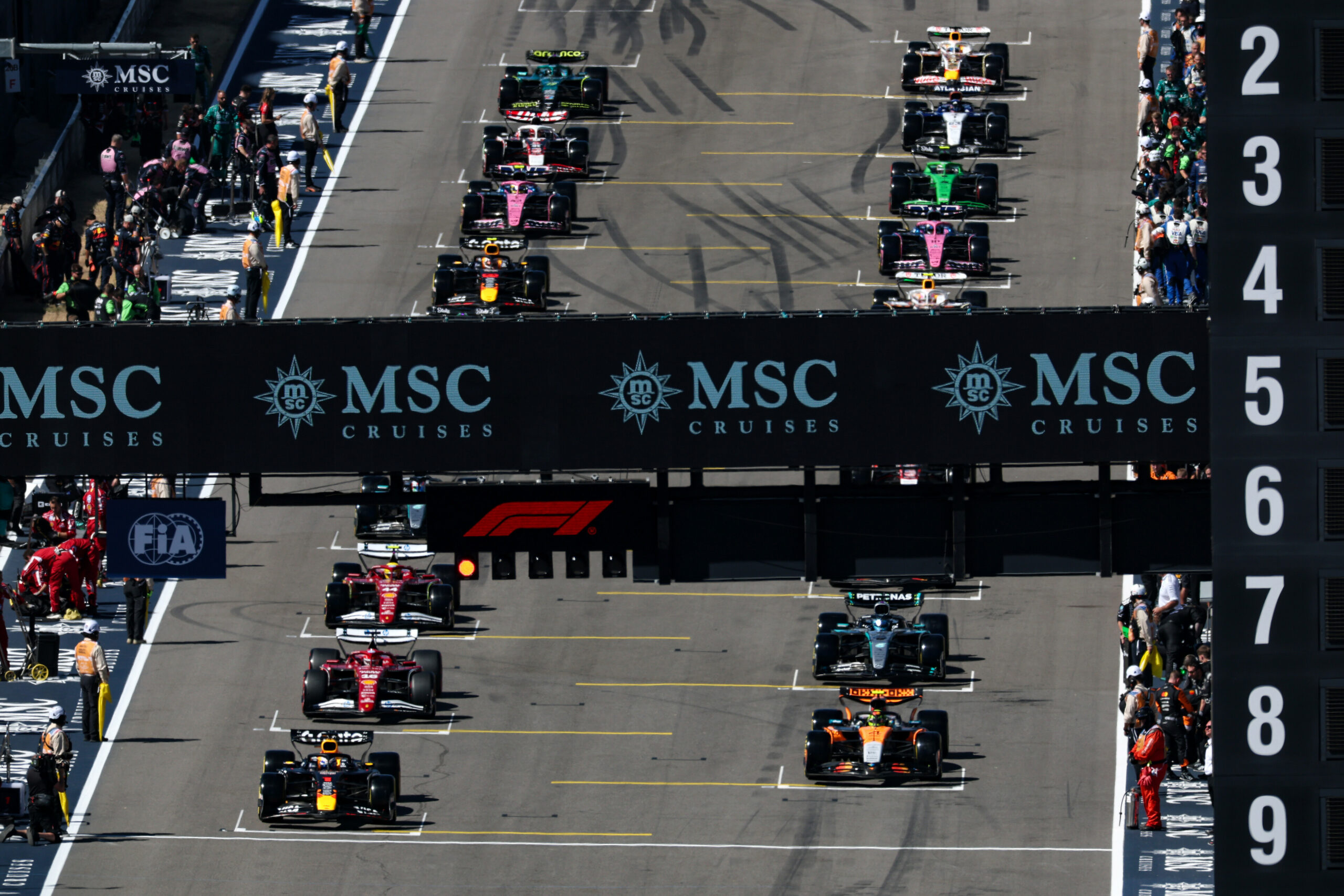
F1 could be heading for a “recipe for disaster” if it doesn’t make any changes around the race start procedures in 2026 – that’s the view from McLaren driver Oscar Piastri after the first Bahrain testing session, as he believes the all-new power units for the season are too complicated to get up and running in a start, which could lead to safety issues.
What changed for 2026
With the all-new power units, the most noticeable change compared to the ones that were in use since 2014 is the removal of the MGU-H, which used its electrical energy to great effect at starts: spinning the turbo up to its optimal range in just a few seconds, effectively eliminating turbo lag and making variability between drivers’ starts a matter of finding the right revolutions and minimising wheel spin in the first few meters.
“The difference between a good and bad start last year was you got a bit of wheelspin or you had a bad reaction time,” Piastri said in a print media session in Bahrain.
But with the removal of the MGU-H, a crucial part of the start procedure of those engines has gone, meaning drivers now have to rev up their cars for as long as 10 seconds in some cases just to find the optimal range to start.
Whilst it could be of little significance to those starting at the sharp end, drivers lower down the field may find themselves still stranded on the grid when the lights go out, as the revs don’t allow for the correct launch just yet.
“This year it could be effectively like an F2 race where you almost go into anti-stall. You’re not just losing five metres or so. You can be losing six or seven spots if it doesn’t go well,” the McLaren driver added.
Another complication concerns the active aerodynamics, as it’s unclear whether cars could start safely in ‘straight mode’, given the minimal downforce would cause even more wheelspin and potentially dangerous situations:
“It’s whether we use straight mode at the start or not as well, because I think a pack of 22 cars, with a couple hundred points less downforce, sounds like a recipe for disaster to me.”
Drivers agree on “worrying” state of race starts right now
Some of the drivers have expressed their concerns with some of the unintended features of the 2026 cars, the most vocal being four-time world champion Max Verstappen, who slammed the driving techniques required to be fast over a lap and called the new rules “Formula E on steroids”.
But this goes far beyond just a drivers’ enjoyment or (lack of) about the new cars, and instead poses a safety risk that has to be taken seriously.
“I’m only doing my launch when I’m in a given window, but we are very conscious that, for a race start, you go when the lights go out,” George Russell said. “You don’t go when your specific turbo is in the right window.”
Haas driver Ollie Bearman admitted that the procedure has become complicated and admitted it’s “worrying” that three weeks out from the season opening 2026 F1 Australian GP, the start procedures “haven’t been consistent” yet:
“It’s really on a knife-edge to get it right and it’s a matter of milliseconds,” he said. “If you’re too late or too early by half a second then it doesn’t work.
“It’s complicated and so far we haven’t been consistent at all with the practice starts, which is a bit worrying.”
Extent of potential issues was only discovered in the Barcelona shakedown
There were already concerns regarding race starts with the new PU’s since last year – including an F1 Comission meeting that proposed changes around the rules to circumvent those issues, which had the backing from Ferrari team principal Fred Vasseur, but was denied by the majority of teams on grounds that Ferrari was looking for competitive gains.
Now that the issues has come to the fore again, Ferrari used its veto power to deny any last-minute changes as of now, given it has designed its turbo in such a way to cope better with the demands that were supressed by the MGU-H previously (in general terms, a smaller turbo).
But as other teams only found out in the Barcelona test, Ferrari did have a reasonable point in being concerned about the race start procedures.
“It’s one thing to see these things on paper and discuss them before you’ve actually seen them in real life,” said Alpine managing director Steve Nielsen. “But I was surprised when I first saw it in Barcelona.
“You see these enormously long, what looks like pre-start revs, but it’s actually the drivers building [turbo] boost.
“Then you start thinking, well, we’ve got 22 cars this year. You imagine them coming around to the grid – and that procedure is very different for the guy on pole than it is for the guy in 22nd. I think it is something that may need looking at.”
Stella demands “responsibility” from teams and FIA surrounding 2026 F1 start procedure
The McLaren team principal was perhaps the most vocal about the topic on the final day of testing in Bahrain, as he demanded fellow F1 teams and the FIA to take the matter seriously, as it has now become very clear just how much of an issue it could be for start procedures in 2026:
“This is a bigger interest than any competitive interest,” he emphasised.“So I think all teams and the FIA should play the game of responsibility when it comes to what is needed in terms of race start procedure.”
Whilst it is widely believed the Ferrari-powered teams are best suited to the new starting procedures, even Haas team boss Ayao Komatsu is seeking changes, as he believes regulations should ensure “normal racing” and starts for every team on the grid:
“We discussed it last year, but of course we didn’t know last year exactly what we were dealing with,” Komatsu said. “It’s not a total surprise. I think it’s important that we have regulations such that everybody can do a decent start and we have normal racing.” –
Start procedure fiasco in final day of Bahrain 2026 F1 test “a mix up in instructions”
With the genuine concerns surrounding the difficulties of a race start in 2026, people were rapid to jump to conclusions on the final day of Bahrain F1 testing, when the FIA tested the start lights procedure with the drivers and teams, and it looked like total carnage.
Franco Colapinto nearly spun his Alpine before even reaching his grid slot, as he desperately tried to generate some temperature on his rear tyres – which is another concern, given that even if the FIA extend the time between the last car joining the grid and the lights actually illuminating, drivers at the front could sit for an excessively long time with their tyres losing temperature and pressure all the while.
When the lights did go out, drivers filtered out in a very unorganised manner, which made it seem like many had hit anti-stall or a similar issue. Colapinto did actually hit anti-stall as he launched off into the first corner, but that seemed more of an issue with his Mercedes PU.
“I think the start today was just a mix up in instructions. I got told to wait until whoever was in front of me had gone – so do my own launch and not do it to the lights.
“Clearly, some other people had a different idea. So that was nothing to do with the power units,” Piastri said.
Alpine driver Pierre Gasly believes the start in Melbourne could be one to remember in years to come:
“I advise you to be sitting with your TV on in Australia, because it could be one that everybody remembers!”