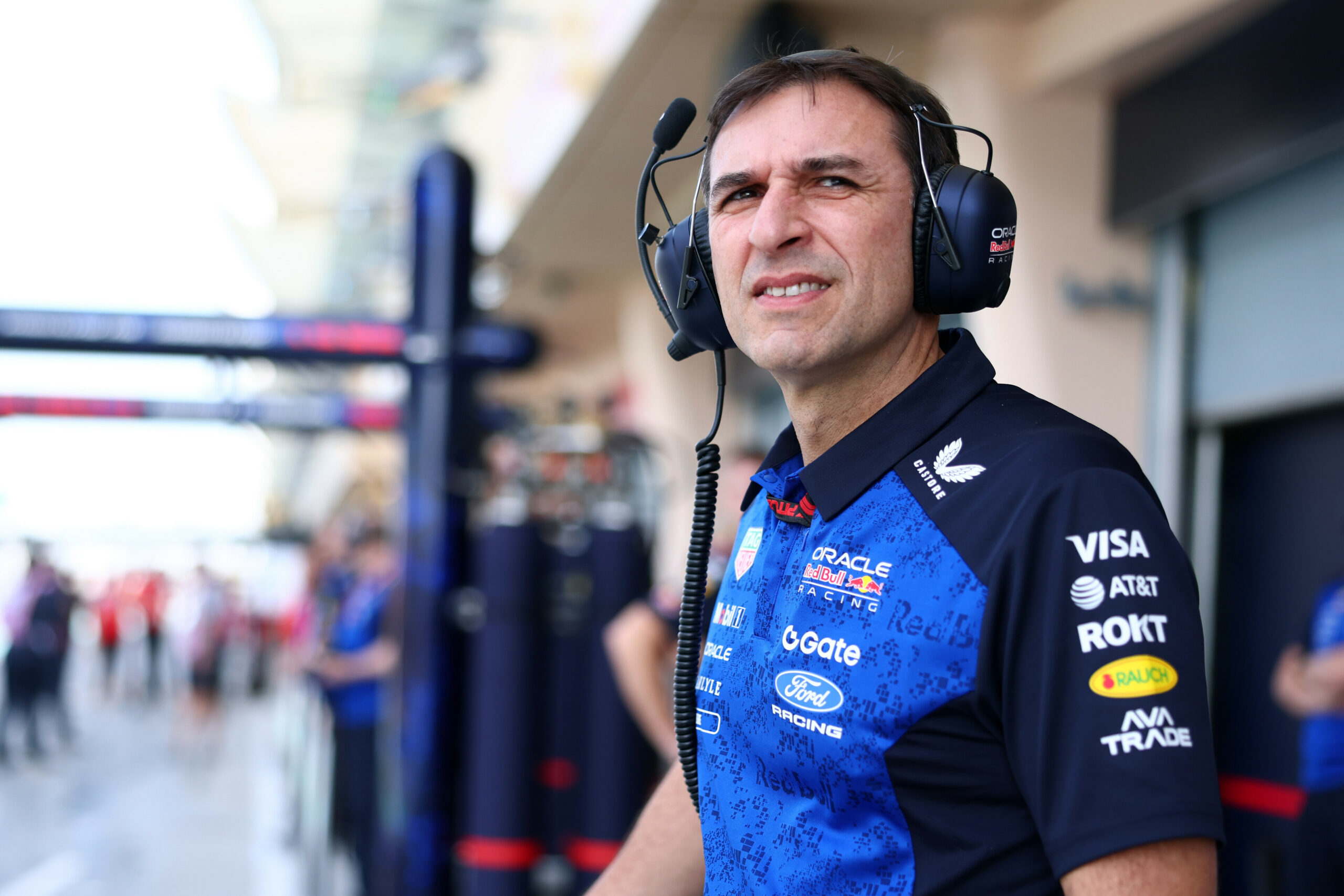
While rival teams have described Red Bull as the reference point under F1’s new regulations, Pierre Waché has taken a cautious stance on the Red Bull 2026 engine project.
The French engineer, Technical Director at Red Bull Racing, acknowledged the team’s winter progress. However, he rejected suggestions that Red Bull is setting the pace. Instead, he stressed that the new regulatory era is still in its early stages. For Waché, outside praise means little without consistent performance on track.
A massive achievement but not the benchmark
Red Bull’s latest project marks a major structural step for the Milton Keynes based squad. With the creation of Red Bull F1 Powertrains ahead of the 2026 engine regulations, developed in partnership with Ford Motor Company, the team has move toward full technical independence.
Speaking in Bahrain, Waché praised the progress made in a short time frame.
“I’m surprised that the engine people did a fantastic job in being able to put a car together and run so many miles. I will not say we are the benchmark. Everybody is playing the same game. But we have to recognise the fantastic job that the engine people have done.
“To be able, as a start up, because it is a start up, in three and a half years to make an engine and not look stupid on track is a massive achievement.”
Despite that success, Waché insists Red Bull is not leading the competitive F1 order in 2026.
“We are not the benchmark for sure. We see clearly the top three teams, Ferrari, Mercedes and McLaren, come in front of us. From our analysis, we are behind.”
Red Bull focusing on improvement over comparisons
By referencing Ferrari, Mercedes and McLaren, Waché underlined how competitive the front of the field looks under the new aerodynamic and power unit framework. However, he cautioned against drawing firm conclusions from testing data.
“It’s difficult to say where everybody is. The run plans, fuel loads and power levels are unknown. Our analysis could be wrong. We don’t spend too much time on that. We focus on improving our own work.”
That mindset reflects Red Bull’s long standing approach during regulation changes. The priority is development direction, not short term headlines.
Red Bull 2026 F1 engine: Technical challenges under the new rules
The current rules introduce tighter operating windows and lower downforce levels. They also place greater emphasis on efficiency and mechanical grip. Waché admitted there is still room for improvement.
“I’m never happy with my own work. We clearly have improvements to make. With this type of regulation, the oil level is quite low and the downforce level is very low. Managing traction at low speed is a big challenge, and it could be one of the keys.”
Reduced downforce increases the importance of traction, especially in slow speed corners. Weight optimization also remains critical following changes to the minimum weight limit.
“Like everybody after winter, we try to reduce weight. We have some challenges. That’s the case for everyone. Maybe some people did it better than us. We still need to find weight on the car. Our philosophy is always to make the car quicker overall, not just to hit the weight limit.”
Correlation concerns and infrastructure investment
Waché also revisited the correlation issues Red Bull faced late in the previous regulation cycle. Using a very, very old wind tunnel held them back in 2024 and 2025.
“The team struggled at the end of the last regulation mainly for two reasons. First, the wind tunnel we have is quite old compared to others in Formula 1. Second, when regulations reach a plateau, the gains are very small. The accuracy required becomes extremely high. That makes it easy to go in the wrong direction.”
With fresh regulations, development gains are potentially larger and slightly less risky. However, risk still remains.
“This year the regulation is new. The development delta you can find is bigger, so it is less risky. But that doesn’t mean there is no risk. To reduce correlation issues, the team has invested heavily in a new tunnel. Soon we will have one of the best facilities in Formula 1.”
For Waché, the real benchmark is not defined by rival opinions. It will be determined by the performance Red Bull can unlock over time.