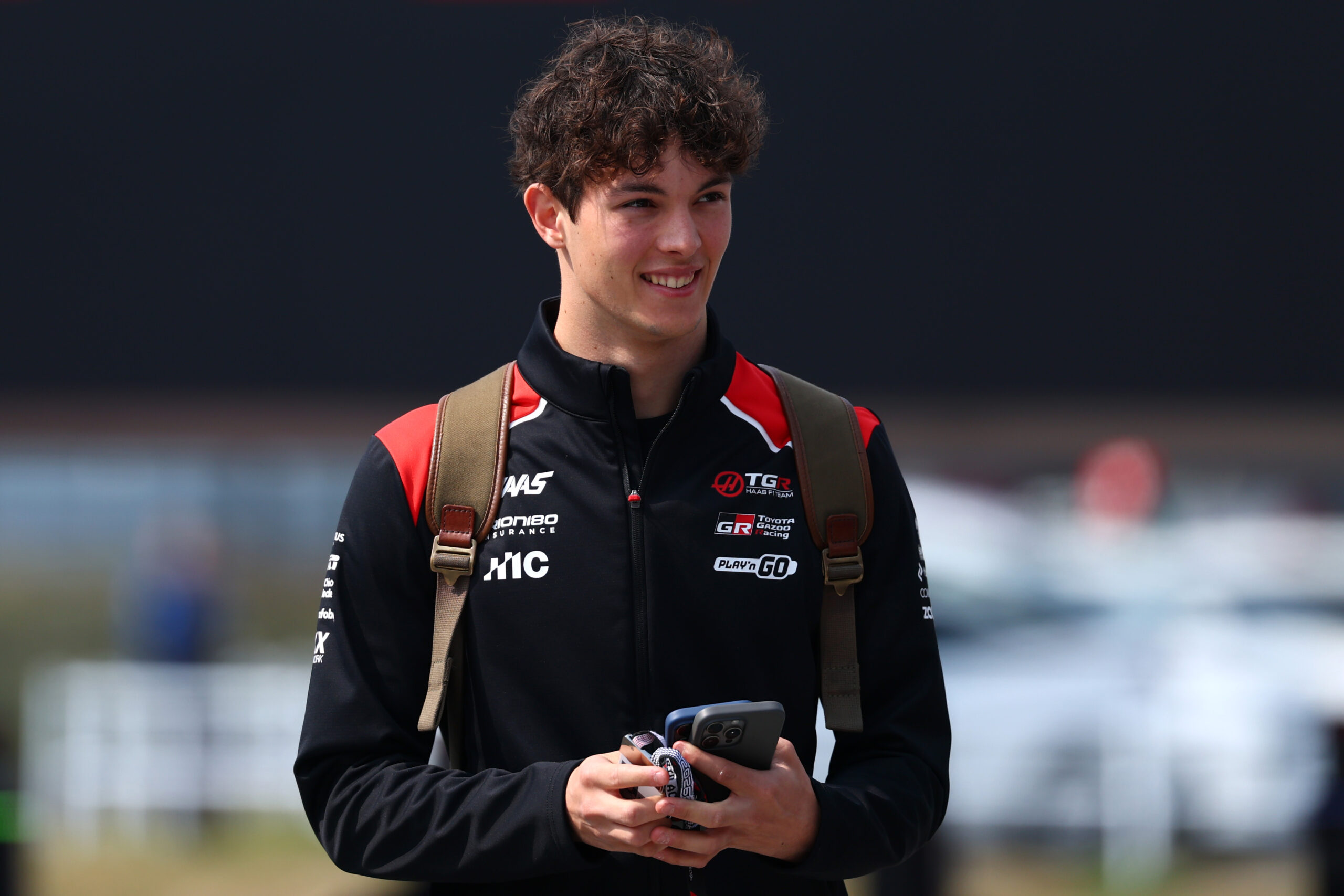
Ollie Bearman criticised the current F1 regulations following a massive 50kph speed delta collision with Franco Colapinto at Suzuka. The Haas driver appeared on the Up to Speed podcast as he recalled the incident in Japan, also placing blame at the door of the Argentinian.
However, his okay physical health did not mask his frustration with the racing standards during the Japanese Grand Prix. This incident highlights a growing concern regarding the 2026 technical regulations and the safety of the manual override boost modes.
The reality of what happened between Bearman and Colapinto in the Suzuka F1 race
The crash occurred because of a massive disparity in energy deployment between the two cars. Bearman chased down the Alpine while using his boost, whereas Colapinto was recharging his battery at the F1 Suzuka race.
Consequently, the closing speed reached a dangerous 50 kph, a figure the Haas driver noted is usually reserved for cars on cool-down laps rather than active wheel-to-wheel combat. This high-speed encounter served as a brutal demonstration of how quickly a closing gap becomes an incident under the current formula.
“It’s the first time in history or in the last however long I can remember that two cars fighting for position have such a massive speed delta. And that’s really a kind of unfortunate result of these regulations.
“But that was 50 kph difference. Franco moved across in front of me to defend his position. Last year would have been absolutely on the limit, but probably okay with just a 5 or 10 kph speed delta. But with 50 kph, he did not leave me enough space. And I had to avoid a much, much bigger crash basically. When he moved left, it was small. But at that speed difference, any move is huge.”
Ignoring the Friday driver agreement at the Japanese GP
Tensions remain high because the drivers had specifically discussed this exact scenario during their Friday briefing, according to the Haas driver. They collectively agreed to show more respect and move earlier when defending to account for the new energy management risks.
Despite this, the A526 of Colapinto moved on the run to Spoon, which Bearman deemed “unacceptable” for the modern F1 standards seen at Suzuka. The Brit’s team boss Ayao Komatsu did not believe the Alpine driver was at fault.
While such aggressive defence was possible in the previous era, the Haas driver argued that the new car limits make such moves lethal.
“We said between all the drivers, ‘come on, we need to give each other a bit more respect. Move to defend your position with a bit more time because the speed deltas are much higher than we’ve ever had in our sport’. And then two days later, that happens, which, for me, was unacceptable.
“So, we need to figure things out between drivers, have a bit more respect between drivers, because I was really not happy with the action that he did. But also, I think there’s a few things, tweaks that we can do with the FIA.”
A temporary plaster for the 2026 era
The British driver did not speak with his rival after the race. While the FIA is working on software tweaks to avoid such extreme speed differences, the grid remained wary of the “plaster” solutions currently in place.
The collision between Bearman and Colapinto is unlikely to settle until the FIA addressed energy recovery parameters more permanently within F1 before the paddock heads to Miami next month.
“Well, not leaving the door open, but just, he saw me coming and moved. But last year, that would have been okay. This year, he sees me coming too late. I’m coming such a speed delta that at that stage, it’s too late to move. So I see, he looked in his mirror and went left, which is not good.
“Last year, we were pushing it to the absolute limit, moving at the last second. And the overtaking was so difficult and the regulations were so mature that everyone knew exactly what the limits were of those cars. And now we’re in a new era where we don’t know exactly what the limits are. So I don’t think it’s a solution. It’s more of a plaster for these differences.”
Safety standards and the road to Miami
Fortunately the Haas chassis and power unit survived the crash with minimal damage. The driver praised the FIA for the incredible safety of the modern cars, which allowed him to walk away from a 50G hit, albeit with a limp.
He admitted that his primary instinct was to exit the car as soon as possible to reassure his family watching from home. “Well, I knew I was going to hurt when I was out of control. That was for sure. And then, of course, I was just thinking to get out of the car as soon as possible.
“Luckily, the car was not too damaged, actually, for the size of the crash. You know, power unit, chassis is okay, which is also important. And I was okay for the most part. I just wanted to get out quickly to show, especially my family who were always watching, that I was fine.
“Because, although it was a big crash from the outside, it was okay. I mean the cars are incredibly safe, which is a testament to the hard work that the FIA has been doing.”
Now, the focus shifts to Miami, where the Bearman and Colapinto incident will undoubtedly be the main topic of the next F1 briefing following the fallout at Suzuka.