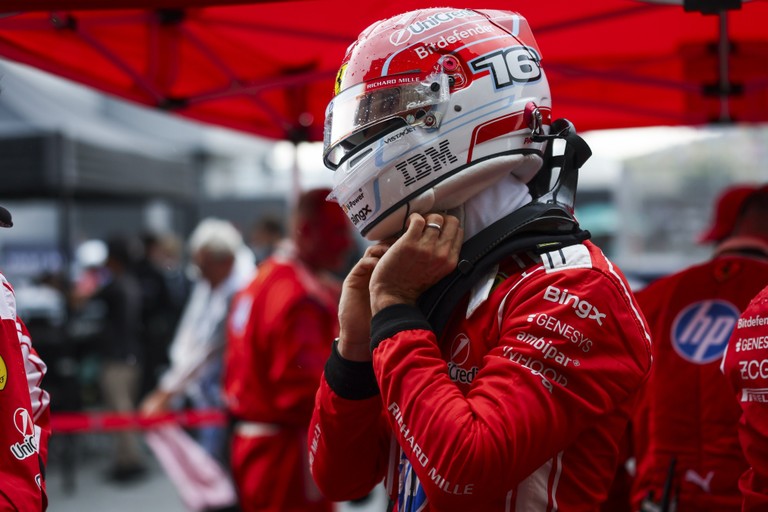
Charles Leclerc described the 2026 F1 race in Malaysia as a “sweaty” afternoon after Ferrari recovered from a difficult opening phase to bring both cars home inside the top four.
Heavy rain delayed the start at Sepang and left teams facing difficult tyre decisions when the race eventually got underway. Ferrari initially committed to slick tyres, a choice that quickly proved costly as the track remained too wet.
Leclerc dropped down to deal last before switching to intermediates. He also required a new front wing at that stop following contact with Nico Hülkenberg.
As conditions improved, the Monegasque steadily worked his way back through the field, getting inside the top 6 by Lap 35. A late Safety Car gave him another opportunity to recover places, and he eventually overtook Isack Hadjar to take fourth, finishing directly behind teammate Lewis Hamilton in third. Max Verstappen claimed victory ahead of Kimi Antonelli. George Russell‘s late downfall also helped.
Leclerc: “Everything that could have gone wrong” did in the first part of the race
While Ferrari ultimately secured third and fourth, the result did not reflect how difficult Leclerc’s F1 race in Malaysia had been.
The Monegasque endured a particularly challenging opening phase as Ferrari’s early tyre choice left him at the back.
However, as the conditions evolved, the race began to come back towards Ferrari. Leclerc recovered positions and eventually brought the car home in fourth, directly behind teammate Lewis Hamilton. Reflecting on the contrasting stages of the race, he admitted that the afternoon had been far more stressful than the final classification suggested.
“Kimi [Antonelli] and Max [Verstappen] were just too strong for us today, and we were right after, and we finished P3, P4, but it’s been a strange race. I think everything that could have gone wrong at the first part of the race went wrong, and everything that could have gone right in the second part of the race went right. So, at the end of the day, it kind of balanced, both extremes balanced each other out, and we are finishing where we should have finished, but it’s been a bit more of a sweaty race than what I would have hoped.”
Limited practice running left Ferrari with little useful data
The unpredictable race followed an already challenging weekend for the teams at Sepang. Leclerc explained that poor track conditions during Friday practice had limited how much useful information Ferrari could gather.
By the time conditions became more representative in FP3, teams no longer had the opportunity to conduct meaningful long runs. The changing weather and cooler temperatures on Sunday then made much of the information they had collected even less relevant.
“Yeah, I mean, it’s a tricky weekend, mostly because the track was in very poor conditions in FP1. So, FP1 and FP2, we didn’t learn much. Then FP3, finally, you have kind of a track that is a bit more representative, but that’s too late to do race runs. And then you get into the race, hoping that the little you’ve learned is useful for the race, but it wasn’t because it was just completely different conditions. So, it was tricky, but it was the same for everyone.”
Ferrari must understand Red Bull’s decision-making
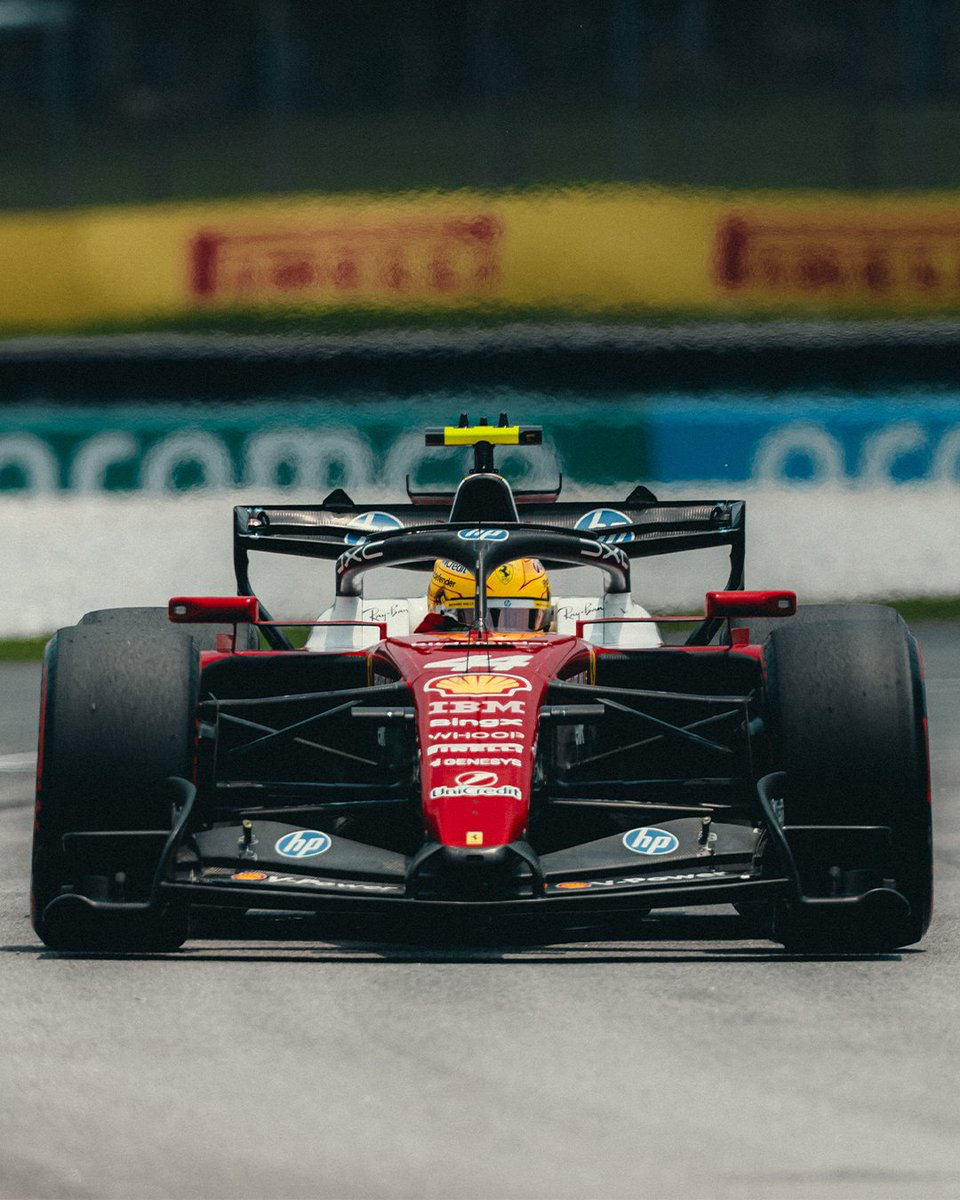
Ferrari’s decision to begin the race on slick tyres became one of the crucial moments of Leclerc’s afternoon. While several drivers opted for intermediates, both Ferrari cars initially ran slicks and consequently lost significant ground during the opening stages.
Leclerc backed the decision Ferrari made in the media pen but acknowledged the team could assess whether splitting strategies between its two cars would have offered a better approach. He had been calling to pit for inters before the start got going.
He also highlighted Red Bull’s ability to consistently make the right calls in uncertain conditions.
“I was aligned with the team. I think it was a close call, as it’s always in these conditions. And yeah, we’ll speak. Whether to split the cars in those conditions is the best possible way, but it’s also true that when you split the cars, by definition, there’s one very wrong choice and one very good choice. And it’s very difficult to have an in-between scenario where both scenarios kind of pans out the same. So, we thought we were doing the right thing, obviously. But clearly, there’s one team in particular, and that is Red Bull, that gets it right most of the time with both cars. And for that, we need to understand what they are doing better than we do.”
Hidden water made slick tyre gamble difficult to judge
With teams lacking representative data for the conditions, Leclerc said Ferrari largely had to rely on intuition when making its tyre decision ahead of the F1 race in Malaysia.
Although the circuit surface appeared relatively dry, water remained trapped within the tarmac. According to Leclerc, there was considerably more water than many expected, making the slick tyre the wrong choice at that stage of the race.
“Yeah, I mean, it’s very difficult. It was the same for everybody. I think even though we had a big bit of data on our side, it’s in conditions that have nothing to do with the conditions we had today. So, yeah, it was based on intuition, on looking at the ground and the surface looked pretty dry. The thing is that the biggest question mark we’ve had is how much water there is in the holes of the tarmac. And there was a lot more water than I think the majority thought there was. And that’s why the slick ended up being the wrong decision.”