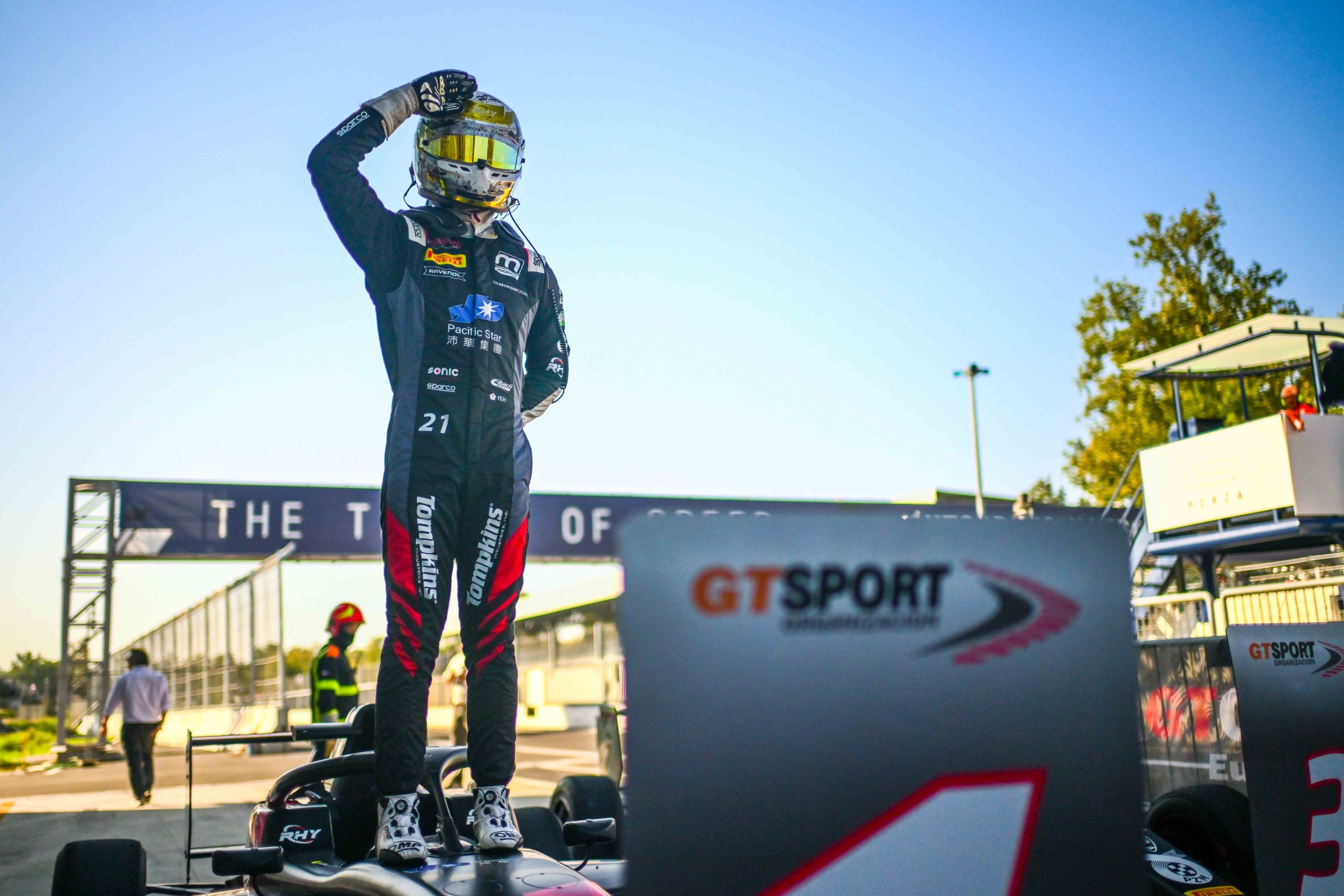
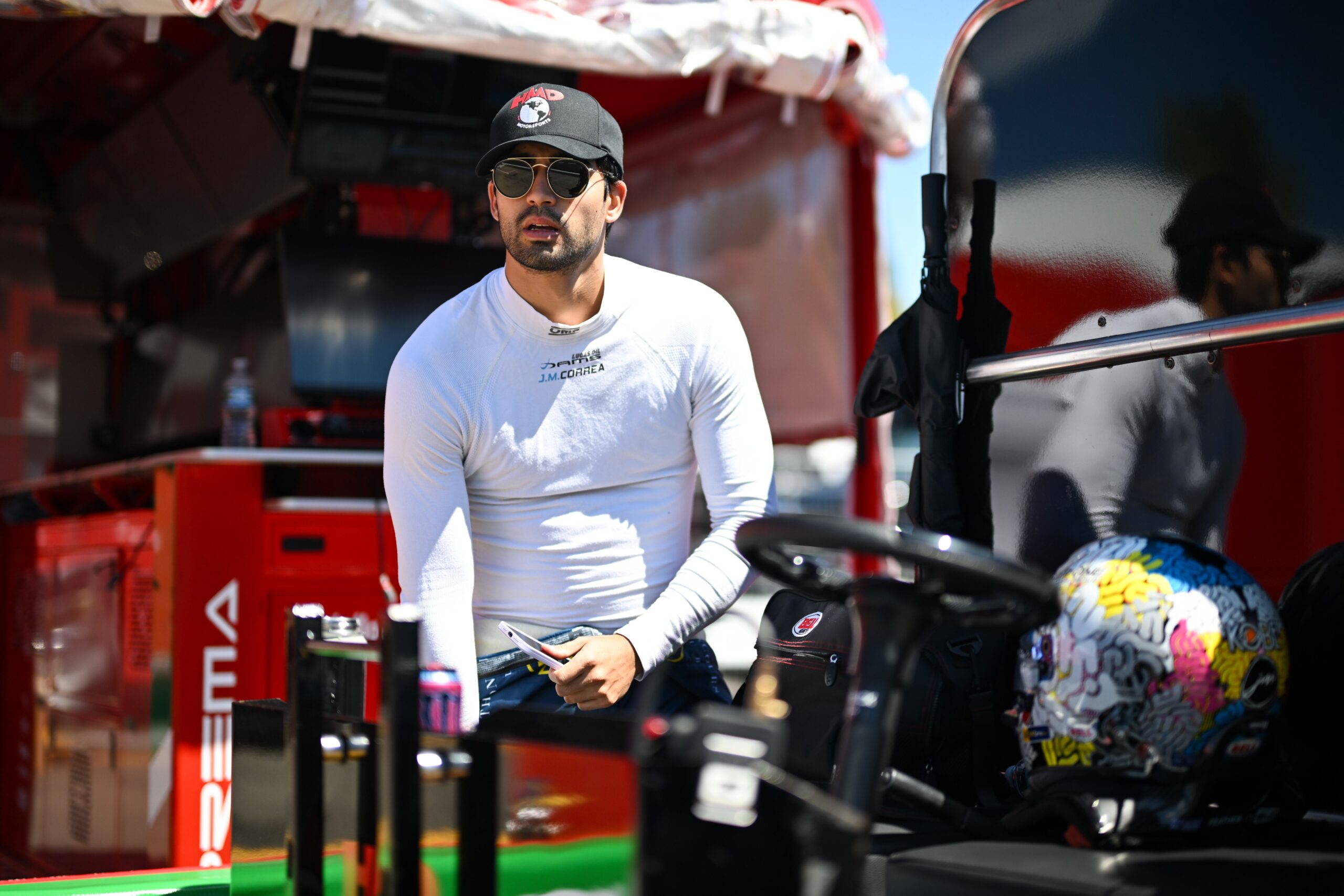
Juan Manuel Correa’s career has demanded more than speed. Across his rise through karting, junior single-seaters, recovery, and return to professional racing, he has needed focus, resilience and an ability to keep moving through difficult periods.
That perseverance has become one of the defining themes of his journey. Correa has faced physical, emotional and professional challenges, yet he has continued to build a career across multiple categories. Now, as he competes at a high level and balances racing with other ambitions, he views motivation through a broader lens.
In an exclusive interview with Pit Debrief, Correa discussed the mental approach that helps him stay driven, the importance of building a dynamic life, and the advice he would give his younger self.
Correa on keeping sight of the bigger picture and his mindset for racing and beyond
For Correa, motivation starts with perspective. While racing requires daily discipline, he believes he performs best when he avoids getting trapped in short-term frustration. Instead, he tries to step back and focus on the wider purpose behind his work.
“I think it’s my personality. And I’m a very big-picture kind of guy, so it’s easy to get caught up in the day-to-day. And I feel like when I do that, that’s when I lose my motivation. It’s like things affect your mood, and sometimes your life maybe feels like it’s just a bit of a cycle and it’s going nowhere.
That mindset has helped Correa stay grounded during a career filled with change. Motorsport often moves quickly, and difficult days can feel overwhelming when a driver judges progress only through immediate results. However, Correa’s approach shows how important it can be to reconnect with a longer-term goal.
“So I have to force myself to step back a bit and be like, ‘what am I really trying to achieve?’ And I’m somebody who always likes to work with a goal.
By keeping that wider objective in mind, Correa gives structure to the sacrifices that racing demands. It allows him to treat setbacks as part of a longer process rather than as permanent obstacles.
That mentality became even more significant after 2019, a year Correa describes as completely life-changing.
A promising future before everything changed
At the time, Correa’s career trajectory appeared extremely promising. Following a Formula 1 test, momentum was building rapidly, and the future seemed full of opportunity. However, within the space of days, everything changed dramatically.
Looking back, Correa sees that period as a reminder of how quickly circumstances can shift, both in motorsport and in life more broadly. One moment, he was preparing for the next step in his career. The next, he was facing a battle that extended far beyond racing.
“Yeah, it was, you know, the year that my life, let’s say, sort of changed. The accident happened about a week after the F1 test, so it was like riding this high of highs. Everything was looking really good for the year after. And then, you know, I think it’s a good representation of what life is like a lot of the time. You don’t know what’s going to happen.”
Rebuilding after the accident
What followed was an incredibly demanding period of recovery. Correa spent months in hospital and then underwent an extensive series of surgeries while trying to process the emotional and physical consequences of the accident. At the same time, he faced the daunting reality of rebuilding his future in professional racing.
“And yeah, the accident happened, and being hospitalised for two months… [I] had to come back to Miami after that to do about a year of surgeries — 20… 28 surgeries or so. The whole process was horrible. It was really tough.
Correa explained that the recovery process stretched far beyond simply healing physically. Returning to competition also meant securing sponsorship, finding opportunities, and proving he could still compete at a high level after such a traumatic experience.
“But also, after, to get back into racing, to be able to get the sponsors again, to be able to get a seat, and most of all, to be able to be competitive again — it was a lot of work.”
How adversity reshaped Correa’s outlook
Although the experience brought immense hardship, Correa also believes it fundamentally changed him as a person. The years that followed forced him to develop resilience, patience, and a different perspective on life and ambition.
At the same time, he still carries the emotional pain of losing Antoine Hubert, whom he considered both a close friend and an exceptional talent with enormous potential in the sport.
“And I’m not the same person that I was before the accident, and I wouldn’t be who I am now if that hadn’t happened. So, in some ways, I wouldn’t change anything that happened, except for the fact of Antoine passing away. That, of course, I would change in a heartbeat. He was a good friend of mine, and he was going to go very far in the sport.”
Even so, Correa now feels genuinely content with where his journey has led him. While he still appreciates Europe and Formula 1, his move towards racing in the United States and IndyCar has given him renewed motivation and happiness.
Importantly, he no longer measures fulfilment solely through the path he originally expected to follow. Instead, he values where he is now and the life he has been able to build after such a difficult chapter.
“But for me, in terms of personal growth and where I’m at, I’m happy with my life now. I’ve pivoted now to the U.S., towards IndyCar, and I couldn’t be happier, to be honest. I love Europe. I love racing out there. I love F1. But I am right where I want to be right now. So everything happens for a reason.”
Life beyond racing keeps Correa motivated
Although racing remains central to Correa’s identity, he no longer defines his motivation through motorsport alone. He has also built interests outside the cockpit, including entrepreneurial projects, which give him new goals and a different kind of energy.
“I have other aspects of my life now that I am working on, not just racing. So I’m a bit of an entrepreneur. So that keeps me motivated. I have my own goals with that. I like combining that and kind of meshing it with my racing side and trying to do both.”
That balance appears important to Correa’s current outlook. Rather than seeing outside interests as distractions, he views them as part of a fuller and more sustainable life. They give him something fresh to pursue while still connecting with his racing career.
“And just overall, I’ve built kind of like a life that is fun and it’s interesting for me, and it’s dynamic. I get to do what I like, and I sacrifice in the things I need to. But yeah, I think—I don’t know—maybe it’s because I’ve been so long just sacrificing for a big goal that it’s just part of who I am now. And that’s how I operate.”
His answer reflects a mature understanding of ambition. Correa still accepts sacrifice, but he has also built a life that keeps him engaged. That combination helps explain how he has maintained focus through such a demanding journey.
The advice Correa would give his younger self
Correa’s path from karting to professional racing has given him a clearer view of what he needed earlier in his career. Looking back, he believes his younger self had the ability required to succeed, but needed more confidence and a stronger understanding of how to show his potential.
“I would tell him that he has what it takes, but he needs to find the best way to showcase that. I think a good confidence boost would have done me well back then.”
That reflection highlights a key challenge in junior racing. Talent matters, but young drivers must also learn how to make decisions, manage pressure and present themselves well. For Correa, that became harder because he listened to too many outside voices. While guidance can help, too much advice can create confusion.
“And then I would give him a few pointers on what are the important things to focus on. I think I, being kind of a hard worker, a perfectionist [that] I was, I listened maybe to too many people, which usually is the opposite for young kids.
He continued, “I listened to too many people. I took input from too many people who had no idea what they were saying. And I think I got lost in certain parts of my career because of that.
That experience ultimately taught him the value of self-trust. While outside input can offer perspective, a driver still needs to recognise which voices matter and which ones can pull them away from their instincts.
“So I would tell him what’s right, what’s wrong, and to trust himself, and do what he thinks is best, because I think I had the right idea from the beginning.”
Correa racing with a mindset shaped by sacrifice and perspective
Correa’s reflections show that motivation does not always come from constant intensity. Instead, his approach depends on perspective, goals and a life that gives him purpose beyond each race weekend. He understands sacrifice because racing has demanded it for years, but he also recognises the need to stay connected to something bigger than daily results.
For his younger self, the message would be simple: trust your ability, focus on the right things, and do not let too many outside voices blur your direction. That advice now reflects the mindset Correa continues to carry through his career.