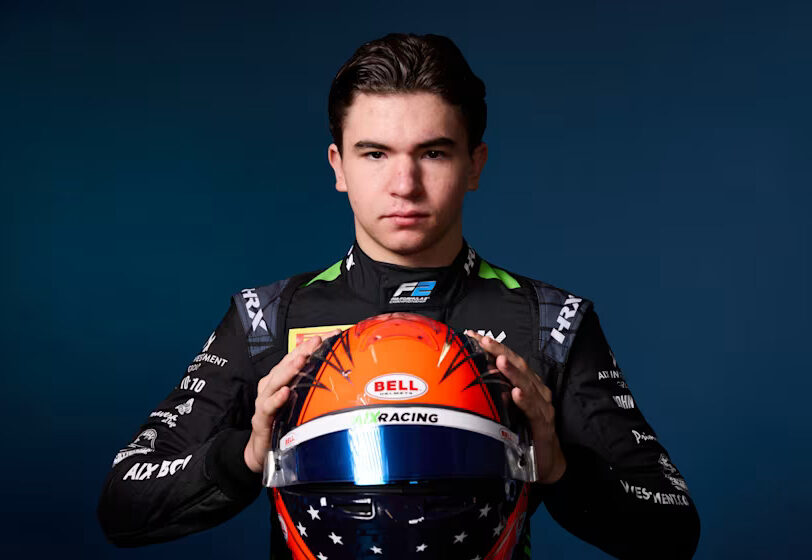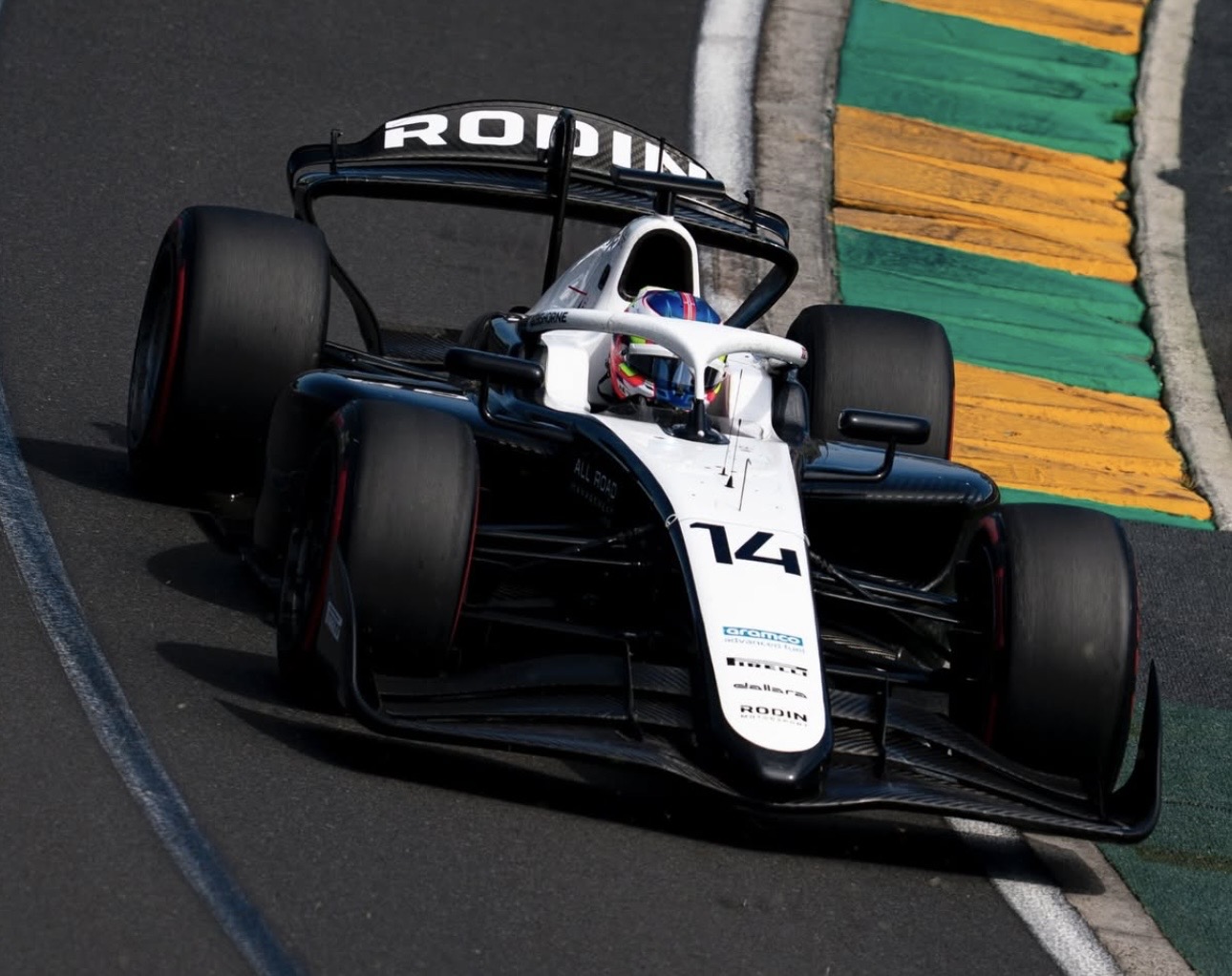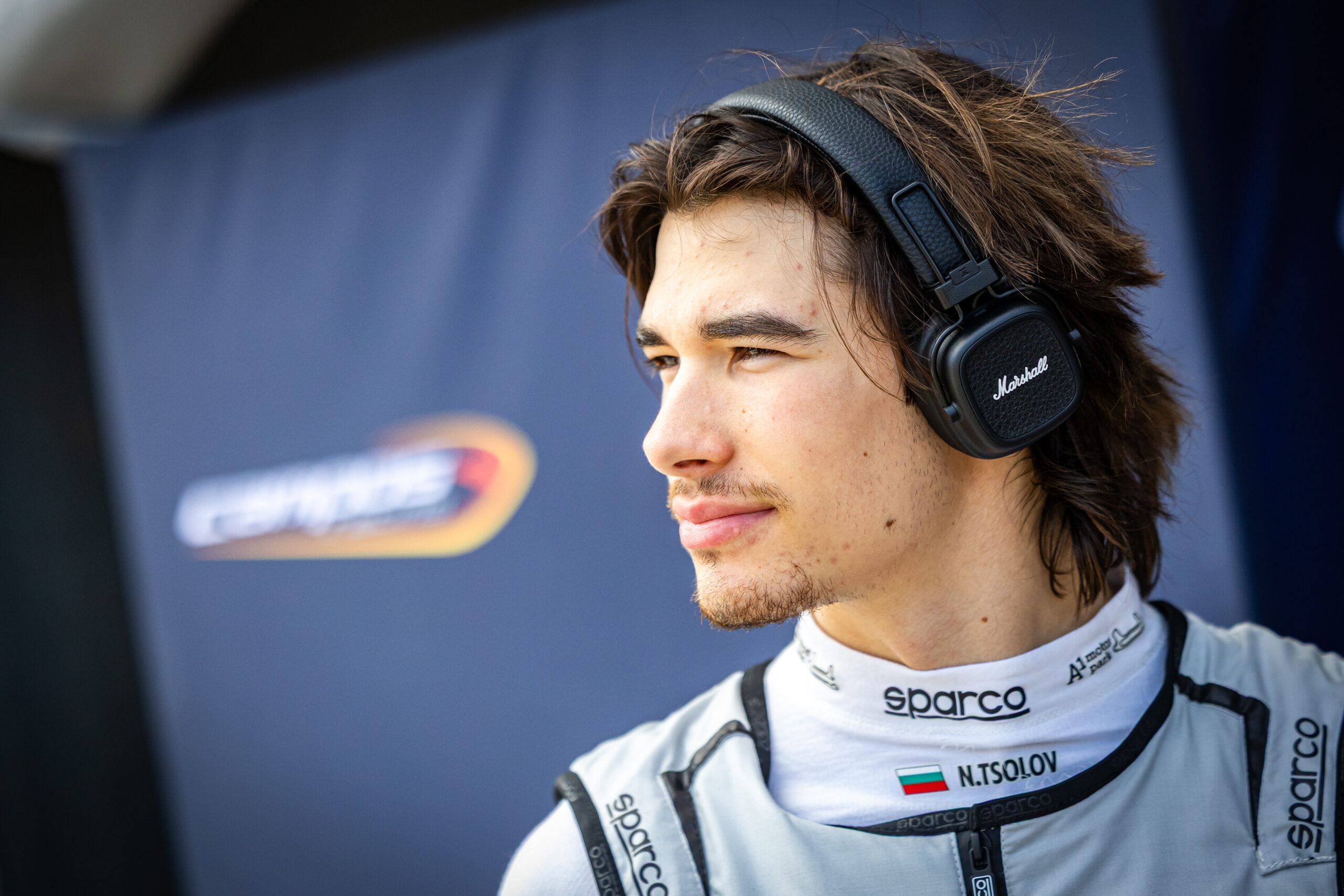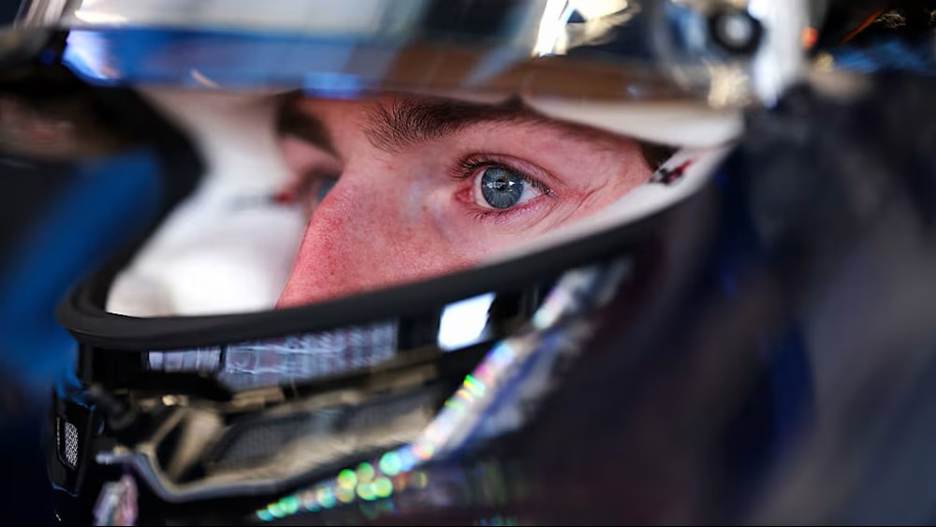
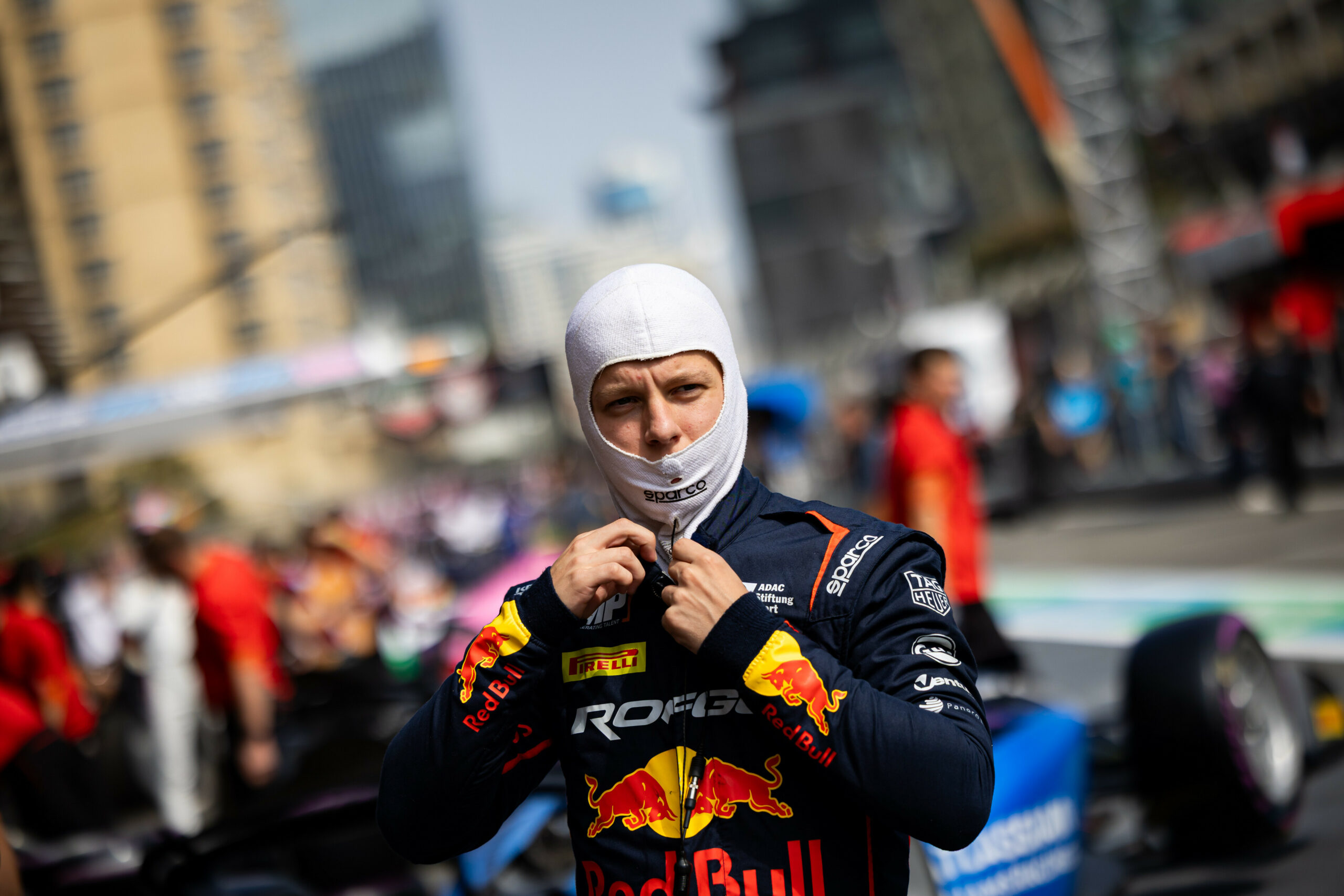
Oliver Goethe entered his first full Formula 2 (F2) campaign in 2025 with high expectations. As a Red Bull Junior driver partnering Richard Verschoor at MP Motorsport, the German racer had momentum from his late-2024 substitute appearances and a strong showing at the 2024 Macau Grand Prix. Yet as the 2025 F2 season unfolded, Goethe’s year became a tale of two halves: early struggles giving way to genuine pace, even as results remained frustratingly elusive.
Pre-season optimism
Confidence radiated from Goethe ahead of the Melbourne opener. His relationship with MP Motorsport stretched back to 2020, creating a foundation of trust and understanding. After replacing Franco Colapinto for the final four rounds of 2024, Goethe had acclimatised to F2 machinery, highlighted by a fourth-place finish in the Lusail Feature Race and a podium at Macau in treacherous wet conditions.
“I’ve been with MP for a few years around my career in Formula 4 and in FRECA,” Goethe explained. “In general, I really love the atmosphere with MP. During the last four rounds, getting the opportunity to step in for Franco [Colapinto], I feel like we’ve done a good job. I feel like I’ve learned a lot for this coming year, and I have confidence in the team that we can do a great result.”
The team’s third-place finish in the 2024 Teams’ Championship with 220.5 points suggested they had the machinery to compete. With veteran teammate Verschoor providing valuable data and experience, all the pieces seemed in place for a successful rookie campaign.

Early season struggles
Reality proved harsher than expectations. Melbourne’s semi-street circuit presented a baptism of fire, with Goethe qualifying 19th. The Sprint yielded no points, while the cancelled Feature Race (due to weather) robbed him of a chance to salvage the weekend.
Bahrain offered a glimmer of hope. After topping Free Practice timesheets, Goethe secured seventh in the Sprint Race, his first points of the F2 2025 season. The Feature saw him finish just outside the points in 11th, but it demonstrated his developing race management capabilities.
Monaco descended into chaos. Track position proved everything, and qualifying outside the top ten condemned Goethe to mid-pack battles. A first-lap collision with Joshua Dürksen in the Sprint brought out the Safety Car, followed by a clash with Victor Martins that earned him a 10-second penalty, dropping him to 12th. The Feature Race salvaged a single point with 10th place, but the weekend highlighted how qualifying struggles were hampering his potential.
“In the first half of the season I was struggling a lot in Qualifying, but the race pace was strong,” Goethe reflected. “However, in Qualifying I was always just outside the top 10, which was very frustrating.”
The breakthrough in Imola
Round 4 at Imola marked a pivotal moment. Goethe finally broke into the top 10 in Qualifying with eighth place, validating that his one-lap pace was improving. Starting third for the Sprint after the reverse grid format should have yielded strong points, but a poor launch dropped him to an eventual 10th-place finish outside the points.
Sunday’s Feature Race showcased Goethe’s racecraft. Despite another difficult start that relegated him to 12th, he carved through the field with controlled aggression and expert tyre management. When the chequered flag fell, he’d climbed to seventh, earning his first Feature Race points of the campaign.
“I feel that I made the most out of the situation and was starting in a strong position for both races,” Goethe said. “Unfortunately, in the races, the starts were really bad, I was losing a lot. We are trying to understand why now on data, so that it doesn’t happen again. But I lost a lot of positions at the start and after that I managed to make those positions back, but who knows how the races could have been if I had a good start.”
The weekend revealed both Goethe’s potential and his Achilles heel. His race pace was genuinely competitive (he was one of few drivers making multiple overtakes), but start line execution remained problematic.
Barcelona proved a reality check, with 13th in Qualifying followed by 18th in the Sprint and 16th in the Feature. The momentum from Imola evaporated quickly.

Promise without results
By the halfway mark at Barcelona, Goethe’s season had produced mixed results at best. Points finishes remained scarce, and he sat outside the championship’s top ten. The pattern was clear: inconsistent qualifying performances left him out of position to capitalise on his strong race pace.
“It’s not gone as good as I would have hoped,” he admitted after Round 6. “There is definitely a lot of positives that were there throughout the season so far, but the results have not come. It’s a shame, especially in the last few rounds. I have been very quick and I have not been able to turn that in to results. So it’s promising, but a bit disappointing and I feel frustrated that I have not been able to show my true potential.”
The turning point in Spa
Spa-Francorchamps in Round 7 represented another step forward. Goethe secured 10th in Qualifying despite going without a slipstream on his final run, a calculated risk that paid off when a red flag could have left him stranded.
“It was a bit scary. Everyone was improving, I could see my name going down and down the leaderboard, but it was good enough for top 10,” he said. “So, I’m really happy with the job I did, it’s a step in the right direction.”
The result meant reverse grid pole for the Sprint Race, his best starting position all season. While the high-speed nature of Spa made leading from Turn 1 challenging, Goethe’s steady qualifying improvement gave him opportunities to fight at the front.
“Feels good to be back in the top 10. It’s a big confidence boost,” he reflected. “In qualifying, we have struggled a lot this year, so to be back in the top 10, we have a lot of opportunities to get some results in the races now.”
Hungary, Monza, and beyond
The second half of the season saw Goethe’s one-lap pace evolve. In five of the last six rounds (excluding Baku), he qualified inside the top 10, a remarkable turnaround from his early-season struggles.
Budapest and Monza delivered top-six qualifying results, demonstrating that the German driver had finally unlocked the F2 car’s potential. However, converting that pace into Sunday results proved elusive, with mechanical issues and racing incidents denying him the points haul his speed deserved.
“There are definitely moments where my confidence has been knocked back,” Goethe admitted. “But it definitely helps to have a team that believes in you and with MP I have that. They know what I am capable of doing, and I know what they are capable of providing.”
Teammate Verschoor’s consistent season provided both a benchmark and a learning opportunity. When asked by Pit Debrief what he’d been able to learn from Verschoor’s experience, Goethe explained, “It definitely helps Richard as a teammate. He’s very experienced. He’s quick as well. So I’ve got good data from him. He’s very knowledgeable with the car.”
The bittersweet pole in Qatar
The penultimate round in Qatar produced Goethe’s most impressive qualifying performance and most crushing disappointment. Under the Lusail floodlights, he topped the session to claim what should have been his maiden F2 pole position.
“I was expecting a good result, to be honest. I feel like slowly this season we have been building momentum,” Goethe said before the penalty was announced. “Over the long break, I was working really hard, so I had a good feeling about this weekend. I was expecting something good. We were quick here last year, so maybe not pole position, but I knew I was capable of it.”

Unlucky penalty
However, a three-place grid penalty for impeding Martinius Stenshorne at Turn 6 dropped him down the order for both races. The pole position evaporated, leaving Goethe to rue what might have been.
“It means a huge amount, really. It has been a tough year. A lot of downs this year,” he’d said, believing the breakthrough had finally arrived. “I am happy for myself, for my family and for the whole team. They have been working really hard to get me back up. I have been working really hard, so it feels really good.”
When asked by Pit Debrief why he performs so well at the Lusail circuit, Goethe admitted he simply feels at one with the layout. “To be honest, I do not know. I really like the track. It is quite a high-speed circuit. Not many low-speed corners. I do not know if that is what I like,” he said.
“But I feel like it is a track that suits me and also suits the team. Both me and Richard were strong here last year. I am not sure where Richard [Verschoor] finishes here. But I feel like we had a good car underneath us today as well. So I am really happy with how it went. I like the track a lot. I guess it suits me.”
Ending on a high note
The season finale at Yas Marina saw Goethe qualify sixth, maintaining his late-season qualifying consistency. While not the pole position he’d achieved (before penalty) in Qatar, it represented solid execution and put him in position to challenge for a podium.
“I’m very happy with how the second half of the season went, maybe not results wise—unfortunately I’ve had quite a lot of bad luck when I had the pace like in Monza and last weekend as well in Qatar,” Goethe reflected. “But overall, the pace has been getting stronger and stronger. The consistency in Qualifying has been there. Apart from in Baku, I think the last five rounds I’ve been in the top 10 in qualifying, which is usually what you need in Formula 2 to fight for the Championship.”
When asked what changed to unlock his qualifying performances, Goethe pointed to methodical work rather than a single breakthrough: “I think it’s just keeping at it, we’ve kept working hard. It’s a tough car to get used to, but I feel like slowly, I’ve gotten better and better, and a lot of it’s to do with confidence.”
“Now we’re in a good position where we’re always up there in Free Practice and in Qualifying. Race pace is always strong. Starts still need a bit of work, but overall, the pace is there to fight for podiums and wins.”

The Red Bull question
Throughout the season, Goethe’s status as a Red Bull Junior added both opportunity and pressure. The Academy’s resources (including simulator access and guidance from experienced engineers) accelerated his development. However, Red Bull’s expectations are unforgiving.
When Dr. Helmut Marko suggested Goethe needed a less easygoing mentality, the driver responded directly: “It’s been positive so far with the Academy. I go for preparation. They help me a lot with simulator training before the races. They have Rocky, who’s a very experienced engineer and I learn a lot from. Yeah, all I can say is recently I’ve been working my butt off with training and with sim and all sorts. So I feel like I’m very ready for this year.”
By mid-season, the reality was stark. “It’s that one step closer to Formula 1,” Goethe acknowledged. “So it is a great feeling, just to be a Red Bull athlete as well, to represent the brand, it’s cool. They gave me the opportunity to prove myself and that is what I am aiming to do. But I need better results, it’s quite as simple as that, without the results you will not making it to Formula 1.”
“This year has not gone my way, it hasn’t gone the way it should have with the potential I have shown. So my goal is to have another year in Formula 2 and to have another chance to really prove myself.”
Unfulfilled potential
Oliver Goethe’s 2025 F2 season finished with him 15th in the standings, a position that barely reflects the genuine pace he displayed in the second half. His best finishes were fourth in the Sprint Races at both Bahrain and Spa, solid results that hinted at podium potential without reaching it.
The numbers tell part of the story, but not all of it. Goethe’s trajectory from qualifying 19th in Melbourne to claiming pole (before penalty) in Qatar represents significant progress. His consistent top-10 qualifying performances in five of the final six rounds demonstrated that he’d cracked the code on extracting one-lap pace from the F2 car.
Goethe’s racecraft developed too. His comeback drives at Imola and elsewhere showed a driver who could manage tyres, execute overtakes, and maintain composure under pressure. The race pace was genuinely competitive with midfield runners, and on occasion, threatened the front-runners.

Lack of results
Yet, the results didn’t materialise. Poor starts cost him repeatedly, leaving track position to recover rather than positions to defend. Bad luck struck at crucial moments: mechanical issues, racing incidents, and penalties (justified or otherwise) prevented points hauls that his pace merited.
The MP Motorsport package proved less competitive than 2024’s form suggested, though not consistently weak enough to excuse mid-table finishes. Verschoor’s more experienced hands extracted better overall results, finishing ninth in the championship, which both highlighted Goethe’s development gap and demonstrated the car’s potential.
For a rookie season, the learning curve was evident. Goethe identified tyre management, brake usage, turbo deployment, and pit strategy as new variables compared to Formula 3. “There are more factors you have to take into account with Formula 2,” he explained early in the season. “I feel like tyre management is a big thing with also the pit stop strategy, with the brakes, with extra power and the turbo.”
By season’s end, he’d mastered many of these elements. The confidence that had eluded him early in the year became his foundation by Abu Dhabi. “It’s quite a tricky car to drive, so if you don’t have the confidence there, and you’re a bit lost with your engineers and what to change with the car, it makes everything more complicated,” he reflected. “Now we’re in a good position where we’re always up there in Free Practice and in Qualifying.”
Looking Ahead
Goethe’s 2025 F2 season can be characterised as promising yet disappointing: a year of clear development that failed to translate into championship points that matched his late-season pace. The fundamentals are there. Racecraft, one-lap speed, tyre management, and team chemistry all improved markedly.
What remains is execution consistency, eliminating poor starts, avoiding penalties, and converting qualifying positions into podiums. For a driver seeking to prove himself worthy of Formula 1 consideration, these aren’t minor details; they’re the difference between being a fast driver and a complete one.