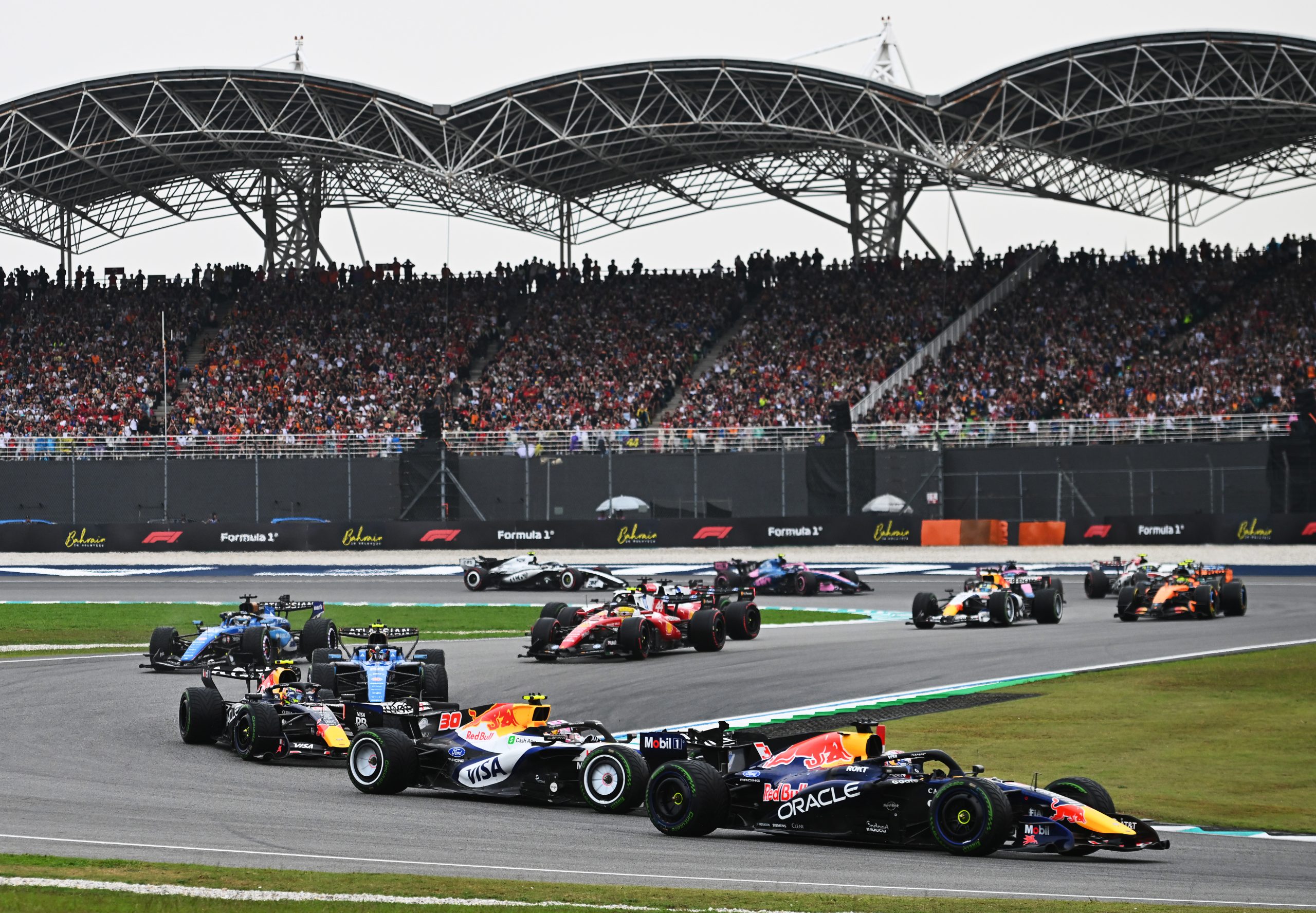
The FIA has completed its review into the Power Unit software bug that caused multiple Formula 1 cars to lose power on the formation lap ahead of the 2026 F1 race in Malaysia.
The race start was suspended after two formation laps when several cars lost power in wet conditions. With multiple cars experiencing power losses on the formation lap, drivers expressed their frustrations after the race, with the race not only delayed by 93 minutes, but all teams requiring software patches for the issue before the race could begin.
FIA identifies cause of formation-lap power losses
The FIA has confirmed that the software bug affected cars running at low engine RPM in certain sectors of Malaysia’s Sepang International Circuit, where the system applied a 250kW power reduction.
According to the governing body, those conditions caused some cars to lose more power than the software intended, and the cars could not recover that power while they remained in those sectors.
The findings have prompted the FIA to change how it manages wet-weather Power Unit settings. The governing body will reinstate the configuration used for the Sepang event at the Singapore GP if similar weather conditions arise.
The FIA will also introduce a further update to the wet-weather software for the United States GP on October 25.
Further F1 software changes planned
The FIA’s review also examined the testing process for the software before its deployment, following questions about whether the configuration had undergone sufficient validation.
The governing body stressed that teams and Power Unit manufacturers tested the software before its introduction. They first conducted simulation exercises to validate the package before carrying out full-scale running during Free Practice 1 sessions at both the Belgian and Dutch Grands Prix.
However, the FIA has now recommended additional measures to strengthen the testing and verification process.
With opportunities to test Power Unit software during Grand Prix weekends limited, the FIA will work alongside teams and Power Unit Manufacturers (PUMs) to improve the validation process through independent assessment and collaborative feedback.
The supplier of Formula 1’s standardised Electronics Control Unit (ECU) will also contribute to the process.
How the FIA resolved the issue
The FIA has also outlined the sequence of events that unfolded after the formation-lap power losses.
The race start procedure was suspended at 15:45 following the two formation laps. Within five minutes, the FIA technical team had identified the cause of the issue and released updated Power Unit software configurations designed to address the problem.
At 16:03, the FIA provided teams with further technical guidance and clarification surrounding the implementation, installation and operation of the revised configurations.
Teams and Power Unit manufacturers completed the integration process by 16:20, with all competitors ready to resume the race approximately 20 minutes later.
The FIA issued the 10-minute signal at 16:22, before the cars left the pit lane at 16:33 to begin the race start procedure.
The FIA will closely monitor the changes as Formula 1 heads into its next wet-weather challenge, with the revised approach set to return in Singapore if similar conditions arise.