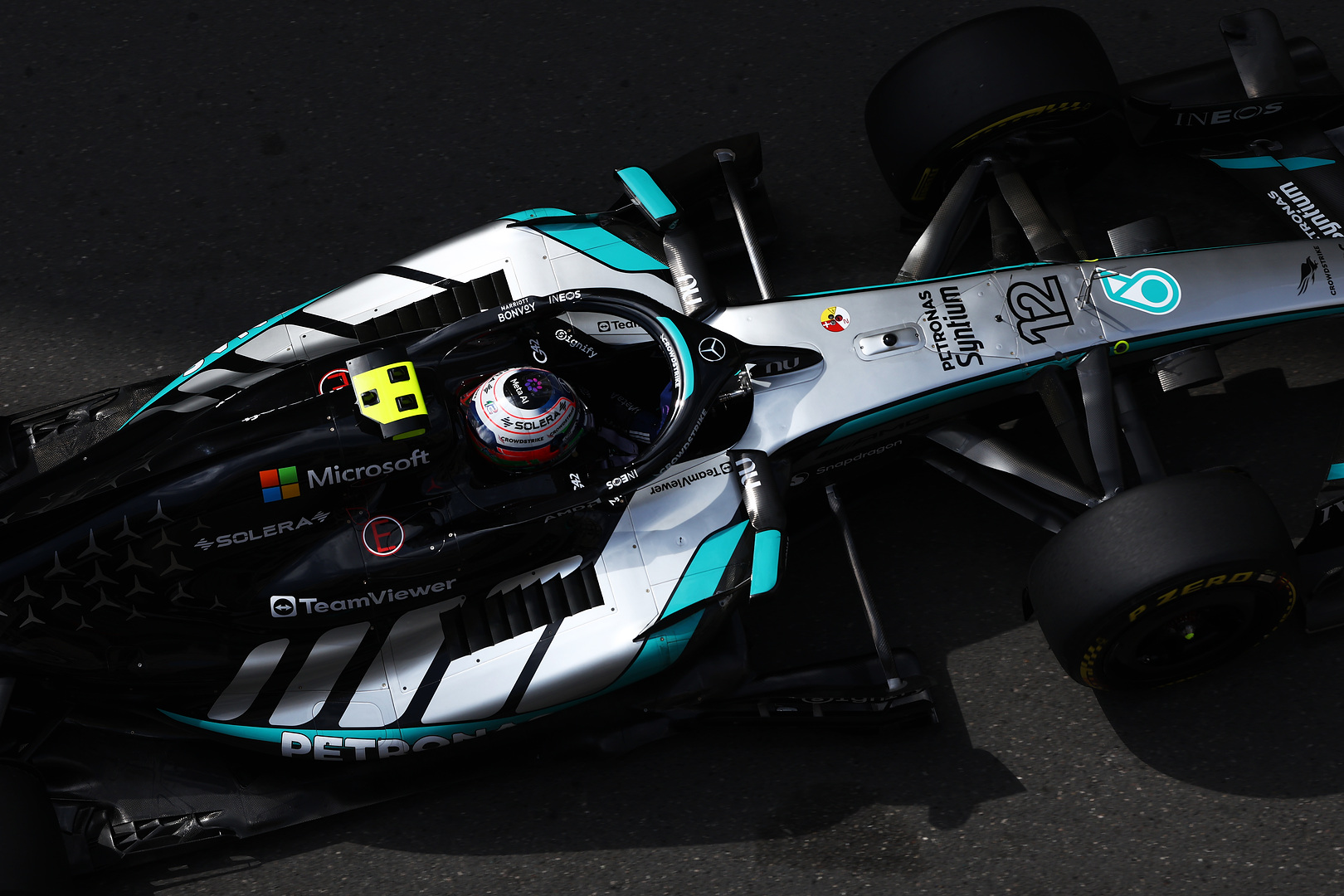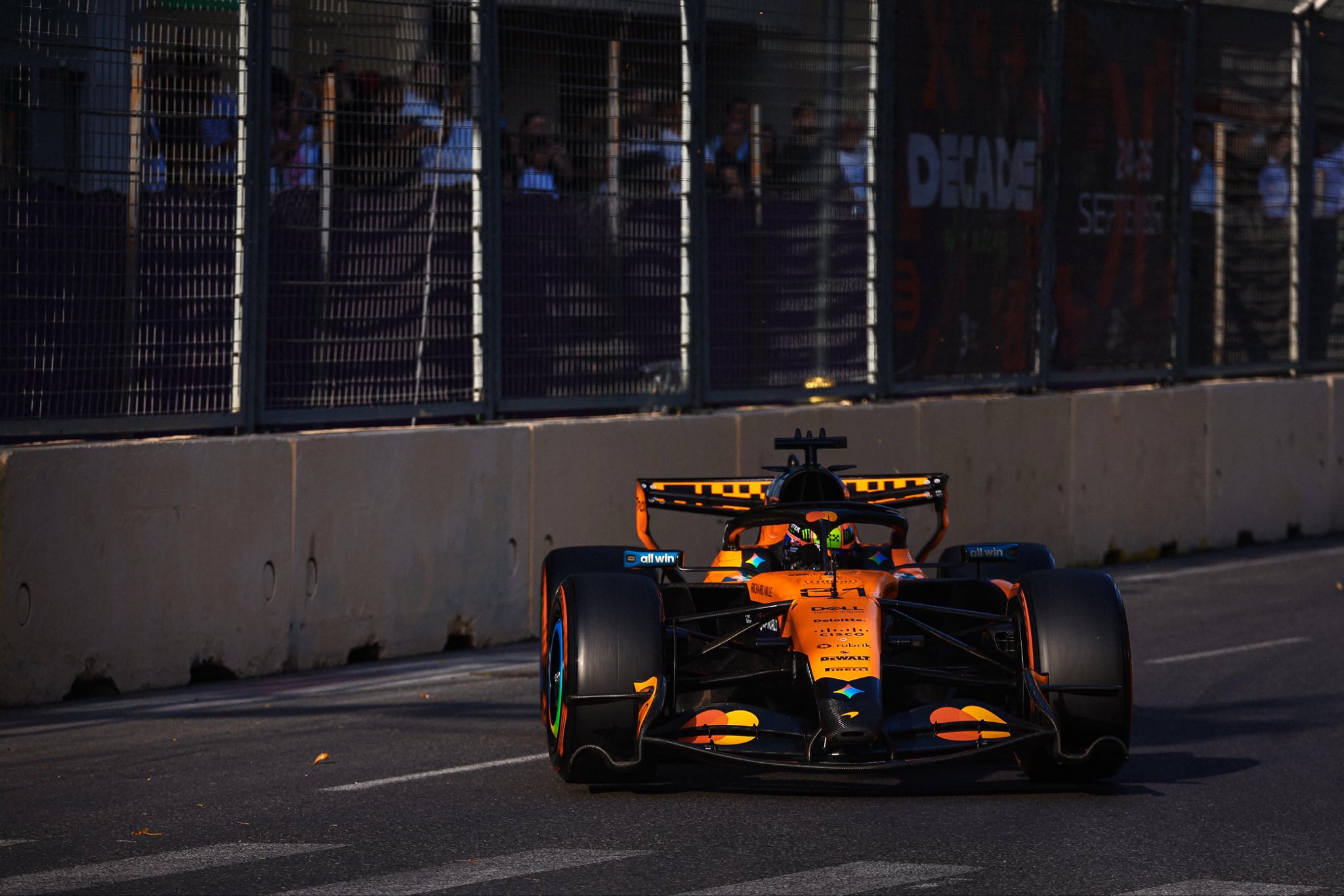
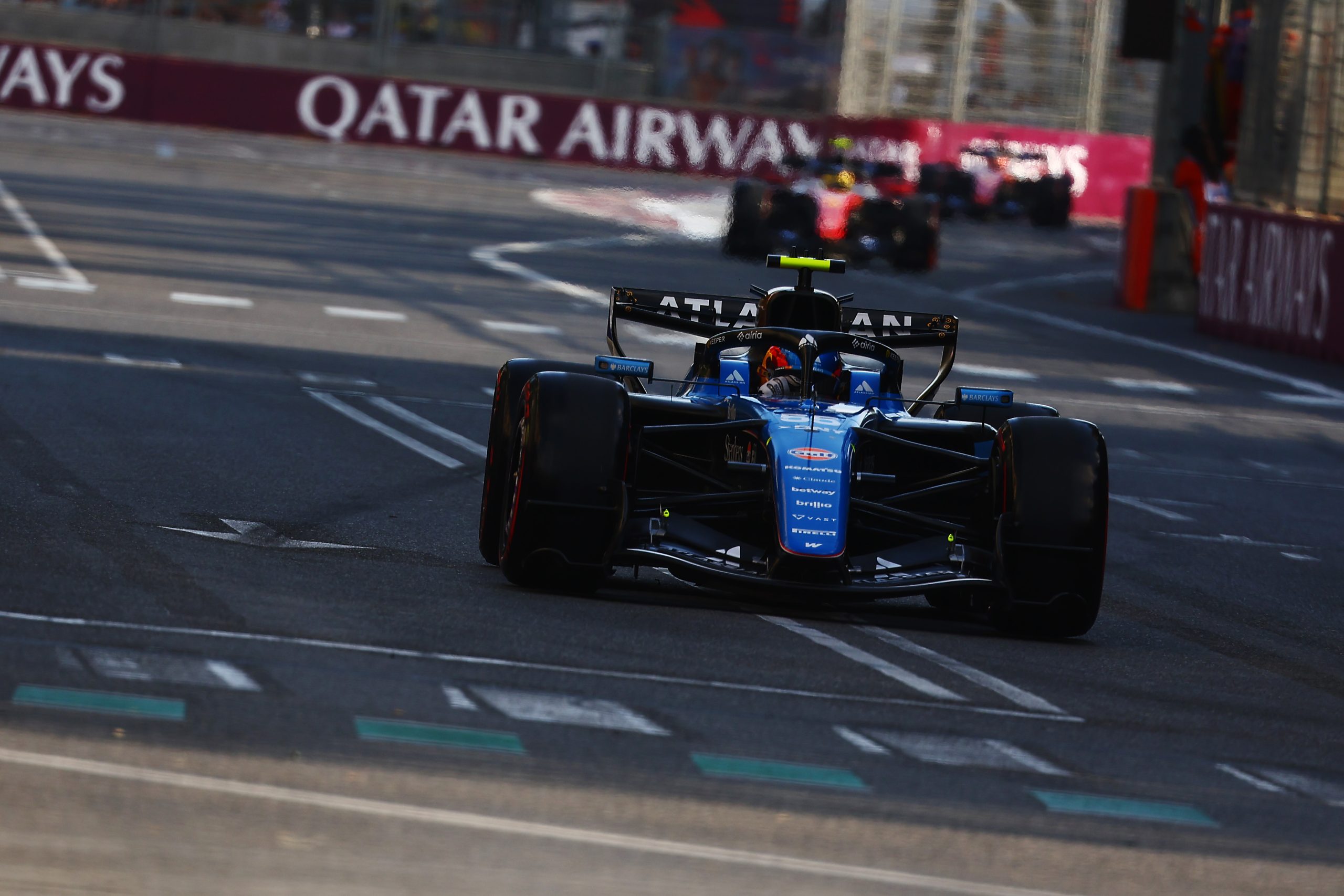
Following the end of qualifying at the 2026 F1 Azerbaijan GP, Cadillac’s Sergio Pérez and Williams’ Carlos Sainz were handed three-place and five-place grid penalties, respectively.
Sergio Pérez handed penalty for impeding Oscar Piastri at 2026 F1 Azerbaijan GP qualifying
Pérez had qualified P20 on the 2026 F1 Azerbaijan GP starting grid. He was then handed a three-place grid penalty for impeding McLaren’s Oscar Piastri. However, the Mexican will still start in P20. Fernando Alonso and Lance Stroll are set to serve a combined 50-place grid penalty after exceeding their permitted power unit component allocations. Both Aston Martins will hence start from the back of the field.
In Q1, during his preparation lap while he was weaving to warm his tyres through Turns 18 to 20, the stewards noted that Pérez received two radio warnings that Piastri was approaching.
As a result, the Australian reported that he had to lift to avoid Pérez. However, Piastri also noted that he did not lose any significant lap time.
Stewards’ verdict
The Stewards heard from the driver of Car 11 (Sergio Perez), the driver of Car 81 (Oscar Piastri), team representatives and reviewed video, timing, telemetry, team radio and in-car video evidence.
PER was on a preparation lap between Turns 19 and 20 while PIA was approaching on a flying lap. PER had received two radio warnings that PIA was approaching. At the relevant point, PIA was travelling at approximately 300 km/h, while PER was travelling at approximately 248 km/h.
The Race Director’s specific traffic-management instructions required a driver on a preparation lap in this section of the circuit to remain on the right-hand side. PER was warming his tyres and, rather than maintaining a predictable line on the right-hand side, his tyre-warming manoeuvre placed him in the path of the approaching PIA. PIA consequently had to come off the throttle.
PER explained that, in the circumstances, he considered that he had no other reasonable option. PIA confirmed that he had to lift because of PER, although he did not consider that he ultimately lost significant lap time as a consequence.
The Stewards considered whether the incident was dangerous but, having reviewed the evidence and heard both drivers, determined that it was not. However, PER had received two warnings of PIA approaching and did not manage his preparation lap in accordance with the specific traffic-management instructions. The fact that PIA was required to lift was sufficient to establish that he had been unnecessarily impeded.
The Stewards therefore determine that PER unnecessarily impeded PIA and apply the standard penalty for impeding during Qualifying.
Carlos Sainz handed penalty for yellow flag breach in qualifying at 2026 F1 Azerbaijan GP
Pérez was not the only driver to receive a post-qualifying penalty, with Williams’ Carlos Sainz also being hit with a grid penalty.
Sainz had initially placed himself P9 on the 2026 F1 Azerbaijan starting grid in qualifying. Making his and Williams’ first Q3 appearance of the 2026 F1 season.
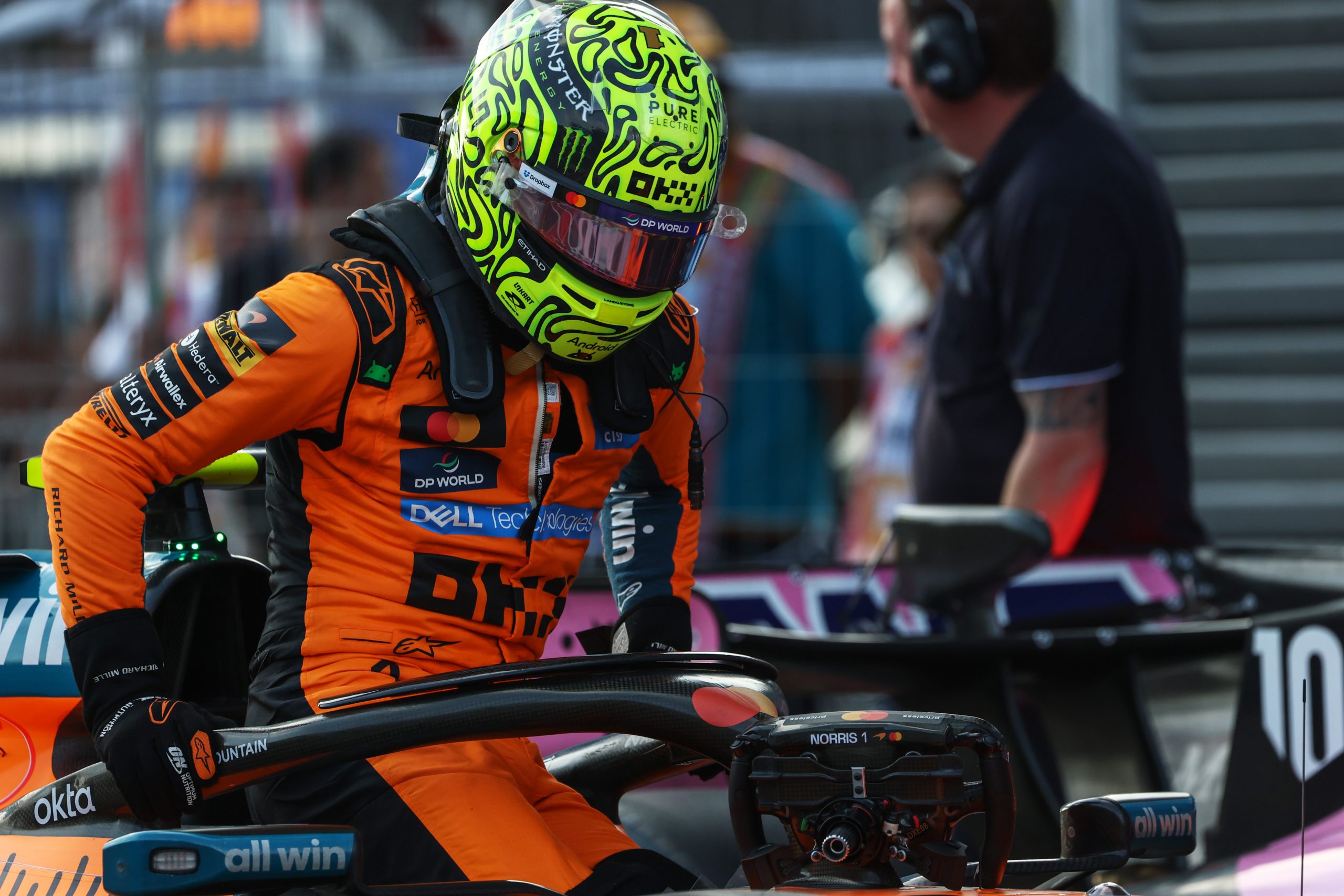
However, following the end of the session, the stewards handed him a five-place grid penalty as he was found guilty of not slowing down for yellow flags in qualifying. The incident occurred in Q3, when Lando Norris brought out the sole yellow flags of Q3 as he locked up in Turn 3 of his final flying lap.
Sainz will instead start the 2026 F1 Azerbaijan GP in P14.
Stewards’ verdict
The Stewards heard from the driver of Car 55 (Carlos Sainz), team representative and reviewed video, timing, telemetry, team radio and in-car video evidence.
Single Yellow Flags were displayed in Marshalling Sectors 4 and 5, in particular after Turn 2 and on the approach to Turn 3. The Yellow indications were clearly visible and SAI had also received a radio warning from the Team: “Yellow ahead, lift.” SAI confirmed at the hearing that he was aware of the Yellow Flag situation.
SAI explained that he intended to demonstrate a reduction in speed across the Yellow area as a whole. He stated that he did not consider it necessary to reduce speed on the straight and instead intended to demonstrate his response when approaching and exiting Turn 3, he considered this to be a “global lift” covering the consecutive Yellow sectors. He further explained that the car which had originally caused the Yellow was no longer in the run-off area and that he expected the Yellow Flags to be withdrawn.
The Stewards did not accept this interpretation. Where consecutive marshalling sectors are subject to Yellow Flag conditions, a driver must demonstrate a significant reaction to reduce speed in each individual Yellow marshalling sector. A reduction in a subsequent sector cannot retrospectively satisfy the requirement applicable to the preceding Yellow sector. The obligation is also not dependent on the driver’s own assessment of whether the original hazard remains present within a particular part of
the Yellow sector.
The telemetry clearly showed that SAI’s reaction to the Yellow occurred only in Marshalling Sector 5. There was no meaningful reduction in speed in Marshalling Sector 4 which could realistically be attributed to a response to the Yellow. Indeed, SAI recorded his fastest time of the session in Marshalling Sector 4.
The Stewards therefore did not accept that the subsequent lift in Marshalling Sector 5 constituted a sufficient “global” response covering both sectors. This is distinguishable from cases where the telemetry demonstrates a significant response to the Yellow even though the overall sector time reduction is relatively small.
In the present case, SAI was aware of the Yellow, had received an explicit warning from the Team, the Yellow indications were clearly visible and the telemetry established that he did not demonstrate the required reaction in Marshalling Sector 4. The Stewards therefore determine that SAI failed to sufficiently reduce speed under the Single Yellow Flag in Marshalling Sector 4.
The standard penalty under the Penalty Guidelines for this infringement during Qualifying is a drop of 5 grid positions.