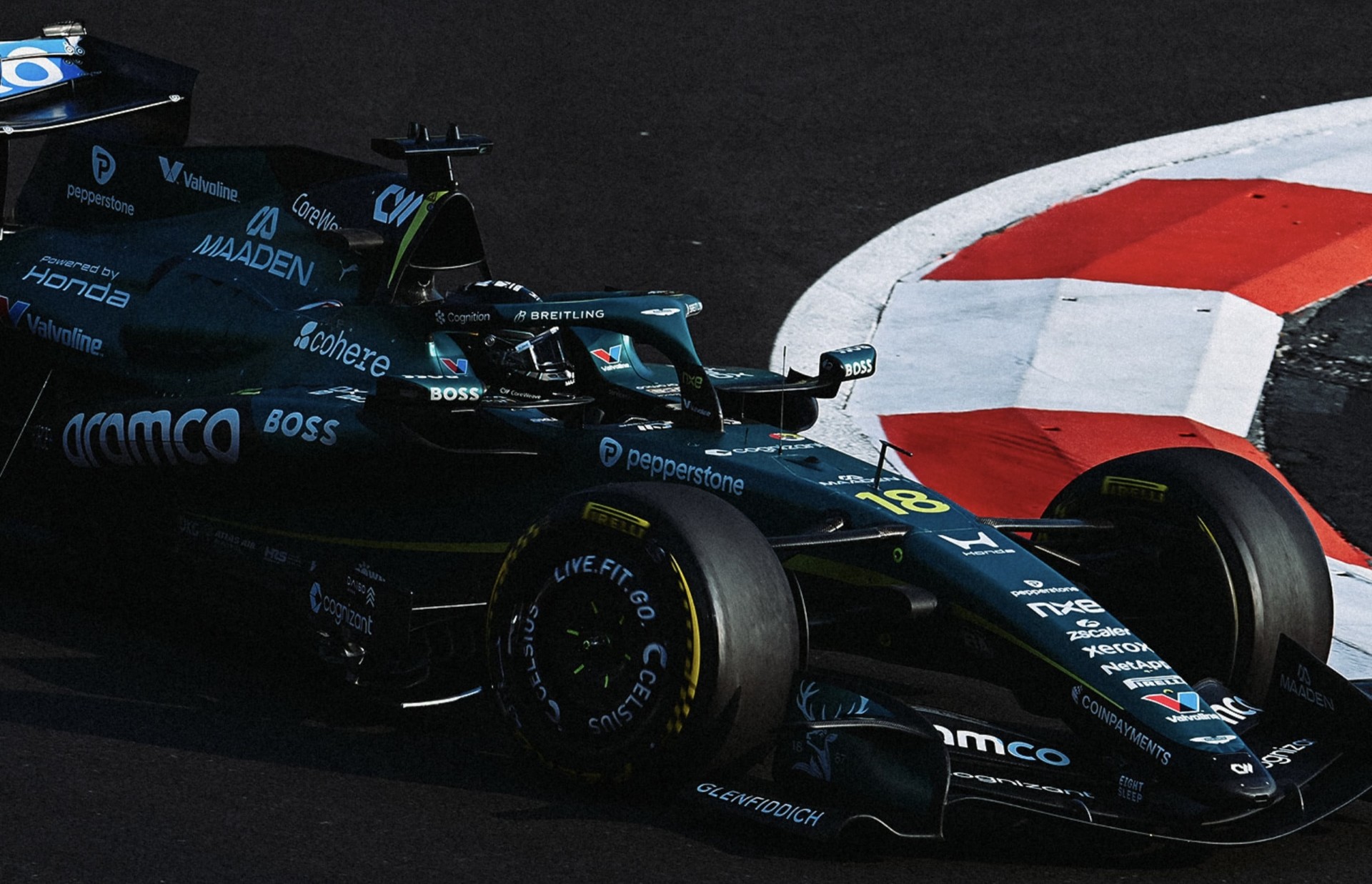
ERS cooling problems ended Fernando Alonso and Lance Stroll’s F1 Mexico City GP, exposing weaknesses Honda must address.
Honda has traced Aston Martin’s Mexico City Grand Prix double retirement to cooling-circuit stress affecting its Energy Recovery System.
Fernando Alonso and Lance Stroll completed just five laps each, despite an early attempt to reduce temperatures.
The failure highlighted a gap between practice performance and reliability under race conditions.
It also left Aston Martin tenth in the Constructors’ Championship, with seven points and four rounds remaining.
Honda identifies ERS cooling weakness in Mexico
Honda’s Trackside General Manager and Chief Engineer, Shintaro Orihara, explained that altitude exposed a weakness under particular operating conditions.
“We found our ERS [Energy Recovery System] cooling circuit got some stress in special circumstances,” he said.
“Racing laps were okay, but in some special circumstance, we have found some stress happen on our circuit, and [as a result] the car stops. That is coming from this high altitude.”
Honda had prepared for Mexico’s demands. However, Orihara acknowledged that its systems remained vulnerable in circumstances beyond routine racing laps.
“Each race we need to learn for next year,” he said.
“For example, here in Mexico we prepared for high altitude conditions, especially turbo lag. Again, 90% racing lap we can manage turbo lag. But in some special circumstance, our ERS management, sometimes you can see weak point. So we should get some robustness for this type of track. That’s our learning point.”
The problem also affected how the power unit responded to its drivers.
“So also driveability, again, in the majority of laps was okay, but some special circumstance driveability is not okay for the driver.”
“We can learn from track learning, and also we can learn from driver feedback. That type of thing we should bring back to factory for next year.”
The requirement is clear. Honda needs a package which remains dependable across the full range of conditions encountered during a weekend.
Why Aston Martin’s double pit stop failed
A double pit stop on lap three was Aston Martin’s attempt to find cooler running conditions.
Releasing both cars from traffic was intended to ease their temperature problems. It failed to prevent either retirement.
Alonso subsequently returned to the garage. Stroll continued before receiving instructions to park on track.
For Alonso, seeing his team-mate enter the pits confirmed that the problem extended beyond his own car.
“I think they were concerned about something already, because when I saw Lance coming as well, I knew that it was a shared problem, between us.”
The intervention followed troubled starts and instructions for both drivers to lift early. Alonso also reported insufficient power off the line.
Pre-race component replacements had offered no protection. Alonso received a replacement MGU-K, while Stroll’s car underwent several power-unit element changes.
“Mexico always provides a very big challenge for the power units and things like that,” Alonso said.
“So yeah, even with that, seems that it was not enough, so we had to retire the car. We need to understand.”
Alonso and Krack assess Aston Martin’s practice promise
Alonso’s approximately 84 practice laps made the subsequent failures particularly frustrating.
His pace, especially during FP2, had suggested a more competitive weekend was possible.
However, an MGU-K cooling problem restricted him to one Q1 run. The race then provided even less opportunity.
“Quali and the race was very frustrating, because free practice was fine. We did a lot of laps in FP1, FP2, and FP3 as well, and when we got to the moment of truth, quali and race, we didn’t manage to do enough laps.”
Orihara explained why the practice mileage had not ruled out further problems.
“That problem happened in some special circumstance, so 80% or 90% is okay [except] in some special circumstance, and that appeared today, and also yesterday.”
Chief Trackside Officer Mike Krack also stressed that the promising pace had always come with reservations.
“We always need to analyse very carefully, how does it come together?” he said.
“It certainly was encouraging, but it was also concerning from the simple point that cooling was a challenge from the beginning, and that’s something that carried also over the whole weekend.”
The resurfaced sections provided encouraging grip. Other aspects of the package remained under pressure.
“Our biggest challenge coming here was the impact of altitude, temperature, on cooling, on driveability, on grip.”
Alonso’s assessment of the power-unit preparation was more pointed.
“I think the challenge with the altitude and things like that probably was underestimated by the power unit.”
Together, those observations explain why practice speed offered an incomplete picture.
Aston Martin could demonstrate performance, but could not sustain the conditions needed to exploit it.
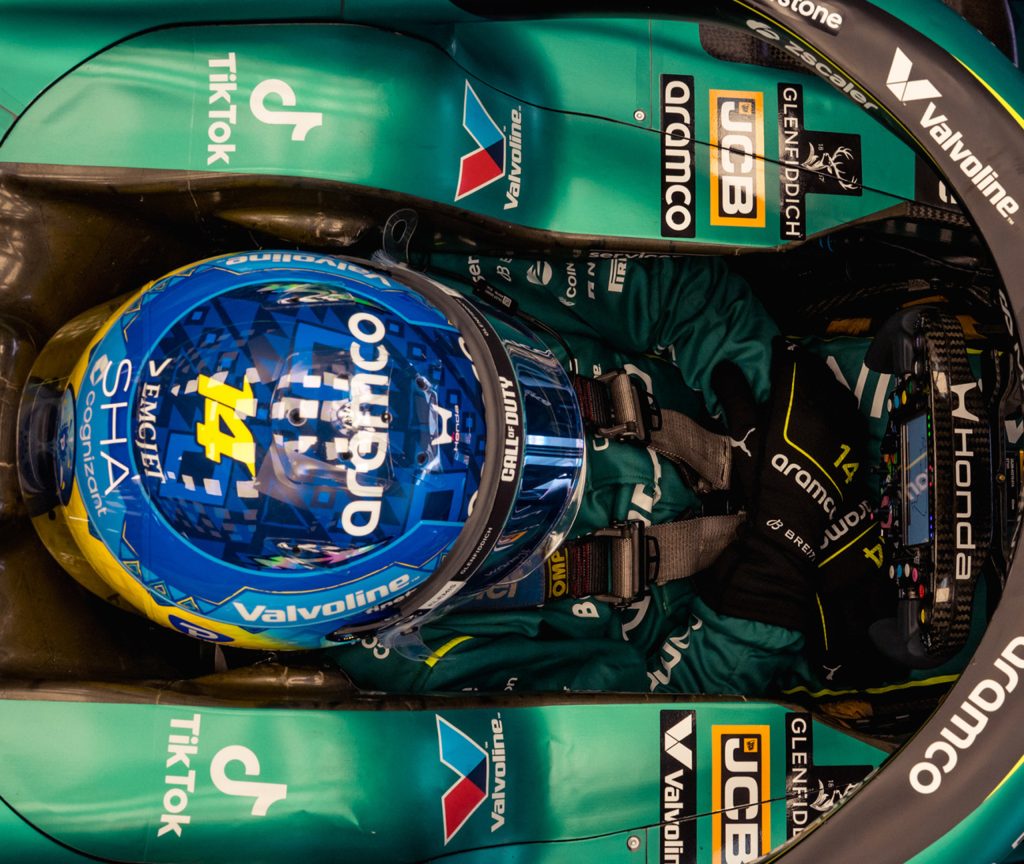
Alonso backs Aston Martin and Honda’s 2027 recovery
The immediate disappointment has not changed Alonso’s public support for the partnership.
“I mean, we are all together on this,” he said.
“Very tough first season for the team. But I think as I said, days like today there are hard lessons, but we are learning. I think the whole power unit department is aware of the problems and the issues.”
His confidence rests partly on Honda’s next power unit, alongside progress with Aston Martin’s chassis.
“Completely new engine next year, currently testing at the dyno. So yeah, I have faith. I have trust in next year because it’s a completely new project, and the car is really going in the right direction, the chassis side.”
“Obviously it’s difficult to say in moments like today, but we all have high hopes for next year. And we still believe that we can fix a lot of the things.”
Mexico has supplied another set of problems for that development programme to address. It also seems to have reinforced the immediate cost of unreliable running. Meanwhile, Aston Martin remains five points behind Williams, with Cadillac the only team below it.
Encouraging pace has offered the team a foundation to build on. However, turning it into completed races remains the priority.