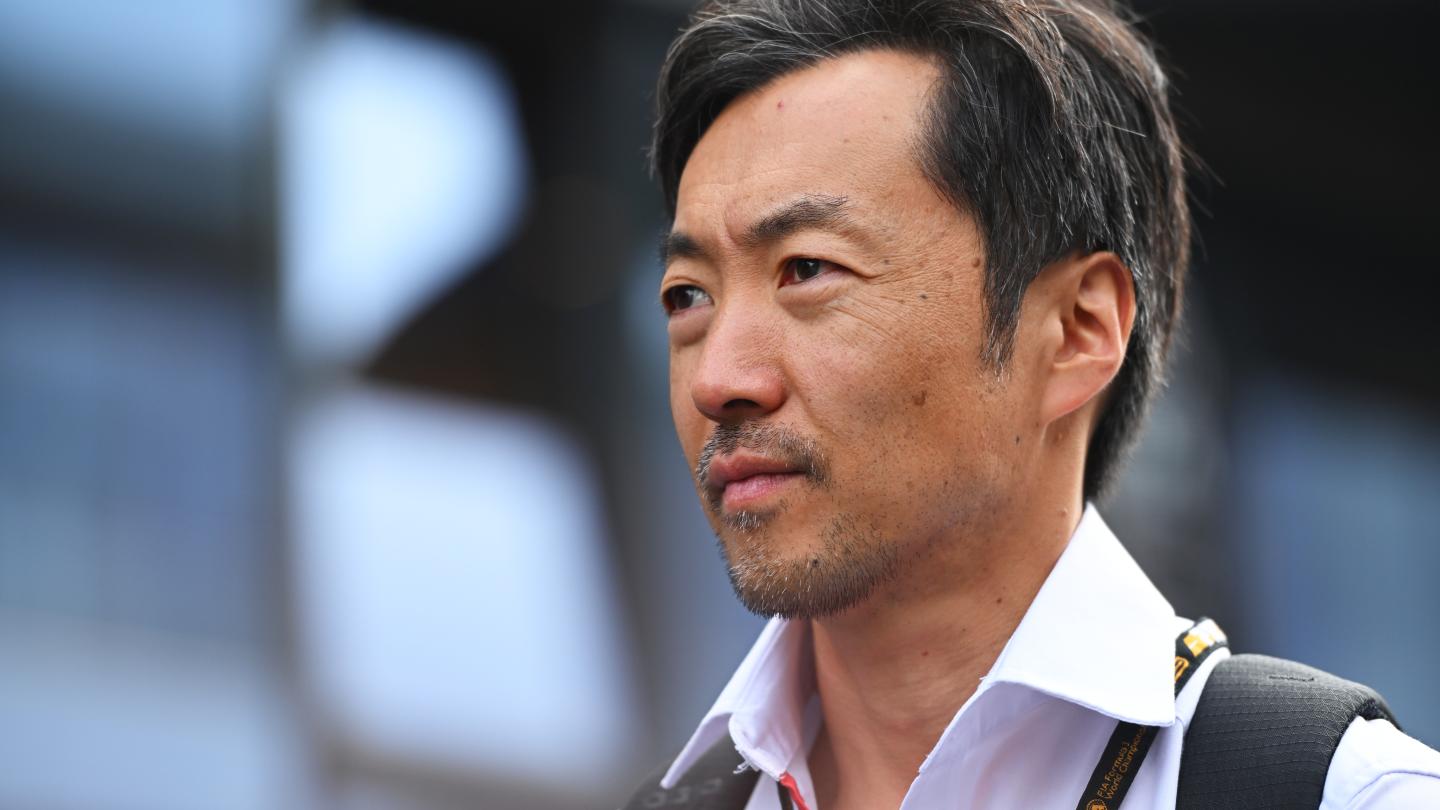
Ayao Komatsu and Haas will head into the 2026 F1 season facing a huge challenge as the smallest team in the sport.
The biggest regulation changes in F1 history
The Japanese engineer, Haas team principal since 2024 and in the sport for over two decades, is facing into the biggest changes ever seen as F1 goes bold and brave for 2026. With a complete overhaul to the engines and aerodynamics, it’s a massive test heading into the new season.
In a pre-season Q&A released by Haas following the unveiling of the VF-26 livery, Ayao Komatsu talked about the changes, the growth and mentality of the team, plus responding to setbacks as happened following the Australia nightmare last year.
“On track we have this huge regulation change, both on the PU and aerodynamics side, the biggest in 22 or 23 years of me being in Formula 1, I don’t remember a change this big. It’s hugely exciting, but at the same time it’s very, very nerve-wracking.
“Away from track, look at what we’ve achieved over the last couple of years – we’ve grown as a team. Not just in numbers, but in terms of mentality, mindset, and how we go racing. I feel like we’re progressing our journey very, very well. It’s different to have something already established and, let’s say, adjusting it to new regulations.
“We’re growing as a team in a pretty aggressive way, and at the same time, we’re tackling these brand new regulations. It’s a huge challenge, but we’ve already shown from what happened in Melbourne last year how we recovered from that, and we’ve haven’t stopped improving since.”
Ayao Komatsu says 2026 F1 pre-season the hardest for Haas in their history
2026 marks 10 years for Haas in Formula One. Last season saw the team achieve their second highest points scoring finish in history. They also equalled their best result as Ollie Bearman bagged P4 in Mexico City.
However, 2025 was a case of trying to have a good season whilst balancing what was to come in 2026.
The former Renault/Lotus and BAR engineer explained the huge mountain of work ahead of them and the scale of the task for every team before the Australian GP. Nonetheless, learning and adapting quickly will be key.
Unsurprisingly, Komatsu explained it has and continues to be the toughest pre-season Haas have ever faced.
“I would say so, especially for our size. The new regulations mean it’s financially challenging and regarding resources, everyone knows we’re still the smallest team. It’s a huge challenge, and as Team Principal, the responsibility is bigger, ensuring that this team is equipped to tackle this massive regulation change.
“I don’t think any team, even the biggest, is going to say they’re fully equipped to tackle this, however for us, the challenge is bigger.
“We need to focus on what we’ve got, what we’re good at, recognize our weaknesses but play to our strengths, and continue learning. We’ve got to learn pretty fast with these new regulations.
“There will be surprises once everyone is up and running, for sure, and it’s going to be about sticking together, reacting, and adapting as quickly as possible.”
Different cars in the first test vs Australia
As Fred Vasseur previously stated, expect to see very different cars in Barcelona compared to the Australian GP.
Facing into such huge regulation changes and with over a month between the test in Spain and round 1 at Albert Park, the Japanese engineer agreed with the Frenchman.
“The car everyone will see in Barcelona won’t be the car that races in Australia, and I think that will be across the board, because it’s simply too early.
“It’s different perhaps having one test two weeks before the first race, but with over a month before the first race, teams won’t stop wind tunnel development. Hence, the cars testing in Barcelona, and even the first week of testing in Bahrain will be less mature compared to what’s built in Australia for the first race.”
Komatsu outlined that the big changes will naturally come on the aero side as the weeks count down toward Melbourne for the 2026 F1 season, although the big test of PU reliability will also be a factor at round 1.
Alongside that, how to use energy will require plenty of learning through pre-season testing. A big contrast in circuits between Barcelona and Bahrain will help them significantly.
“Between Barcelona shakedown week and the final Bahrain test, you will see very different cars across the grid focused on their aero package, because on the PU side of things, the hardware is pretty much set.
“How we’re going to use that PU, that’s the biggest thing. In Barcelona, everybody is going to be focused on how best to optimize energy usage, and that needs to develop very quickly for everyone.”