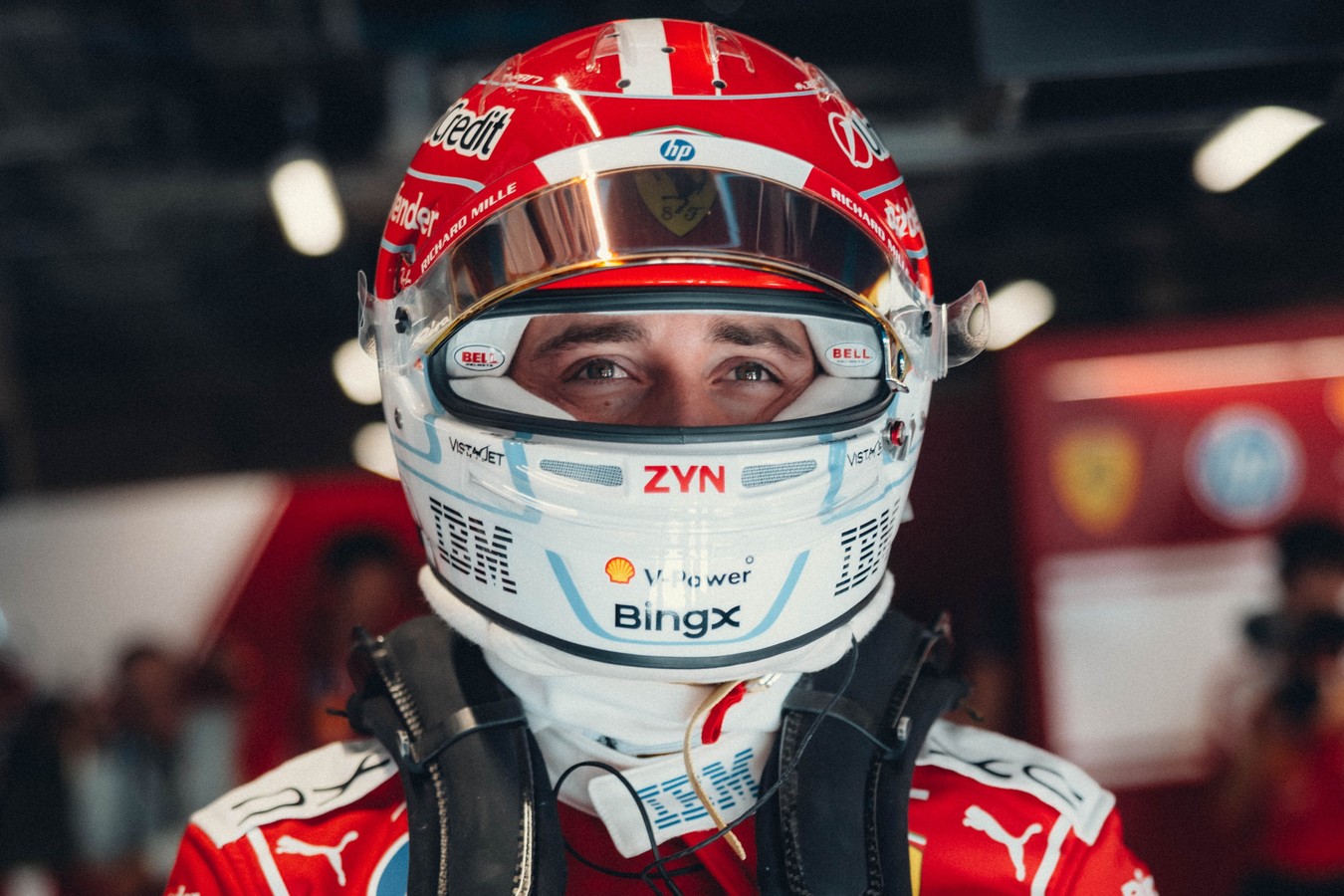
Ferrari F1 driver Charles Leclerc opened up about how his race unfolded, their ongoing struggles in qualifying, and whether the alternative H-S one-stopper was the right strategy following his fourth-place finish at the 2026 Spanish GP on Sunday.
Given the Monégasque’s massive shunt in Italy, the Scuderia opted to use the older ADUO 1 power unit as a precaution in F1’s inaugural event at Madring. As a result, he only managed to set the fifth-fastest time in qualifying—0.006 seconds behind teammate Lewis Hamilton.
Opting for the alternative strategy, Leclerc started the race on the hardest compound. He moved up to fourth following Hamilton’s retirement and then found himself in the lead when the drivers ahead of him boxed to take advantage of the VSC triggered by Lance Stroll.
Ferrari decided to extend Leclerc’s stint on the hard tyres in order to make the most of any potential neutralisation in the remaining laps of the race. However, luck didn’t favour them, and the 28-year-old eventually pitted for softs at the end of Lap 48.
Leclerc ultimately managed to hold off George Russell and came home in P4. He sits fifth in the Drivers’ standings, 19 points adrift of Lando Norris in fourth.
Leclerc talks about the lack of radio chatter and his pace at the 2026 Spanish GP
Speaking in the print media pen afterwards, Charles Leclerc touched on why he preferred not to converse with his race engineer too much during the 57-lap F1 race. While not revealing any details on why the SF-26 struggled for pace on the softs, he admitted that their pace on the hardest compound was robust.
Leclerc added that his P4 finish at the 2026 Spanish GP was essentially him suffering the consequences of a relatively suboptimal qualifying at a track where overtakes were scarce.
“Yeah, I mean obviously Bryan [Bozzi] and I didn’t speak too much during the race because on a track like this I just wanted to have as little communication as possible. But at one point I just checked to understand exactly what we were fighting for because I didn’t really know inside the car.
“But yeah, at the end of the day, I think the pace was quite strong on the hard. On the soft at the end, I couldn’t really push for other reasons, but the hard stint was a good one.
“Eventually where we are paying the price, it’s our qualifying pace. Because when you are starting further away then you get to the race, and it’s very difficult to make up those positions.”
Asked if Hamilton could’ve let him by sooner when he started encountering brake issues, Leclerc maintained that his teammate hadn’t slowed him down and that the timing of the swap had no impact on the outcome of his race.
“No, I mean he did it very, very quickly obviously, and I wasn’t losing so much time because obviously with the brake problems he was kind of cutting the corners. So, he didn’t hold me up and wouldn’t have changed anything in my race.”
Why the SF-26 struggles in qualifying
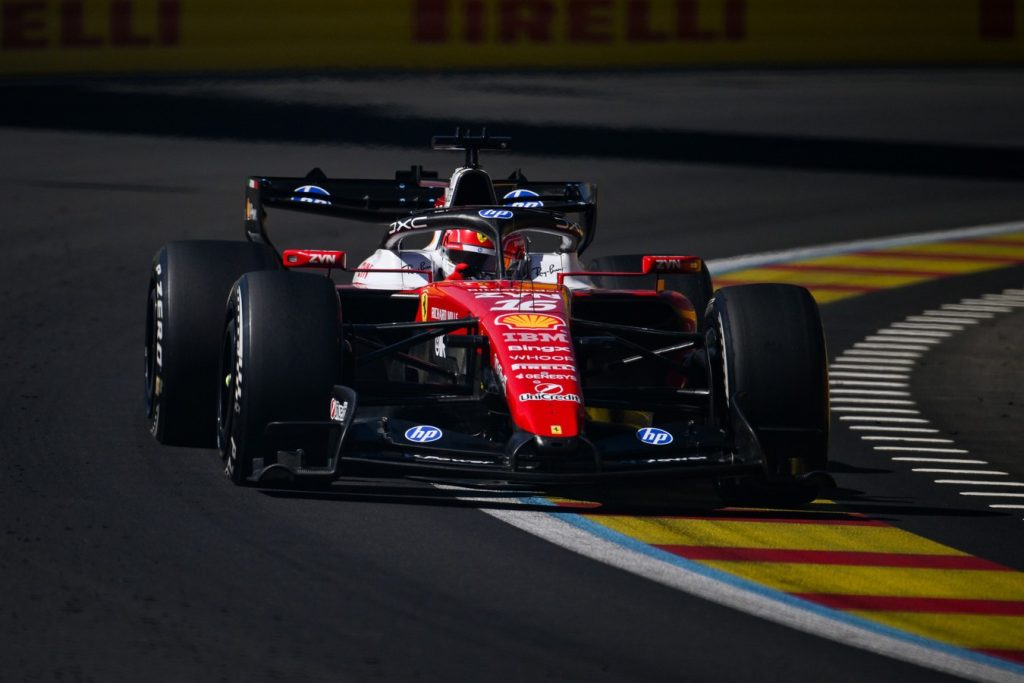
With regard to whether Ferrari’s struggles over a flying lap stem from their inability to get the tyres into the right operating window, Charles Leclerc agreed with the assessment. However, he also claimed these problems are not limited to the Maranello-based squad and that the SF-26 is simply stronger over a race distance than in qualifying.
Emphasising McLaren’s one-lap performance that saw Norris clinch the pole position for the 2026 Spanish GP, Leclerc reckoned that Ferrari’s underperformance in qualifying has been a chronic issue that compromises their race weekends this season.
“Yes, but I really don’t think we are worse than the others. I just think that generally our car is just a little bit weaker in qualifying than it is in the race, with lower fuel when you’ve got to really attack the kerbs.
“Particularly yesterday, McLaren was very, very strong, and we were a bit on the wrong side of things on that. So, we paid the price this weekend probably because of this. But as a whole, I always feel like we are a bit on the back foot in quali.”
What Ferrari need to do to achieve better results in the races
As to the superb pace he demonstrated while nursing his hard tyres for 48 laps at the 2026 Spanish GP and whether remedying their shortcomings in qualifying would allow them to contend for better positions in the race, Charles Leclerc responded, “For sure.”
The Monte Carlo native drew attention to how inconsistencies in deployment continue to undermine Ferrari’s chances in qualifying. At the same time, he admitted that there’s no magic bullet that would immediately unlock the SF-26’s full potential over a single lap.
Nonetheless, Leclerc insisted that the Italian outfit is looking for potential solutions and that making even a little progress on the Saturdays would amplify their chances to secure a bigger haul of points on the Sundays.
“I think our car is a strong race car. But again, we just need to try and understand how to unlock more performance in qualifying.
“We know that deployment is even more of a struggle, I feel, on the Saturday than on the Sunday. And for that, we don’t have any quick fixes.
“But whatever we can do to try and gain a bit more performance on the Saturday will be very helpful for our race result.”
Whether Leclerc’s strategy for the 2026 Spanish GP was the right one
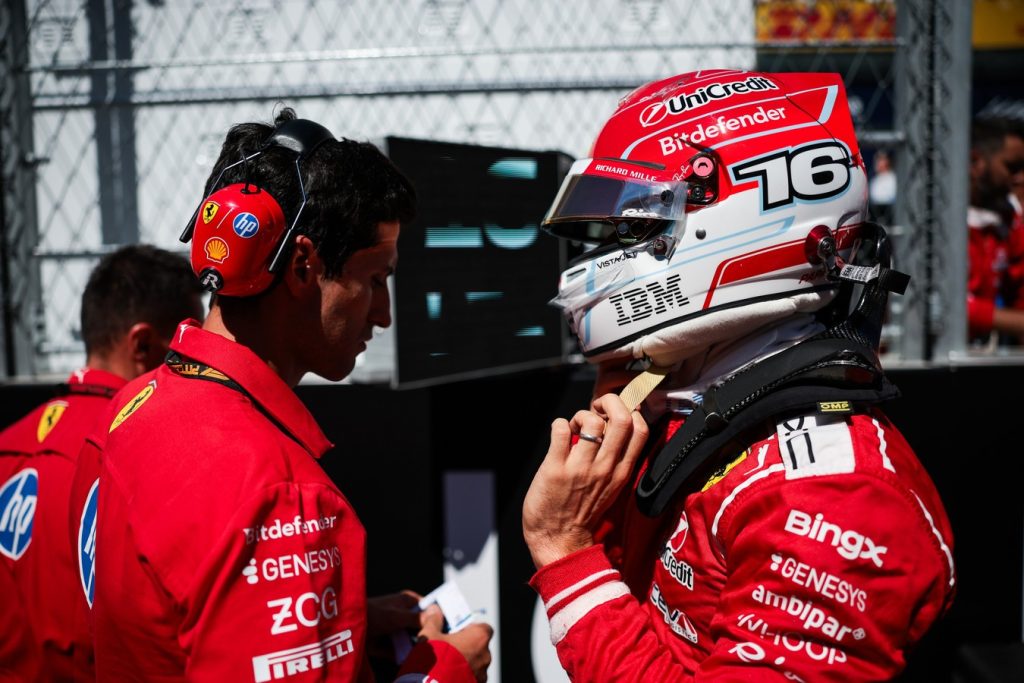
With respect to the H-S strategy he executed in Sunday’s Spanish GP and whether there were any other options on the table, Charles Leclerc maintained that opting for the alternative plan was the right choice.
The nine-time F1 race winner explained that starting on the soft tyres would have limited his flexibility and left him stuck behind the frontrunners anyway given the lack of overtaking opportunities at Madring. Even though the gamble didn’t play in their favour in the end, he reiterated that extending his first stint for a potential Safety Car intervention was the sensible decision.
“Yeah, we could have done many different things, but I think the best thing for us today was what we did.
“If I had to do the race again, I would do exactly the same thing because starting on the soft at the beginning wouldn’t have given me the opportunity to do anything special. I would have ended up in the same strategy as the guys in front of me and wouldn’t have been very helpful considering there was no overtakes.
“So, the hard-soft was the right strategy and waiting for the Safety Car at the end was also the right thing to do, but unfortunately it never came.”