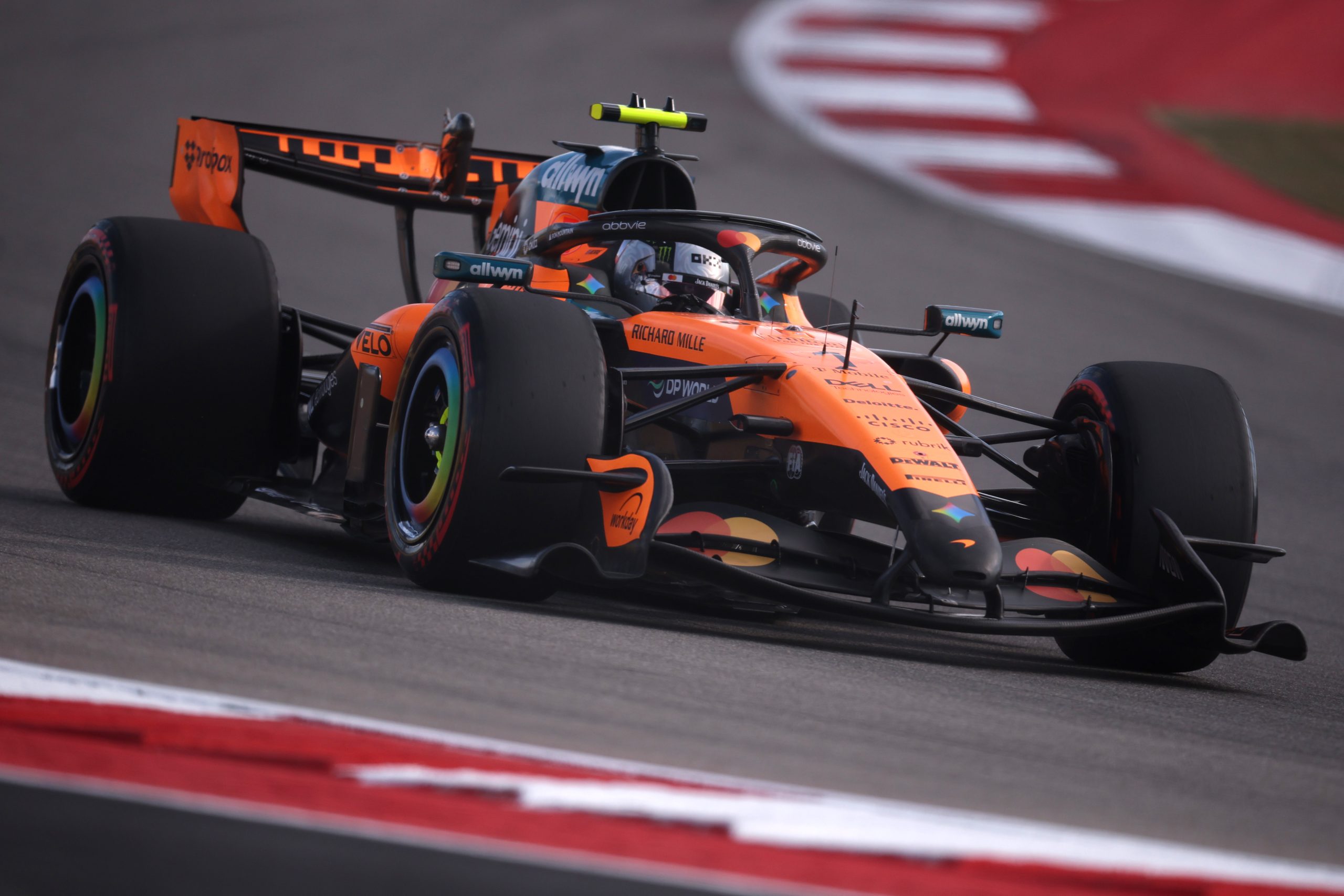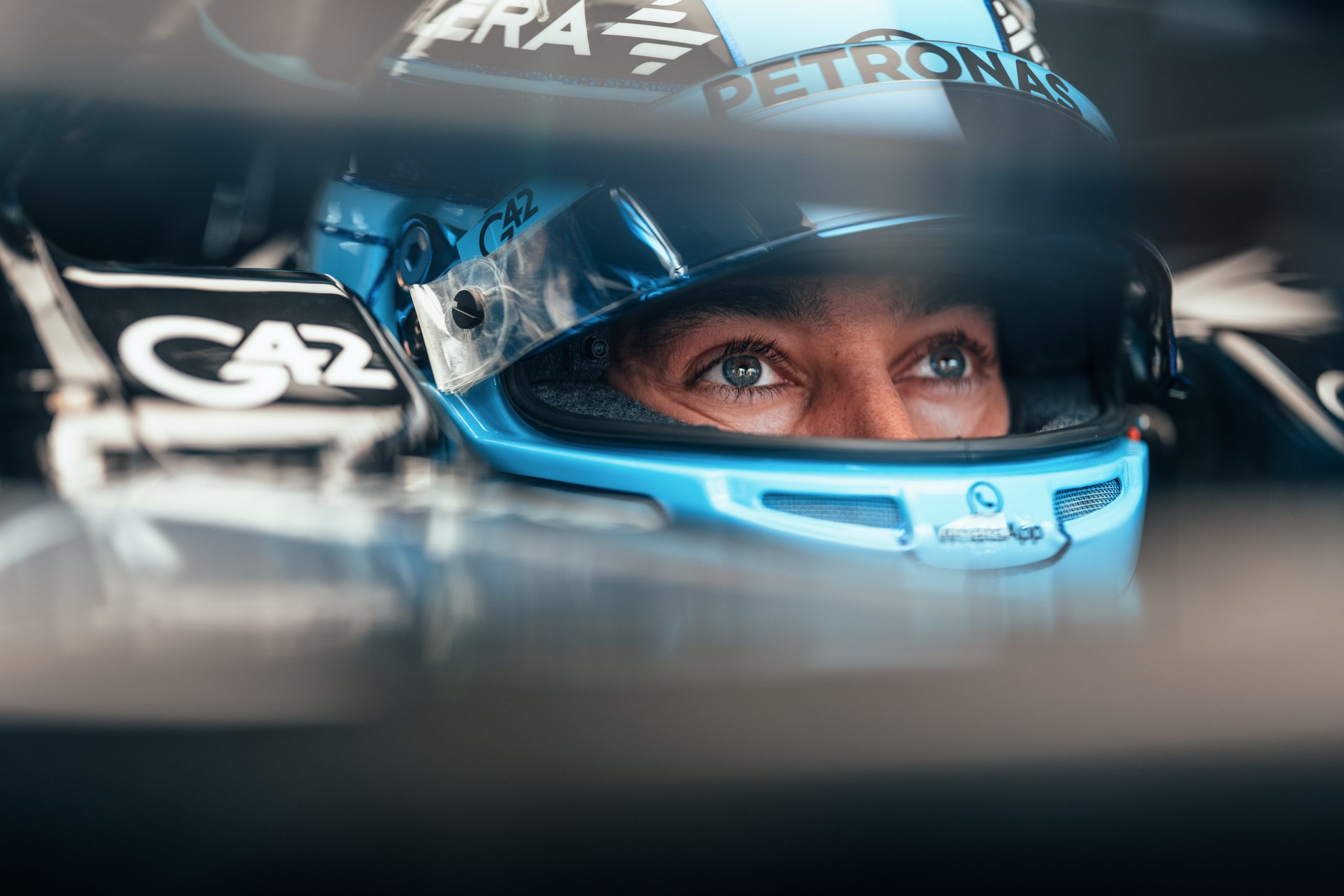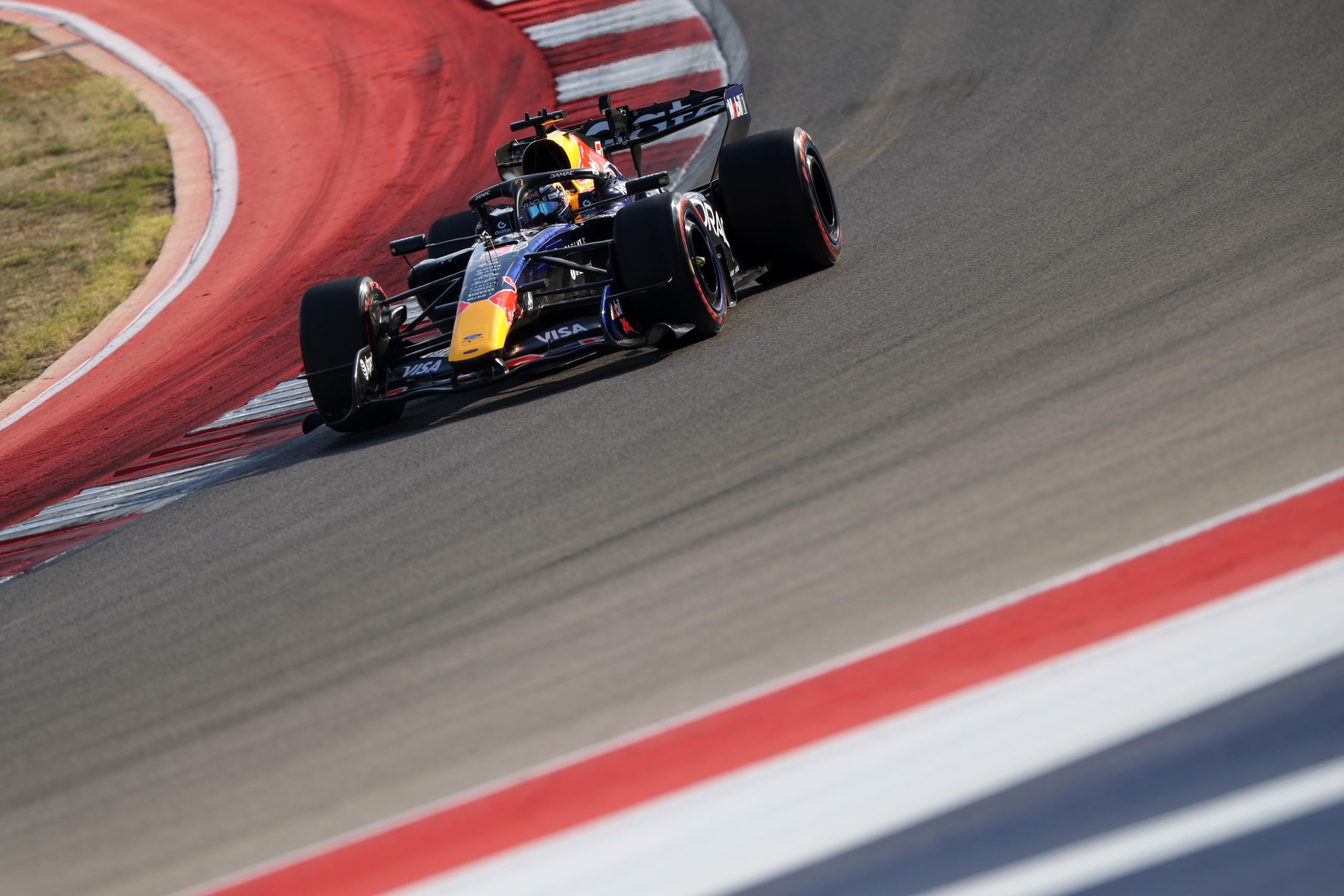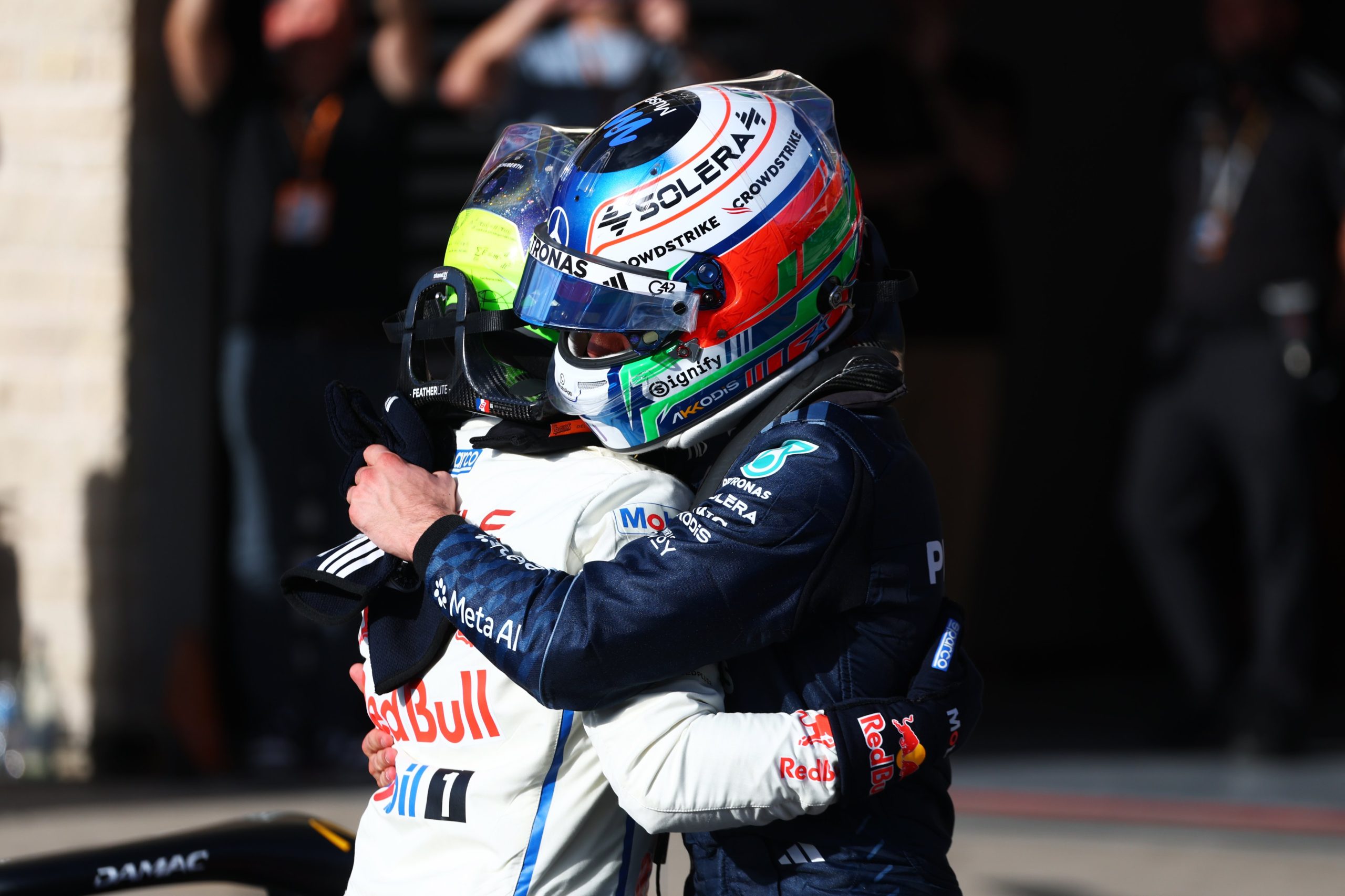
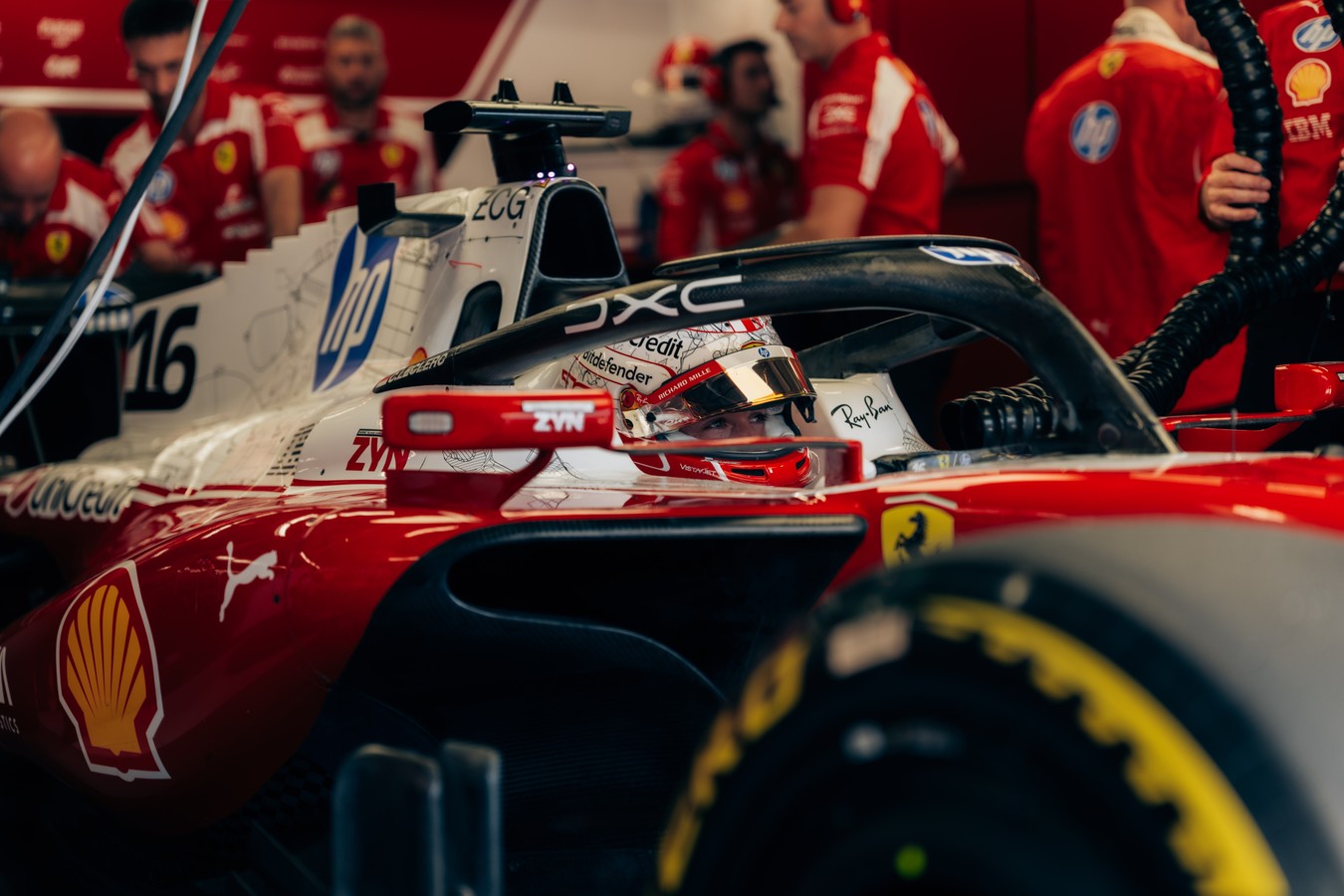
Charles Leclerc expressed frustration after qualifying fourth for the 2026 F1 United States GP, explaining how Ferrari’s difficulties with tyre temperatures prevented him from challenging for pole position at the Circuit of the Americas (COTA). Despite demonstrating competitive pace throughout Free Practice and topping Q2, the Monegasque struggled to extract the same performance during the final Qualifying segment.
Leclerc finished 0.232 seconds behind Mercedes’ Kimi Antonelli, who secured pole with a 1:34.035. Red Bull’s Max Verstappen and Isack Hadjar completed the top three, while Leclerc’s Ferrari teammate Lewis Hamilton qualified fifth.
Following the session, Leclerc highlighted the SF-26’s sensitivity to tyre temperatures, the challenges associated with extracting maximum performance over a single lap and the potential differences between Ferrari’s qualifying and race pace. He also acknowledged that the team must continue working to understand the issue, having encountered similar difficulties earlier in his Formula 1 career.
Leclerc disappointed as Ferrari fails to convert Free Practice pace into pole in Qualifying at the 2026 F1 United States GP
Ferrari entered Saturday’s Qualifying session among the favourites after dominating the opening three practice sessions at COTA. Leclerc topped both FP1 and FP2 on Friday, while Hamilton maintained the team’s momentum by finishing fastest in FP3.
However, Ferrari could not maintain that advantage when Qualifying reached its decisive stages. Although Leclerc demonstrated sufficient pace to challenge the leading contenders, the Monegasque struggled with tyre temperatures during Q3, particularly on his out-lap. He explained that even a small change in conditions significantly affected the car’s balance and available grip.
“Yeah, it’s very disappointing because I think there are some other weekends where we’ve been strong in Free Practice, but then, coming to Quali, it’s very clear that the others are just having a lot more in the straights, and it’s very difficult for us to match that. But I felt like today, it’s a Qualifying where we had the potential in the car. But the car also includes tyres, and in Q3, unfortunately, we were not in the right place. It was like one or two degrees less in Q3, and for me, it was a huge difference, just really struggled in the outlap. I was sliding quite a lot already from the outlap, and that made it very difficult after that.”
Leclerc expected further improvement after topping Q2 at the 2026 F1 United States GP
Leclerc’s disappointment was compounded by his performance during the second Qualifying segment, where he established the fastest time with a 1:34.198.
The Ferrari driver had initially struggled to match the leading contenders during his opening Q2 attempt. However, he found considerable time on his final run, moving ahead of Antonelli and Russell to finish the segment at the top of the order.
Having improved throughout Qualifying, Leclerc expected to extract additional performance during Q3. Instead, he could only manage a 1:34.267, making his fastest lap in the final segment 0.069 seconds slower than his Q2 benchmark.
Antonelli, meanwhile, delivered a 1:34.035 to secure pole position, leaving Leclerc fourth in the final Qualifying classification.
“Yeah, and even more when I look at my Q2 lap, which was a tenth, which I think was only maybe a tenth behind Kimi. So I was expecting to do another step in Q3, which unfortunately never came.”
The inability to improve between Q2 and Q3 ultimately cost Leclerc an opportunity to challenge for the front row, despite Ferrari’s strong performance throughout the weekend.
Ferrari’s sensitivity to tyre temperatures remains a concern ahead of 2026 F1 United States GP race
Beyond the immediate disappointment, Leclerc identified Ferrari’s sensitivity to tyre temperatures as an area requiring further investigation.
The Monegasque explained that the SF-26 becomes particularly difficult to manage when the tyres operate outside their ideal temperature range. Although every team must work within the same tyre operating parameters, he believes Ferrari finds it more difficult to generate the temperatures required to extract maximum performance during Qualifying.
Consequently, even a relatively small difference in conditions can have a significant impact on lap time, particularly when drivers attempt to maximise their performance during Q3.
“It is quite frustrating, but there are reasons for it. At the same time, I think we just need to work harder and try to understand those tyres even better than what we are doing now. Because the others, I think, normally have a bit more. It’s a bit easier for them to extract the lap time in Q3 than it is for us, and as soon as we are a tiny bit outside the window, we pay a lot of the price. So this is something that we need to look into.”
Ferrari’s difficulties became particularly evident in Austin, where the changing conditions throughout Qualifying coincided with the team’s loss of performance relative to Mercedes and Red Bull.
Leclerc explains why Ferrari’s balance becomes critical in Q3
Leclerc also addressed the challenges associated with pushing the SF-26 to its limits during the final Qualifying segment.
With drivers attempting to find increasingly small gains, even minor handling difficulties can become more pronounced. For Ferrari, Leclerc explained that the car’s balance becomes particularly sensitive when he attempts to extract the final tenths of performance, making it difficult to improve on earlier qualifying laps.
However, he acknowledged that he could not directly compare Ferrari’s characteristics with those of its rivals, having only experienced the team’s own machinery.
“I mean, as soon as you go into Q3 and you go and push for the last hundredths or two-hundredths per corner, that’s where maybe the issues of the car, the balance issues that you are having, are standing out a little bit more. And for us, it’s very much on a knife edge, and as soon as we start going a little bit over, then we are losing quite a lot of lap time. It’s difficult to say. I mean, I haven’t driven other cars as well, but as a tendency, I feel like it’s very often the case that we get to Q3 and we fall short of what we expected when we expect to go and gain a tenth and a half in Q3. We sometimes struggle to get that, so it’s an assumption more than a certainty.”
The difficulties prevented Leclerc from building on his Q2 performance, despite having demonstrated competitive pace earlier in the Qualifying session.
Tyre warm-up difficulties create qualifying and race pace compromise
Although Ferrari’s tyre temperature difficulties have affected its single-lap performance, Leclerc acknowledged that the same characteristics could provide an advantage over longer race distances.
The Monegasque explained that Ferrari struggles to generate sufficient tyre temperature during Qualifying, particularly when conditions become cooler. However, the team’s difficulties with tyre warm-up could prove less significant during Sunday’s GP, when drivers must manage tyre temperatures and degradation throughout longer stints.
“I mean, the tyre window is the same for everybody, but our car, for some reason, is very difficult to put some heat in those tyres, which is a good thing for us on a Sunday. But in Qualifying, it makes it very tricky when the track time goes down.”
Leclerc was also asked whether Ferrari could completely resolve its tyre management difficulties through future development, particularly with the team preparing for the 2027 season.
However, he cautioned that improving qualifying performance could require compromises elsewhere, particularly if changes to the car’s characteristics affected its behaviour during races.
“No, I wouldn’t say that, but it’s maybe a bit of a compromise that you would have to choose between race and Qualifying.”
For Ferrari, finding a suitable balance between single-lap performance and tyre management over a race distance remains an important consideration as the team continues developing its car.
Leclerc recalls similar difficulties during 2024 F1 season
Leclerc also drew comparisons between Ferrari’s current qualifying difficulties and problems he experienced during the early stages of the 2024 F1 season.
During that campaign, the Monegasque encountered challenges extracting consistent performance from the car over a single lap, particularly when attempting to operate the tyres within their ideal temperature range.
Asked whether he had previously experienced similar characteristics, Leclerc confirmed that the issue was not entirely unfamiliar.
“Yeah, I think 2024, at the beginning of the year, I had that. But again, I think there are some solutions to that. It’s just we’ve got to see what else we have to compromise for those solutions.”
Although Leclerc acknowledged that solutions could exist, he reiterated the importance of evaluating their potential consequences. Changes intended to improve tyre warm-up and qualifying performance could affect other aspects of the car’s behaviour, requiring Ferrari to consider the overall impact rather than focusing exclusively on single-lap pace.
With the 2026 season approaching its conclusion, Ferrari must balance efforts to maximise its current performance against preparations for the following campaign.
Leclerc cautiously optimistic about Ferrari’s race prospects in Austin
Despite the disappointment of qualifying fourth, Leclerc remains more optimistic about Ferrari’s prospects for Sunday’s United States GP.
The Monegasque explained that the tyre temperature difficulties affecting his qualifying performance should be less problematic during the race. With drivers completing longer stints, maintaining tyre performance and limiting degradation will become more important than generating maximum grip over a single flying lap.
Ferrari also enters the race with a different tyre allocation from some of its rivals, although Leclerc acknowledged that Red Bull appears to have adopted a similar approach.
“Yeah, I don’t know how much of an advantage it is, but for sure, we’ve got a different tyre allocation, and I think we are in the same situation as Red Bull, which we’ll see.”
Throughout Friday’s FP2 session, drivers experienced significant tyre degradation during their long-run simulations, with several struggling to maintain grip on the demanding Austin surface.
When asked whether Ferrari’s tyre characteristics could prove more beneficial on Sunday, Leclerc confirmed that he expected fewer difficulties than those encountered during Qualifying.
“Yeah, this should be a little bit better for us. At least we won’t have the same issues as we had today.”
However, the extent of any advantage remains uncertain, particularly with Mercedes and Red Bull demonstrating competitive pace throughout the weekend.
Leclerc looks to recover from fourth in Sunday’s 2026 F1 United States GP
Leclerc will start Sunday’s race from fourth, immediately behind Antonelli, Verstappen and Hadjar. The Ferrari driver secured his position with a 1:34.267, finishing just 0.017 seconds behind Hadjar and 0.232 seconds away from pole position.
Although Ferrari could not convert its promising Free Practice performances into pole, both drivers secured positions inside the top five, with Hamilton qualifying fifth on a 1:34.311.
The result leaves Ferrari well placed to challenge the leading contenders, particularly if its tyre characteristics prove more competitive over a race distance. However, Leclerc will need to overcome the track-position disadvantage created by his Qualifying result, with Mercedes and Red Bull occupying the leading three grid positions.
Tyre management will also play an important role, particularly after Friday’s long-run simulations highlighted the challenges associated with degradation and maintaining consistent performance at COTA.
Following a weekend in which Ferrari demonstrated strong pace but struggled to deliver its maximum potential in Q3, Leclerc will now turn his attention towards converting that performance into a stronger result during Sunday’s 2026 F1 United States GP race.