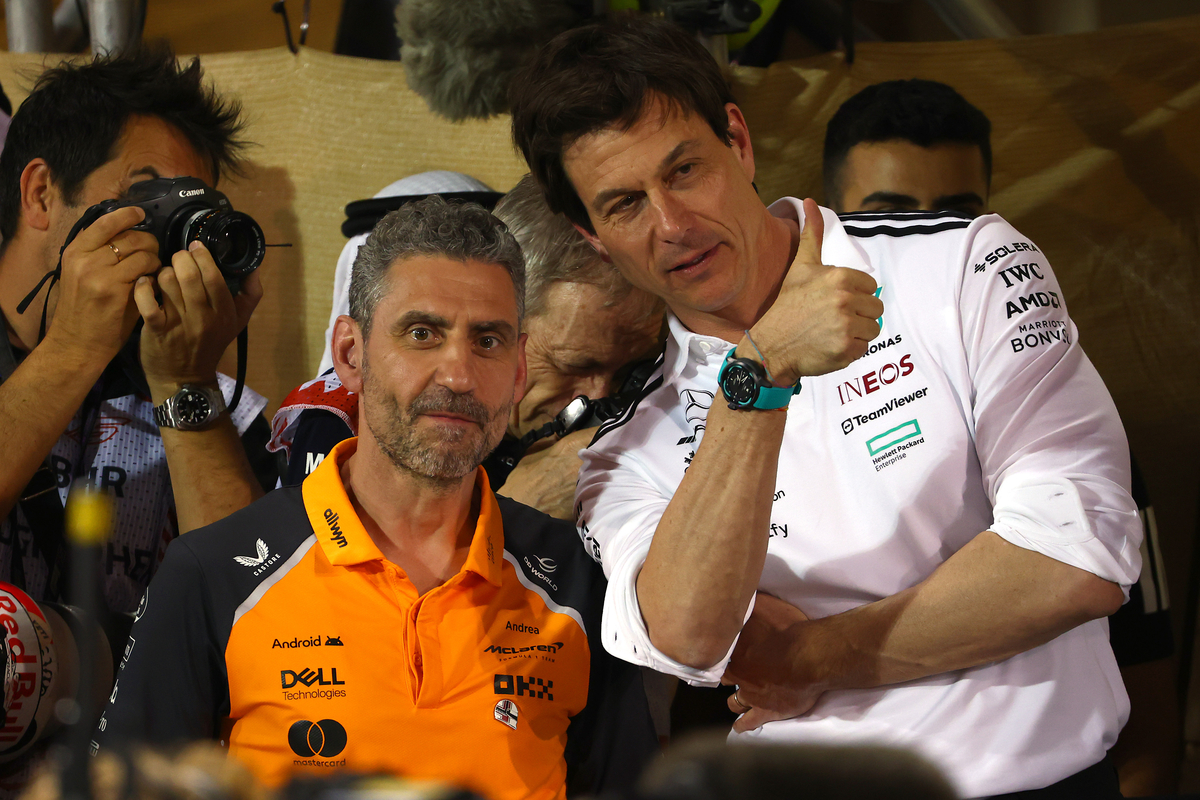

McLaren team principal Andrea Stella called on the FIA to review and amend the F1 2026 regulations before the season opener in Australia amid safety concerns regarding race start procedures.
Andrea Stella raised the issue following the recent three-day Bahrain pre-season test, where teams conducted their first meaningful running with the new-gen 2026 cars in realistic race simulations. Based on what McLaren observed, Stella believes the FIA should intervene to prevent avoidable risks from carrying over into the championship.
The McLaren team principal identified three specific areas that require attention: the timing and readiness of power units during race starts, the increased likelihood of lift-and-coast driving, and the potential for dangerous closing speeds when cars run closely together on straights.
Race start procedure risks under new regulations
Stella flagged issues with the race start procedure under 2026 regulations, and warned that the FIA must ensure every driver can launch cleanly and safely once the lights go out.
“We need to make sure that the race start procedure allows all cars to have the power unit ready to go because the grid is not the place in which you want to have cars slow in taking off the grid,” Stella told the media at the conclusion of testing.
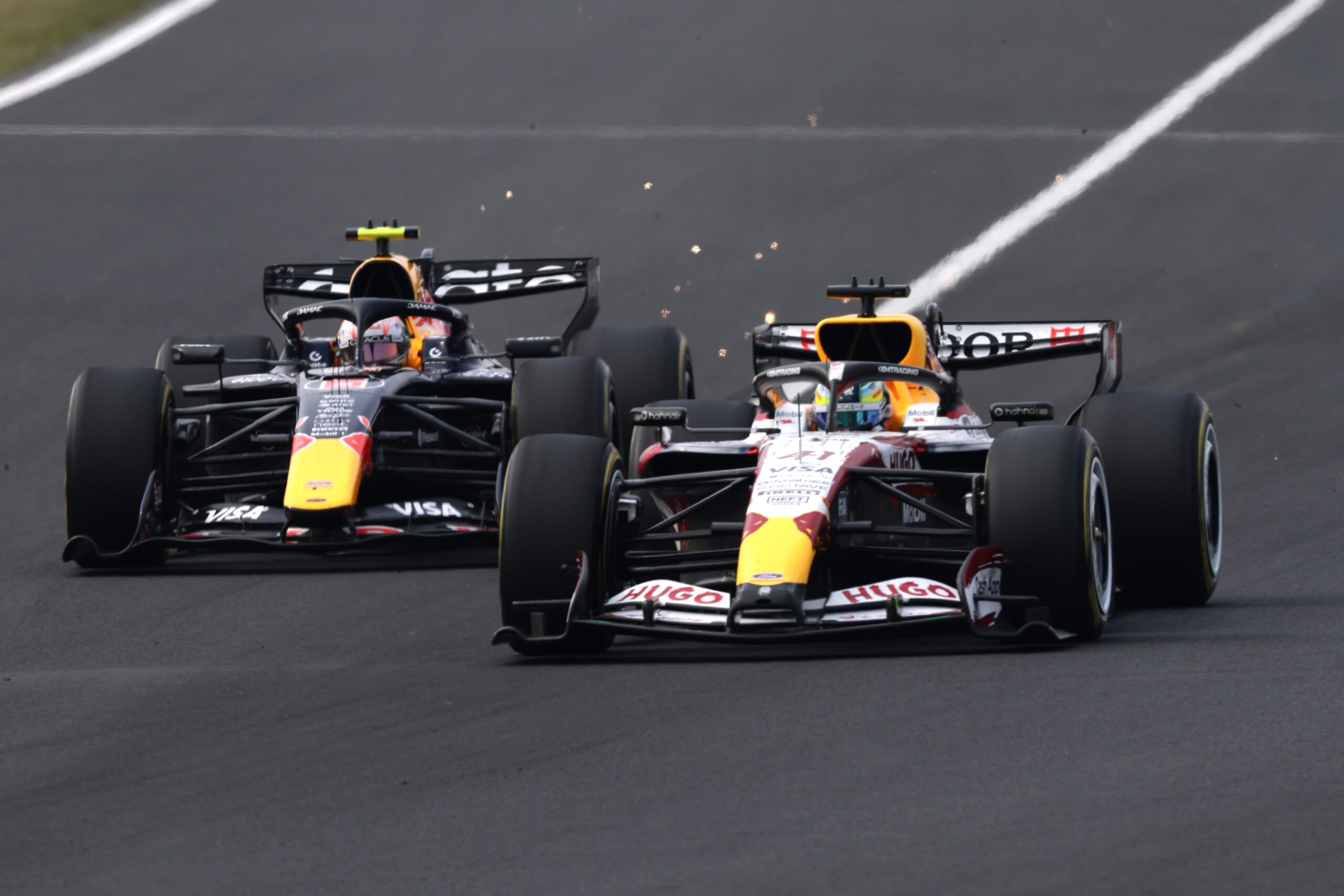
Beyond start procedures, the McLaren team boss also pointed to concerns over how closely cars now run together on straights. Without DRS creating larger speed differentials, drivers now follow each other much more closely during on-track battles. This proximity increases the risk that a chasing driver may not react in time if the car ahead suddenly slows to recover energy, a scenario Stella fears could trigger dramatic airborne crashes.
He explained: “This may not be an ideal situation when you follow closely, and this can give rise to a situation like we have seen before a few times like [Mark] Webber in Valencia [2010], [Riccardo] Patrese in Portugal [1992], and a few more that definitely we don’t want to see anymore in Formula 1.”
He also highlighted how lift-and-coast driving—where drivers deliberately reduce speed to manage battery energy and fuel—could create unpredictable speed variations between cars. McLaren believes regulatory tweaks, such as modifying battery deployment allowances in certain race phases, could discourage excessive lift-and-coast behaviour and potentially reduce risk.
McLaren’s Stella insist fixing issues with F1 2026 regulations should be a “no-brainer”
Under the 2026 F1 regulations, executing an optimal launch now requires drivers to keep the turbo spooled for roughly 10 seconds to reduce lag off the line, while also ensuring the battery does not overcharge.
Several teams and drivers encountered difficulties while rehearsing starts during testing, complaining about the complex nature of the procedure and the new challenges the regulations introduced compared to how the previous generations of cars operated.
The F1 Commission previously discussed extending the grid preparation window at a meeting last July. However, the proposal failed to pass after Ferrari team principal Fred Vasseur opposed the change.
It appears this opposition stemmed from earlier discussions in which Vasseur advocated similar modifications, only to see rival teams reject them. Ferrari subsequently committed to a power unit concept designed to cope with the shorter start procedure. When the topic resurfaced, Vasseur argued that introducing changes at this point would unfairly disadvantage Ferrari after it had already aligned its design philosophy accordingly.
“We’re not talking about how fast you are in qualifying,” Stella argued. “We are not talking about what’s your race pace. We are talking about safety on the grid.
“There’s some topics which are simply bigger than the competitive interest. And for me, having safety on the grid, which can be achieved with a simple adjustment, is just a no-brainer. It’s just a bigger interest.”
Stella urged the FIA to address these safety concerns and find a suitable solution before the F1 2026 season kicks off in Melbourne.
“I think it’s imperative. I think it’s imperative because it’s possible and it’s simple,” he said.
“We should not complicate what is simple and we should not postpone what is possible immediately. Therefore, I think it’s something that we should definitely achieve before Australia.”