The Mercedes-AMG PETRONAS F1 squad took a big step forward in 2025 in terms of establishing themselves as one of the leading professional sports teams worldwide so far as sustainability is concerned.
Mercedes’s progress aligns with F1’s ambition to achieve a net-zero carbon footprint by 2030. This aggressive sustainability plan covers not only the cars and on-track activities but also the sport’s considerable off-track operations during a season.
W16 instrumental in Mercedes’s sustainability drive in 2025 F1 season
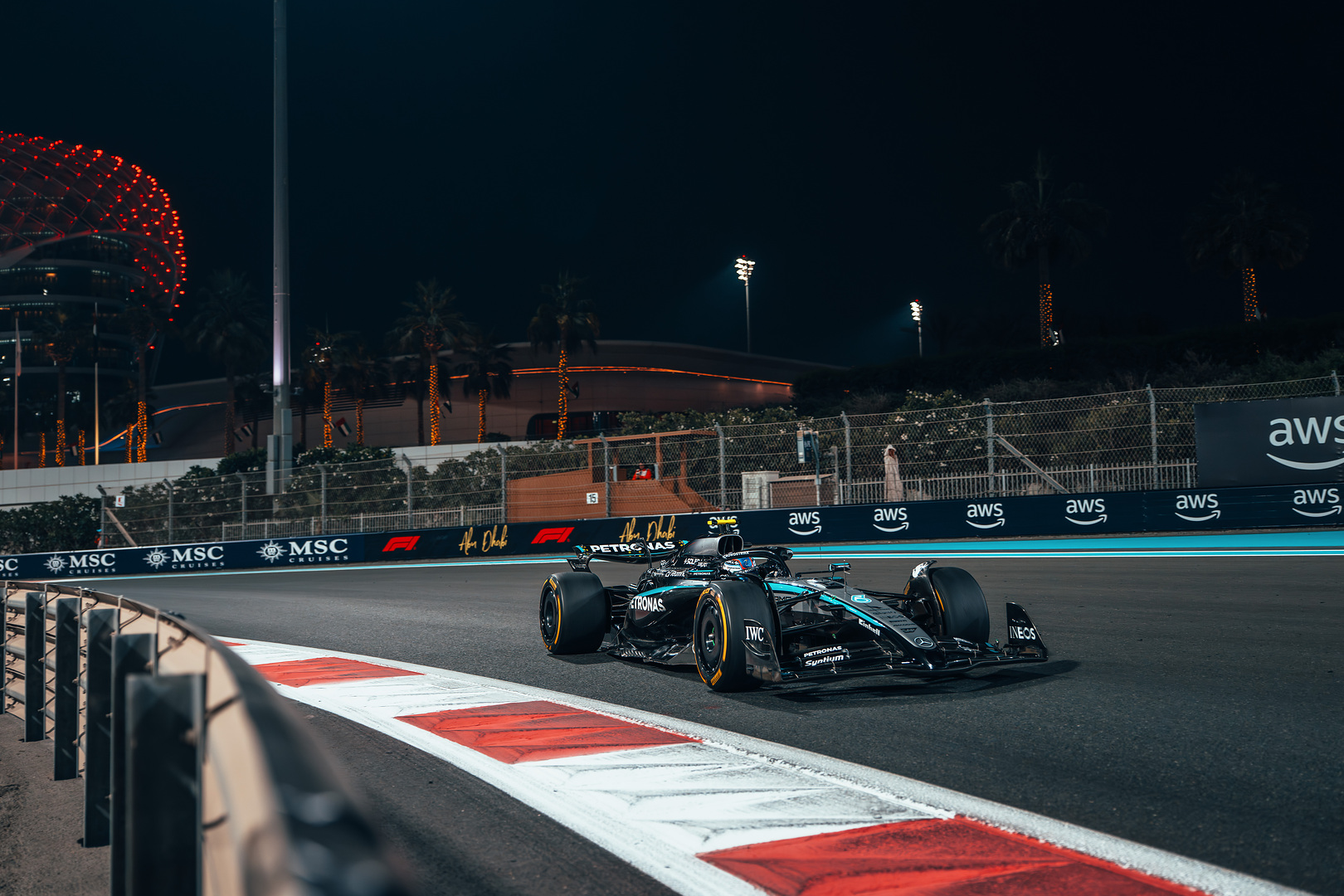
The W16 became a vehicle of driving innovation, and Mercedes debuted a bio-based carbon fibre composite on the rear brake duct wheel shields of George Russell’s car at the 2025 F1 Azerbaijan GP.
Following its introduction in the city streets of Baku, the aforementioned component raced over 7,000 km and played a part in Russell’s victory in Singapore and the team securing multiple top-three finishes in the remaining race weekends of the season.
A close collaboration with their carbon fibre composites supply chain enabled Mercedes to bring forth this pioneering development. Moreover, the lack of any reliability concerns in the final third of their 2025 campaign substantiated that this technology can endure the rigorous conditions at the pinnacle of motorsport.
Off-track progress in sustainability
Mercedes’s commitment to sustainability also extended to activities beyond the F1 circuits in 2025. The team members at Brackley actively helped in carbon reduction, as they saved 360,000 miles of commuting through an internal car-sharing initiative.
Furthermore, the German outfit transported their W16 race cars and their supporting equipment to the 2025 Dutch GP using an all-electric Mercedes-Benz Trucks eActros 600. After an initial trip to the British GP, the 673 km journey from their headquarters to Zandvoort made the Silver Arrows the first team on the F1 grid to use electric power to transport their race cars to a European race weekend.
Mercedes also carried on with the expansion of HVO100 coverage in the internal combustion engine trucks deployed to facilitate their European season logistics. According to their reports, the use of biofuel in lieu of standard diesel helped them avoid over 410 tCO₂e in 2025.
Mercedes and their Title Partner commit to climate mitigation

Mangrove trees are a crucial tool in combating climate change, thanks to their remarkable abilities to sequester and store carbon from the atmosphere, protect coastal ecosystems, and sustain biodiversity.
Setting up the Blue Carbon Collective with their Title and Technical Partner PETRONAS, Mercedes recognised the pivotal role mangroves play as climate heroes in our increasingly volatile world. Additionally, their merchandise design for the 2025 Miami GP drew inspiration from these productive wetlands located in tropical and subtropical intertidal zones.
Launched in June 2025, the Blue Carbon Collective provides funding for mangrove restoration research in Brazil and Malaysia. Given that eight locations on the current F1 calendar are within 100 km of a mangrove forest, including Singapore and São Paulo, Mercedes are resolute in their “commitment to enhance and protect local environments”.
Mercedes promoting sustainability at the grassroots level of motorsport
Aside from their F1 ventures, the Mercedes-AMG PETRONAS team collaborated with Motorsport UK (MSUK) to co-fund the use of sustainable fuel for the 2025 IAME Waterswift Restricted Cadet Class, one of the four classes within the British Karting Championships. The fuel achieved a 55 per cent reduction in emissions relative to its fossil fuel equivalent since its application from Round Three onwards.
Mercedes maintain that their alliance with MSUK not only validates their resolution to build “a more sustainable future for motorsport” but also strengthens their “legacy of supporting up-and-coming racing talent” as well.
Team Representative Bradley Lord said:
“We are proud of the progress made in 2025 across the environmental sustainability landscape and within the inclusion and social impact space. Our actions matter to us, and we know it matters to our fans.
“We are energised by what is to come in 2026 and determined to keep raising the bar—at home, on track, and in the communities that we live and race in.”
Alice Ashpitel, Head of Sustainability, Mercedes-AMG PETRONAS F1 Team, added:
“As we look to the coming season, it’s rewarding to see the progress that our team made in 2025. Our progress would not have been possible without the contributions of our team members in Brackley and Brixworth, and the support of our partners and suppliers.
“There were many highlights in 2025 but the significance of applying a bio-based carbon fibre composite material to the W16 cannot be underestimated, and we are grateful to all of those involved.
“We look forward to 2026 as we work to shape a more sustainable future for Formula One.”