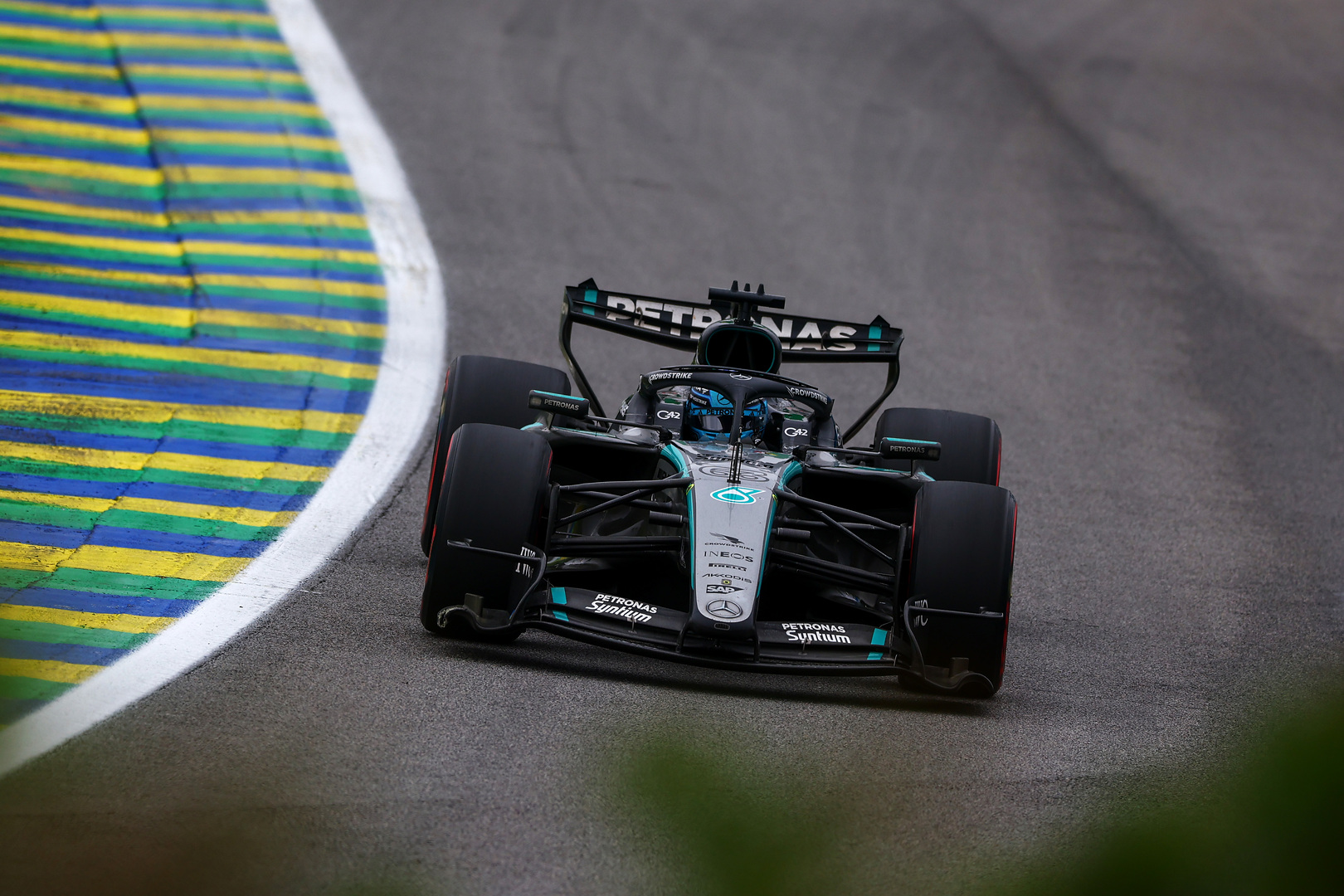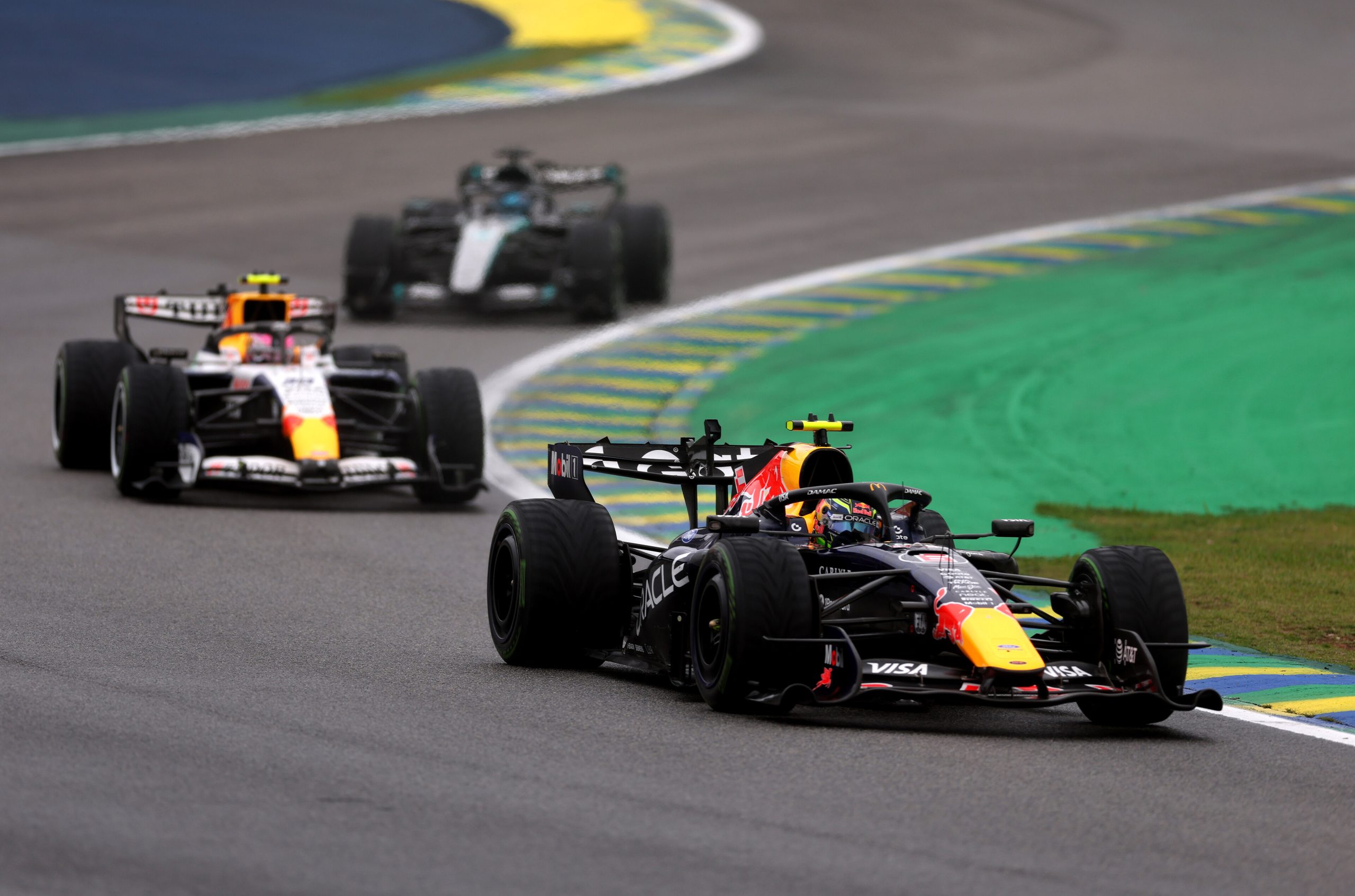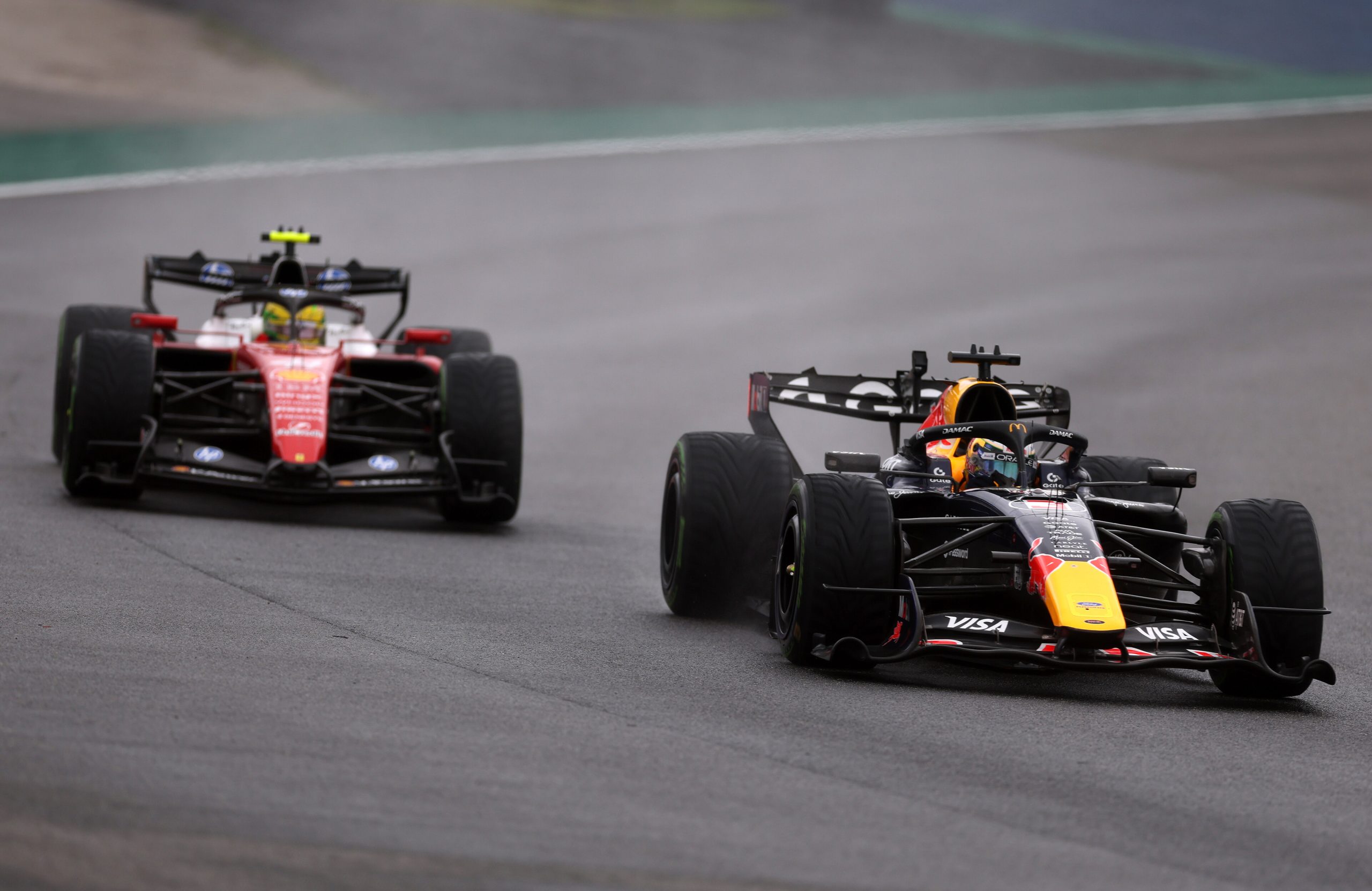
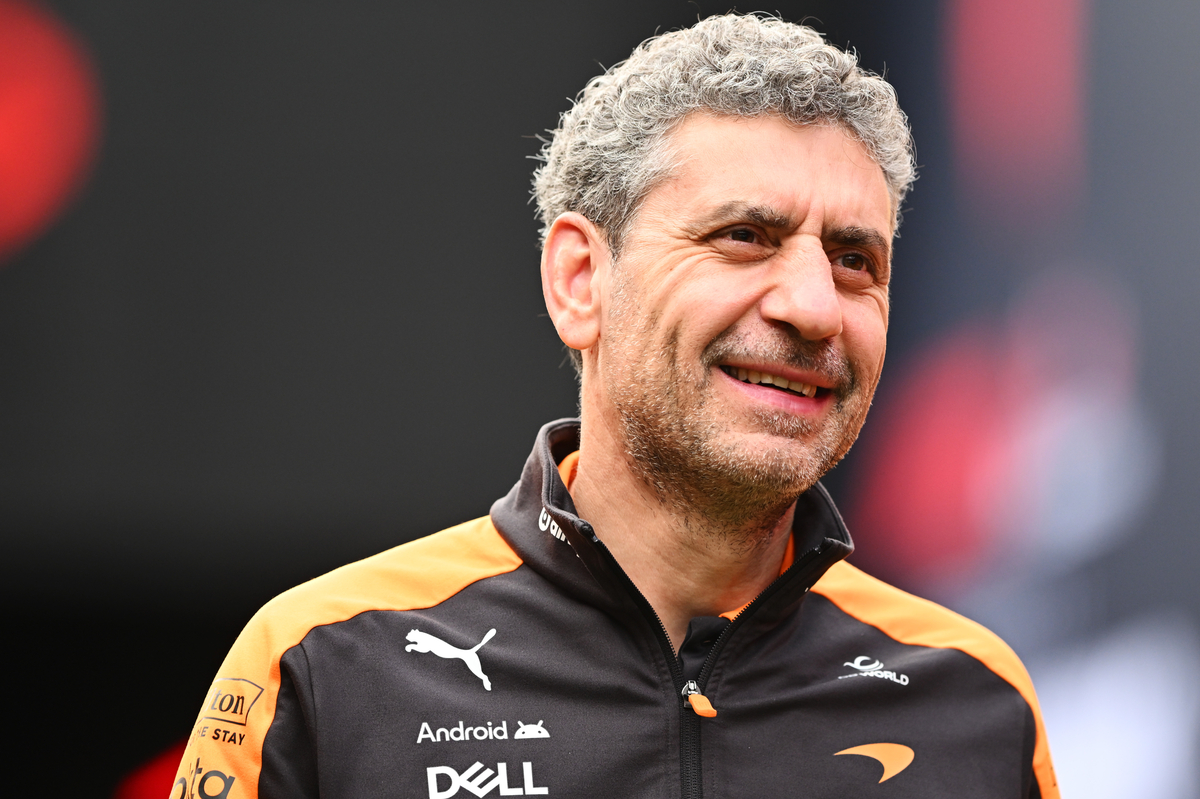
McLaren F1 Team Principal Andrea Stella shared his thoughts on the threat posed by Max Verstappen, the pace of Lando Norris on intermediate and soft tyres, their pit stop strategy, and what set the MCL40 apart from the rest of the field following their haul of 33 points at the 2026 São Paulo GP on Sunday.
Norris secured his third victory of the season at the Autódromo José Carlos Pace, which began wet and dried out before the Brit had to navigate a late rain shower. Despite a shaky start, he managed to keep Verstappen at bay and eventually claimed victory by 14.602 seconds after starting from pole.
Meanwhile, Oscar Piastri failed to make it out of the second segment of qualifying but lined up in P10 on account of the grid penalties Charles Leclerc and Lewis Hamilton had received. Nonetheless, he executed the I-S-S-I strategy well and rose to P6 at the flag.
Verstappen being a threat in the early laps and general tyre warm-up issues
Andrea Stella touched on Verstappen’s stellar start from P21 on the grid in a post-race print media session and admitted that McLaren had viewed him as a substantial threat in the early stages. At the same time, he elaborated on how multiple cars had found it challenging to warm up their tyres on a slippery track.
Stella particularly lauded the Dutchman and Hamilton for their ability to fire up their intermediate tyres at the start of the 2026 São Paulo GP and for their impressive overtaking manoeuvres.
“The threat set by Max [Verstappen] definitely looked like material in the early laps.
“I think what we have seen today is that cars exhibited different features. Like, at the start of the race, you needed to be good at bringing the tyres into temperature. In the laps to the grid, nobody could actually generate any temperature.
“So, definitely in the early laps, there was a premium to the cars [for] all the drivers were able to generate tyre temperature.
“Obviously, Max, likewise Lewis [Hamilton], I think they have shown their talent not only from a tyre switching on point of view, but also in the first lap, they were just incredible how easily they gained positions.”
Underlining that the MCL40 thrives in fully wet conditions, the Italian also conceded that there were moments when their car’s performance wasn’t optimal.
“But going back to the evolution of the race, I think something we have seen yesterday, even in qualifying, you may remember I made the comment that we seemed to be good when there was a lot of water. And then we kind of lost it a little bit in Q2 when there was less water. Likewise, today, it was difficult to see a car that was good in all conditions.”
Stella discusses Norris’s pace on intermediate and soft tyres at the 2026 São Paulo GP
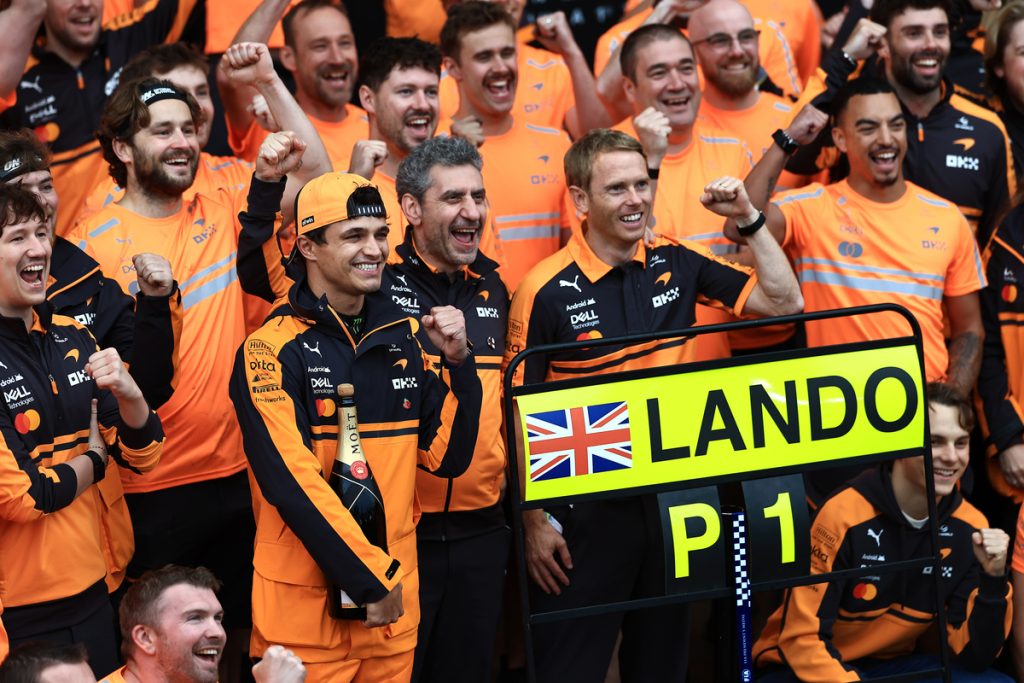
Noting Norris’s difficult getaway from pole position that had seen him drop down to P3, Andrea Stella pointed out how the McLaren driver managed to extract performance from both the wet and dry compounds to climb on the top step of the podium.
The 55-year-old also argued that Kimi Antonelli’s struggles were similar to those of Norris and that they were both rapid in the final stages of their stints on softs.
Labelling the 2026 São Paulo GP as a technically interesting F1 race, Stella drew attention to the lack of a clear pattern for their troubles, with the teams grappling with cold or overheated tyres in different phases of the race.
“We struggled a bit more with Lando [Norris] at the start. And then somehow, we managed to keep good grip in the intermediate tyres and also on the soft tyres. I think in the final part of the stint on the soft tyres, Lando was very fast.
“And probably there is the one that had done the best job, because if you look at Antonelli as well, he was good at the final part of the stint on soft. And he struggled at the start and he lost positions.
“So, it was technically a very interesting race, or event if you want. Because, really, everyone had to do at some stage with the tyres being either too cold or getting too hot. But without a clear pattern.
“So, I think it was definitely interesting. And all teams will have some data to look into and understand.”
Stella reveals why Norris pitted for a second set of softs
With regard to Norris’s conversation with race engineer Will Joseph about the possibility of extending his stint on the softest compound and whether they boxed for a second set of softs at the end of Lap 49 in response to Verstappen’s pit stop, Andrea Stella clarified that the degradation at the São Paulo GP was fairly high once the track dried up.
Claiming that the decision to make a second stop for softs was a no-brainer for Red Bull since the RB22 was experiencing higher degradation, the McLaren Team Principal revealed how Hamilton’s rapid pace on a new set convinced them that Norris would’ve reclaimed the lead successfully even if they lost track position after pitting.
“Well, the deg was looking actually relatively high, even if for a long part of the stint it was masked by the fact that the track was getting faster and faster.
“So, it was unclear numerically how the degradation would look. Once the track was definitely dry, it was apparent that there was degradation.
“I think for some other teams like Red Bull, there was more degradation. So, for them, it was more straightforward that they needed to stop.
“And I have to say that once we had to deal with Hamilton on new tyres, then it was very apparent that the new tyres would be much much faster.
“So, this gave us the confidence that even if we had pitted behind Antonelli, we would’ve passed him. And then Antonelli decided to go for another stop, and this made our life a little easier from his point of view.”
Stella on whether the McLaren drivers could’ve taken their first set of slicks to the end of the São Paulo GP
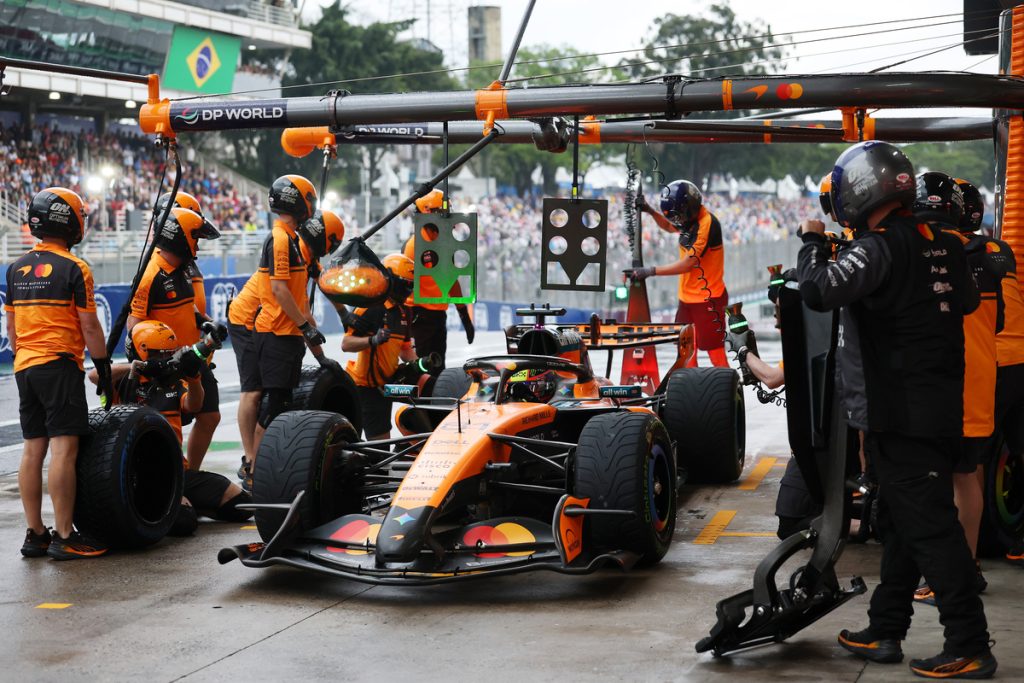
Furthermore, Andrea Stella admitted that McLaren weren’t confident about trying to take the soft compound all the way to the end in Sunday’s São Paulo GP.
Referring to how George Russell capitalised on staying out and boxed straight for the green-walled tyres at the end of Lap 61, the Italian added that the uncertainty about whether the rain would return had prompted them to go for the reasonable choice and pit both their drivers for fresh softs.
“I don’t think at any stage we thought that we could have gone all the way to the end.
“Russell, I think, is the only one that took advantage for staying on the same set and go on to intermediate tyres.
“This was a consideration, but we were unsure as to how the rain would have actually manifested itself. So, we decided with both drivers to go for, kind of, let me say, the more rational approach, which was just go on another set.”
What the MCL40’s strengths and weaknesses are now
As to the secret behind Norris being the fastest driver at the rain-affected São Paulo GP, Andrea Stella chalked the 14-time F1 race winner’s superb pace up to conducive temperatures.
Reflecting on how the warmer practice sessions had seen them tackle overheating rubber, the 55-year-old stated that the colder conditions on Sunday had allowed them to keep their tyres in the right working window. Reiterating that the MCL40 fares well on a damp or wet track, he acknowledged that they still have progress to make so far as their race pace in hotter conditions is concerned.
“Yeah, my explanation of our performance in dry today is associated with the track and ambient temperature.
“The conditions were very cold, much colder than we had in practise. In those conditions in practice, I think we saw that we were still tending to overheat the tyres. Today, somehow, the conditions came our way, and we could keep the tyre temperature under control. I think that’s the main reason.
“We know that we have some work to do in terms of getting more consistent in long runs in hot conditions.
“I think we were in a way helped. You could see also this well especially with Londo when the track was getting greasy. Before switching on to intermediate tyres, Lando was just able to keep the lap times much better than anybody else. I think our car is good from this point of view.”