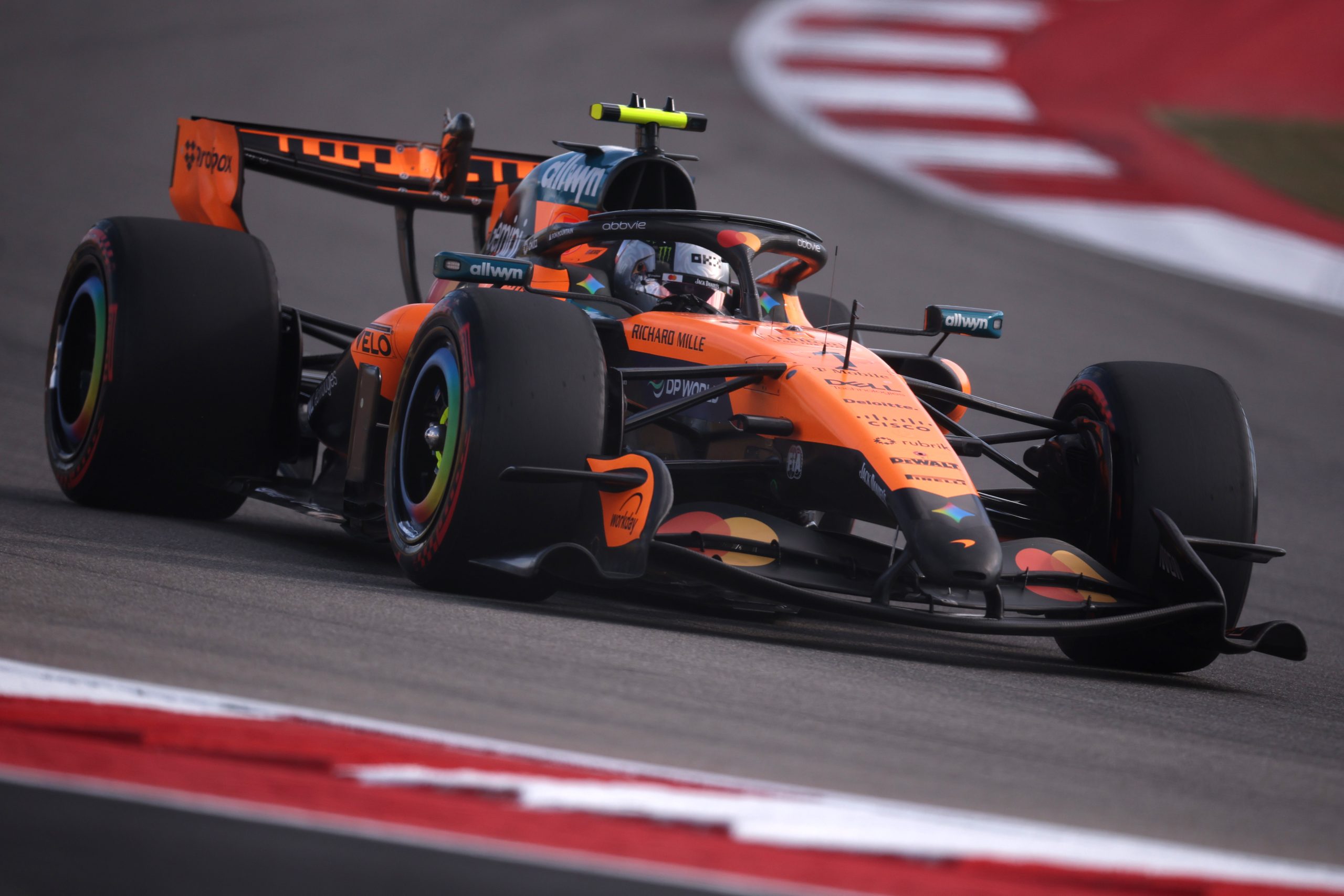
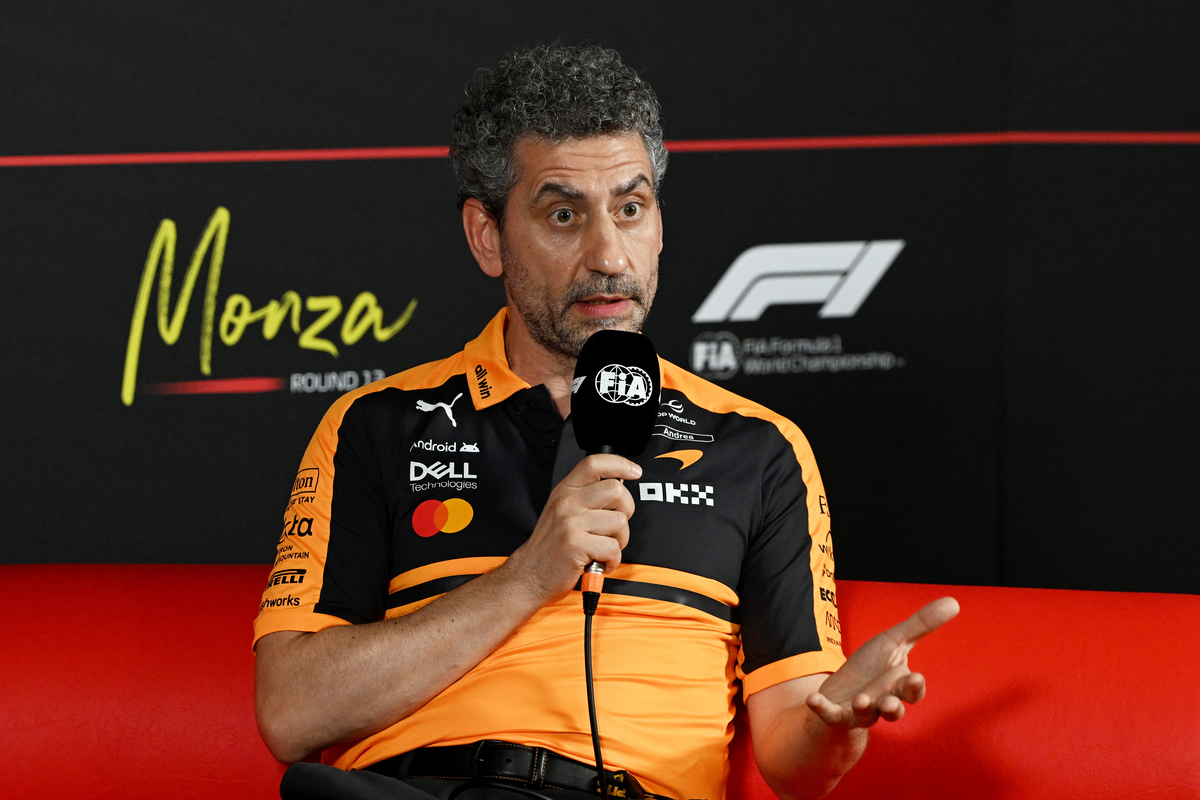
Team Principal Andrea Stella shared his thoughts on how McLaren’s overall execution of the 2026 Italian GP was, the challenges of energy management, the impact of the powerful slipstream at Monza, the set-up changes they made, and their current weaknesses after Lando Norris and Oscar Piastri came home in P4 and P5, respectively, on Sunday.
In the final segment of qualifying, Piastri set a lap time good enough for P3. However, the FIA handed him a three-place grid drop for impeding Liam Lawson in Q2. Meanwhile, Norris—having set the ninth-fastest time—lined up eighth on the starting grid on account of Kimi Antonelli receiving a penalty for taking new power unit components.
Both McLaren drivers started the race on the medium compound and safely made it through the chaotic opening laps. With Charles Leclerc’s massive crash on Lap 2 bringing out the red flag, the team fitted the two MCLs with new hard tyres.
When Lance Stroll encountered a hydraulic issue and triggered the VSC on Lap 28, Norris and Piastri stayed out and maintained track position.
In the closing stages, the McLaren duo battled each other hard. Norris was able to use the boost from his power unit on the final lap to gain a position on his teammate. He finished P4, just 0.137s ahead of the Australian in P5, securing a combined 22 points for the team.
Stella talks about McLaren’s execution at the 2026 Italian GP
Speaking in a print media session after the 53-lap F1 race, Andrea Stella reflected on how McLaren’s execution of the 2026 Italian GP weekend was and whether they had left anything on the table.
Admitting that their execution over a flying lap on Saturday wasn’t ideal, the Italian maintained that their poor starting positions compromised their race from the get-go. Furthermore, he highlighted how it’s more difficult to make overtakes stick under the new regulations.
“So, I think this is a race in which we executed racing better than what we did yesterday. I think yesterday in qualifying we should’ve qualified certainly better than P6, P8 on the grid.
“We reviewed that with the team and with the drivers, and we said to ourselves that today from an execution point of view we should’ve done better and operated higher standards.
“I think overall we did, we paid a bit of price of the position on the grid and the fact that somehow with this Formula 1 is not easy to get an overtake completed and move on, like if we see how much it took for Lando [Norris] to pass Gasly and then start to close the gap to the cars ahead.
“We see that there’s certainly been quite a lot of entertainment today. But to some extent there was also some issues for a quicker car to be able to compete if you don’t start at the front of the grid.”
Energy management and impact of powerful slipstream at Monza
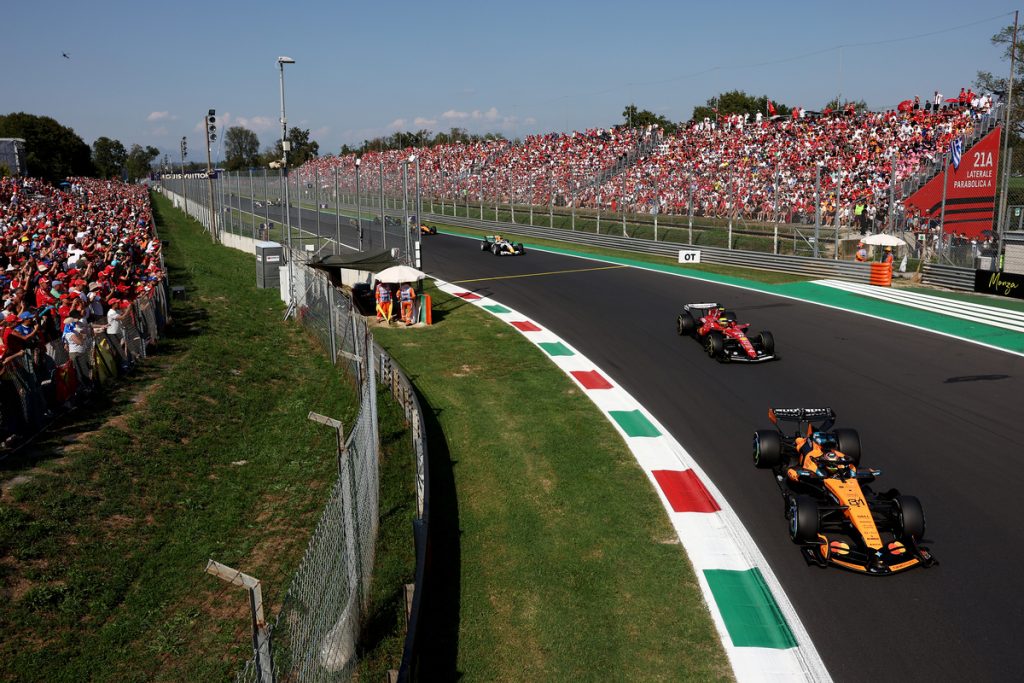
Andrea Stella also pointed out how energy management had become the primary concern rather than pure racing on a power-hungry track like Monza. He emphasised how the huge slipstream on the long straights of the 5.793 km circuit further boosted the effectiveness of the overtake mode, allowing inherently slower cars to keep up with the faster ones ahead.
With Monza arguably producing the most extreme version of ‘yo-yo racing’ yet, Stella even went on to label the 2026 Italian GP as “the most relevant race” under the brand-new technical regulations.
Reiterating that the Woking-based squad had made some considerable progress in the race so far as execution was concerned, the McLaren Team Principal stated that they were unable to challenge for the win due to the significant edge Mercedes still have over them.
“Very, very busy everyone, drivers and engineers with managing the power unit and the battery in a circuit like Monza, this becomes the dominating element of racing.
“We see that jointly with the slipstream, a faster car actually can struggle then to pull away from a slower car. And this could make as much as half a second the combination of the slipstream and the fact that you have a car behind that you start to use the boost to defend then you lose all the pace.
“So, there were a few factors today. The 2026 Monza, I think it will be remembered as the most relevant race with the new regulations.
“It required a high quality from an execution point of view. I think we did, but overall, we were not in contention for the victory because Mercedes had a step advantage than everyone else.”
Stella comments on the set-up changes McLaren made during the 2026 Italian GP weekend
With regard to the MCL40 struggling in the slow corners and whether McLaren had made any set-up tweaks to address the issue before Sunday’s race, Andrea Stella revealed post-Italian GP that they went from prioritising the first two corners to ensuring the car was also competitive in the medium-speed corners.
Claiming that the set-up changes were effective and that the MCL40 was far more competitive in different sectors of the track on Sunday than in the free practice sessions, the 55-year-old added that improving their performance in low-speed corners with subsequent upgrades would allow them to make up some ground in the remaining rounds of the 2026 F1 season.
“That’s actually quite a precise observation because on Friday we biased our approach from a set point of view to be competitive in the first couple of corners.
“We came here thinking we need to make sure we are not too weak in these two chicanes. But we saw that we were not very competitive in the corners around 180-200 kph like in the rest of the circuit.
“So, we made some changes to the set-up of the car to rebalance a bit our competitiveness. I think this worked. I think we were a bit more balanced in terms of our competitiveness.
“Overall, low speed remains our main opportunity from a development point of view.”
Areas of improvement
Conceding that the MCL40’s mechanical platform allows them to play with set-ups and decide where they want to generate the most grip, Andrea Stella issued caution that mere set-up changes wouldn’t produce all-round competitiveness at circuits like Zandvoort and Baku that require the car to be inherently strong in low speed from an aerodynamic perspective.
“Once you have a car like we have at the moment, you can tweak some things from a set-up point of view to rebalance where you put your peak grip. So, there’s something you can do.
“But at some circuits like Zandvoort or like it will be in Baku, they are dominated by some low speed. At those circuits you’ll have to have some more underlying quality of the car in low-speed performance from an aerodynamic point of view rather than trying to play with the set-up. Because when you play with the set-up, there’s only a little bit that you can go willingly more.”
Arguing that multiple teams had struggled with braking—especially in the first two corners—during the 2026 Italian GP weekend, Stella drew attention to how Piastri had suffered from a lock-up into Turn 1 on his final run in Q3. He identified their braking performance as an area they could improve on apart from their overall competitiveness in low-speed sections.
“Those two chicanes, they are also very much affected by the braking. I think a few teams are struggling with braking. And in qualifying, for instance, there we struggle with the brakes, especially now you start struggling with braking into corner 1 or you’ll have seen Oscar [Piastri] locking the tyres in Q3.
“So, there’s definitely the low-speed theme, but there’s also a bit of opportunity from a brakes and braking system point of view that we’re looking into.”