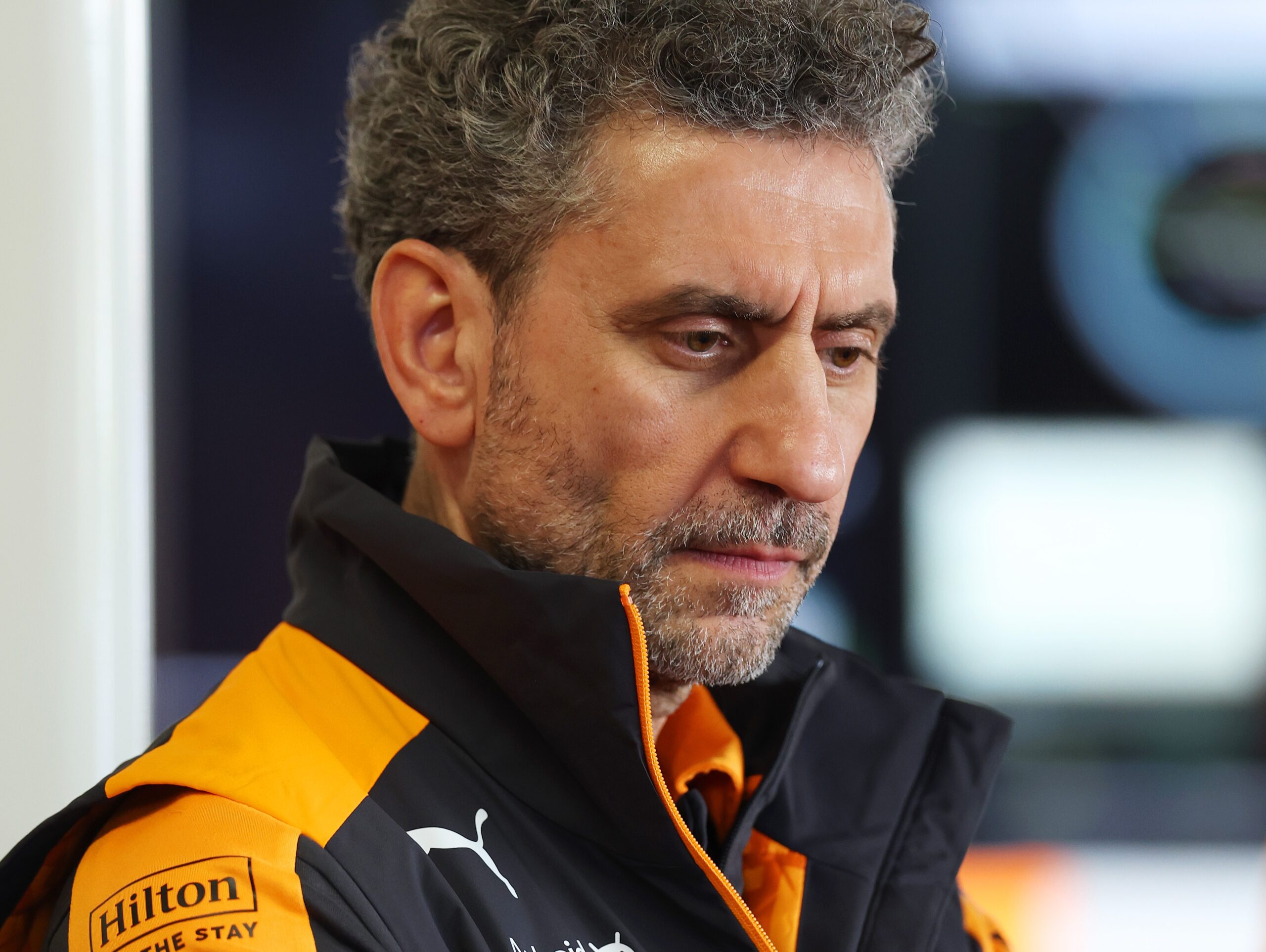
Speaking during the Japanese GP weekend McLaren team principal Andrea Stella urged F1 decision-makers to implement changes to improve the safety and quality of racing under 2026 regulations.
During a Saturday media session, Stella reiterated the need for FIA to prioritise safety after the first three races of the season exposed flaws in the new regulations. Many key figures in the paddock have expressed similar views, with the call for change amplified in the wake of Ollie Bearman’s recent 50G crash.
“I think as an F1 community, we have identified the priority number one, apart from safety issues, that we at McLaren in particular have definitely raised the attention, like starts or the risks with the lift and coast of the car ahead for the following car and so on,” Stella said.
How the 2026 F1 regulations dampen the excitement of qualifying
Ferrari driver Charles Leclerc—27-time polesitter, renowned for his one-lap pace and ability to find extra time in the final stages of Q3—lamented that the new regulations have inadvertently dampened the excitement and challenge of qualifying. He pointed out that the battery management system penalises drivers for trusting their instincts and employing the same tactics they used to improve their lap times in the past.
The McLaren boss shared a similar view, explaining how the regulations have affected the spectacle of qualifying.
“But from a performance and from a driving point of view, the main opportunity that was identified was qualifying,” Stella noted. “And driving in qualifying to the limit of grip and to make sure that the drivers that are best at exploiting the grip and at times even take the risks to do so, they are rewarded.
“I think here in Suzuka, because we have this shortage of energy, we expose some of the limitations of the current regulations.
“Because you mentioned Degner 1 is now a corner in which you almost lift and roll through the corner and then you have to avoid going on power between Degner 1 and 2, because that way of using your battery would not be efficient. Instead, that corner has always been one that the drivers will mention in a season, like, what are the most challenging corners, that’s one of those.
“And at the moment that corner is kind of… you think about the battery as you go through the corner, you don’t think about gaining half a tenth just by committing to it. So I think that’s one of those, the first corner of the Spoon as well, and similar concept applies between the first part and second part of the Spoon.”
On the specific challenges encountered at Suzuka
While the cracks were already beginning to show at the Chinese GP, the issue was especially prominent at Suzuka, a fan favourite circuit known for being an old-school track that provides a unique test of skill for drivers.
Stella continued: “I think also the speed you enter into corner two. In the past you would enter into the first part of the corner one, corner two very, very fast, and now you enter there at limited speed, so this makes corner one, two just overall slightly easier.
“So I think the challenges of Suzuka kind of suffer, and I can understand that the drivers push the F1 community to fix this, such that qualifying retains the excitement, the challenge, the DNA of being the moment in which the best driver gets rewarded, especially in the places where they can make the difference with the bravery and the ability.
“I think this is not obvious as to how to do that, but there are some possibilities, and there are some further meetings that will happen between the teams, the FIA and F1, between now and Miami, so let’s see what progress we can do there, but I think it’s something that we should implement.”
F1 leaders aiming for solutions ahead of Miami
Stella expects changes to arrive as early as later this season, particularly as F1 decision-makers will be holding discussions during the month-long break in April.
“I cannot say whether the solutions will be implemented for Miami or later,” he admitted.
“But I think that there will be adjustments made in 2026, in order to improve the way in which we utilise what’s available in the power unit, to retain, like I said before, for instance, the challenge of qualifying, and the excitement of qualifying, which is an excitement for the drivers, and also it’s an excitement for the spectators. When we had the last F1 commission, the attitude by all parties was very constructive.”
Stella noted that the main obstacles are technical rather than political, as he believes many in the paddock are on the same page regarding the issues currently plaguing new-gen F1.
“It wasn’t very difficult to identify the areas to work on, and I think all parties come with the will to find some solution and implement them. So I don’t think it will be too much of a political game. I think it’s actually more of a technical challenge.
“Like, what do you do in terms of adapting what’s available in the current regulations, to make sure that qualifying retains these challenging elements, and you are rewarded if you attack an high-speed corner or if you are earlier on throttle, rather than being penalised because you used your battery too early and you won’t take it later in the straight.
“So I don’t think it’s political, I think it’s more technical, and I would expect changes in 2026.”