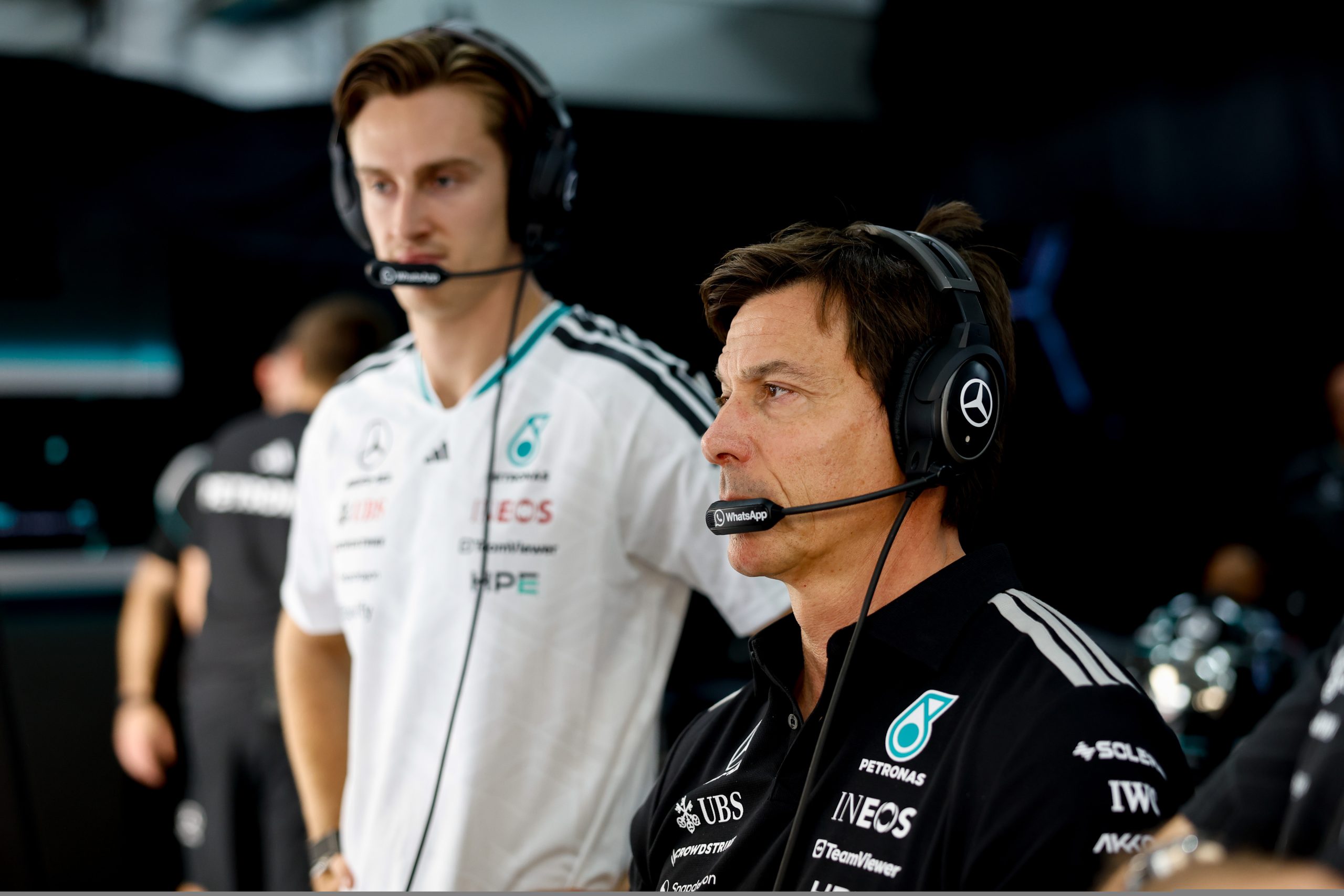
Mercedes Team Principal Toto Wolff has explained how Kimi Antonelli’s decision to lift rather than overtake Max Verstappen on the penultimate lap of the 2026 Formula 1 Las Vegas GP ultimately cost the Italian a chance at victory. With George Russell finishing P9, while Antonelli secured P4, Mercedes narrowly missed out on a stronger result in Las Vegas.
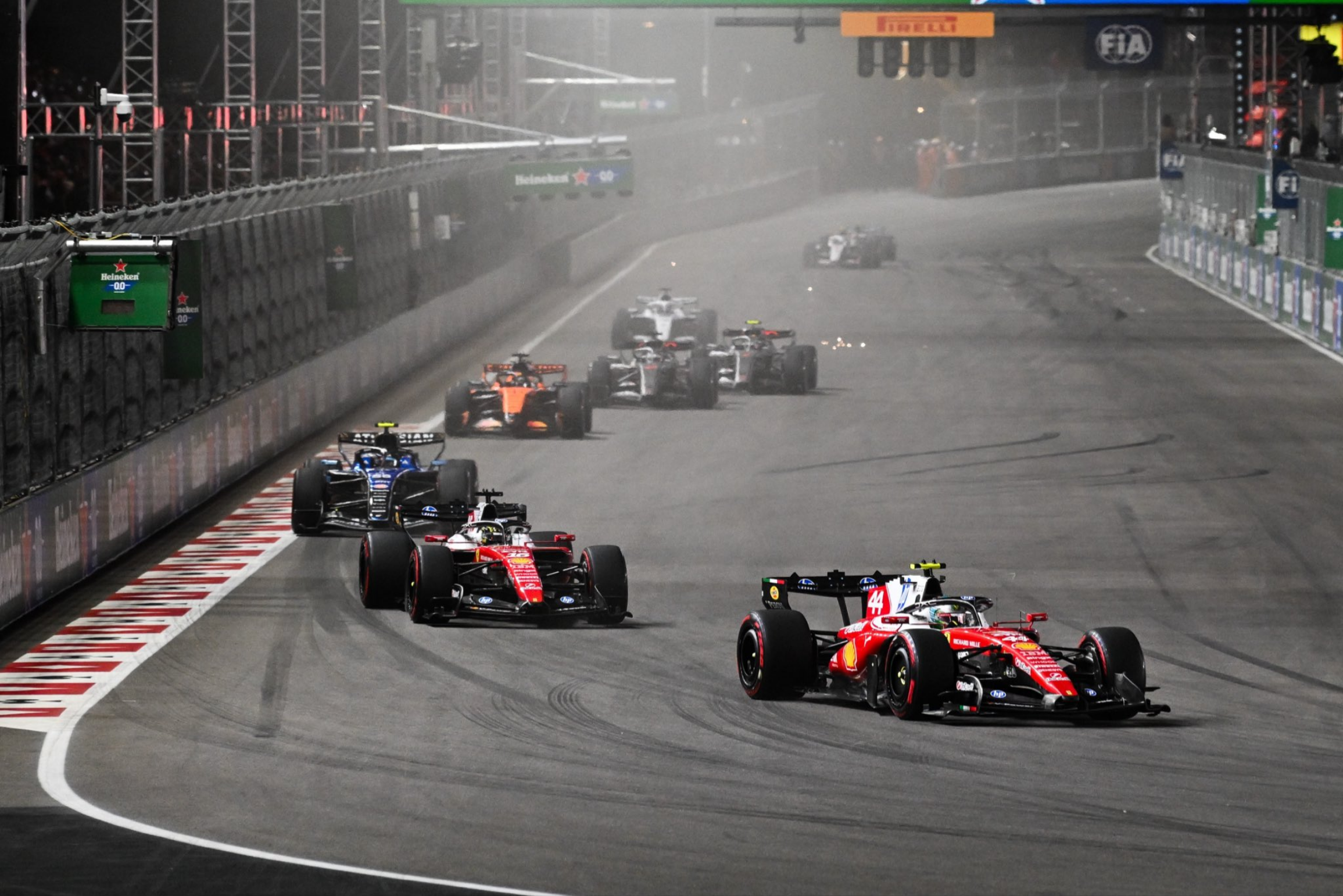
After starting the race in P6, Antonelli had been in contention with race winner Verstappen during the closing stages, with Mercedes believing it had enough in the tank to challenge the Red Bull driver on the run to the chequered flag. However, a decision to lift left Antonelli brutally exposed on the run to the line at the end of Lap 49, allowing both McLarens to easily get through.
Wolff calls Russell incident “an error of judgement”
Speaking after the race, Wolff also addressed Russell’s incident three laps from the end into Turn 5, describing the move on Antonelli as an ambitious one that ultimately ended in contact with the wall.
The Mercedes Team Principal also spoke on Antonelli’s late-race battle with Verstappen, revealing how the driver’s decision-making affected the team’s energy strategy.
”Yeah, I think from George’s side, he made an ambitious move there on the dirty part of the track. And obviously missed the braking and hit the wall, so it was an error of judgement. And as for Kimi, I think everything was set for an epic last lap in terms of energy deployment. And then, unfortunately, on the back straight, rather than passing Max, he lifted. And that caused the battery on the reapply, caused the battery to be totally depleted. He had no energy left.“
Wolff denies Mercedes used a different engine deployment strategy
Asked whether Mercedes had used a different type of engine deployment strategy compared to its rivals, Wolff explained that the team was operating with the same deployment as Alpine and McLaren.
He also revealed that Mercedes had another strategy available for the final 400 metres of the lap for the final tour, which could have potentially helped Antonelli beat Verstappen.
“So, no, it was exactly… I think at the end we were running the same deployment than the Alpines and the McLarens. At least, you know, it’s available for everyone.I don’t think whether it was exactly the same on the same laps, but everybody had the opportunity and was using it at a certain stage. We had a last weapon up our sleeve for the final 400 metres over the left kink. I think it would have just saved it over the line to win the race. But, obviously, we lost that opportunity.”
Wolff was also asked whether the racing seen in Las Vegas showed a return to the energy deployment battles seen in some of the earlier races of the season, like Melbourne and Monza. The Austrian pointed to several contributing factors, including the circuit layout and the importance of slipstreaming.
”I think what we saw was a combination of factors. The slipstream, definitely a big factor. I think it’s the straight longer in Monza. I think it is. The amount of energy that’s left during the lap is better than in Monza. Because in Monza, straight after straight after straight. Here you have those twisty parts, then you have a straight and then a long one. So I think it’s a combination of all of that.”
Wolff clarifies who was responsible for Antonelli’s final-lap decision
Wolff further clarified that Antonelli’s decision to lift rather than attempt an overtake on Verstappen was ultimately a driver decision, rather than an instruction from the Mercedes pit wall.
”I thought that. First, why we got passed is because he literally had no battery. You know, he wanted to stay behind Max. So he lifts, he reapplies and the battery is empty.And that’s why even the Alpine almost had us and that’s why they overtook us left, right and centre. So that was the error. It can happen, it’s complex.”
When asked whether the decision was made by the team or the driver, Wolff confirmed that Antonelli had made the call himself in the 2026 F1 Las Vegas GP.
“It was Kimi to decide it differently. I was Kimi lifting. But we had something up our sleeve, which would have been very complex on the final long straight, but obviously it never came to that point because the battery wasn’t there anymore.”