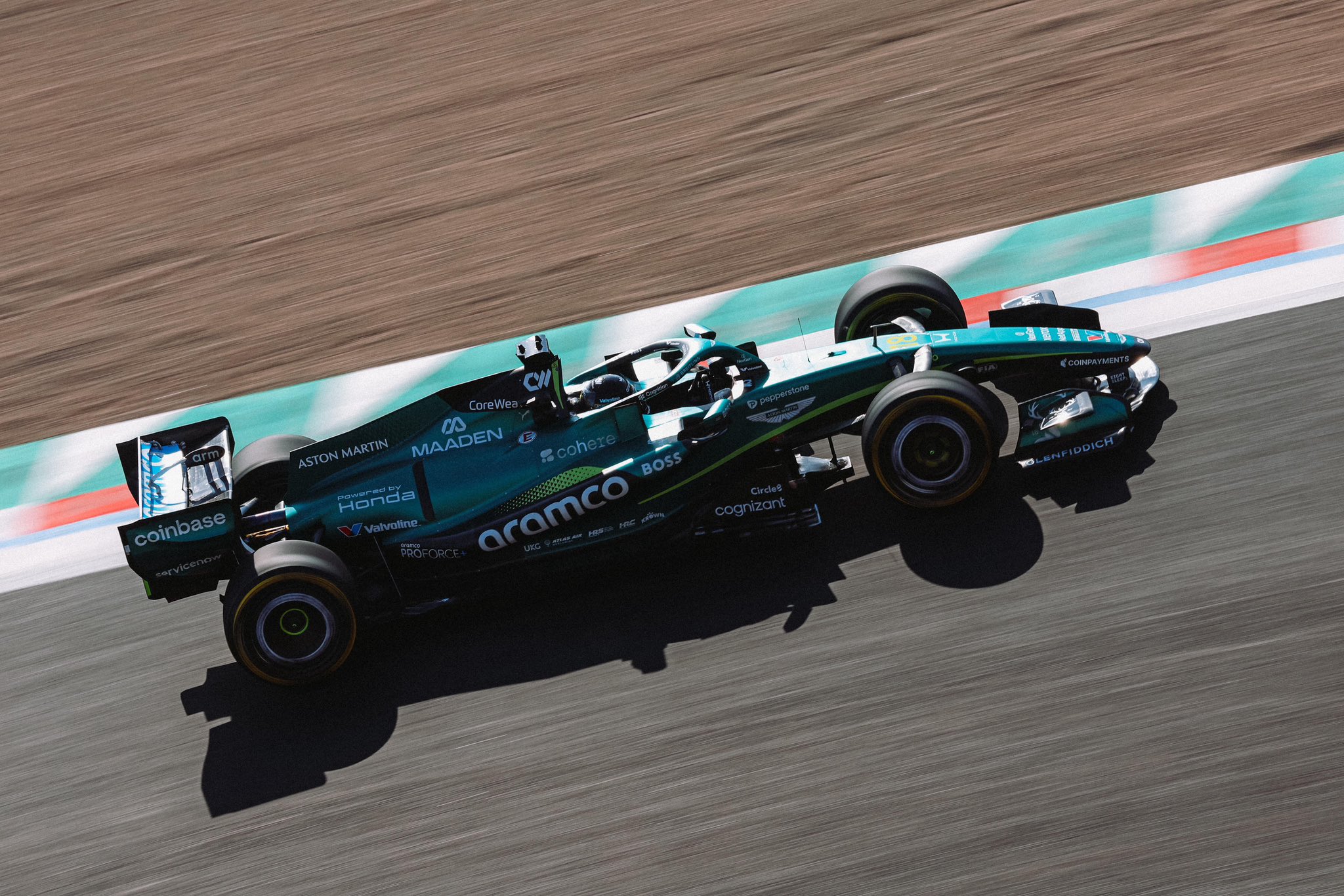
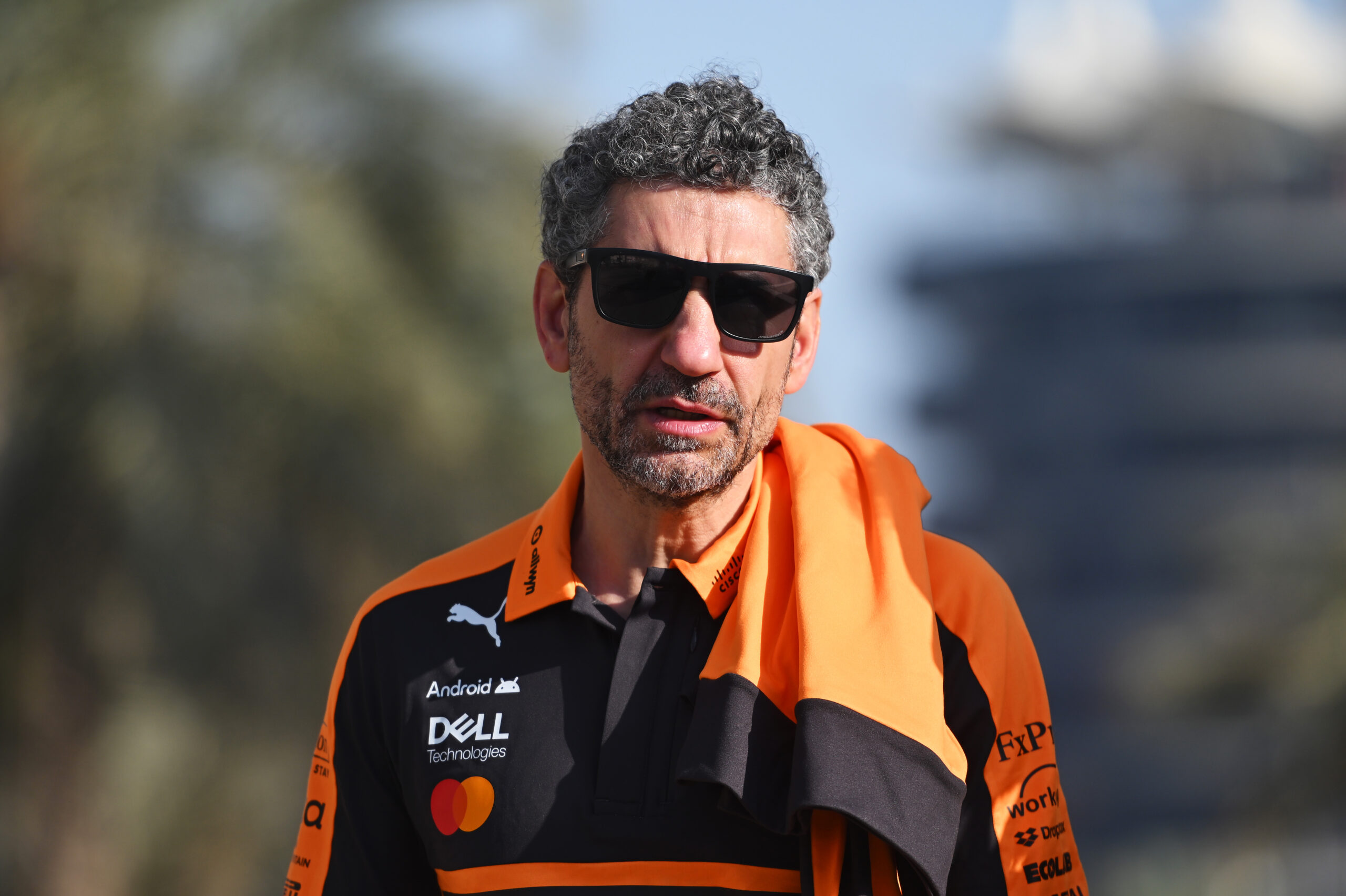
Andrea Stella left the 2026 F1 Japanese GP with a second-place finish for Oscar Piastri and a respectable fifth-place for Lando Norris. The McLaren team principal delivered an explanation of his team’s strategic thinking in Suzuka, that laid bare how fundamentally the new power unit regulations are reshaping the art of racing at one of the calendar’s most demanding circuits.
The problem with three consecutive straights
Piastri ran a strong race, crossing the line in second, but it was the “yo-yo” battles involving Lando Norris that drew the most attention: the exchanges with Lewis Hamilton, positions traded and immediately retaken.
Stella was characteristically direct in explaining why those moves played out the way they did during the F1 Japanese GP.
“What happens when in a track like this, you have three straights, one after the other, you won’t have enough energy for the three straights. So you kind of have to pick when you want to attack or defend. We saw today that, for instance, following Ferrari, the right place to attack was between Spoon and the chicane.”
130R is no longer flat
That decision was not arbitrary. Stella explained precisely what attacking at that point on the circuit sets in motion, and why the consequences extend all the way to 130R.
“There, if you press the boost button, then you are going to have an extension of the MGU-K deployment. This will use a lot of your energy. This will make the speed approaching 130R very high. We talk about 340.”
To understand why that number matters, it helps to know what 130R actually is. Turn 15 of the Suzuka International Racing Course, 130R takes its name from its geometry: a long, sweeping right-hander with a radius of 130 metres. The convention of naming corners by their curvature rather than by a proper name is common in motorsport, and at Suzuka it has produced one of the most recognisable pieces of tarmac in the sport.
In traditional F1, drivers took 130R completely flat out at full throttle, committing to the corner at high speed with no margin for error. It was one of the purest tests of nerve and mechanical trust on the calendar.
A change due to new regulations
Under the 2026 regulations, that character has changed. At 340 kilometres per hour, the speed a driver can reach after deploying boost between Spoon and the chicane, the physics of 130R no longer permit a flat-out approach.
“At 340, 130R is no longer a flat-out corner. So you don’t only lift because you want to recharge, you lift because otherwise you would have a problem from a stability point of view. So the lifting in 130R is not only related to the energy management, it is a grip-limited condition.”
What appears to the observer as a driver recovering battery charge is, in practice, a mandatory lift imposed by the physical limits of the corner at those speeds. The two effects, energy recovery and the requirement for grip, have become impossible to separate from the outside. The 2026 power unit regulations have quietly altered one of Suzuka’s most defining characteristics.
The rule that forces the issue
The 2026 regulations themselves complicate the situation further. Once a driver lifts, the rules constrain how power can be redeployed.
“Once you lift, and for instance you have not been able to overtake, then if you go on power again, you will have to comply with some regulations that force you to deploy the electrical engine. So this means that you will have to use furthermore your battery, and very likely this means that if you have completed your overtake, you are now going to be short of battery after the chicane, and that’s why we saw overtaking back from the chicane to corner 1.”
This explains why positions kept changing hands at the same corners throughout the afternoon. The driver who attacks successfully at the chicane finds himself immediately vulnerable on the following straight, because the regulations oblige him to consume energy at the very moment he needs to conserve it.
A call for more freedom
Stella did not stop at analysis. He moved directly to advocacy, arguing that the regulations could be refined to give engineers and drivers greater operational flexibility.
“So this is for instance something that from a regulatory point of view is probably avoidable. Like you can let the engineers select themselves sections of the circuit in which after you have lifted, if you go on power you may actually have no electrical engine deployment and you have more freedom in the way you use the battery.
“I think otherwise you find that Lando a couple of times has overtaken Hamilton and has been overtaken back. I think there is a possibility to allow drivers and engineers to have more freedom.”
Without that flexibility, the sport risks producing overtakes that are effectively self-defeating. A driver gains a position only to surrender it immediately, because the act of passing has left him with insufficient battery to defend.
Reading the race
McLaren’s ability to understand and exploit these dynamics in real time, directing Piastri to attack between Spoon and the chicane rather than elsewhere on the circuit, was central to keeping him competitive against the faster Mercedes machinery. That Antonelli ultimately had the pace to win comfortably does not diminish the precision of Stella’s strategic thinking.
If the FIA takes note, Stella has presented a clear and technically grounded case, using the 2026 F1 Japanese GP, for revisiting the deployment rules. If it does not, the same pattern of positions gained and immediately conceded will repeat itself at every circuit that places three straights in succession.