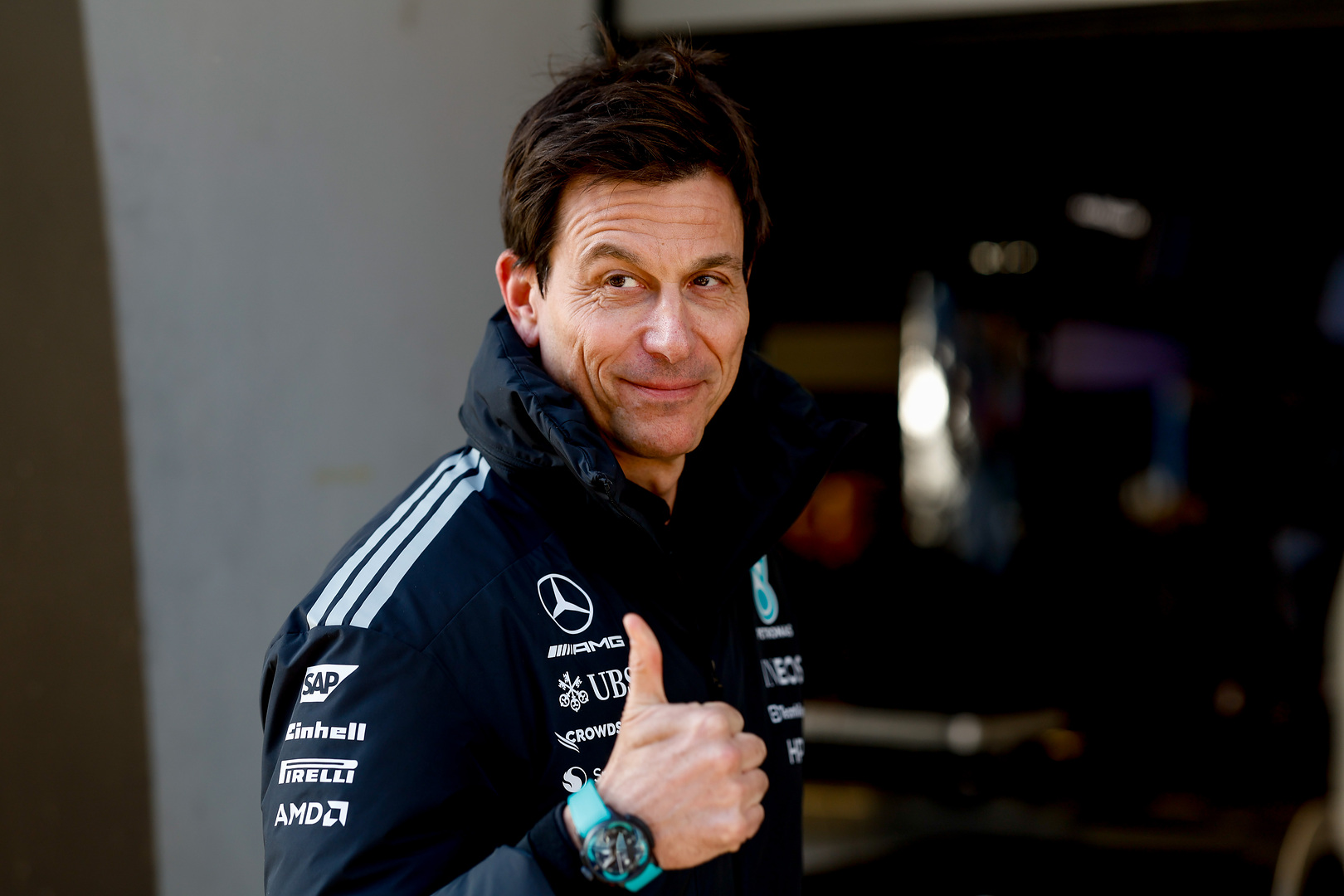
Three races into the 2026 F1 season, the reaction to the new 2026 technical regulations is already deeply divided. Amid the 5-week break before the upcoming 2026 F1 Miami GP in May, stakeholders of the sport met to discuss the regulations. Prior to the meeting, Mercedes’ Toto Wolff spoke in a media call and expressed his hopes for a constructive dialogue with other stakeholders and the FIA on the 2026 F1 regulations. He emphasised that revisions should be surgical and targeted. Wolff also urged critics of the sport not to “badmouth the sport” in public.
Wolff comments on the critics of the 2026 F1 regulations and upholding their responsibilities to the sport
Coming into the 2026 F1 season, the sport had undergone the biggest technical regulation overhaul in recent decades. One of the most polarising changes was the divide in the power units. The new F1 power units now run on a 50-50 split between electric and combustion power.
Despite only being three rounds into the season, many drivers, such as four-time world champion Max Verstappen and reigning champion Lando Norris, have openly criticised the regulations. A shared complaint from a few on the grid is the shift towards technical management rather than raw racing. Another being the safety concerns due to the extreme speed differentials created by the 50-50 power split.
Amidst the wave of negative comments on the 2026 F1 regulations from the grid, Wolff reminded his rivals of the influence of their comments.
He added that they should instead take on the responsibility of working towards helping the sport thrive.
“We all, the drivers, the FIA, Formula One and the teams, we need to understand our responsibility as the guardians of this sport. And we need to respect what the sport has done for us and work constructively among ourselves to improve where things need to be improved and safeguard when it’s needed.”
The Austrian added that while valid, these discussions should have been handled with the stakeholders rather than the public.
“And we all have our opinions, and that’s absolutely legit. But these opinions and discussions should happen among the stakeholders more than in the public eye because the sport is in a great place.”
The impact of drivers’comments on fans
Wolff emphasised that “gamesmanship” should not be the primary factor that affects the revisions of the 2026 F1 regulations.
He explained that F1 has a large fanbase, and it would be impossible to please everyone.
“We have many hundreds of thousands of fans that love the sport. There are others that don’t love certain aspects of the sport. But in order to protect all of this huge opportunity that the sport gives us, we shouldn’t badmouth in public our own sport. And we’ve been all falling foul to this in the past because of gamesmanship or because of trying to protect a situation or improve a regulatory situation.”
The 54-year-old then reiterated that drivers should not “badmouth” the Championship in public. He explained that, over time, these comments would result in a negative perception of F1 among fans.
“But we need to be very careful because the things we say in public, they may not have an immediate repercussion on how the fans perceive the sport. But that comes with a lag, and I think lag in terms of L-A-G. And that is the responsibility we have. And of course, everybody’s entitled to have an opinion. But I think we owe it to ourselves to express that opinion in the stakeholder groups.”
Setting the objectives
Wolff believes that the key to having productive conversations on the 2026 regulations that would actually benefit everyone in F1 is to have clear priorities. For the Austrian, his two main concerns are drivers’ safety and the racing.
“Now, this has happened in the last few weeks in a constructive way. We need to; we have set our objectives in the way that we want to improve, where we believe it improves, we want to look after the safety of the drivers. We want to protect what we see in racing.”
Another key aspect Wolff has considered is the fans’ satisfaction with the sport. However, he also believes many passionate fan opinions are influenced by “nostalgia”.
He further reiterated his point, using the 2000s era of F1, where there was little to no overtaking as an example.
“We act upon data. What do fans love, and what do they not love? And respect also the hardcore motorsport fans that have loved what we had before. But there’s also a certain degree of nostalgia that makes the past much better than the present. I mean, people talk greatly about the 2000 years and maybe forget that there were years where there wasn’t a single overtake in a race. It was maybe great for the drivers because it was flat out through the corners.
“But if this product is boring for spectators, then we don’t gain. And we had many years where the product was criticised, and we acted erratically in changes, and they weren’t any better either. So I think we are in a very privileged situation today that we have a great sport and we all have a responsibility to carry that.”
Wolff on Bearman’s incident at the 2026 F1 Japanese GP
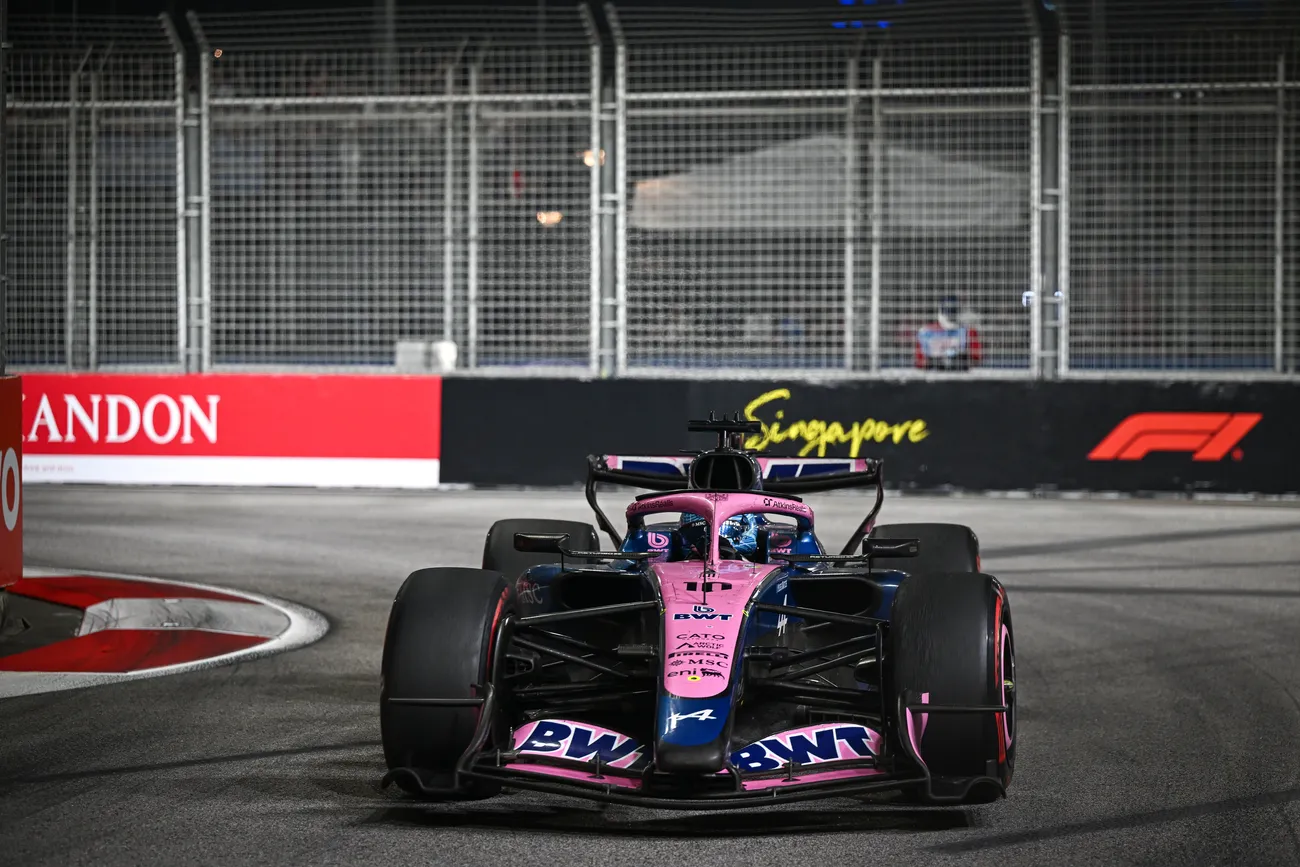
At the 2026 F1 Japanese GP, Haas’ Ollie Bearman‘s weekend came to a premature end on lap 22 of the 53-lap race. After lining up his Haas to overtake Franco Colapinto, the British driver veered off track to avoid colliding with the much slower Alpine.
While the incident only further fueled safety concerns on the 2026 F1 regulations, Wolff argues that the incident was more of a “misjudgment of a situation” when using the boost.
“At the same time, you know, we need to see the Bearman accident for what it was. And it was a misjudgment of a situation. It’s like pushing the boost button, and it’s like not braking on a kink where you supposedly should brake.”
Wolff debunks safety concerns on significant speed differentials
Wolff futher explained his judgement on Bearman’s incident by drawing on his passion for endurance racing. The Austrian had citied the multi-class dynamics of the Le Mans series and argued that significant speed differentials were indeed safe.
He then emphasised that the his top priority was the safety of the drivers on track.
“And whilst we need to protect the safety of the drivers, and this needs to be of utmost priority importance, there’s plenty of brilliant racing happening in the world that we as racers love. I love Le Mans. I’m sitting overnight watching the timing screen, but the hypercars go through the Porsche curves 30 or 40 kilometres faster than the GT3 cars.
“The speed differences are enormous. We have seen critical situations, massive accidents between those different two classes. I remember I was awake overnight when Mike Rockenfeller crashed against the GT car in the night because it was a misjudgment.
“I remember Allan McNish having the spectacular off with the GT3 car. I remember an accident a year or two ago in the Porsche curves because of a misjudgment of one of the drivers. And we still love it. And this series exists with all of that.”
Motorsport may not be the safest sport, but drivers are aware of the danger
Wolff then brought up the Nordschleife and the World Endurance Championship (WEC) series to drive home the point that drivers are well aware of the risks of the sport.
He added that while the sport may not be the safest, he, along with other key stakeholders, can reduce the chances of big accidents.
“And obviously, we have the tragic event. But one of the fascinations of the Nordschleife is that a works GT3 car races a private Volkswagen Polo with amateur drivers in the night, in the rain, over crests that are not where you don’t know what to expect from the other side. And even the best racers in Formula One in our world love that sport with all the dangers it brings with it. When you look at WEC in Imola this weekend, the lap time differences between the prototypes and the GT cars were more than 10 seconds.
“And that’s why, you know, let’s concentrate on those two priorities that I mentioned before and make it better and safer. Will it be always the safest sport? It won’t. It is about understanding what those systems do to the car, how we can avoid, how we can reduce the risks. And in particular situations, like in the rain or whatever.
“And but always with reminding ourselves we are guardians of the sport. We have responsibility for the sport. The opportunity is given to all of us, rather than looking at your personal advantage or disadvantage of certain regulations being changed or not.”