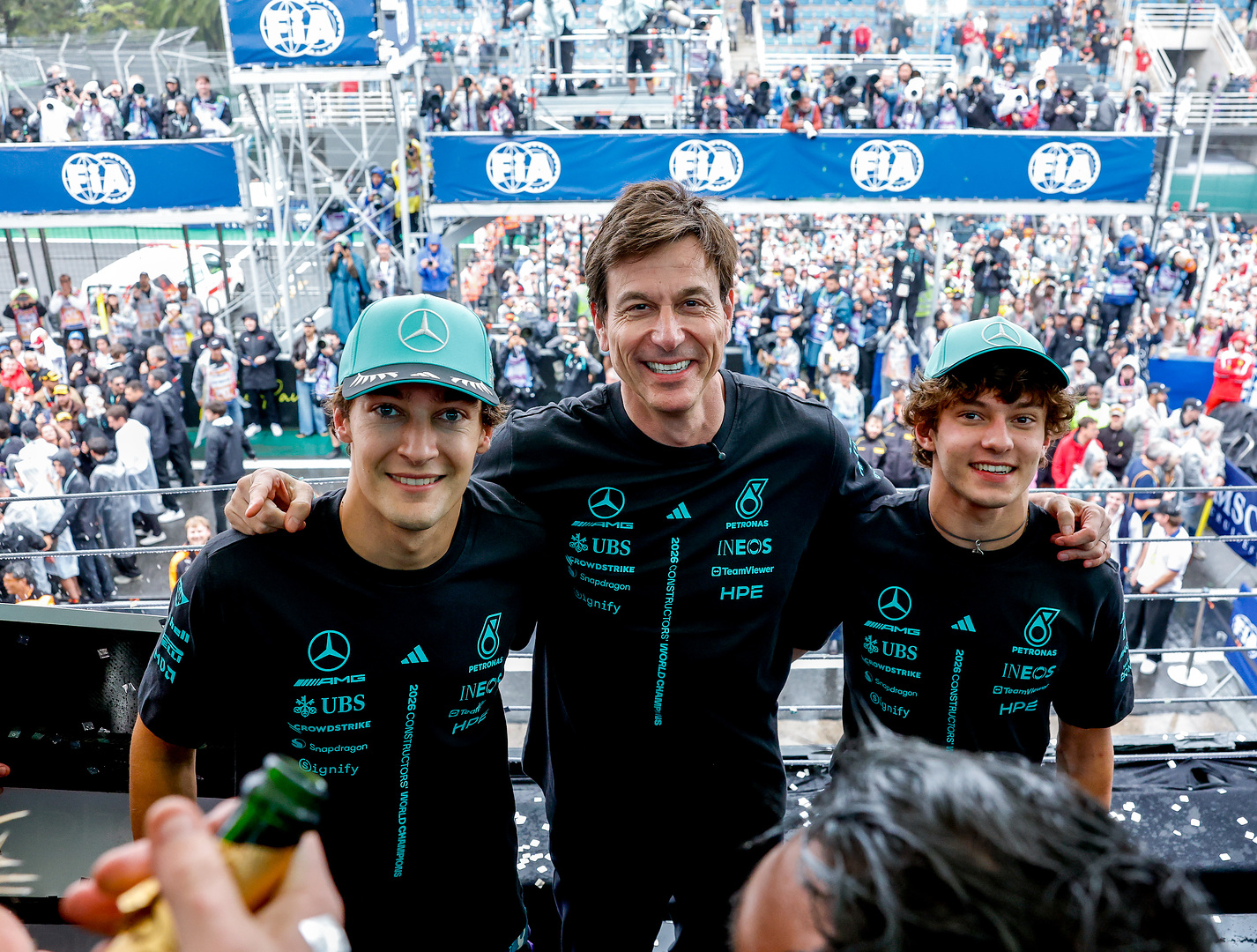
Toto Wolff has reflected on Mercedes’ journey back to the top of Formula 1 after the team secured the Constructors’ Championship at the 2026 F1 São Paulo GP, admitting the difficult years following their dominant championship run played an important role in shaping their return to success.
After establishing themselves as the benchmark of the sport during an unprecedented period of dominance, Mercedes endured a challenging spell following the introduction of Formula 1’s ground-effect regulations in 2022.
The team struggled to find consistency with the new generation of cars, with their championship challenge slipping away as rivals Red Bull, McLaren and Ferrari increasingly established themselves as contenders.
However, Mercedes have now returned to the summit, with their latest Constructors’ Championship representing a significant milestone for an organisation that had to rediscover its winning formula after years of success.
Other Constructors catching up in the later stages of 2026
Speaking after the 2026 São Paulo Grand Prix in a print media session, Wolff acknowledged that the competition had become increasingly difficult, despite Mercedes’ strong position in the Constructor’s Championship heading into the final stages of the season.
“Yeah, look at the last few races. We haven’t won. And today at the beginning of the race Kimi was just storming away. It looked like this could be ours. But the competition has been getting tougher. Between Ferrari, McLaren, Red Bull and ourselves,” Wolff explained.
“It’s four teams that can win races. And we’ll be challenging for a world championship. And I have no doubt that it’s going to be very difficult for us next year.”
Despite Mercedes celebrating the 2026 Constructors’ Championship, Wolff was already turning his attention towards the challenges ahead, particularly with the next major regulation change approaching in 2027.
The Mercedes team principal explained that the final three races of the current campaign would provide an important opportunity to understand where the team could improve, both in terms of its current machinery and its preparations for the next generation of cars.
“For me the 2027 season has started now. It’s about learning in the three last races. What is it we can optimise? What didn’t we spot when we put the upgrade on the car? What is it we can learn from today? And attack these last three races full blast. Whilst also making sure that we have the learning for next year’s power unit and car.”
Stability and culture behind Mercedes’ return
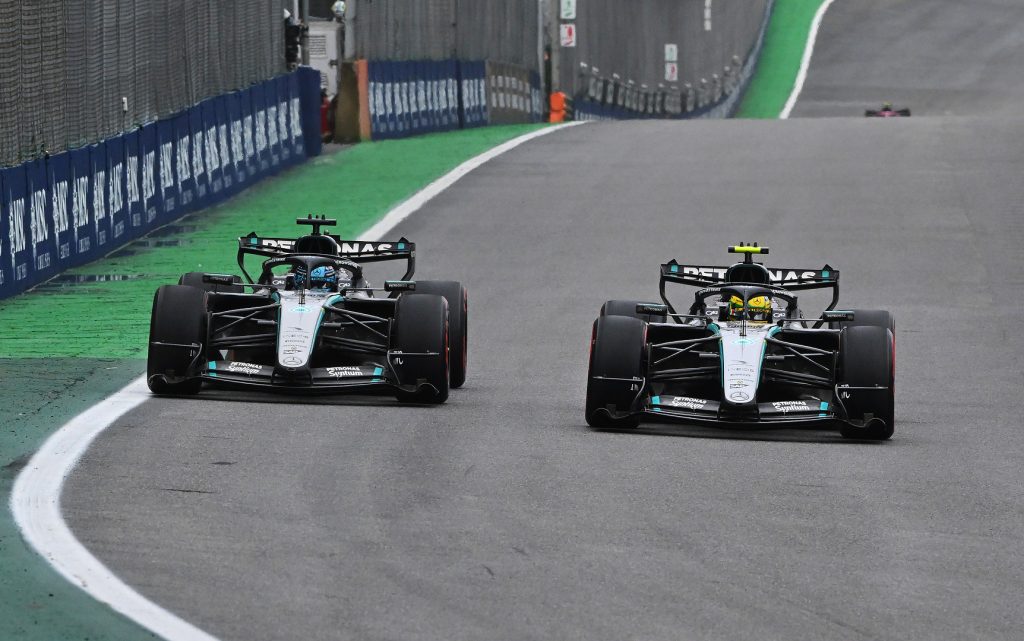
While Mercedes’ latest championship success represents a return to the heights they previously enjoyed, Wolff believes the foundations for that achievement were established during the team’s more difficult years.
Asked about the importance of stability within the organisation, particularly with many of the personnel who experienced Mercedes’ previous championship-winning era remaining in place throughout the struggles, Wolff identified the environment created within the team as an equally important factor.
Although stability had played its part, he was keen to highlight the importance of building a culture where employees felt comfortable making mistakes, speaking openly and contributing to the organisation’s long-term development.
“We have stability certainly a factor. But we have also many people that have joined us recently. And I think what I would like to choose as a word is safety.
“We are not a high end fire organisation. We provide a culture and an environment where you can thrive. Where you are allowed to make mistakes. Where you can speak up.”
Achieving long term results
For the Austrian, building a successful organisation is not simply about achieving immediate results. Instead, he believes the foundations of sustained success must be established over many years, with the team’s culture and standards consistently reinforced.
“And over the long term I believe if you want to be successful. Not over a period of a few years but over many decades. This is what you need to be able to kind of ingrain in the team.
“You have to leave your standards in and out. And these are the standards we are setting to ourselves. Sometimes we fail. But we look at the long term vision.”
He added: “For me soon is in 10 years. And I need to set the team up for soon.”
Wolff opens up on Mercedes’ difficult years
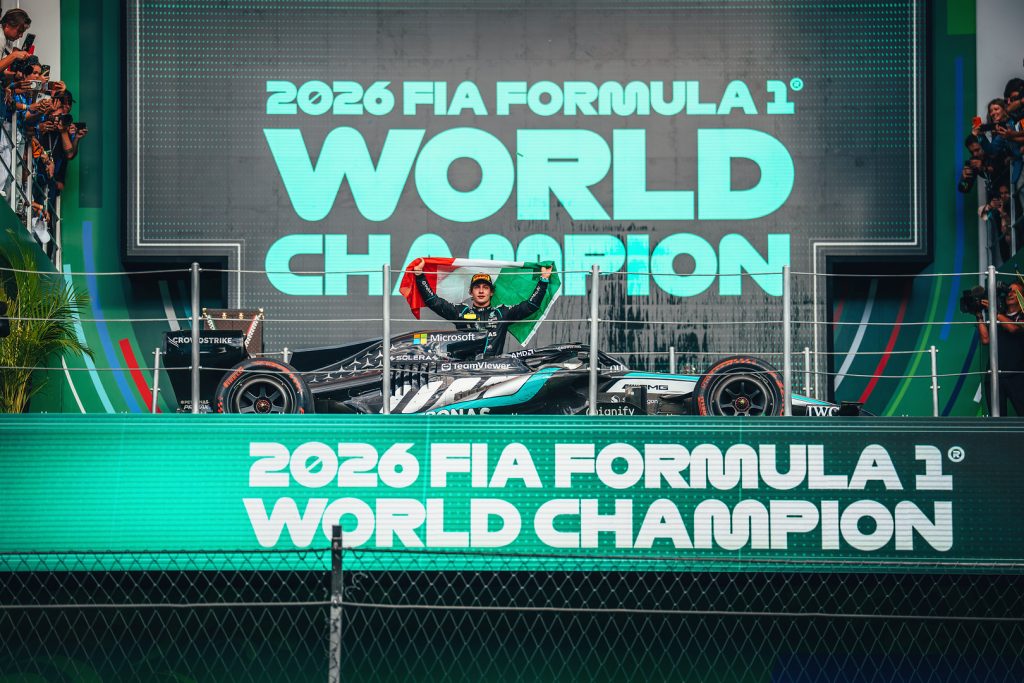
Mercedes’ return to the 2026 F1 Constructor Championship-winning form also carries personal significance for Wolff, who has experienced both the extraordinary highs of the team’s dominant era and the frustrations of its subsequent struggles.
Between 2014 and 2021, Mercedes established one of the most successful periods in Formula 1 history, collecting consecutive Constructors’ Championships and becoming the team to beat.
However, the arrival of the new technical regulations in 2022 brought an end to that dominance. While Mercedes continued to win races and remain competitive, the team struggled to consistently challenge for championships, finishing second, third, third and fourth in the Constructors’ standings across the following four seasons.
Reflecting on those years, Wolff admitted that the difficulties were considerably harder to appreciate while the team was experiencing them.
“You know the thing is when you are in these difficult moments. Like we all are sometimes in our lives. It’s not that easy to keep going.”
Looking back, Wolff believes those experiences were ultimately necessary for the organisation’s development, although that perspective was difficult to maintain when results were not going to plan.
“Because looking back in retrospect. We needed these tough moments in order to grow as people. Or to grow as an organisation. But when you are down. That is quite difficult to feel.”
Prolonged trial and error
He described the period as a prolonged process of trial and error, with Mercedes repeatedly attempting to understand why their performance had fallen away before realising that the answers were not always as straightforward as they initially believed.
“So looking back. Those last four years were very difficult. Between getting it wrong. And then kind of understanding why it was wrong, and then realising no we didn’t understand. And that was a big back and forth.”
Despite the frustration, Wolff was keen to put Mercedes’ struggles into perspective, pointing out that the team had remained a regular presence towards the front of the grid throughout that period.
Mercedes still remaining a strong team through the tough times
While they had lost their position as championship favourites, Mercedes still secured race victories and finished no lower than fourth in the Constructors’ Championship.
“But we will be looking back in 10 or 20 years. And when you look at the statistics. It wasn’t that we were complete losers over those four years. Because we finished second, third, third, fourth. I think that was the result. We won races. Won many races.”
However, the Austrian acknowledged that the statistics did not necessarily capture the disappointment felt within an organisation that had become accustomed to winning.
“So it wasn’t that bad at all when you look at the sheer numbers. But it felt not good.
“The resilience of the team. The people that held together in those tough times. Is a factor I think.”
Now, with another Constructors’ Championship secured, Mercedes have completed a journey that few teams in motorsport have managed following such an extended period of dominance.
Wolff admitted the achievement carried particular weight given the challenges the organisation had faced since its previous championship-winning era, expressing his pride in being part of a select group of teams capable of rebuilding and returning to the summit.
“So it feels really good sealing those two titles. Not many sports teams have done that. After consecutive run of championships. Then a difficult spell and then coming back.
“I’m really proud that we are part of this very small group of teams that have done that in motorsports.”