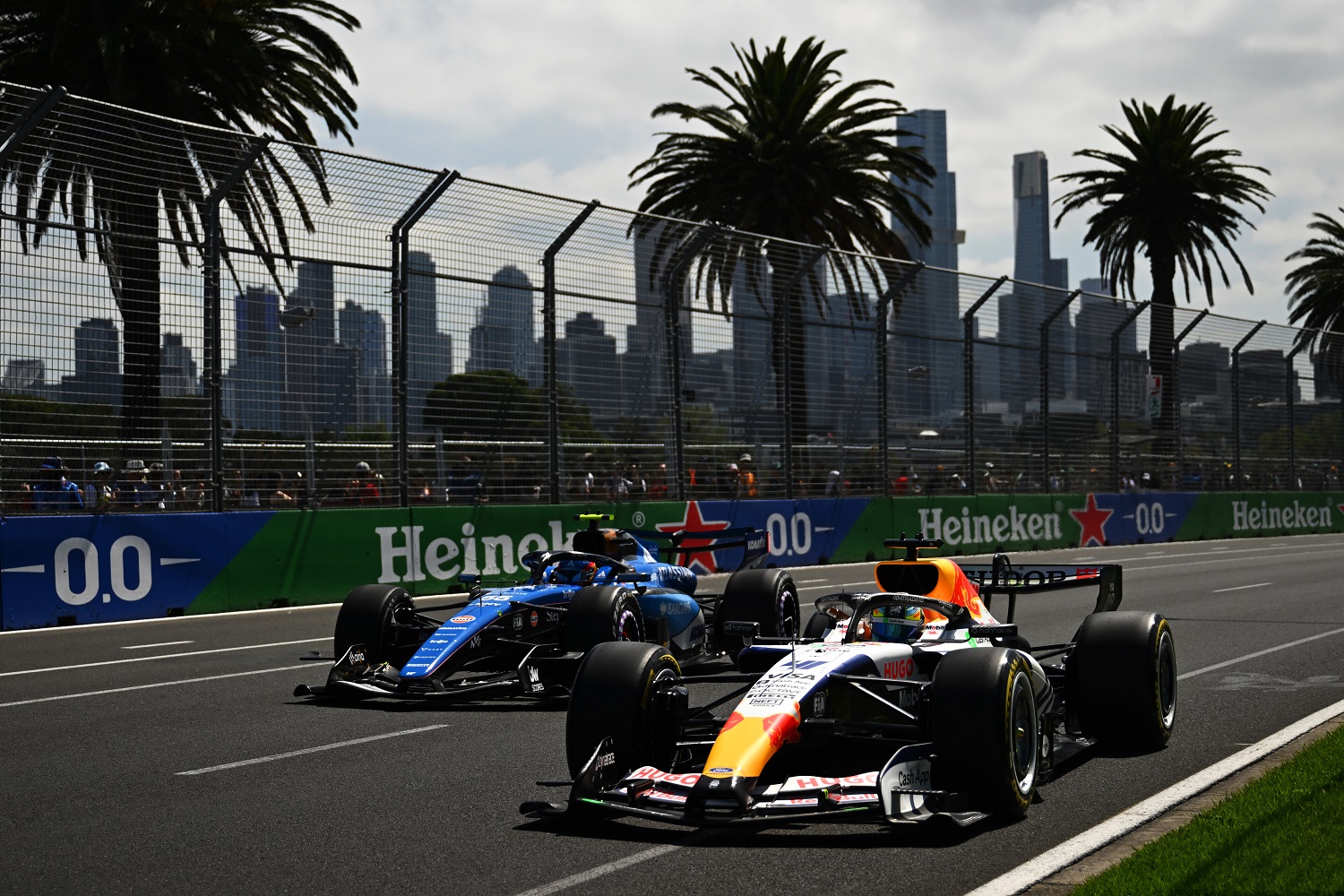
The FIA released information about changes made to driving standard guidelines and penalty guidelines for F1 2026 after Qatar meet.
The FIA together with F1 teams and drivers agreed to changes and modifications to driving standard guidelines and penalty guidelines for 2026 season, after their last meet in Qatar. For long, the governing body kept both documents confidential between them and the teams.
But in recent times, they have made the documents public for better transparency. The driving standard guideline is not imposition and a guarantee of a penalty, but only a guiding document for stewards when taking a decision on a particular incident or rule break.
FIA agrees to changes
Following the discussions, the FIA agreed to some key changes which came to light last year. One of the key issues ignited by the F1 drivers was related to penalty points on FIA superlicense for small incidents, which increased chances of a race ban if they earned 12 points in one year.
As such, the FIA decided that penalty points will not be imposed for minor offences other than, if the offence is ‘dangerous, reckless or apparently deliberate actions resulting in a collision or for other unacceptable or unsportsmanlike behaviour’.
In terms of overtaking moves, there will be leniency if drivers have ‘attempted to avoid a collision’ due to ‘temporary loss of control or lock-up may be due to the “laws of physics”’. Additionally, the stewards will also keep in mind that the other car cannot disappear, if one car has gained the right to the corner.
These are some of the points that the FIA steward will look into regarding overtaking:
- How did the cars get to the incident? (E.g. late braking, diving in, moving under braking.)
- Was the manoeuvre late or “optimistic”?
- What could the drivers reasonably see, know, or anticipate?
- Do we believe the manoeuvre could be completed on the track?
- Was there understeer / oversteer / locking?
- Was there an attempt to avoid a collision?
- Did either car release the brakes in order to attempt to gain priority.
- Did someone position / handle their car in a way that contributed to the incident?
- Did the type of corner contribute to the incident? (e.g. camber, kerbs, curve, apexes)
- What were the relative tyres / tyre age / grip?
There will be more flexibility in imposing certain standards by the stewards. After queries on driver behaviour under yellow & blue flags and track limits, the FIA added certain guidelines for better clarity.
These are the pointers that FIA will look into in relation to track limits, blue flags:
- If a driver exceeds track limits following an obvious loss of control.
- If a driver exceeds track limits in order to avoid a collision e.g. Typical Lap 1, Turn 1 incident.
- If a driver has been considered to be “forced off” by another car (in a decision of the stewards)
- If a driver exceeds track limits and is penalised for gaining a lasting advantage or unsafe re-join.
- If a driver exceeds track limits during an incident which is penalised for any other reason. E.g. if a driver exceeds track limits during an incident for which they are penalised for causing a collision.
- In the context of an overtaking manoeuvre, be that failed or completed, if a driver leaves the track but clearly gains no advantage, the Stewards retain the discretion to determine that no strike will be applied.
- (Blue flag breach will be considered) If the overtake occurs after the car has passed 8 consecutive light panels.
- If an overtake is delayed by the car being lapped in order to receive OVERTAKE from the car lapping.
Need for publishing guidelines
The FIA states that its objective to publish the guideline is to facilitate and promote: ‘Safe racing; Hard and competitive racing; Fair racing; Sporting justice; Consistency across all categories; Standardization of driving standards and race direction operation across all categories’.