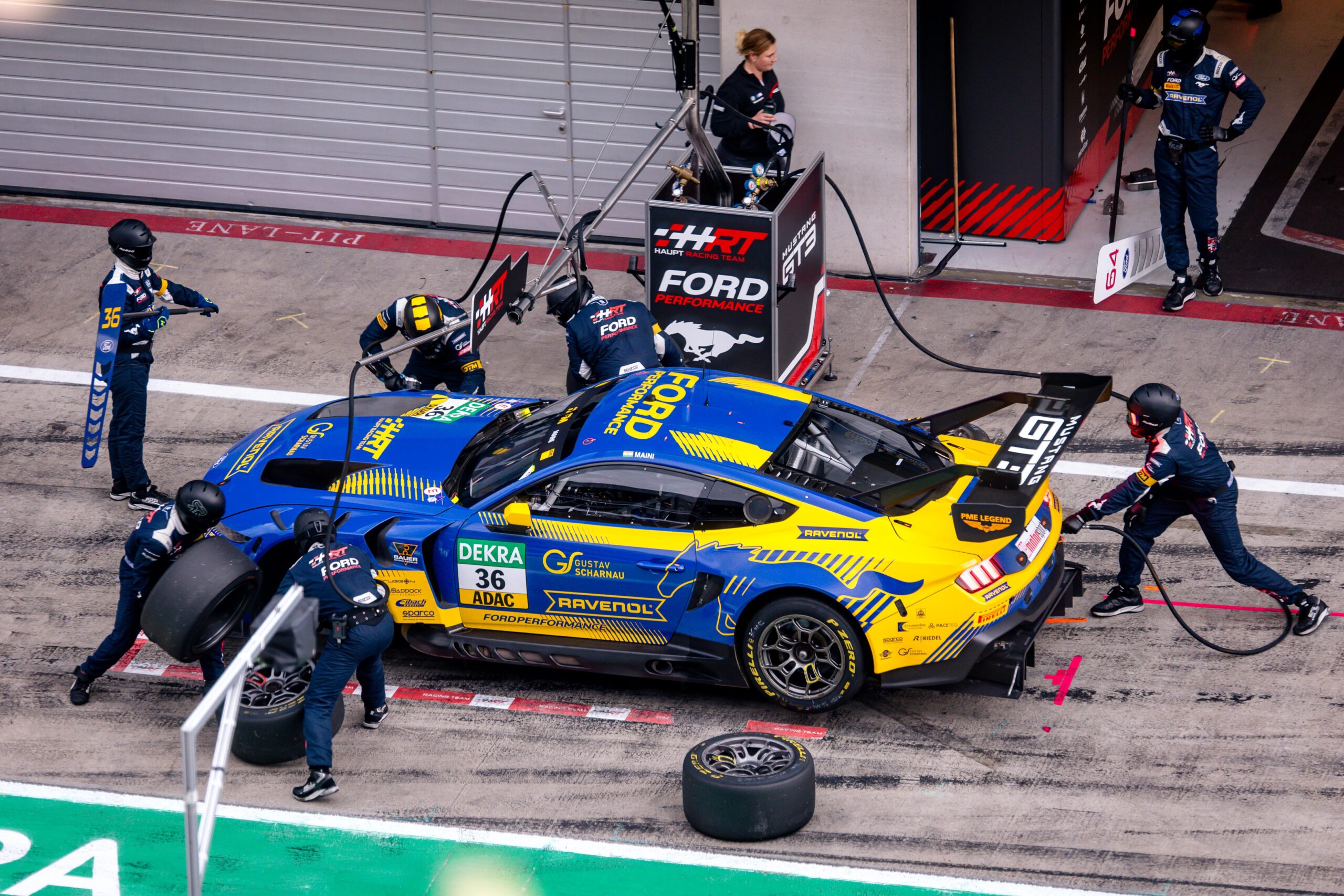
Arjun Maini believes that success in the Deutsche Tourenwagen Masters (DTM) demands far more than outright speed. Competing with Haupt Racing Team (HRT), Maini operates in one of the most competitive environments in GT racing, where DTM success relies on precision, execution, and relentless consistency.
In an exclusive interview with Pit Debrief ahead of his 2026 campaign, Maini explored what separates occasional standout performers from drivers who achieve sustained DTM success. His reflections reinforce a central theme: in DTM, consistency defines success just as much as pace—if not more—over the course of a full season.
Maini on the unpredictable nature of DTM and its impact on success
Maini highlighted that one of the defining characteristics of DTM is its unpredictability. Unlike many other championships, where performance trends often stabilise, DTM regularly produces fluctuating results. Consequently, DTM success becomes exceptionally difficult to sustain, even for the most competitive drivers.
He explained that this volatility forces drivers to constantly adapt, as strong performances one weekend do not guarantee similar outcomes at the next event. In this context, maintaining momentum becomes one of the greatest challenges in achieving DTM success.
“That’s actually a very good question,” he said when asked what separates drivers consistently fighting at the front from the occasional points-scorers. “And I think it’s very difficult to answer because I feel like DTM is one of those championships where you could be winning one weekend and the next weekend you’re not even scoring points.”
Building on this, Maini underlined just how fine the margins are across the grid. In DTM, success often depends on extracting every possible detail, as even minor issues can dramatically affect results.
“And I think that’s the speciality in it. It’s like everyone is so close, so tightly matched, and just one thing out of the window and suddenly you are nowhere. And I think there’s a lot of things that need to come together, for sure. You need to be at your best week in, week out.”
As a result, Maini makes it clear that DTM success requires near-perfect execution. Drivers must consistently perform at a high level across all sessions, reinforcing how unforgiving the championship can be.
The ingredients required for sustained DTM success
Moving from unpredictability to performance, Maini outlined the key components that underpin consistent results. He stressed that DTM success is never defined by a single factor, but rather by the alignment of multiple elements working together seamlessly.
From car performance to team coordination, every aspect must function optimally. Maini emphasised that success in DTM depends on a strong relationship between driver and engineers, ensuring that the car operates at its full potential throughout the weekend.
“And I think in terms of your car performance needs to be there, in terms of you need to be on top of your setup with your engineers, making sure that everything is working. Of course, there’s pit stops as well that need to go well. And your race car.”
He further expanded on this by highlighting the importance of managing the many variables that influence race outcomes. In DTM, success often comes down to how effectively a driver and team handle changing conditions, strategic decisions, and execution under pressure.
“So there’s so many things that actually need to come together. And I think usually the champion ends up being the person that manages all of those scenarios the best throughout the year, and is able to get not just one-off good performances, but consistently be strong everywhere and scoring points. And I think even the bad races at least picking up some points, and that’s the key.”
The role of Qualifying in shaping DTM performance
Another key factor influencing DTM success is qualifying performance. However, Maini pointed out that even this crucial phase of the weekend remains highly unpredictable within the championship.
He explained that, unlike in many other series, even leading drivers can find themselves starting far down the grid. This unpredictability adds another layer of complexity, forcing drivers to recover lost ground during races and adapt their strategies accordingly.
“Again, it’s a weird thing in DTM. And I think it’s probably one of the only championships where it actually happens, where you can see the championship leader qualifying 18th or 19th for a race. And I don’t think that happens in many championships.”
This characteristic further reinforces Maini’s broader point: DTM success demands resilience. Drivers must consistently respond to setbacks and still extract valuable points, even in less favourable circumstances.
Consistency as the ultimate measure of success in DTM
Maini ultimately frames DTM success as the ability to deliver under all conditions. In a championship defined by minimal margins and intense competition, those who succeed are the ones who consistently perform, adapt, and score points.
For Maini, DTM success is not about winning occasionally. Instead, it is about sustaining performance across an entire season.