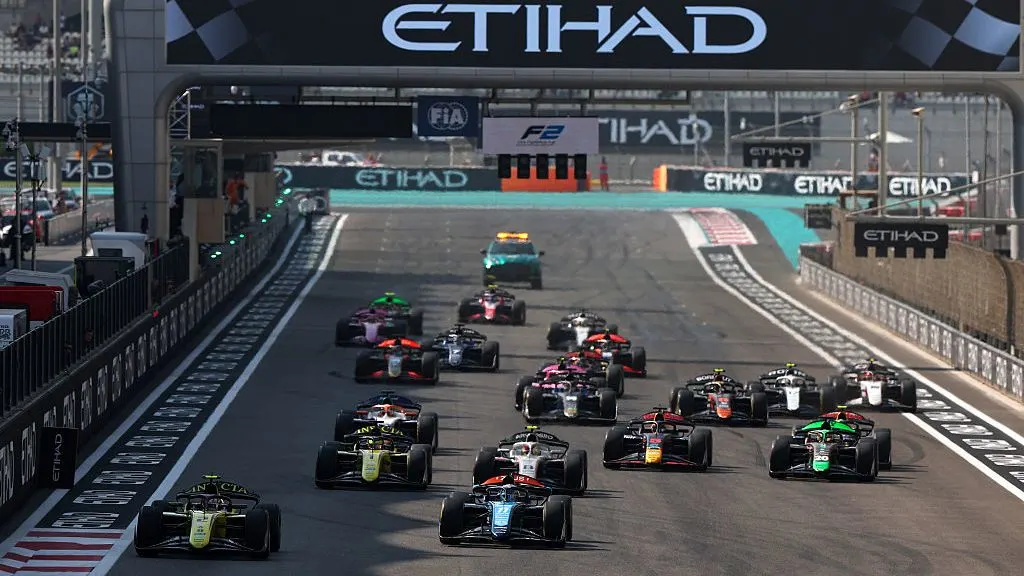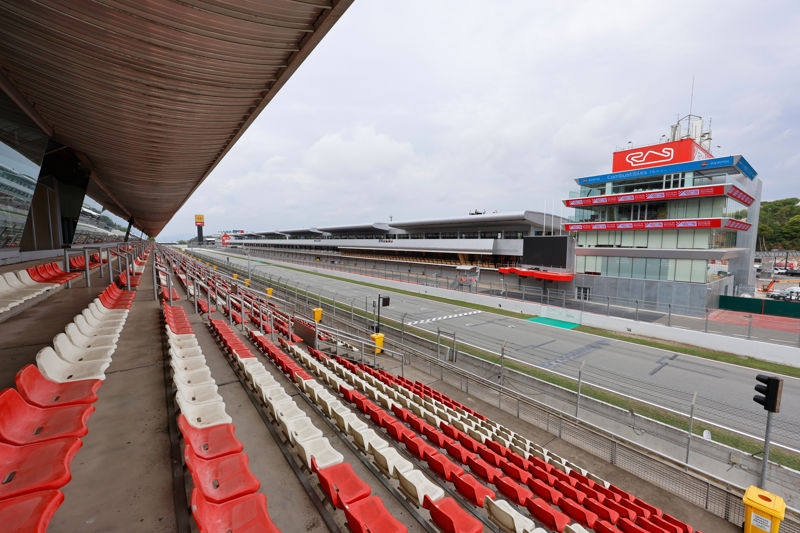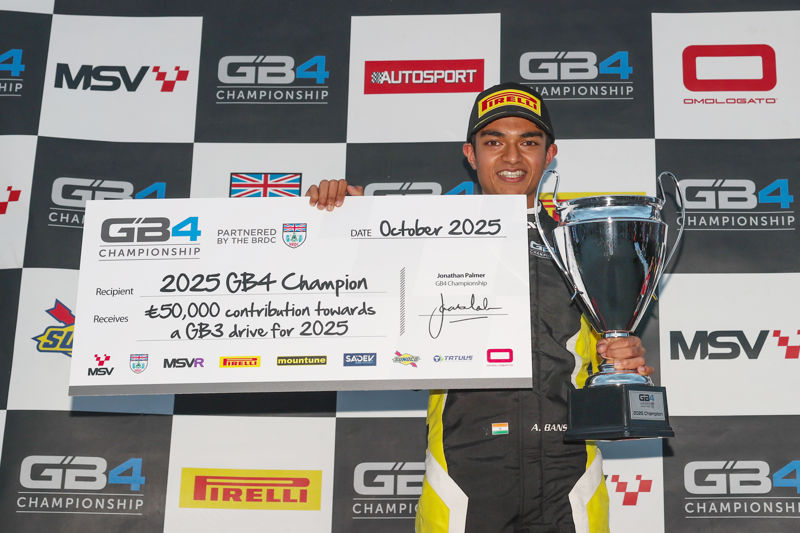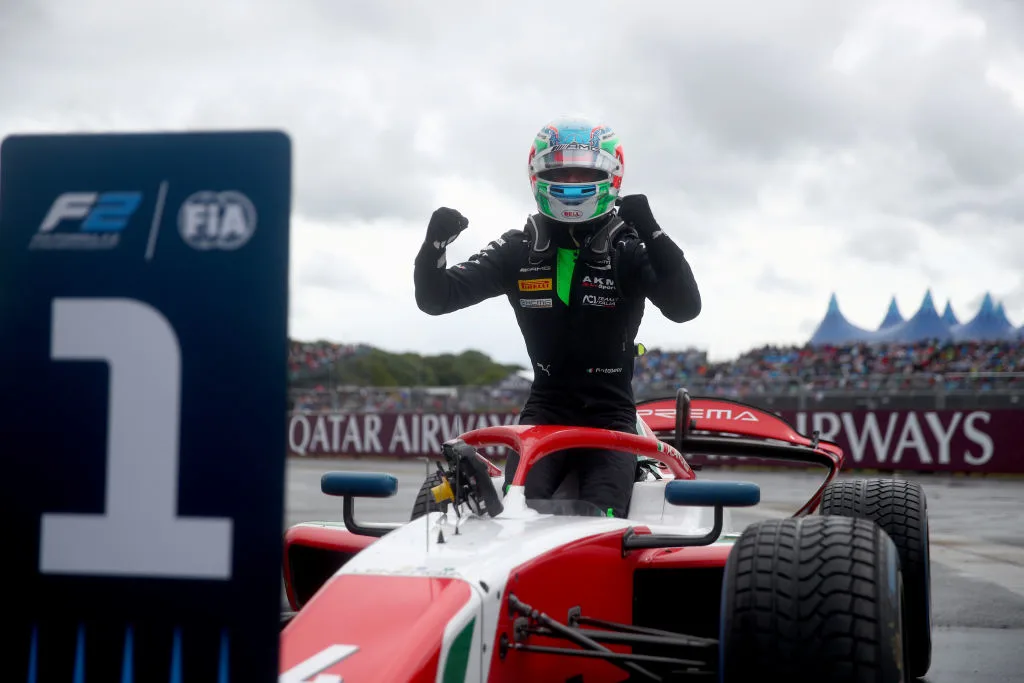
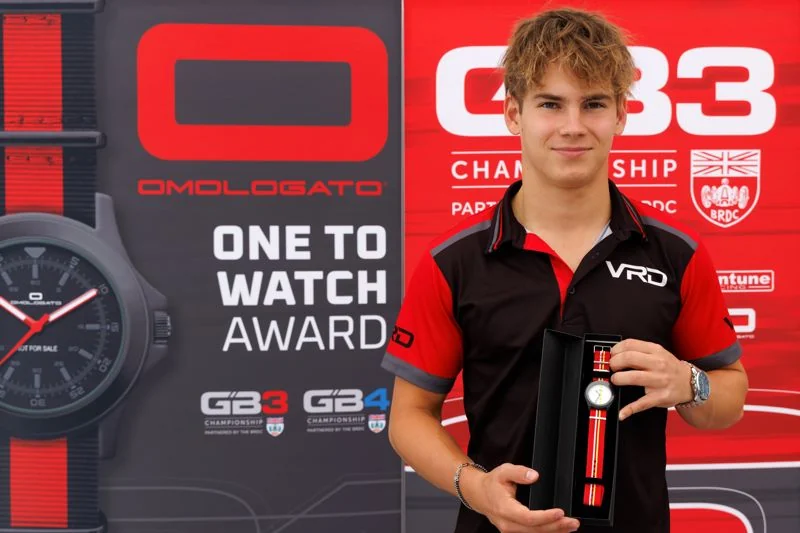
The 2026 GB3 Drivers’ Championship reaches its conclusion at the Circuit de Barcelona-Catalunya on 7–8 November, with four drivers remaining mathematically capable of claiming the title. VRD Racing’s Nikita Bedrin enters the final round with a commanding 89-point advantage, although Deagen Fairclough, Lucas Fluxá and Martin Molnar retain opportunities to overturn the standings.
Bedrin has led the championship since the opening round at Silverstone, securing six victories and accumulating 445 points across the seven completed events. However, the competitive order has changed considerably during the second half of the campaign. Fairclough has won six of the previous nine races, climbing from tenth after the Red Bull Ring to second in the championship.
The penultimate round at Brands Hatch further reshaped the standings, with Fairclough completing another double victory and Fluxá claiming his maiden win of the season. Meanwhile, Molnar dropped from second to fourth, leaving just five points separating Bedrin’s three remaining challengers.
With a maximum of 102 points theoretically available, Barcelona will determine whether Bedrin completes his dominant campaign or one of his rivals produces an extraordinary final-round comeback.
Understanding the GB3 points system
The GB3 Championship awards points across three races per weekend, with different allocations for the opening two contests and the reversed-grid finale. All results contribute towards the Drivers’ Championship, meaning consistency throughout the season remains important.
Under the 2026 GB3 Sporting Regulations, the scoring structure is as follows:
- Races 1 and 2: 35 points for victory, 29 for second, 24 for third, 21 for fourth and 19 for fifth. Points extend to 20th.
- Race 3: 20 points for victory, 17 for second, 15 for third, 13 for fourth and 11 for fifth. Points extend to 15th.
- Overtaking points: Race 3 awards an additional point for each position gained, up to a maximum of 12.
- Maximum theoretical weekend score: 102 points, comprising 35 in each of the first two races and 32 in the finale.
The reversed-grid race introduces an important variable because championship points depend on both finishing position and places gained. A victory from 13th or lower can yield 32 points, while winning from fourth provides 23.
In the event of a championship tie, the regulations prioritise the number of race victories, followed by second places and subsequent results.
Bedrin establishes championship advantage during opening half
Bedrin’s position at the top of the standings reflects an exceptional opening half of the season. The VRD Racing driver began the championship with two victories at Silverstone, collecting 76 points and establishing an early advantage over Rodin Motorsport’s Maxim Rehm.
He maintained that momentum through the European rounds, adding victories at Spa-Francorchamps and the Hungaroring before delivering his strongest performance at the Red Bull Ring.
The Austrian weekend proved particularly significant. Bedrin won both conventional-grid races before recovering from 12th to second in the reversed-grid finale, collecting 97 points across the event.
His Red Bull Ring performance increased his championship total to 319 points, giving him a 106-point advantage over Fluxá. At that stage, Bedrin had won six of the eleven races contested, accounting for more than half of the available victories.
His early dominance also reflected a combination of qualifying pace and race execution. While several rivals demonstrated competitive speed, Bedrin consistently converted his opportunities into substantial points hauls.
The advantage accumulated during those opening rounds has ultimately provided the foundation for his championship lead, even as his results became less dominant later in the season.
Second-half results reveal major shift in momentum
The championship picture changed significantly after the Red Bull Ring, with Bedrin’s rivals beginning to reduce his advantage.
At the halfway stage, Bedrin held 319 points compared with Fairclough’s 102, giving the VRD driver a 217-point advantage over the Hitech competitor.
However, their respective performances across Silverstone, Donington Park and Brands Hatch demonstrate how considerably the competitive order has shifted.
During those three rounds, Fairclough collected 254 points, compared with Bedrin’s 126. Consequently, the Hitech driver outscored the championship leader by 128 points across nine races, reducing his deficit to 89.
Fairclough’s haul represents approximately 83% of the maximum theoretical 306 points available across those three weekends, highlighting the strength of his late-season performances.
Nevertheless, the results also demonstrate why Bedrin remains the championship favourite. Despite being outscored by 128 points, he retained a substantial advantage because of the margin established during the opening half.
While Fairclough has emerged as the leading driver on recent form, Bedrin’s earlier consistency has prevented the championship battle from becoming significantly closer.
Bedrin faces pressure after Donington and Brands Hatch setbacks
Bedrin’s recent results have been less dominant than those achieved during the opening four rounds, although he has continued collecting valuable championship points.
His most difficult weekend came at Donington Park, where he entered with a 103-point advantage over Molnar. After finishing second to Fairclough in Race 1, the championship leader retired from Race 2 following an opening-lap incident and subsequently finished 16th in the reversed-grid finale.
The results restricted him to 29 points, reducing his advantage to 79. Nevertheless, Bedrin responded at Brands Hatch with two third-place finishes, adding 48 points across the opening races.
A false-start penalty in Race 3 then cost him several positions, dropping him from seventh on the road to 11th in the amended classification.
Despite the setback, Bedrin completed the weekend with 53 points, increasing his total to 445 and extending his championship lead to 89.
The contrast between his Donington and Brands Hatch performances illustrates the importance of avoiding non-scoring results. Bedrin no longer needs to win races to become champion, but clean execution remains essential to prevent his rivals from exploiting another difficult weekend.
Fairclough’s seven victories make him strongest challenger
Fairclough arrives at Barcelona as the driver with the strongest recent record, having transformed his championship position through an extraordinary sequence of victories.
The Hitech driver occupied tenth after the Red Bull Ring with just 102 points, having encountered several early-season difficulties. Retirements, penalties and inconsistent results had prevented him from converting his pace into a sustained championship challenge.
However, his performances improved dramatically during the second Silverstone round, where he claimed both conventional-grid victories. He repeated the achievement at Donington Park before completing a third consecutive double-winning weekend at Brands Hatch.
Fairclough has consequently won all six conventional-grid races across the previous three rounds, bringing his season total to seven victories.
His qualifying performances have also become increasingly competitive. At Brands Hatch, he secured both pole positions, including a new GB3 qualifying lap record, before converting them into comfortable victories.
The Hitech driver eventually won Race 2 by 7.432 seconds over Rowan Campbell-Pilling, demonstrating an advantage that extended beyond his qualifying pace.
However, despite winning more races than Bedrin, Fairclough remains 89 points behind. His championship challenge therefore depends on maintaining his exceptional form while the leader encounters significant difficulties.
Fluxá’s consistency keeps Xcel driver mathematically involved
Fluxá enters Barcelona third in the standings with 355 points, trailing Fairclough by just one and Bedrin by 90.
The Xcel Motorsport driver has been among the championship’s most consistent performers, regularly collecting points across all three races while remaining involved in the battle for second.
His strongest performances during the opening half included consecutive runner-up finishes at the Hungaroring and Red Bull Ring, helping him emerge as Bedrin’s closest rival after the Austrian round.
However, Fluxá struggled to match Fairclough’s surge during the final British events. Although he continued scoring, results outside the leading positions restricted his ability to close the championship deficit.
His breakthrough came during the Brands Hatch reversed-grid finale, where he moved from fourth to first at the start and controlled the race to claim his maiden victory of 2026.
The result delivered 23 points, comprising 20 for victory and three overtaking points. Combined with his earlier finishes, it lifted Fluxá to 355.
Although his championship prospects remain remote, his consistency and recent victory provide a strong foundation for the final weekend. The narrow margins behind Bedrin also leave him well positioned to challenge Fairclough for runner-up honours.
Molnar’s consistency remains central to Rodin challenge
Molnar enters the championship finale fourth with 351 points, five behind Fairclough and four behind Fluxá.
Unlike his three title rivals, the Rodin Motorsport driver has yet to secure a victory during the 2026 season. However, his consistent finishing record has allowed him to remain mathematically involved despite the increasing pace of his closest competitors.
The Hungarian established himself among the leading drivers early in the championship, securing podium finishes at Silverstone and Spa-Francorchamps before taking pole position at his home round at the Hungaroring.
He subsequently continued accumulating points through the Red Bull Ring and second Silverstone events, although the absence of race victories restricted his ability to match Bedrin’s larger scores.
At Donington Park, Molnar added 53 points to move onto 313, reducing the championship deficit to 79 and strengthening second place.
However, Brands Hatch proved less productive. Finishes of seventh, fourth and 14th yielded 38 points, allowing both Fairclough and Fluxá to move ahead.
Molnar consequently enters Barcelona facing the largest deficit of the remaining title contenders. Nevertheless, his relative consistency leaves him firmly involved in the battle for the remaining championship podium positions.
Bedrin needs only 14 points to guarantee championship
The mathematical situation heavily favours Bedrin, whose 445-point total places him within reach of securing the championship during the opening race.
With a maximum of 102 points available, the highest possible final totals for his rivals are:
- Deagen Fairclough: 458 points
- Lucas Fluxá: 457 points
- Martin Molnar: 453 points
Bedrin therefore needs just 14 additional points to reach 459, making him mathematically unreachable.
A seventh-place finish in Race 1 would award 15 points and immediately guarantee the championship, regardless of the results achieved by his rivals.
An eighth-place finish would provide 13 points, taking Bedrin to 458. That would eliminate Fluxá and Molnar outright, while leaving Fairclough with only the theoretical possibility of matching his total by collecting the maximum 102 points.
However, the championship could also be decided with fewer points if his rivals fail to maximise their results.
The calculations demonstrate that Bedrin’s championship prospects do not depend on securing another victory. Instead, a relatively modest finish in Saturday’s opening contest could settle the Drivers’ title.
What Fairclough, Fluxá and Molnar need to win
Although three drivers remain mathematically capable of overtaking Bedrin, their requirements differ considerably.
Fairclough has the smallest deficit at 89 points. He therefore needs to gain at least 89 points on Bedrin during the finale, potentially securing the title through countback if their totals become equal.
The Hitech driver currently holds seven victories compared with Bedrin’s six, giving him an advantage under the championship’s tiebreak procedure. Nevertheless, achieving the necessary points swing would require an exceptional weekend and a very low score from the leader.
Fluxá faces a 90-point deficit and must outscore Bedrin by at least 91 points to finish ahead outright. His single victory means that a tie would favour Bedrin, even if Fluxá won all three remaining races.
Molnar faces an even greater challenge. Trailing by 94 points, he must gain at least 95 to finish ahead. With no victories so far, he also cannot overturn Bedrin’s countback advantage with the three remaining races.
These scenarios underline the scale of the challenge confronting the chasing drivers. Even maximum scores would be insufficient if Bedrin collects enough points to protect his advantage.
Race 1 could settle the championship immediately
The opening Barcelona contest offers the first opportunity for Bedrin to secure the championship mathematically.
With 35 points available for victory, the first race can produce significant changes in the standings. However, Bedrin’s 89-point advantage means his challengers must generate an unusually large swing to keep their title hopes alive.
After Race 1, only 67 points would remain available across the second conventional-grid race and reversed-grid finale.
Fairclough must therefore outscore Bedrin by at least 22 points during the opener to remain mathematically involved. A victory for Fairclough combined with eighth place for Bedrin would produce exactly that swing, reducing the championship gap to 67.
However, if Fairclough won and Bedrin finished seventh, the gap would remain 69 points, placing the leader beyond reach before Race 2.
Fluxá would need to reduce his 90-point deficit to no more than 67, requiring a swing of at least 23. Molnar would need at least 28.
Consequently, all three challengers require outstanding opening-race results and significant difficulties for Bedrin.
A strong qualifying performance will therefore be especially important, given the limited opportunities to recover positions during the conventional-grid contests.
Reversed-grid points create final uncertainty
The reversed-grid finale introduces an additional mathematical complication, with points awarded for positions gained as well as finishing position.
Under the regulations, the twelve fastest drivers from combined qualifying are reversed to determine the front of the Race 3 starting grid. Drivers qualifying outside that group retain their relative order behind the reversed top twelve.
This structure can create opportunities for competitors starting further down the order to collect substantial additional points.
For example, a driver winning from 12th would score 31 points, while victory from 13th or lower could produce the maximum 32, provided at least twelve positions were gained.
However, the starting position required to maximise overtaking points introduces a trade-off. Qualifying at the front benefits the opening two races but places drivers towards the back of the reversed group.
Fairclough experienced both sides of that challenge at Brands Hatch. After securing two poles and victories, he started 12th in Race 3 and recovered to fifth, collecting seven overtaking points alongside his finishing-position score.
The format could influence the final championship outcome if the title remains undecided, particularly if penalties, retirements or unexpected results affect the leading contenders.
Runner-up battle remains open despite Bedrin advantage
While Bedrin holds a substantial championship lead, the battle for second remains extremely close.
Just five points separate Fairclough, Fluxá and Molnar, creating a significantly more competitive contest for the remaining championship podium positions.
Fairclough enters with the strongest momentum, having won six of the previous nine races. However, Fluxá demonstrated competitive pace at Brands Hatch, while Molnar has consistently accumulated points throughout the season.
Rehm also remains involved in the battle for the upper championship positions. The Rodin Motorsport driver sits fifth with 324 points, 32 behind Fairclough and 27 behind teammate Molnar.
Although Rehm can no longer claim the title, his maximum potential total of 426 would allow him to challenge for runner-up honours if the drivers ahead encounter difficulties.
Campbell-Pilling sits sixth on 284 points and could also gain championship positions, although the gap to the leading group makes a substantial climb less likely.
Consequently, the final round could produce significant changes behind Bedrin even if the championship itself is settled during Race 1.
Barcelona title analysis and championship outlook
The championship standings present a clear distinction between the favourite for the title and the driver demonstrating the strongest recent form.
Bedrin has built his advantage through early-season dominance, securing six victories before the halfway stage and maintaining a substantial points cushion throughout the remaining events.
Fairclough, meanwhile, has transformed his season with six consecutive conventional-grid victories, demonstrating the pace to challenge for further wins at Barcelona. However, the points difference accumulated during the opening half remains difficult to overcome.
Fluxá and Molnar face even greater mathematical challenges, although both remain well positioned to compete for the remaining championship podium places.
The key variable will be Bedrin’s ability to avoid another difficult race. A seventh-place finish in the opener would guarantee the championship, while further setbacks could create opportunities for his rivals.
With three races remaining, Bedrin remains the overwhelming favourite to become the 2026 GB3 champion. Nevertheless, the close competition behind him ensures that the Barcelona finale will retain significant championship implications regardless of when the Drivers’ title is decided.