
Nicolas Baert saw DTM’s calendar as one of the championship’s strengths, with its mix of circuits giving drivers a range of different challenges across the season. That variety also highlighted what made the series stand out, as DTM continued to combine traditional racetracks with events that carried a strong identity and history.
The Belgian driver also looked beyond individual venues and reflected on DTM’s wider future. As GT racing continued to grow internationally, he believed the series had the potential to attract more fans outside its traditional markets, while still recognising the challenges that came with expanding beyond Germany.
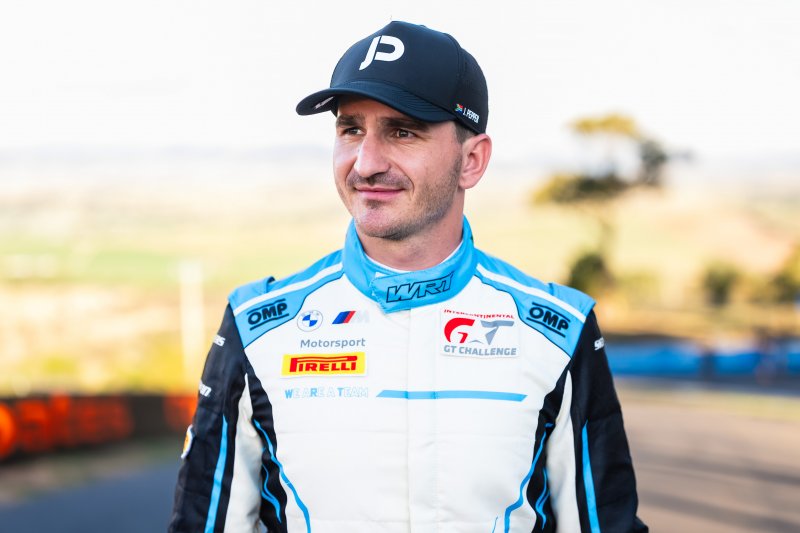
Speaking in an exclusive interview with Pit Debrief, Baert discussed DTM’s identity, its international ambitions, and why fan engagement remained key to the championship’s continued development.
Norisring as DTM’s standout event
Baert said the Norisring stood out as the circuit he looked forward to most on the DTM calendar. The Comtoyou Racing driver explained that street circuits remained rare in modern racing, which made the chance to compete there especially valuable. For him, the Norisring carried extra weight because of its history, its atmosphere, and its long-standing place in DTM’s story.
The Belgian driver felt the event had built a legendary reputation over the years, with many memorable moments adding to its status. That made it the clear choice when looking at the tracks he most wanted to race on.
“I think it’s not a surprise if we both [him and teammate Nicki Thiim] say Norisring. I think the street circuit is something that you don’t see everywhere, and you don’t get the chance to do that, to always drive on a street circuit. So for me it will be no mistake, for sure, because it’s legendary as well. There’s been so many stories behind that event in DTM that I have to go with this track.”
Baert reflects on DTM’s challenge to grow beyond Germany
Baert also discussed how DTM could continue to grow internationally, noting that the championship had always been strongly linked to Germany.
He pointed to the series’ history with German manufacturers and said that background had shaped its identity for many years. However, he felt the main challenge now lay in building the same level of support outside Germany.
Baert believed each country had a different relationship with motorsport. In Germany, he said the sport felt deeply rooted in the culture, while other markets still needed more development.
“I agree with Nicki on that side. I’m also thinking about how you can have the championship grow internationally. Because DTM has always been very German-based, just looking back in the years when it was only German constructors.”
“But I think that’s the biggest struggle actually. It’s to bring the same amount of fans outside of Germany, which would be nice, but of course there are different parameters. It’s just a society.”
“Did they grow up with motorsport or not? For sure Germany, it’s in their blood.”
Baert hopes for a Belgian home race on the calendar as DTM eyes wider growth
Baert added that Belgium already had a strong motorsport fan base and had produced many talented drivers, including himself. Because of that, he would have liked to see DTM return to Belgium, with Zolder standing out as an example from previous years.
At the same time, Baert understood the organisational demands behind the DTM calendar. He said promoters needed to attract enough fans at the circuit, which made international expansion more complex. He also noted that events in Germany usually drew bigger crowds, while races such as the Red Bull Ring did not always reach the same level of attendance as the German rounds.
“But for sure I would have liked to race in Belgium. For example, in Belgium we have a very strong fan base in motorsports. A lot of racing drivers come from Belgium. It’s a very talented country for that, which I’m lucky to be part of.”
“But I would have loved to be in Zolder three or four years ago, for example. But I also understand that if you look at it on organisation side, you have to reach a certain amount of fans on track. I think that if they manage to build this and develop this to get more people on track in other countries than just Germany and Austria, because you clearly see that if you go to Red Bull Ring, there are a bit less people than if you go to Okinawa, which is the final.”
Baert hopes DTM keeps building on its current momentum
Baert believed wider international growth would benefit everyone involved in DTM and GT racing.
He said more races outside Germany would be an ideal scenario, but he also recognised the difficulties around that ambition. Different countries viewed motorsport in different ways, and the push for sustainability had added another layer to how racing was perceived.
Still, Baert felt DTM had a strong foundation. While he hoped for more international events, he also accepted that Germany remained central to the championship’s DNA. His realistic wish was for DTM to keep developing in the direction it had already taken. He praised the championship’s ability to bring large numbers of fans to the track and suggested that, outside Formula 1, few series attracted crowds in the same way.
For Baert, that continued fan engagement showed that DTM remained in a strong position as it looked to build its future.
“This would be amazing for everyone. I think everyone would just be winning out of this. And in the end, motorsports would be in really good spots.”
“But it’s difficult to have a clear vision on that also, because you know that in other countries, the look motorsports can have, especially now that everything has to be sustainable. My wish would be to have more international race. But I also understand that the DNA of DTM is Germany.”
“So my realistic wish is that they just keep developing the way they do. Because if you compare with different championships, I think after Formula 1, DTM is a championship that brings more people on track, which is a really good thing for the sport.”