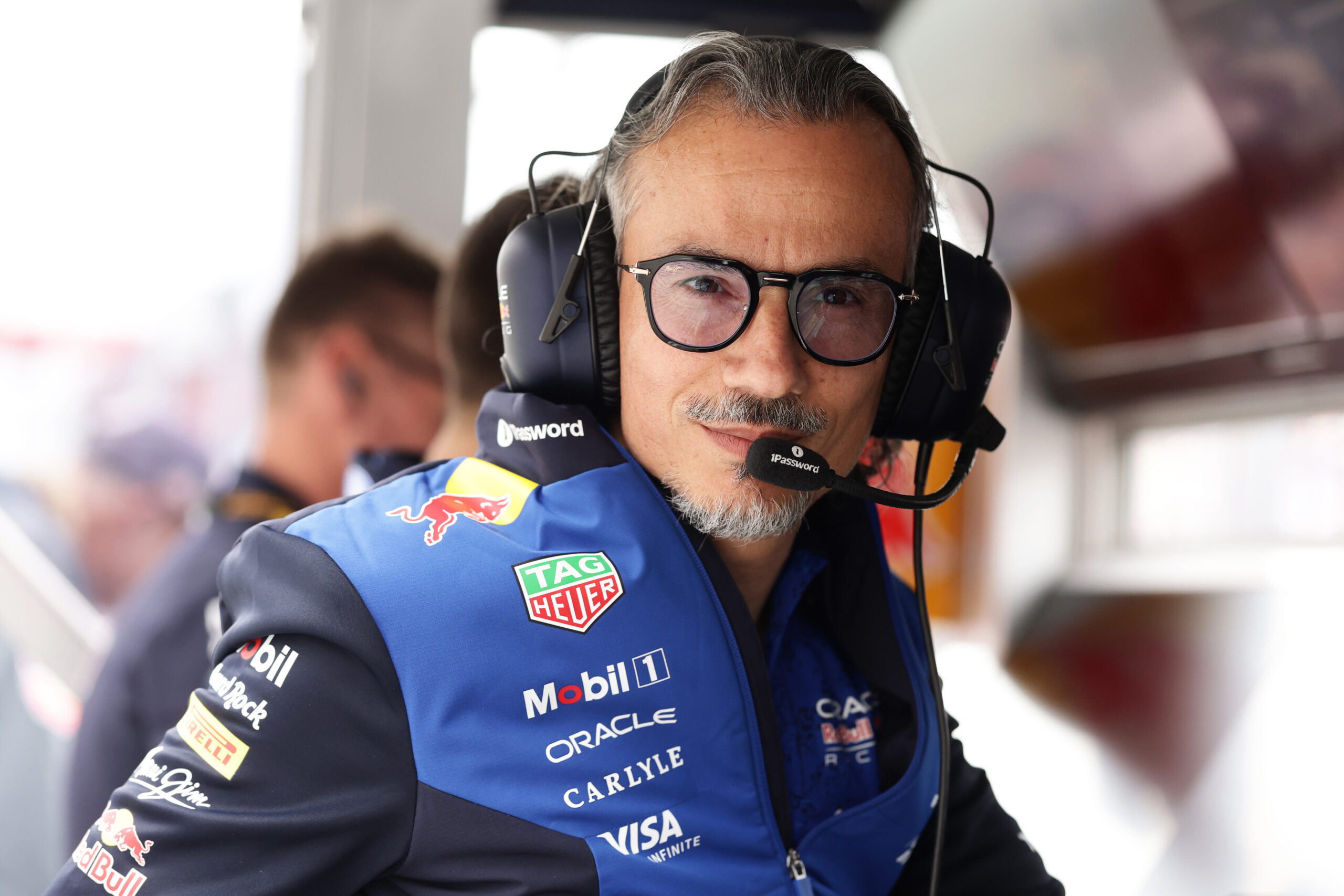
The technical realities of the current F1 regulatory cycle forced Red Bull Racing into a reactive stance on Saturday afternoon during the 2026 Canadian GP. Team Principal Laurent Mekies saw his squad face a significant performance gap to the top teams during the practice and Sprint qualifying sessions on Friday at the Circuit Gilles Villeneuve.
The team struggled heavily during tyre warm-up sequences and ride-quality issues over the bumps and kerbs in Canada. Consequently, the engineering crew split the technical set-ups between their two drivers to find a viable aerodynamic baseline before the main qualifying session.
Red Bull exploring radical choices for the Canadian GP
The strategic choice split the Milton Keynes-designed garages down the middle. Isack Hadjar ran a stable, simulation-backed configuration and found his rhythm quickly. Meanwhile, Max Verstappen‘s side pursued an aggressive mechanical direction to resolve the balance issues.
This risky development path ultimately compromised the Dutchman’s qualifying performance, locking him into an unfavourable starting position of P6 on a grid where track position remains crucial.
Mekies stood firmly behind his engineering staff where questioned about the failed set-up direction after the session. He defended the operational process.
“We take risks every time we don’t feel we are at the right balance or at the right gap to competition. And when you do take risks like that, you do explore certain directions with both cars. We are lucky enough to have those two drivers that were in the right rhythm this weekend, so we could explore with Max [Verstappen] and with Isack [Hadjar].
“And that’s what we have done. And then we improve our understanding of the car, what is working, what is not working, what is bringing something for [qualifying], what is bringing something for the race. That’s the beauty of parc fermé as well.”
Mekies assessed driver feedback at the F1 Canadian GP
The power dynamic inside the team was questioned later on, especially about Red Bull allegedly ignoring Verstappen’s feedback to prioritise experimental data at the F1 Canadian GP.
The current chassis regulations demand absolute precision, forcing the engineers to rely heavily on comparative data across both sides of the garage rather than a single driver’s intuition.
Mekies immediately dismissed any claims of an internal hierarchy shift. “Absolutely not,” he countered.
“As much as it may have felt different, the reality is that our drivers are completely integrated in the choices we make. It doesn’t mean that we don’t have our own little game at saying what do you think and what do you think. But in the end of the day, we agree on what to try. And then after sometimes there is a bit of, I told you.
“But we still learn together. And what is clear is that both sides are very conscious that you need that dynamic. And you need that, I told you feeling sometimes, in order to progress.”
The painful set-up gamble under parc fermé rules delivered critical data to the engineers. The technical crew utilised the extreme suspension telemetry to optimise the cars for Sunday. These aggressive adjustments allowed the team to execute an optimal recovery race, securing vital championship points and a P3 in the race.