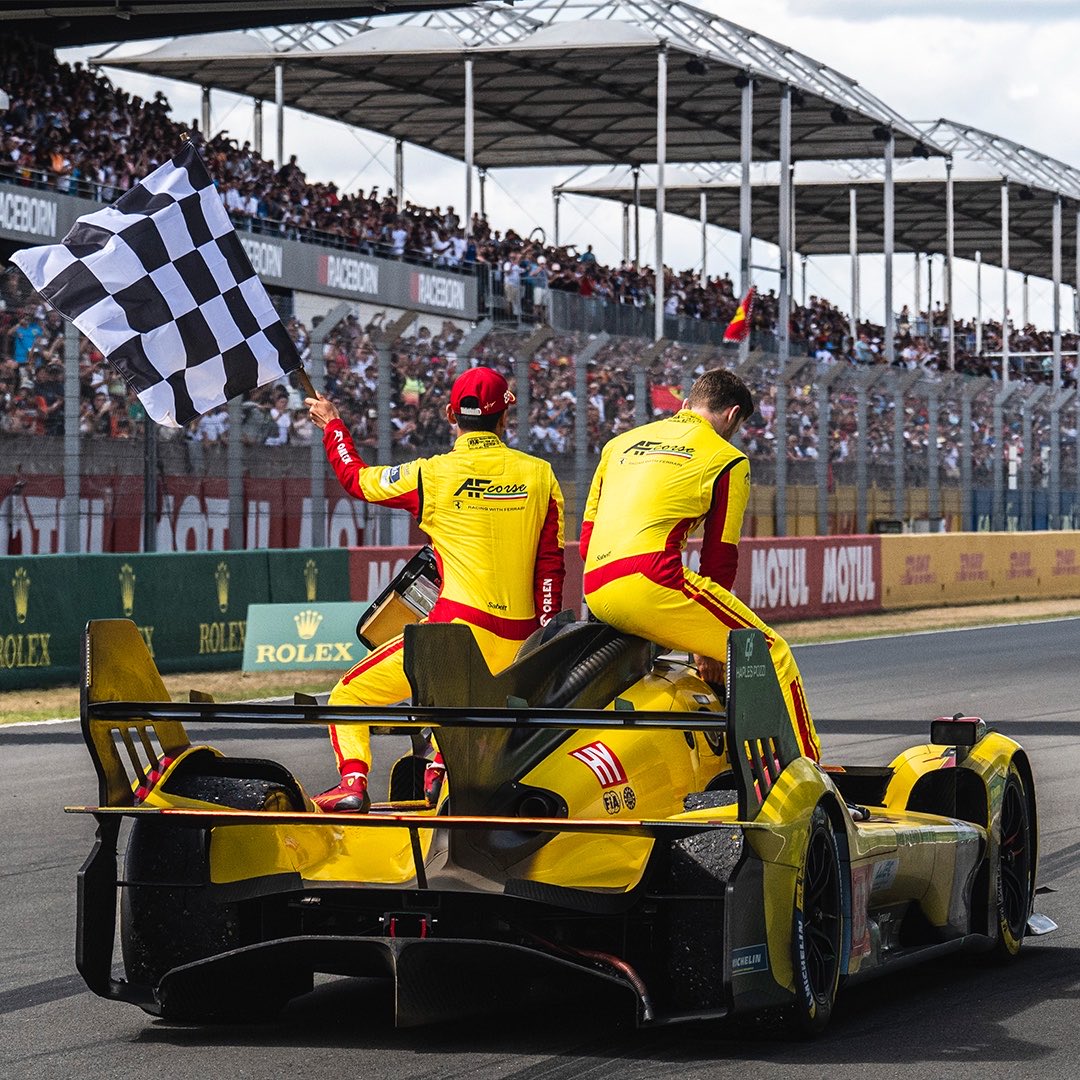
The 24 Hours of Le Mans is one of the most prestigious and demanding events in motorsport. Held every June in the Sarthe region of France, the race challenges drivers, teams and manufacturers to survive a full day and night of competition on one of the most famous circuits in the world.
First held in 1923 as the Grand Prix d’Endurance de 24 Heures – Coupe Rudge-Whitworth, Le Mans has grown into a defining event in automotive history. More than a century later, it remains one of the ultimate tests of speed, reliability, strategy and endurance.
Unlike a traditional race, Le Mans is not decided over a fixed number of laps. Instead, the objective is simple: cover the greatest distance possible in 24 hours. To win, a car must combine performance with durability, while its drivers must manage fatigue, traffic, changing conditions and the pressure of racing through the night.
What is the 24 Hours of Le Mans?
The 24 Hours of Le Mans is an endurance race held annually at the Circuit de la Sarthe. The track measures 13.626 km, combining permanent circuit sections with public-road elements that help give the event its unique character.
Over 24 hours, cars race through daytime, sunset, darkness, sunrise and the following afternoon. This creates a challenge that is very different from a standard sprint race. Drivers must deal with changing visibility, cooler night-time temperatures, possible rain, heavy traffic and physical fatigue.
The race has also become a major showcase for automotive manufacturers. Le Mans allows brands to demonstrate speed, efficiency, reliability and technological development on a global stage. For many manufacturers, success at Le Mans is not only a sporting achievement but also a statement of engineering strength.
The event has endured through different eras of motorsport and even survived the disruption of World War II. Today, it is regarded as a vital part of French sporting heritage and one of the races that defines endurance racing.
How does the race work?
The concept is straightforward: once the race begins, the cars run continuously for 24 hours. The winner is the car that completes the greatest distance by the end of the race.
However, the execution is far more complex. Each car is shared by a crew of drivers who rotate throughout the event. Teams must manage fuel stops, tyre changes, driver changes, repairs and race strategy while staying within the regulations.
Because the race lasts an entire day, reliability is just as important as raw pace. A car may be extremely fast over one lap, but that is not enough to win Le Mans. It must also survive mechanical stress, high-speed running, braking demands, traffic, night conditions and long stints without major mistakes.
Strategy also plays a major role. Teams must decide when to pit, how long to keep each driver in the car, which tyres to use, how to respond to weather changes and how to recover from slow zones, safety cars or incidents. The race rewards the team that can remain fast, clean and consistent for the full 24 hours.
Three categories share the same track
One of the defining features of Le Mans is multi-class racing. Cars from different categories compete on the same circuit at the same time. For the 24 Hours of Le Mans, the track is shared by Hypercar, LMP2 and LMGT3.
Each class has its own performance level, technical identity and competitive battle. This means there is not just one race happening on track, but several races within the same 24-hour contest.
The faster cars must constantly manage traffic, while the slower classes must remain aware of closing speeds from behind. This makes racecraft especially important. Drivers need to be aggressive enough to make progress, but disciplined enough to avoid unnecessary risk.
Hypercar: the top class
Hypercar is the leading category at the 24 Hours of Le Mans. These cars are prototypes or production-based machines with closed cockpits, and they can be either hybrid or non-hybrid.
They produce up to 680 horsepower and can reach a top speed of around 330 km/h. Hypercars must weigh at least 1,030 kilograms and run on Michelin tyres.
This is the class that fights for overall victory. Hypercar is reserved for professional drivers, and it is the category where major manufacturers showcase their most advanced endurance racing machinery. Because these cars are the fastest on track, their drivers must manage both outright pace and constant traffic from the other classes.
LMP2: prototype racing with mixed driver line-ups
LMP2 is also a prototype category, featuring closed-cockpit cars designed for endurance racing. These cars are slightly slower than Hypercars but remain extremely quick, with a top speed of around 315 km/h.
An LMP2 car must weigh at least 950 kilograms and uses Goodyear tyres. The category is designed for both professional and amateur drivers, which makes driver line-up balance especially important.
LMP2 often produces close racing because the cars are more tightly controlled than in the top class. With similar machinery across the field, execution becomes crucial. Strong driver consistency, clean pit work and smart strategy can make the difference over 24 hours.
LMGT3: production-based GT cars
LMGT3 is the Grand Touring category at Le Mans. These cars are derived from production models, making them more recognisable to road-car audiences than the prototype classes.
LMGT3 entries are run by private teams only. The cars can reach a top speed of around 300 km/h and must weigh at least 1,245 kilograms before Balance of Performance adjustments. They run on Goodyear tyres and are driven by a mix of professional and amateur drivers.
Because LMGT3 cars are the slowest of the three categories, their drivers must constantly manage traffic from faster Hypercar and LMP2 entries. At the same time, they are fighting their own class race, where consistency and avoiding trouble can be just as important as outright speed.
Why multi-class racing makes Le Mans unique
Multi-class racing is one of the reasons Le Mans is so demanding. Hypercars, LMP2s and LMGT3s all share the same 13.626 km circuit, but they do not reach corners at the same speed or accelerate in the same way.
This creates constant interaction between classes. A Hypercar driver may be fighting for the overall lead while trying to pass several LMGT3 cars. An LMGT3 driver may be battling for class position while needing to leave enough space for faster prototypes. These moments require judgement from both sides.
Traffic can decide races. A perfectly timed pass can save seconds, while a badly timed move can cost momentum, damage the car or trigger a penalty. Over 24 hours, those small moments add up.
Why Qualifying matters in a 24-hour race
Although Le Mans is won over 24 hours rather than one lap, Qualifying still matters. Starting higher on the grid can help a team avoid early traffic, reduce the risk of first-lap incidents and establish rhythm in the opening phase.
However, pole position does not guarantee victory. The race is too long and too unpredictable for that. A team that starts from the front still needs reliability, clean pit stops, strong driver management and smart strategy. A team starting further back can still win if it stays out of trouble and executes the race well.
That balance is part of what makes Le Mans special. Qualifying rewards speed, but the race rewards completeness.
How to watch the 24 Hours of Le Mans 2026
The 2026 24 Hours of Le Mans will be streamed live through FIAWEC+, the official FIA World Endurance Championship streaming platform.
The service is available through the FIAWEC+ app on the Apple App Store and Google Play Store, as well as on the web. It provides live coverage of the full 24 Hours of Le Mans, along with Free Practice, Qualifying, Hyperpole and the race itself.
FIAWEC+ also offers onboard cameras, Live Timing and full replays, adding detailed coverage across the event.
Pit Debrief will also provide live updates throughout the race via its live blog, covering the key moments, incidents and class battles as they unfold.
Why Le Mans remains the ultimate endurance race
The 24 Hours of Le Mans is more than a test of who has the fastest car. It is a test of the entire operation.
Drivers must remain focused through fatigue and darkness. Engineers must keep the car in its ideal performance window. Mechanics must deliver clean stops and repairs under pressure. Strategists must make the right calls across changing conditions. Manufacturers must build cars that are not only fast, but durable enough to survive one of motorsport’s hardest events.
That is why Le Mans carries such weight. It brings together history, technology, speed, endurance and human resilience in a way few races can match.
The race lasts 24 hours, but the challenge is much bigger than the clock. To win Le Mans, a team must be fast, disciplined, reliable and adaptable from the first lap to the final minute.