The 24 Hours of Le Mans has grown from a bold reliability trial on public roads into the most famous endurance race in the world.
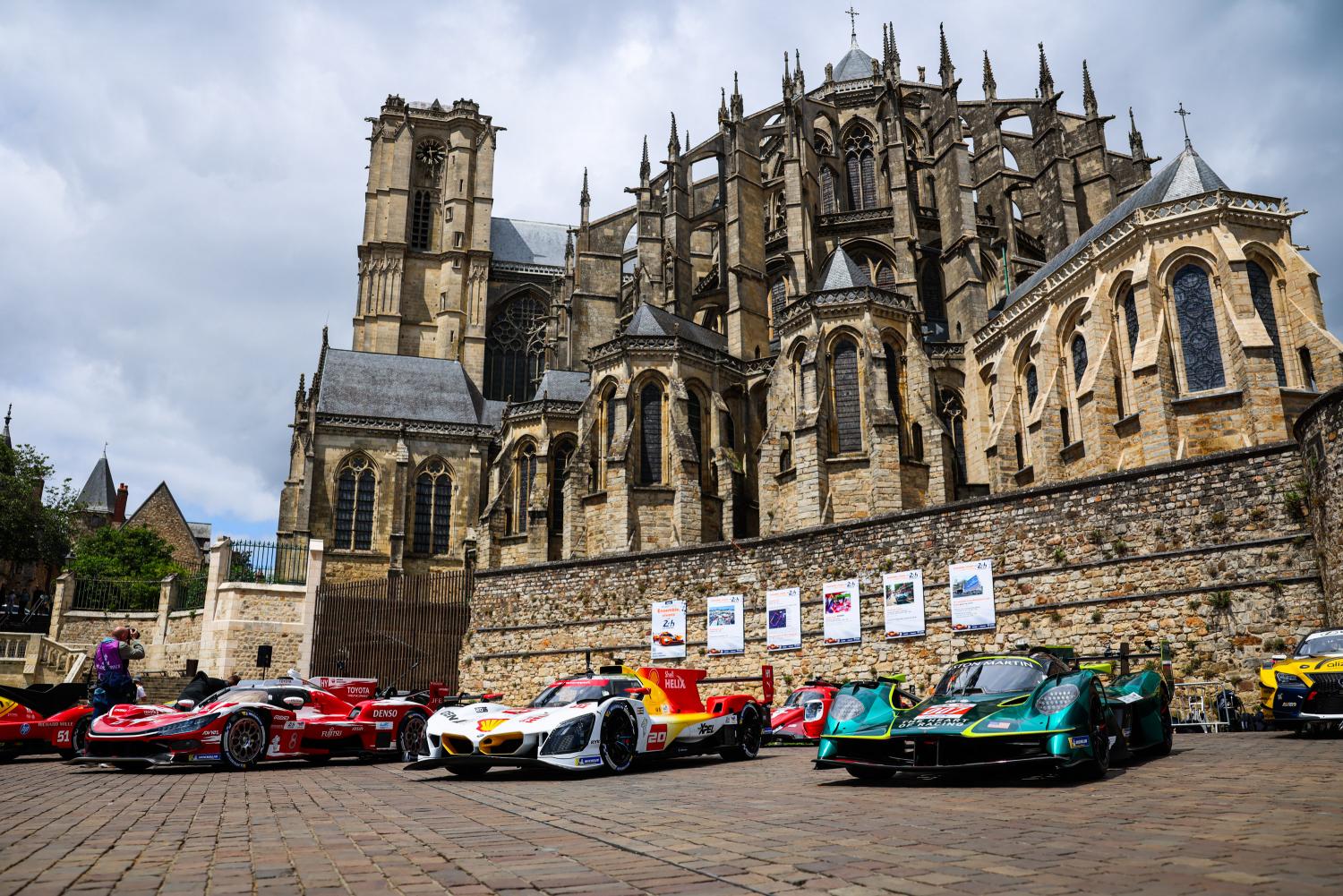
First held in 1923, the race takes place near Le Mans, France, on the Circuit de la Sarthe. Unlike fixed-distance races, Le Mans rewards the car that covers the greatest distance in 24 hours, forcing teams to balance outright speed with reliability, fuel economy, tyre management, braking performance and driver endurance.
Over more than a century, the race has reflected almost every major shift in sports car racing. Bentley, Alfa Romeo, Ferrari, Ford, Porsche, Audi, Toyota and now the modern Hypercar manufacturers have all used Le Mans to prove engineering strength under the most extreme conditions.
The race begins as a test of endurance
The first 24 Hours of Le Mans took place on 26 and 27 May 1923 on public roads around Le Mans. Organisers originally planned it as part of the Rudge-Whitworth Triennial Cup, where manufacturers would compete across three consecutive 24-hour races. However, that format disappeared by 1928, and the race adopted the simpler principle that still defines it: the winner covers the greatest distance after 24 hours.
The early editions placed reliability above pure speed. At the time, Grand Prix racing already tested outright performance, so Le Mans offered manufacturers a different challenge. It rewarded cars that could run quickly, consistently and efficiently for a full day and night.
French, British and Italian teams shaped the early years. Bentley became one of the race’s first great forces, while Alfa Romeo and Bugatti also helped define the pre-war period. As speeds increased, manufacturers began experimenting with more aerodynamic bodywork to improve performance along the long Mulsanne Straight.
War interrupts the first great era
Le Mans quickly established itself as a major international race, but wider events soon interrupted its growth.
The 1936 race did not take place because of general strikes in France. Then, the outbreak of the Second World War in 1939 forced the event into a ten-year hiatus.
That break marked the end of the race’s first chapter. By the time Le Mans returned, the event needed rebuilt facilities, renewed manufacturer support and a fresh place in a changing motorsport landscape.
Ferrari, Jaguar and Aston Martin shape the post-war race
Le Mans resumed in 1949 after reconstruction work at the circuit. Ferrari immediately began building its relationship with the race, taking its first overall victory that year with the 166 MM driven by Luigi Chinetti and Peter Mitchell-Thomson.
The creation of the World Sportscar Championship in 1953 gave Le Mans even greater importance. Factory teams from Ferrari, Jaguar, Aston Martin, Mercedes-Benz and others arrived with serious programmes, turning the race into a central battleground for international sports car manufacturers.
However, the era also brought tragedy. The 1955 disaster, in which Pierre Levegh’s car crashed into the crowd and killed more than 80 people, changed motorsport safety forever. Organisers rebuilt the pit complex further back and widened the pit straight, while safety standards improved across the sport.
Ford ends Ferrari’s dominance
The 1960s produced one of the defining rivalries in Le Mans history. Ferrari dominated the early part of the decade, but Ford then launched its GT40 programme and transformed the race’s competitive balance.
Ford claimed four consecutive overall victories from 1966 to 1969. Its 1966 triumph became especially famous because the American manufacturer defeated Ferrari after an intense and heavily publicised development effort.
That period also showed how quickly Le Mans cars had evolved. Closed-cockpit prototypes and GT machines pushed speeds beyond 320kph on the Mulsanne Straight, and the race increasingly demanded sophisticated engineering as well as durability.
Porsche rises as Le Mans enters a faster age
After Ford’s breakthrough years, Le Mans moved into an era of increasingly specialised sports prototypes. Porsche became the central force across multiple decades, eventually building the strongest overall record in race history.
The 1970s and 1980s brought major changes in car design, regulations and speed. Fuel economy became an important part of the race after the oil crisis, while Group C regulations later turned efficiency into a core performance target. Le Mans no longer measured only whether a car could survive 24 hours; it also measured how intelligently teams could use fuel, tyres and pit strategy.
Porsche’s dominance reached a peak between 1981 and 1987, when it won seven consecutive editions. The manufacturer remains the most successful in Le Mans history, with 19 overall victories.
The Mulsanne Straight changes forever
By the late 1980s, the extreme speeds on the Mulsanne Straight forced organisers to act. In 1988, Roger Dorchy reached 407kph in the WM P88, setting a speed benchmark that helped trigger major circuit changes.
The organisers later added chicanes to the straight to reduce top speeds. After that change, the maximum speeds fell significantly compared with the pre-chicane era, although Le Mans remained one of the fastest and most demanding circuits in the world.
This change also altered the character of the race. Teams still needed low drag for the long straights, but they now had to prioritise braking stability, traction and acceleration through the chicanes.
The 1990s bring supercars and prototypes together
The 1990s produced one of Le Mans’ most varied and unpredictable periods. Manufacturers pushed the boundaries of the rules, especially in GT categories, where increasingly exotic cars blurred the line between production-based machinery and prototype-level performance.
By 1999, GT cars from manufacturers such as Porsche, Mercedes-Benz, Toyota, Nissan and others faced Le Mans Prototypes from BMW, Audi, Toyota and Ferrari. BMW won that year, while Mercedes-Benz withdrew from top-level sports car racing after its CLR suffered three dramatic airborne accidents during the event weekend.
The decade also helped spread the Le Mans identity beyond France. In 1999, the ACO lent the Le Mans name to the American Le Mans Series, strengthening the race’s influence on global sports car racing.
Audi defines the modern endurance era
Audi became the dominant Le Mans force of the 2000s. After many major manufacturers withdrew following the expensive late-1990s period, Audi committed heavily and won repeatedly with the R8. Bentley, linked through the Volkswagen Group, then returned and won in 2003 with the Speed 8.
Audi then changed Le Mans again with diesel technology. The Audi R10 TDI became the first diesel-powered car to win the race, beginning an era in which efficiency and alternative powertrain ideas became central to overall victory. Peugeot responded with its own diesel prototype, creating one of the great modern manufacturer battles.
The 2010 race captured the essence of Le Mans. Peugeot showed strong speed, but Audi focused on reliability and finished 1-2-3 after all four Peugeots retired.
Hybrids change the race again
Le Mans entered another technological phase in the 2010s. The race joined the FIA World Endurance Championship in 2012, and that same year Audi won with the R18 e-tron quattro, the first hybrid car to claim overall victory at Le Mans.
Hybrid technology became central to the top class. Audi, Toyota and Porsche all used Le Mans as a high-profile laboratory for energy recovery, efficiency and advanced prototype engineering.
Porsche returned to the top class in 2014 and won three consecutive races from 2015 to 2017 with the 919 Hybrid. Audi withdrew after the 2016 race, while Porsche left after 2017, leaving Toyota as the dominant manufacturer in the late LMP1 hybrid era.
Toyota finally breaks through
Toyota endured years of Le Mans heartbreak before finally winning in 2018. The Japanese manufacturer then built a dominant run, taking five consecutive overall victories from 2018 to 2022.
That period came during a transitional moment for the top class. LMP1 had become expensive and thinly populated, so organisers developed new Hypercar rules to reduce costs, encourage manufacturer variety and bring more road-car identity back to the front of the grid.
Toyota’s success gave the manufacturer the Le Mans prize it had chased for decades. However, the race still needed a broader manufacturer field to restore the depth that had defined its greatest eras.
Hypercar revives manufacturer competition
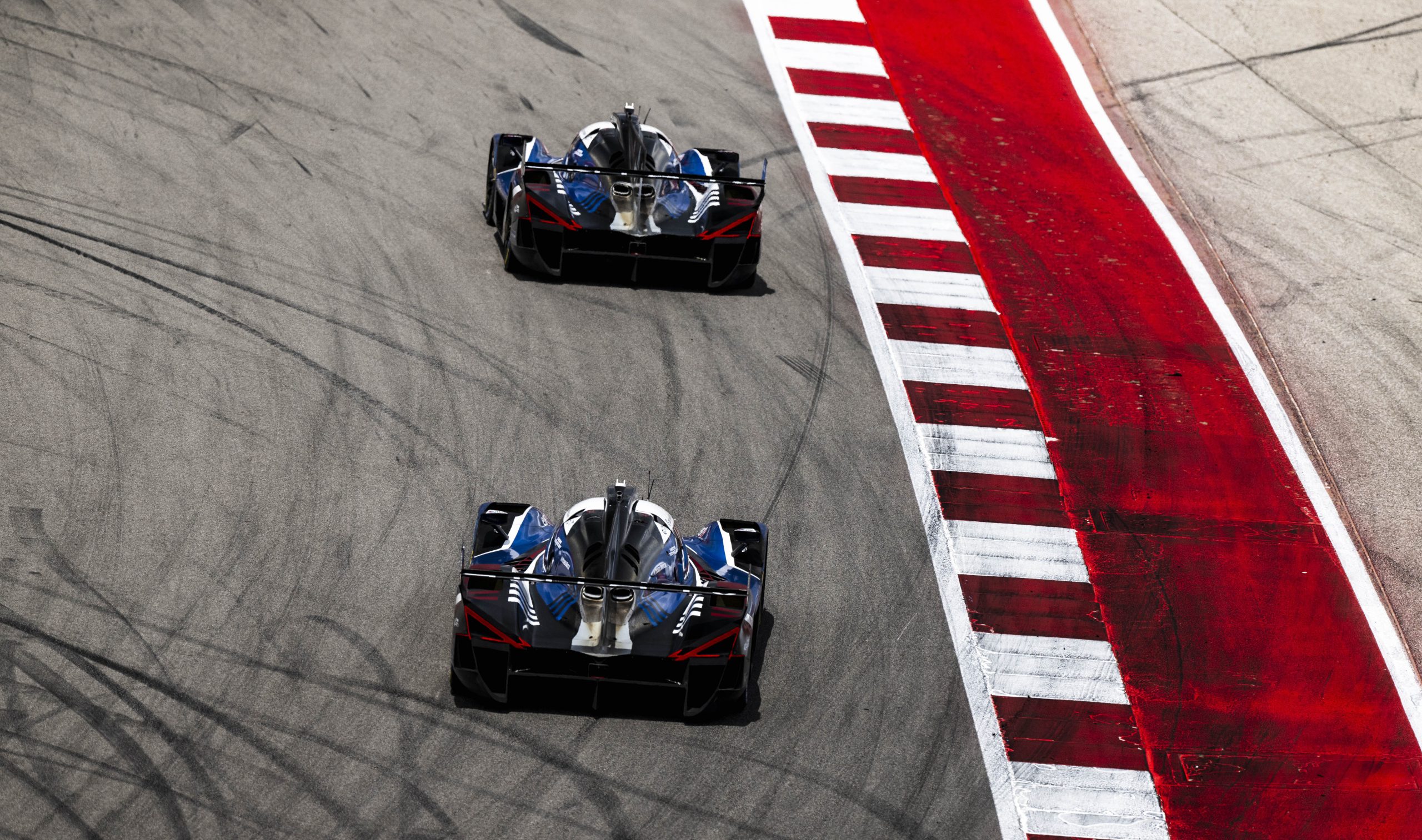
The Hypercar era began in 2021 and reshaped the future of Le Mans. The class replaced LMP1 as the top category and allowed both LMH and LMDh cars to fight for overall honours. The rules aimed to contain costs while giving manufacturers more flexibility in design and identity.
The new rules helped bring major names back to the front. Ferrari returned to the top class and won the centenary edition in 2023, then continued its modern Le Mans resurgence with further victories. Meanwhile, Toyota, Porsche, Cadillac, Peugeot, BMW, Alpine, Lamborghini and others have strengthened the depth of the Hypercar field.
That revival has made the current period feel like a return to Le Mans’ traditional strength: a major manufacturer contest where technology, endurance and brand prestige all collide.
Innovation remains central to Le Mans
Le Mans has always acted as a proving ground. Disc brakes appeared at the race in 1953 with the Jaguar C-Type, while Mercedes-Benz used an air brake on the 300 SLR in 1955. Ford used quick-change brake rotors in 1966, and reinforced carbon-carbon brakes later became standard at the top level.
The race also pushed alternative fuels and hybrid systems. Ethanol appeared in 1980, biofuels returned in the 2000s, and hybrid systems became central to the prototype era from 2012 onwards.
Therefore, Le Mans has never been only a race. It has also served as a public test bench for durability, efficiency, safety and performance technologies that manufacturers use to prove engineering credibility.
Why Le Mans still matters
The 24 Hours of Le Mans has survived because it keeps changing without losing its central identity. It still asks the same fundamental question it asked in 1923: which car, team and driver line-up can go furthest in 24 hours?
Over time, the answers have changed. Bentley brought early British dominance. Ferrari became a post-war giant. Ford created one of motorsport’s most famous upsets. Porsche built the strongest long-term record. Audi defined the diesel and early modern prototype era. Toyota conquered its long-standing goal. Now, the Hypercar field has given Le Mans another golden period of manufacturer competition.
That continuity makes Le Mans unique. The cars, rules and technologies have changed dramatically, but the race still rewards the same qualities: speed, reliability, discipline, efficiency and endurance.
See the full schedule for the 2026 edition of the 24 Hours of Le Mans, and you can get live updates on race day from our blog.