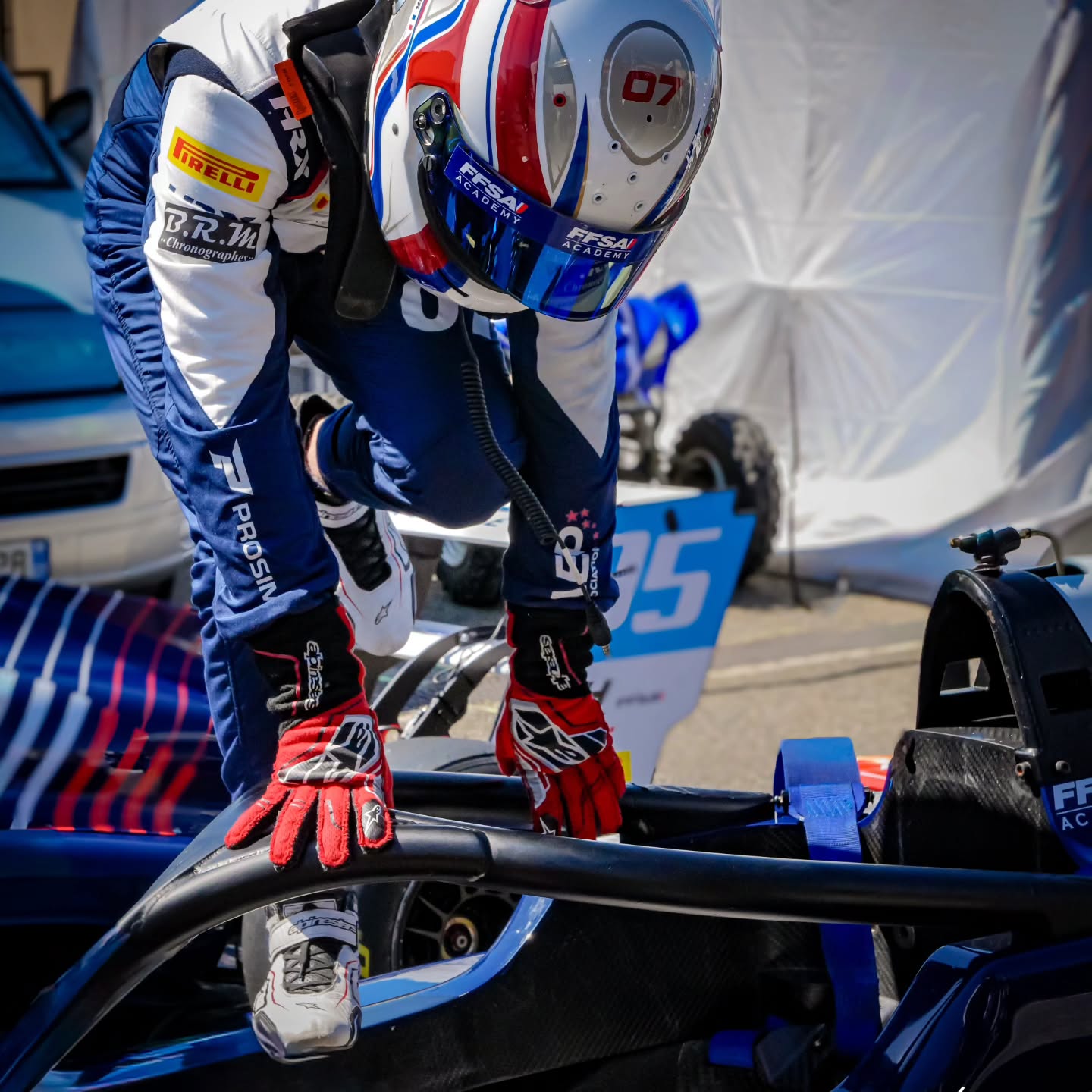
Arthur Eschalier’s journey into motorsport did not begin with a childhood spent chasing a racing dream. Before karting became the centre of his life, he tried several sports, searching for something that could hold his attention and give him a real sense of purpose.
In an exclusive interview with Pit Debrief, Eschalier reflected on how a recreational karting experience at the age of 13 unexpectedly changed the direction of his life. While many young drivers begin competing much earlier, his later start did not discourage him. Instead, it gave him another reason to work harder, learn quickly and prove that his ambition was still possible.
What began as a fun activity soon became something far more serious. Motorsport gave Eschalier a feeling that other sports had not provided: a combination of speed, control and personal responsibility. Then, one unexpected victory turned that feeling into a clear ambition.
Exploring sport before finding a clear passion
Before karting entered his life, Eschalier tried a broad range of physical activities. Basketball held some appeal, while rugby and swimming also formed part of his early sporting experience. Nevertheless, none of them developed into the defining passion that motorsport later became.
That varied background allowed him to experience different forms of competition and physical challenge. However, racing ultimately offered the strongest sense of purpose and became the discipline around which he wanted to build his future.
“Before motorsports, I didn’t have any particular passion. Maybe basketball, but motorsport was the first real sport that I did when I was young. But I did a lot of sports like basketball, rugby, and swimming. I didn’t do soccer though. Yeah, now I do motorsports and that’s the main one.”
Rather than following a lifelong plan towards racing, Eschalier discovered his passion through experience. Motorsport gradually separated itself from every other activity he had tried and gave him a direction that felt different from the rest.
That difference was not only about competition. It came from the sensations inside the kart, the speed, the responsibility and the feeling that every movement depended directly on him.
Control and speed make motorsport different
When Eschalier took control of a kart, he found something he had not experienced in other sports. Racing allowed him to influence every movement directly and immediately feel the consequences of each decision.
The speed added another dimension. As he pushed harder, he discovered a sense of freedom and intensity that other sports could not reproduce. That combination of control and sensation quickly made motorsport more than just another activity to try.
“It was the best sport because it was the only sport where I could control things. It was the only sport where I got the feeling of the speed. It’s a sport where you can fly when you’re fast, when you do the race. That’s a feeling you can’t find in other sports, and I love that.”
His description of feeling as though he could fly captures the emotional appeal that racing held from the beginning. The kart gave him responsibility for braking, turning and accelerating, while the speed rewarded precision and confidence.
Motorsport therefore offered both freedom and accountability. Eschalier could control his own performance, but he also had to accept the outcome of every decision he made behind the wheel. That relationship between driver and machine encouraged him to take the sport more seriously.
A recreational beginning develops into competition
Eschalier entered karting relatively late compared with many drivers who begin competing in early childhood. He first drove at 13, and his early experiences carried no expectation of building a professional career.
At first, karting was simply entertainment. He enjoyed it during events such as birthdays, but he had not yet committed himself to organised competition. Then one race changed his perspective.
“It’s hard to say, but I started karting when I was 13 years old, and it was for fun at the beginning. It was just for some event, just like a birthday. And one day, I did a race for fun. I won the race. I was pretty surprised, but it was the best feeling I had got in all my life. So my parents told me to go to do the competition, and then I decided that I couldn’t go back. I just wanted to go to the competitions and have this in my life.”
The victory gave Eschalier more than an encouraging result. It introduced him to the satisfaction of competing successfully and showed him that karting could provide the sense of purpose he had not found elsewhere.
His parents recognised how strongly he reacted to that moment and encouraged him to enter organised competition. From there, karting was no longer an occasional recreational activity. It became something he wanted to keep in his life.
Starting later becomes motivation
Starting at 13 also shaped the way Eschalier approached motorsport. In a discipline where many drivers begin much younger, he knew that others already had more experience.
For some people, that made his ambition seem unrealistic. However, Eschalier did not treat his age as a reason to step back. Instead, it became a source of motivation.
“When I started karting at the age of 13, many people thought it was already too late to dream of a career in motorsport. But instead of discouraging me, that only made me work even harder to catch up.”
He understood that he would have to work harder to catch up. He needed to learn quickly, listen carefully and make the most of every opportunity. Rather than focusing on the time he had missed, he concentrated on the progress he could still make.
That mentality helped turn his late start into part of his determination. The challenge of catching up became another reason to keep pushing forward.
The victory that created a lasting ambition
Eschalier’s early story shows how quickly one experience can transform an interest into a serious goal. He did not enter motorsport through a carefully planned route or a childhood commitment to racing. Instead, enjoyment led to competition, and competition created ambition.
The emotional impact of his first victory gave him a reason to continue. At the same time, the feeling of speed and control made motorsport stand apart from every other sport he had explored.
Before that race, Eschalier drove for fun. Afterwards, he knew that he wanted to compete and continue experiencing the intensity that came with racing.
That unexpected beginning now forms the foundation of his journey. A casual karting activity introduced him to the sport, but the feeling of winning convinced him that he had found something he wanted in his life.
Starting at 13 may have made the path more demanding, but it did not weaken his ambition. Instead, it gave Eschalier another reason to work harder and prove that his dream was still possible.