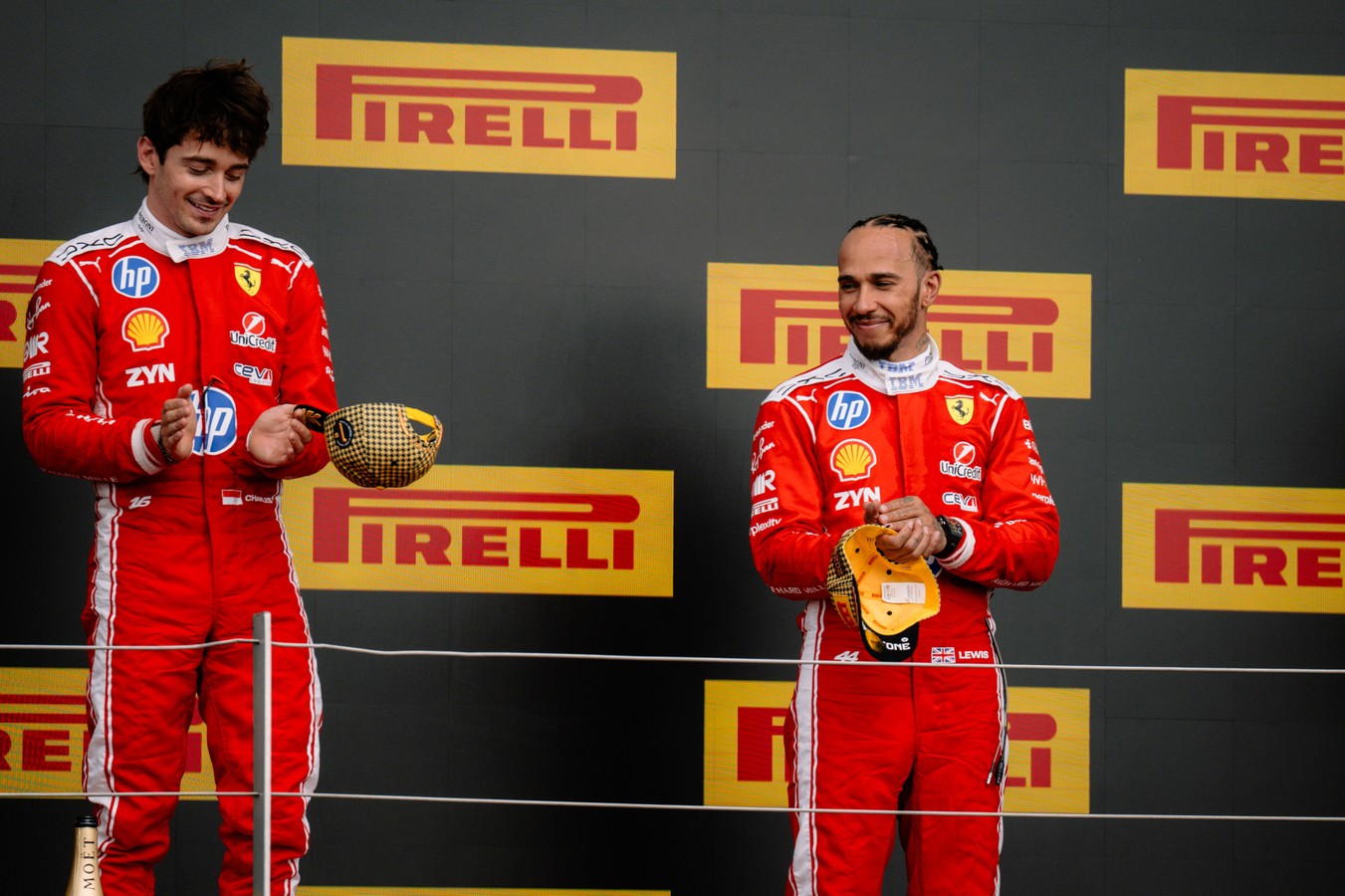
With F1 reaching its mid-season mark in 2026, Pit Debrief has put forward a review of how Scuderia Ferrari and drivers Lewis Hamilton and Charles Leclerc have fared in the first half of the campaign.
While Mercedes have emerged as the clear favourites to lift both titles after the first eleven rounds, the Italian marque sits second in the teams’ standings. With two victories and seven more podiums under their belt, they are currently 72 points adrift of the championship leaders.
So far as the Drivers’ crown is concerned in 2026, Hamilton and Leclerc find themselves second and fourth, respectively, in the F1 championship table.
Leclerc holds a slight advantage when it comes to single-lap metrics, classifying in front of his teammate in six out of eleven Grand Prix Qualifying sessions. Meanwhile, the numbers are reversed for race day, with Hamilton leading on six higher finishes to the Monégasque’s five.
Although both Ferrari drivers have secured one Grand Prix win apiece, Hamilton just edges Leclerc with respect to podiums scored by five to four.
Scuderia Ferrari 2026 F1 Mid-Season Review: 7/10
Despite not having an answer to the W17’s blistering pace in the first three rounds, the way Scuderia Ferrari started their 2026 F1 campaign in Australia was quite promising. Besides flexing their superb race starts, they also claimed three podiums.
In Miami, Ferrari introduced their first sizable upgrade package of the season. While they managed to bring home a third-place finish in the Sprint race, Mercedes and McLaren had the upper hand in the Grand Prix. Early damage and a post-race penalty resulted in the Italian team’s haul only amounting to 12 points.
At the Circuit Gilles Villeneuve, the SF-26’s pace was pretty underwhelming in the 23-lap Sprint race. However, George Russell’s retirement on Sunday proved rather beneficial, and the Prancing Horse secured a podium and gained 5 points on Mercedes.
The subsequent two rounds gave Ferrari plenty to celebrate. After Hamilton grabbed a second-place finish in Monte Carlo, he claimed his first victory in red at the Circuit de Barcelona-Catalunya—where the 16-time world champions brought changes to eight parts of the SF-26 as well.
While getting drenched in champagne in Monaco and Spain, Ferrari also registered DNFs in back-to-back races due to mechanical issues. As a consequence, Leclerc slipped down to fourth in the Drivers’ standings.
After struggling considerably for pace in Austria, Ferrari bounced back rather well at Silverstone—with Leclerc standing on the top step of the podium and Hamilton on the third. The Belgian GP saw them add one more podium to their tally.
Even with the Hungaroring suiting the SF-26 on paper and Ferrari bringing two updated elements, they missed out on pole and failed to climb onto the podium. Messy start, poor execution, and an additional penalty aggravated their struggles on Sunday.
Positives to take away from the first half
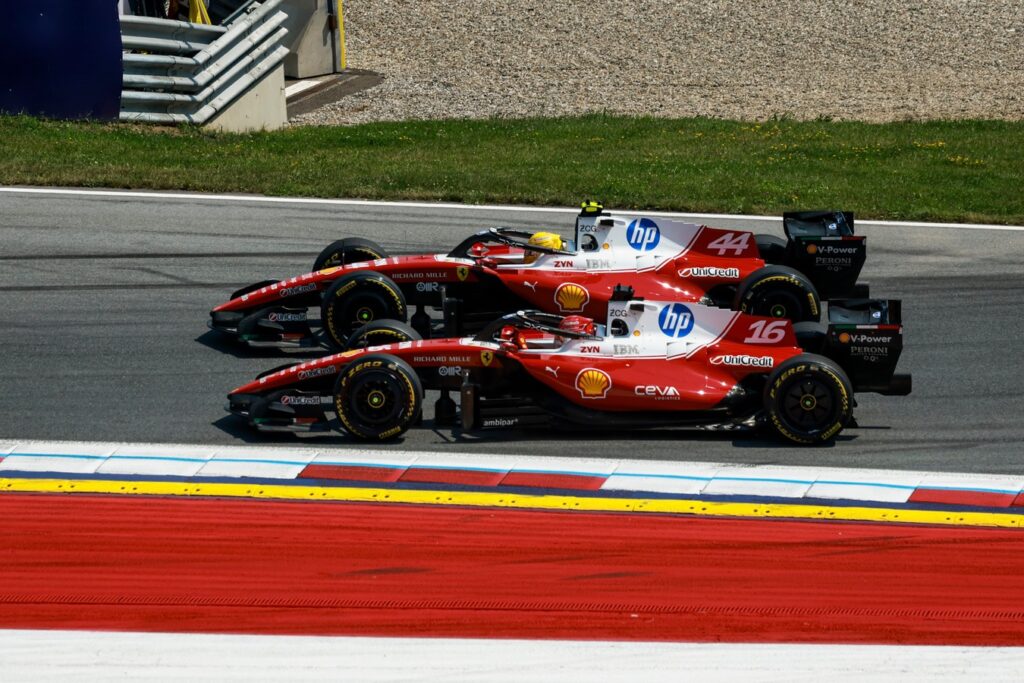
Scuderia Ferrari deserve credit for building a pretty reliable F1 car with a quality chassis, but their 2026 campaign until now—compounded by a weak power unit—merit only a 7 in Pit Debrief’s mid-season review.
Granted that the SF-25’s flawed design philosophy relegated them to fourth place in the Constructors’ standings last year, the Maranello-based squad have clearly bounced back under the brand-new technical regulations this season.
While the SF-26’s power unit is certainly lacking in horsepower relative to its immediate rivals, its reliability, nevertheless, shone through in the first eleven rounds. Neither of Leclerc’s two retirements was attributable to engine failure.
McLaren’s drivers and Team Principal Andrea Stella, in particular, have raved about the SF-26’s chassis on account of its excellent mechanical grip, superlative cornering speeds through slow- and medium-speed sections, and phenomenal traction.
Although the pit stops thus far have been slower on average in comparison to last season’s, the crew are still doing a commendable job. The team has also been operationally sound, with the pit wall proactive enough to roll the dice on bold strategies on more than one occasion.
Areas of improvement
Even if Scuderia Ferrari—the oldest and most successful team in F1—are faring well in 2026, they are still not good enough. They have, once again, produced a car that has failed to establish itself as the fastest on the grid.
With respect to the engine pecking order, the Italian manufacturer’s ICE is only the third-best on the grid. Besides, it is more than 4% adrift of the benchmark—deficient enough to qualify for two upgrade opportunities in 2026 under the ADUO system.
Although it’s encouraging that Ferrari have emerged victorious in two races so far, it’s debatable whether they could’ve bested the championship leaders on pure pace alone. Had the Mercedes drivers adopted a similar three-stop strategy and wasted no time battling each other, the outcome might’ve been different in Barcelona. Their Silverstone win probably also would’ve slipped away without Kimi Antonelli’s retirement.
There are a couple of other areas that Ferrari need to work on. With more efficient instruction, Hamilton could’ve gotten out of Oscar Piastri’s way sooner and avoided a penalty in Budapest. The unsafe release that saw the Brit hit a mechanic during his pit stop in Belgium is yet another instance of how a lack of clear communication can cost both the driver and the team crucial time.
Ferrari losing relative competitiveness at times after showing promising pace on Friday is also a concerning development. When track evolution and overnight set-up changes disrupt their expected trajectory—even at venues tailored to the SF-26 strengths—the strategists get backed into a corner.
A messy Hungarian GP led Team Principal Fred Vasseur to concede that the Maranello-based squad have to refine their execution going forward. Furthermore, they cannot entertain more mechanical failures if they are to mount a championship challenge in the latter half of 2026.
The brake controversy
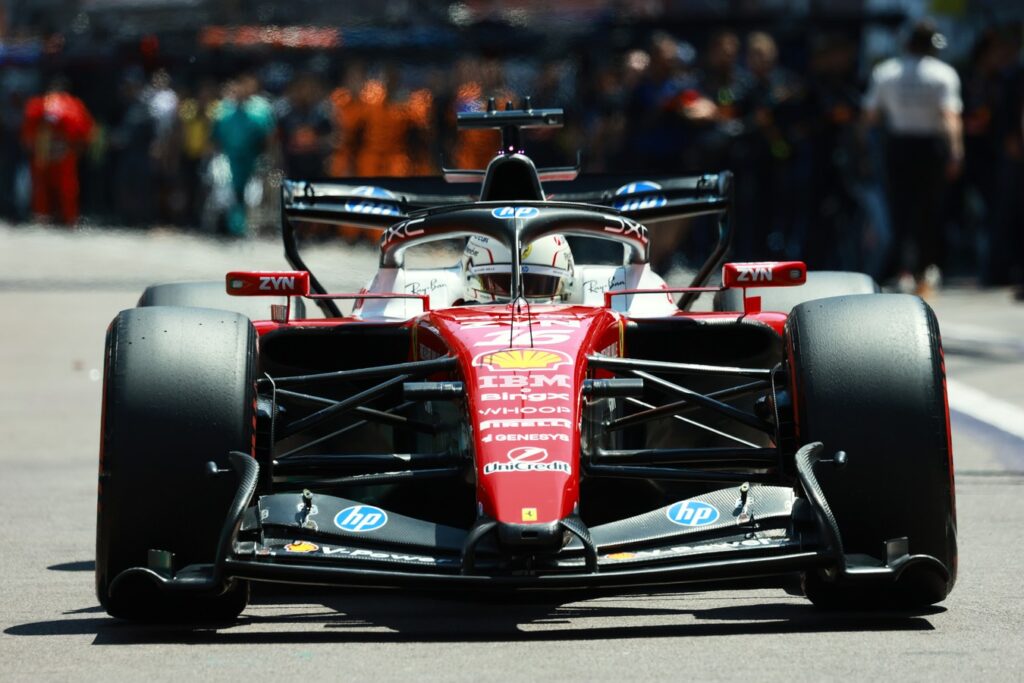
Let’s delve into Scuderia Ferrari’s brake saga now that has soured their relationship with long-standing technical partner Brembo, cost the team valuable points, and derailed Leclerc’s momentum in the 2026 F1 season!
With the home hero refusing to shoulder any blame for his crash in Monaco and labelling the situation—where three of his four brakes had stopped working properly—borderline dangerous, Brembo issued a statement accusing him of drawing “premature” technical conclusions.
Nevertheless, the aforementioned controversy led to a revelation that Hamilton had switched to Carbone Industrie discs from the Japanese GP in order to make himself more comfortable with braking.
It also became evident from Deputy Team Principal Jerome D’Ambrosio’s statements that Ferrari weren’t too pleased that the information regarding the drivers running different specifications had finally gone public.
According to The Race, Brembo’s products tend to be more progressive and consistent throughout the whole braking phase and temperature range, meaning that they have traditionally been better at firing up in the cold and Safety Car conditions.
It’s possible that Brembo discs can no longer retain temperatures as effectively as before given the hybrid elements in braking this season. It would be a reasonable explanation for why Leclerc’s brakes had become too cold and malfunctioned while running behind the Safety Car in Monaco.
However, it’s important to point out that in the previous race weekend, the 28-year-old had started voicing concerns about his brakes on Friday, when track temperatures were moderately high in Montreal.
While the different energy management requirements under the new regulations certainly played a role in Leclerc’s brake discs behaving inconsistently across two rounds, the fact that his brake troubles materialised in Canada—when Ferrari further optimised their Miami upgrades—should raise some eyebrows.
Setbacks that might prove costly later on
With the Italian automotive manufacturer equipping multiple teams on the 2026 F1 grid with complete braking systems and no other driver—apart from Leclerc—enduring session-ending incidents, Scuderia Ferrari’s failure to anticipate that the standard Brembo configuration would no longer be compatible with the upgraded and optimised SF-26 is astounding.
Although it’s understandable that the Monégasque driver opted not to switch to alternative Carbone Industrie brake discs in Monte Carlo to avoid testing unfamiliar hardware on a tight street circuit, Ferrari shouldn’t have put him in such a compromised position in the first place.
Ultimately, Leclerc suffering a DNF at the Monaco GP while running in the podium places led to the team leaving 15 easy points on the table. The switch to a new brake configuration meant he wasn’t performing at his optimal level in Barcelona even before he retired from the race due to a severe hydraulic failure.
Ferrari accommodating Hamilton’s needs this season to make him more comfortable in the car is a logical decision. Watching the seven-time world champion perform at a top level again has certainly been worthwhile.
However, this feel-good story has also lowered Leclerc’s ceiling. Regardless of whether the Brembo discs’ inconsistency was an unforeseen consequence of the Carbone Industrie materials gelling well with the current interaction of the SF-26, he will have to concentrate his efforts on adapting rather than pure performance for the rest of the campaign.
Even though the Carbone Industrie discs are providing the Ferrari drivers with much-needed consistency, Leclerc had issued caution in Monaco that the new specification might have its own shortcomings. Whether or not that’s the case, the second half of the season will tell.
Lewis Hamilton Mid-Season Review: 8/10
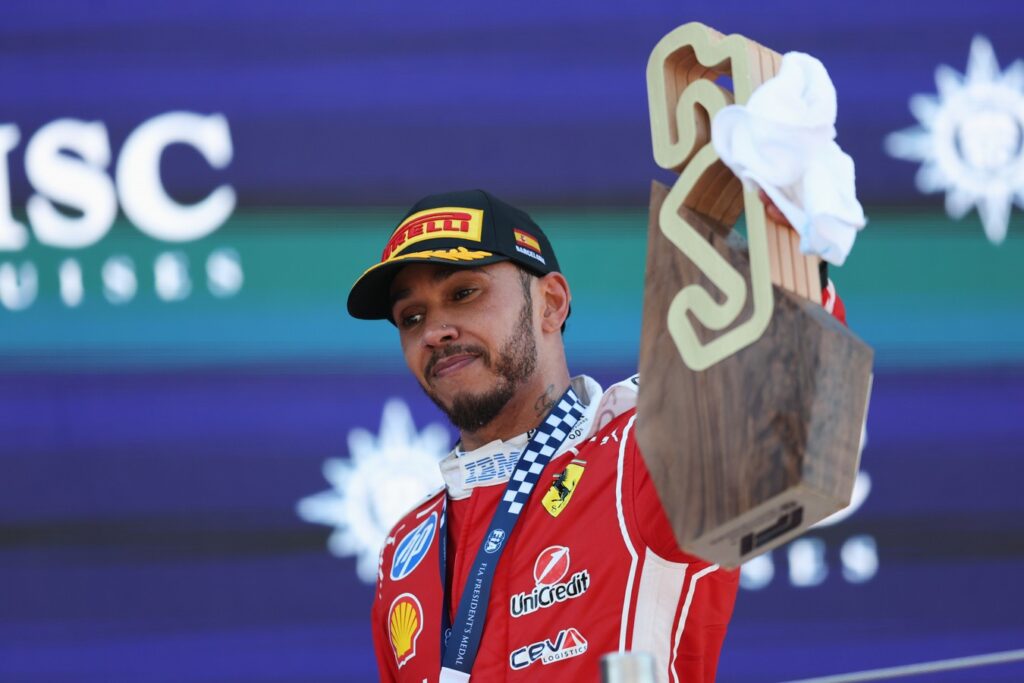
Missing out on the rostrum by a tiny margin in Melbourne, Lewis Hamilton claimed his first podium in red in Sunday’s race at the Shanghai International Circuit. Having complained about a lack of power on the straights, he only managed a P6 finish in Japan.
The Ferrari driver’s Miami GP outing was utterly underwhelming. His SF-26 lost several points of downforce due to an early race collision with Franco Colapinto.
Hamilton bounced back rather well in Montreal. Despite setting only the fifth-fastest time in qualifying, he managed to get the better of Max Verstappen in an on-track battle and bag 18 crucial points.
Securing a comfortable P2 finish on the streets of Monte Carlo following the Dutchman’s DNF, the 41-year-old registered his first front-row start of the season in Barcelona. On Sunday, a bold three-stop strategy and a perfectly timed VSC led him to claim his first-ever Grand Prix victory with Ferrari.
Owing to the SF-26’s high tyre degradation and balance issues in the hot conditions, Hamilton scored only 10 points in Spielberg.
On his home turf, the Brit received a 5-second penalty for a false start but managed to make his way back to P2. However, with Ferrari pitting him for softs, Russell staying out, and the race ending under the Safety Car, he crossed the line in third place.
After a shunt in FP3, the Lap 1 contact with Russell not only damaged Hamilton’s car but also earned him a penalty at Spa-Francorchamps. Despite claiming that was fast enough to win if his race weekend had gone more smoothly, he finished off the podium.
In Budapest, Hamilton missed out on pole position by 0.012 seconds. However, he racked up two different penalties during the race weekend and came home in fifth.
Clearly rejuvenated
Inasmuch as Pit Debrief’s mid-season F1 review goes, Lewis Hamilton has done a pretty convincing job thus far in 2026. While his consistency, racecraft, and a couple of standout performances have boosted his rating, the avoidable mistakes—a false start and speeding in the pit lane—he committed in the last few rounds have also counted against him.
With the ground effect era coming to a close in Abu Dhabi last year, the 41-year-old clearly started the new regulatory cycle with a clean slate. The confidence with which he approaches the SF-26 is miles better than how he handled its predecessor.
Hamilton is also the only driver to have completed 100% of the racing laps so far in 2026. Although this feat is noteworthy, it has little to do with his driving. It’s sheer luck. Everyone else on the grid, including his teammate, has endured race-ending issues that were beyond their control most of the time.
The 106-time race winner’s solid pace has undoubtedly been instrumental in him currently sitting second in the Drivers’ standings. At the same time, it’s true that Mercedes’ unreliability has made his eighth title look achievable for now.
However, if the Brackley-based team manages to resolve their reliability woes in the second half, Antonelli will further extend his championship lead. Going forward, all Hamilton can do is maximise his own race weekends, capitalise on his rivals’ mistakes, and hope that he comes out on top when the season is done and dusted.
But with success comes more expectations
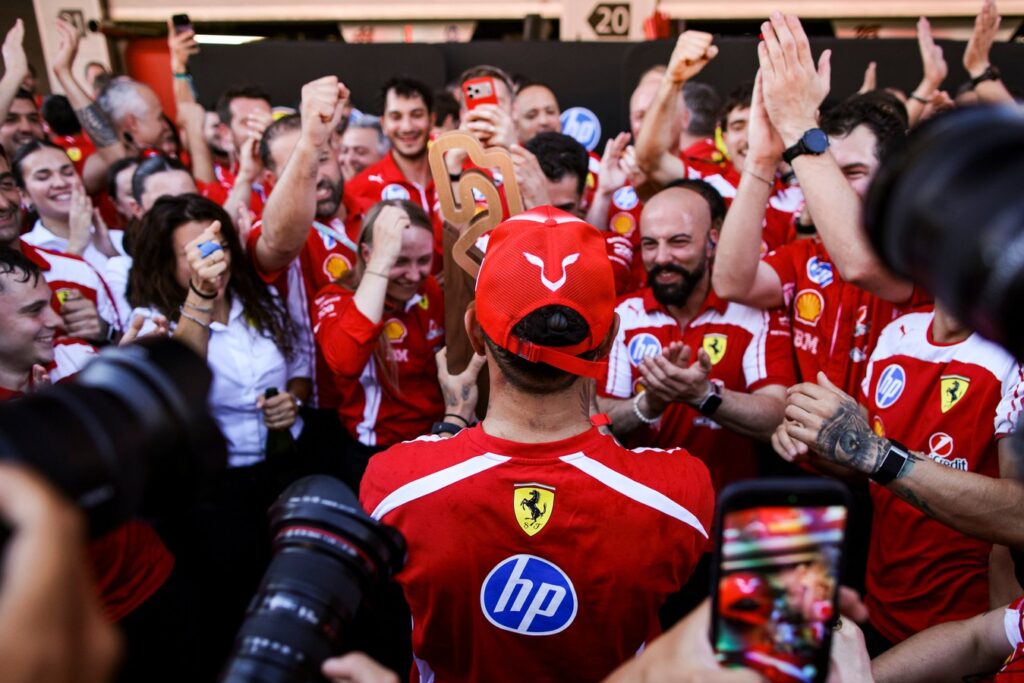
Ahead of his home race at Silverstone, Lewis Hamilton revealed that he had realigned himself with Scuderia Ferrari’s top management—President John Elkann and CEO Benedetto Vigna—to improve synergy with the F1 team in 2026.
The Brit also emphasised his contribution to the design of the SF-26, stating how he had to push really hard behind the scenes for the team to tailor certain components to his preferences and introduce the brakes and front suspension he wanted since last year.
Considering Ferrari have pulled out all the stops to make Hamilton more comfortable, perhaps at the expense of his teammate, and the SF-26 boasts ‘a bit of his DNA’, it’s only fair to expect that he delivers more results that are worthy of the stature of a seven-time world champion in the remaining races of the season.
Charles Leclerc Mid-Season Review: 7.5/10
The start to Charles Leclerc’s ninth season in F1 was undeniably solid, as he picked up two pieces of silverware in the first three rounds of 2026.
After leading the race in Melbourne and coming home in third, the Monégasque fought his way up from sixth to finish in second place in the Shanghai Sprint. A lock-up cost him the podium on Sunday.
While the timing of the SC inconvenienced him, the closing stages of the Japanese GP saw Leclerc overtake Russell with a stunning move around the outside and clinch a hard-fought podium.
Attempting a risky move to regain the P3 from a faster Piastri, the 28-year-old spun and hit the wall on the final lap in Miami. A post-race penalty dropped him to eighth place.
Leclerc, who had complained about brake issues throughout the weekend, finished fourth in Montreal. His misfortunes only doubled at his home race, which saw him crash in qualifying and retire on Sunday due to brake failure.
Switching to new brake discs in Barcelona, Leclerc made a costly mistake in qualifying. In the race, a hydraulic issue forced him to retire with four laps to go.
Despite lining up in second, Leclerc’s Sunday in Austria was very underwhelming. Speaking about finding a breakthrough ahead of qualifying at Silverstone, he put his SF-26 on the front row and delivered a controlled drive to secure his ninth F1 victory.
Ferrari’s call to pit under the second VSC—although advantageous—didn’t give the 27-time polesitter a big enough cushion to keep Kimi Antonelli at bay in Belgium. Nonetheless, he kept the Italian honest in the final few laps and bagged 18 points.
In Budapest, Leclerc had a pretty anonymous race after losing several positions on Lap 1. Hamilton’s penalty promoted him to fourth at the chequered flag.
Mixed fortunes
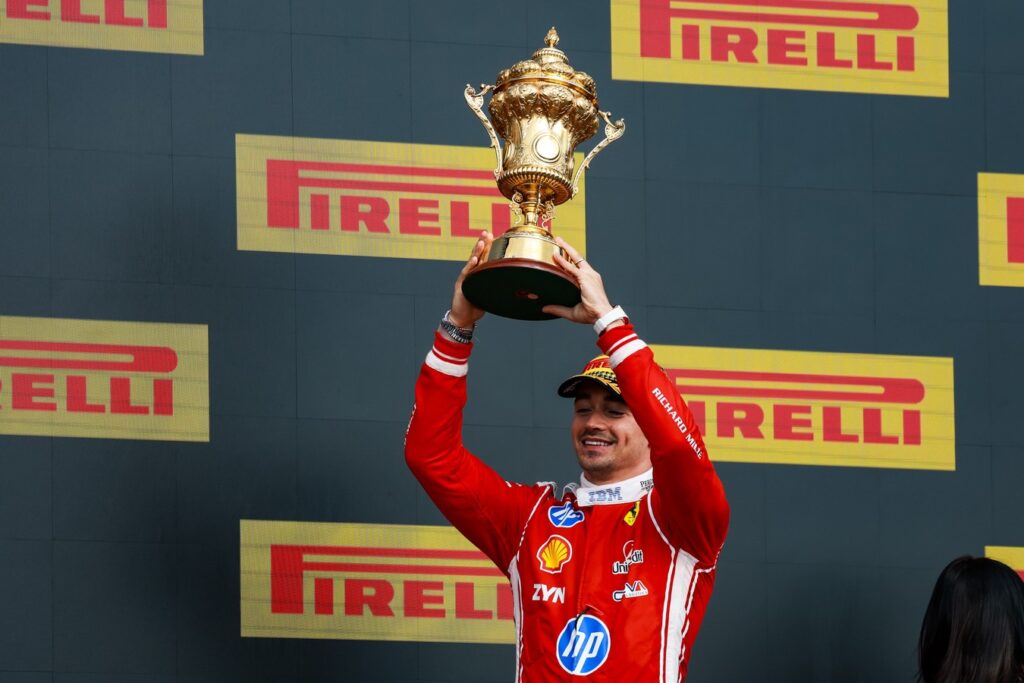
Charles Leclerc’s overall performance in the first eleven rounds of the 2026 F1 campaign has earned him a grade of 7.5 in Pit Debrief’s mid-season review. He not only showed off his innate skills over a flying lap and a race distance on several occasions but also demonstrated his ability to bounce back fast after a difficult period. However, his ranking also took a hit thanks to the couple of crashes and the multi-race slump—irrespective of the extenuating circumstances—he experienced before heading to Silverstone.
While the superb wheel-to-wheel racing ability he displayed in the early rounds and his long-awaited victory at Silverstone constitute the nine-time race winner’s biggest highlights until now, the stretch between the Canadian GP and the Sprint race in Britain also saw the Ferrari driver at his lowest.
Leclerc’s fourth position in the Drivers’ standings right now, without a doubt, seems unimpressive on the surface. After all, his teammate finds himself in second, 50 points adrift of championship leader Antonelli.
However, if we engage in hypotheticals and leave the Monte Carlo native’s DNFs out of the equation, he would currently be third in the championship table, just 6 points behind Hamilton. In this scenario, his campaign looks far more respectable. Nonetheless, these ifs and buts won’t win him a title in 2026.
One aspect of his racing that Leclerc could perhaps tweak is his do-or-die approach. Take his Miami GP crash, for instance. Rather than attempting a high-risk move and pushing too hard to overtake the faster McLaren on older rubber, he should’ve settled for a slightly worse result to maximise his session. But it’s really hard to condemn a driver for daring to chase the impossible.
Do Ferrari count on Leclerc’s adaptability a bit too much?
Although Charles Leclerc has admitted that his aggressive driving style, which typically entails a unique throttle application that overlaps braking, does not pair well with the 2026 F1 regulations, it would be wise to remember that he was performing just fine before the brake discs he had known his entire career stopped working for him.
Many argue that Leclerc migrated to the Carbone Industrie specification of his own volition. However, if the choice to stick with familiar discs meant risking an incident in every session, did he really have a choice?
Over the years, Ferrari, on several occasions, have made certain adjustments to make the lives of Leclerc’s teammates easier. Has the Italian outfit ever brought any changes solely at his request?
Since the answer is no, it’s fair to say that Ferrari have and are continuing to take unfair advantage of the 28-year-old’s exceptional adaptability. And as long as they keep doing so, they will never unleash his full potential, which is definitely a shame.
Ultimately, it took Leclerc two and a half weekends to pull his form back up to a satisfactory level. Instead of completely adjusting his driving style to replicate Hamilton’s, he opted to rely on his own instincts and found a way “around the car”.
Nevertheless, the road ahead is tough. The Monégasque won’t receive any custom-made modifications to fuel his resurgence. He will have to rediscover his feel and adapt to new braking references as he hits a different track for the remainder of the season.
If Leclerc’s confidence behind the wheel of the SF-26 is restored and he somehow manages to pull off a 2024-esque season—where he scored the most points of any driver following the summer break—it would be not because of Ferrari, but in spite of them.
Looking ahead to the second half the 2026 F1 season
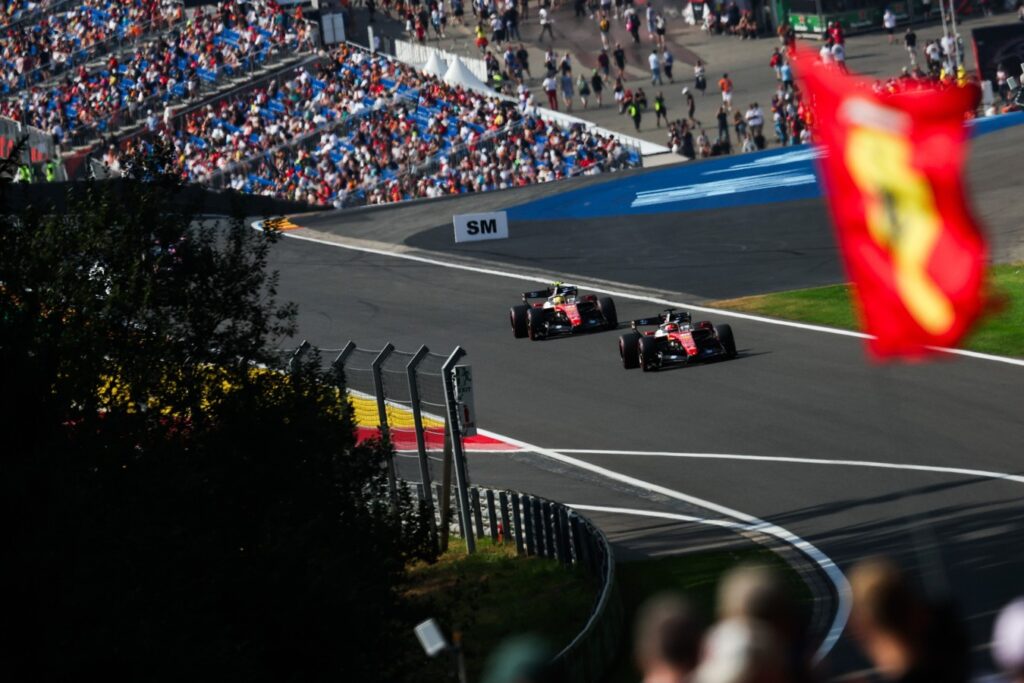
When the 2026 F1 campaign resumes in two weeks’ time at Zandvoort, Scuderia Ferrari and their drivers will have their work cut out for them.
As Hamilton works on his situational awareness while hunting down Antonelli, Leclerc will hope the solutions he found at Silverstone work in the remaining race weekends and help him fully regain his confidence in the SF-26.
Aside from improving execution, avoiding strategy missteps, and minimising other operational errors, the Italian outfit—as Vasseur stated ahead of the summer break—will strive to maintain a steady development rate throughout the latter half of the season. Whether their second major power unit upgrade, which is supposedly arriving at Monza, can bridge the deficit to Mercedes remains to be seen!
In case Ferrari’s 2026 season turns out to be a repeat of 2024, where they missed out on the Constructors’ title by a small margin, they will unfortunately have no one else to blame but themselves for the questionable decisions and concessions they made and the points they threw away in the earlier rounds.