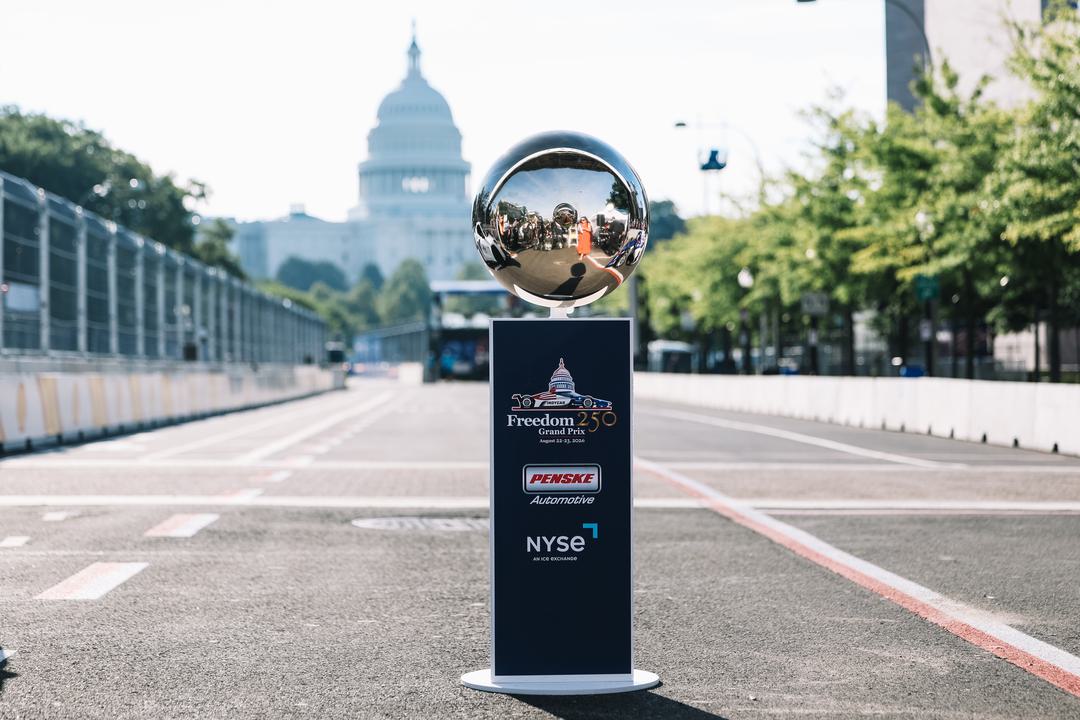
IndyCar headed to uncharted territory as the field prepared for Practice 1 on the Streets of Washington, D.C.
The inaugural Grand Prix in Washington D.C. marked a historic first for the championship, with Alex Palou, Kyle Kirkwood, Josef Newgarden and the rest of the 25-car field set to take on the new street circuit in the United States capital. With no previous race data to rely on, Practice 1 gave teams and drivers their first real chance to understand the layout, grip levels and early set-up direction.
That made the opening session especially important. Street circuits usually rewarded confidence, precision and clean track time, but a new venue could shift quickly as the surface evolved and drivers learned where the limits sat. With Palou leading the championship and several contenders looking to close the gap, Washington’s first IndyCar practice session promised to offer the first clues ahead of a landmark weekend.
Cars roll out for the first time in Washington
IndyCar cars rolled onto the Streets of Washington, D.C. for the first time, with conditions immediately creating a difficult tyre call.
Rain had left the circuit damp before the session, but the track began to dry as the sun came out. With no intermediate tyre available, teams faced an awkward crossover point between wets and slicks. The surface still held enough moisture for spray and small puddles, but several dry patches had already started to appear.
Christian Lundgaard became the first driver to head out, fulfilling his aim of turning the first lap of the new circuit. The Dane took a cautious approach on his installation lap, short-shifting as he explored the tight sections of the layout and the run past the Capitol.
Rather than returning to the pits immediately, Lundgaard stayed out for another pass down Pennsylvania Avenue, giving his team an early read on ride height and track conditions. The rest of the field then completed their opening laps without incident before returning to pit lane for checks.
With the cars back in the boxes, teams inspected the machinery and began assessing how quickly the track could move towards slick tyres. Although conditions remained too damp at that stage, the drying surface suggested the first practice session could quickly enter a difficult tyre window.
Bumps and surface changes create an early challenge
As speeds increased, the new Washington, D.C. circuit quickly began to show its character. Drivers had to deal with surface changes mid-corner, particularly around Turn 2, while bumps across the layout made the opening practice far from straightforward.
The track also featured several different road surfaces, creating a bigger challenge than a fully repaved venue. The camber of the street lanes added another difficulty, with parts of the road pulling the cars towards the walls.
Younger drivers such as Dennis Hauger, Rinus VeeKay and Kyffin Simpson were among those sent out early as teams gathered more information about the circuit. With limited data and changing conditions, every lap gave teams a clearer picture of how demanding the new street track would be.
The first lap times soon followed. In the opening group, David Malukas led the way with a 1:09.783, ahead of Hauger and Simpson. VeeKay then made his move and lowered the benchmark, before Lundgaard returned to the top as the field continued to build speed.
Drying track brings lap times down
As the track continued to dry, lap times began to fall quickly. Power set a 1:06.1, while Siegel moved up to second as more drivers started to push.
The bumps also became more obvious as speeds increased. Newgarden bounced through the crosswalk section, where the brick surfaces on both sides of the road created a difficult double hit for the cars. Other areas, including the exits of Turns 3 and 4, also looked tricky as drivers fought for traction.
With around 25 minutes remaining, nearly half the field had started to circulate and a dry line was forming, especially from Turn 7 towards Turn 1. However, the southern part of the circuit, particularly through Turns 5, 6 and 7, still held more moisture.
Several experienced drivers waited before completing flying laps, including Scott McLaughlin, Alexander Rossi, Alex Palou, Scott Dixon, Louis Foster and Graham Rahal. Romain Grosjean, meanwhile, described the conditions as difficult, with some corners fully dry and others still wet, but said the circuit had good flowing sections despite its bumps.
Lundgaard sparks first slick switch
With 17 minutes left, Power still led after improving to a 1:05, with Kirkwood and O’Ward close behind as the track continued to dry.
The session then reached its first major tyre crossover point. Lundgaard became the first driver to switch to slicks, giving the rest of the field an immediate reference as light spray still lingered along Pennsylvania Avenue.
Although the circuit was drying quickly, small puddles remained in places and helped the wet tyres survive longer than expected. Lundgaard’s first lap on slicks was cautious, but he still climbed to sixth, proving the dry tyre had started to work.
That put the rest of the field on notice. If Lundgaard continued to improve, the remaining teams would have little choice but to follow his call.
Kirkwood also had a frustrating moment with Ferrucci at pit exit, as the A.J. Foyt driver rejoined while Kirkwood approached on a fast lap. The incident highlighted a potential issue for the weekend, with cars exiting the pits able to move back towards the racing line at a high closing speed.
VeeKay and Power trade fastest laps late on
With just over seven minutes remaining, most drivers had moved onto slick tyres as the dry line continued to improve.
Lundgaard initially led from VeeKay, while Power and Siegel tested possible passing opportunities into Turn 1 as they moved past Caio Collet. Power also pushed hard into Turn 6, where the surface remained slick and the bumps continued to catch drivers out.
Turn 7 became a key corner as the session built towards its final minutes. Drivers edged closer to the exit wall with every lap, and those willing to take more risk often found time on the timing screen.
VeeKay then set a new benchmark with a 59.436s, putting Juncos Hollinger Racing at the top ahead of Rossi and Dixon. Hauger also dipped below the one-minute mark as more drivers found confidence.
Power later became the first driver to break into the 58s, moving fastest with just over a minute remaining. Rossi improved to second, but Lundgaard’s session took a hit when he went deep at Turn 6, lost the rear and hit the wall, leaving his car facing the wrong way with visible right-rear damage.
Rossi leads before split-group running
As the combined portion of practice came to an end, Alexander Rossi moved to the top with a 58.60s.
VeeKay sat second after briefly leading the session, while Power ended the segment third after becoming one of the first drivers to break into the 58s. By that stage, the track had dried enough for slick tyres, with lap times falling quickly across the field.
Lundgaard, who had triggered the switch to slicks earlier in the session, became the first driver to make contact with the wall. He caught a damp patch, struck the barrier with the right rear and spun, leaving visible damage to the car.
With the initial running complete, IndyCar then moved into split-group practice, giving drivers another chance to build confidence on the new Washington, D.C. street circuit.
Split-group running brings more risk
The IndyCar Practice 1 session in Washington then moved into split-group running, with Group 1 given around 12 minutes on track. Scott McLaughlin headed out early, while Will Power immediately switched to the soft tyre to gather data for the rest of the weekend.
The drivers started to push harder as confidence grew on the new circuit. Kirkwood briefly looked especially strong and became the first driver to dip into the 57s, despite reports that he may have brushed the wall earlier in the run.
The bumps continued to play a major role. Through the slower sections, the steering wheel kicked back heavily in the drivers’ hands, while several cars bounced across the crosswalks on Pennsylvania Avenue. Drivers also began moving across the road to find the smoothest line into Turn 1, which could make pit exit and green-flag stops a key talking point during the race.
Andretti remained strong as Kirkwood and Marcus Ericsson both ran inside the 57-second bracket. Power also improved to third, although his laps came with several moments as the rear of the Penske continued to move around.
Romain Grosjean then brushed the wall at the exit of Turn 7, leaving a red tyre mark from the Firestone softs. It underlined how narrow the margin had become as drivers chased more time around the new Washington street circuit.
Kirkwood tops Group 1 as drivers push the limits
Kirkwood finished Group 1 on top by just under half a second, continuing Andretti’s strong street-course form after another standout showing the previous weekend. Ericsson completed an Andretti one-two, while Newgarden climbed to third.
VeeKay remained competitive in fifth, with O’Ward sixth and Power seventh. O’Ward also gave detailed feedback after the run, appearing to discuss oversteer as McLaren worked through set-up options on the new street circuit.
Further back, Louis Foster continued to face a difficult weekend while driving through pain from injuries to his right hand and left foot. He ended the group around two seconds off Kirkwood’s benchmark, leaving plenty of work to do before the rest of the weekend.
Group 2 begins as ECR shows early pace
Practice 1 continued with Group 2 on track, giving another set of drivers time to learn the new Washington, D.C. street circuit.
Mick Schumacher headed out as he continued to build confidence on a layout new to the entire field. The rookie’s IndyCar future remains unresolved publicly, although he indicated ahead of the weekend that he expected to stay in the series next season.
Christian Rasmussen had an early moment at Turn 1, running into the escape road after the bumps unsettled the car under braking. The incident underlined how much the circuit punished drivers as speeds increased and the cars ran lower to the ground.
Rasmussen later recovered to go fastest with a 59.0, while Alexander Rossi moved up to second to put both ECR cars near the front. It marked an encouraging start for the team after a difficult season defined by DNFs and missed opportunities.
Rinus VeeKay, who had been second quickest in the full-field running and fifth in his earlier group, explained that several teams had chosen to save the softer tyre for Practice 2 as the track continued to evolve. With the surface still changing and qualifying yet to come, tyre strategy remained a key part of the opening day.
The final four minutes did not disappoint. Siegel spun as drivers continued to search for the limit, while Rasmussen tapped the wall in a similar moment to Lundgaard’s earlier contact. Rahal and Schumacher also had moments as the field pushed harder on the improving track.
Palou ultimately finished Practice 1 on top, with Hauger second and Malukas third, as IndyCar’s first session on the Streets of Washington, D.C. ended with plenty of data, several close calls and clear signs of how unforgiving the new circuit could be.
2026 IndyCar Washington Practice 1 results