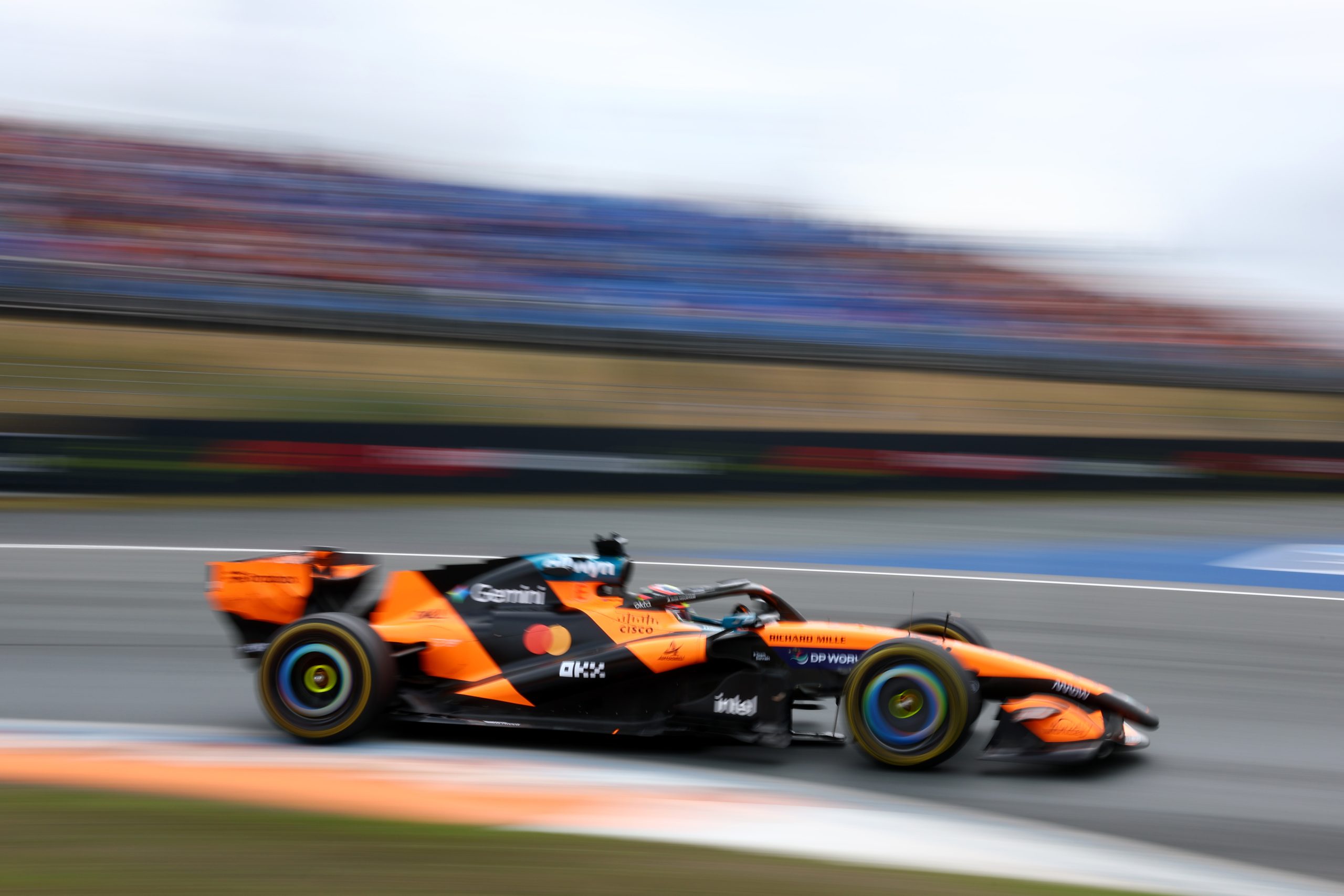
McLaren Technical Director of Applied Engineering Neil Houldey believes the team must remain cautious heading into the 2026 F1 Italian GP despite arriving at Monza on the back of consecutive victories.
After securing back-to-back victories in Hungary and the Netherlands with Lando Norris, the Woking-based outfit faces a very different challenge at the Autodromo Nazionale Monza. The circuit’s long straights, heavy braking zones and unique aerodynamic demands could shake up the competitive order seen at recent rounds.
McLaren to introduce minor aerodynamic updates and H-Wing at Monza
McLaren has continued to develop its 2026 car throughout the season as it looks to improve its performance across a broader variety of circuits. That development programme will continue at Monza, where the team plans to introduce several minor aerodynamic updates alongside components designed specifically for the Italian circuit’s low-downforce characteristics.
McLaren will also make use of its so-called H-Wing, which first appeared on track during practice at the 2026 Hungarian GP in July. The name follows a similar approach to McLaren’s famous F-duct, which the team introduced in 2010. That system took its name from the ‘F’ in the branding located near the inlet on the car. McLaren has adopted the same idea for the H-Wing. The name comes from the ‘H’ in Etihad Airways’ branding displayed on the rear wing as part of the airline’s partnership with the team.
Houldey warns Monza could change the competitive F1 order
McLaren heads to Monza in strong form after securing back-to-back F1 victories, but the team expects the Italian circuit to present a very different challenge to the previous rounds. The low-downforce nature of the track could also alter the competitive order. Houldey therefore stressed that McLaren cannot assume its recent advantage will automatically carry over into the weekend at Monza.
“We arrive at Monza following back-to-back victories, and it has been great for everyone in the team to see the progress we have made this season rewarded on track. Winning again was a fantastic feeling and has reinforced the motivation across the team to keep pushing. We know we have had a quick car at the last few races, but we are not taking anything for granted.”
With rival teams continuing to introduce upgrades, Houldey believes execution across the entire weekend will remain crucial if McLaren wants to remain in contention at the front.
“This is a very different track from the most recent ones, and we can expect a pecking order that not necessarily reflects what has been seen in Hungary and in the Netherlands. Our rivals will continue to bring aerodynamic and power unit developments, so we will need to execute every detail well – from set-up and energy management to ensuring the drivers can perform at their absolute best – if we aspire to fight at the front again.”
Energy management set to play key role at Monza F1 round
Monza’s long straights make aerodynamic efficiency particularly important, while its heavy braking zones and chicanes place additional demands on stability and ride performance. Energy management will also become a major focus throughout practice. Teams will have to determine the most effective way to harvest and deploy energy around the lap without sacrificing performance at crucial points.
“Monza presents a unique challenge, with its long straights placing a premium on drag reduction, while the heavy braking zones demand stability and the chicanes require good ride performance. Energy will also be limited around the lap, so understanding the best way to recharge and deploy it will be an important focus during practice.”
Those different approaches to energy deployment could also influence how drivers attack and defend during the race. A car may gain an advantage in one part of the lap before losing it elsewhere, depending on how much energy remains available.
“Managing overtakes will therefore be particularly important, as different approaches to harvesting and deploying energy could create a yo-yo effect, with cars trading an advantage at different points around the lap.”