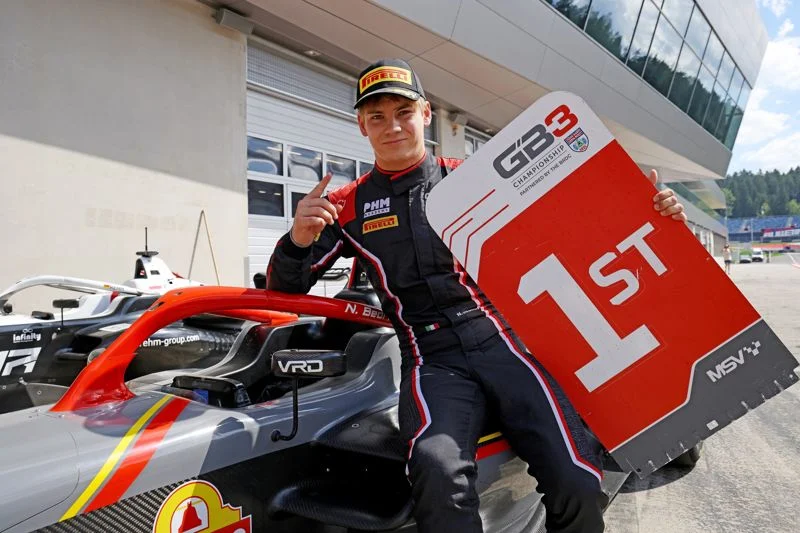
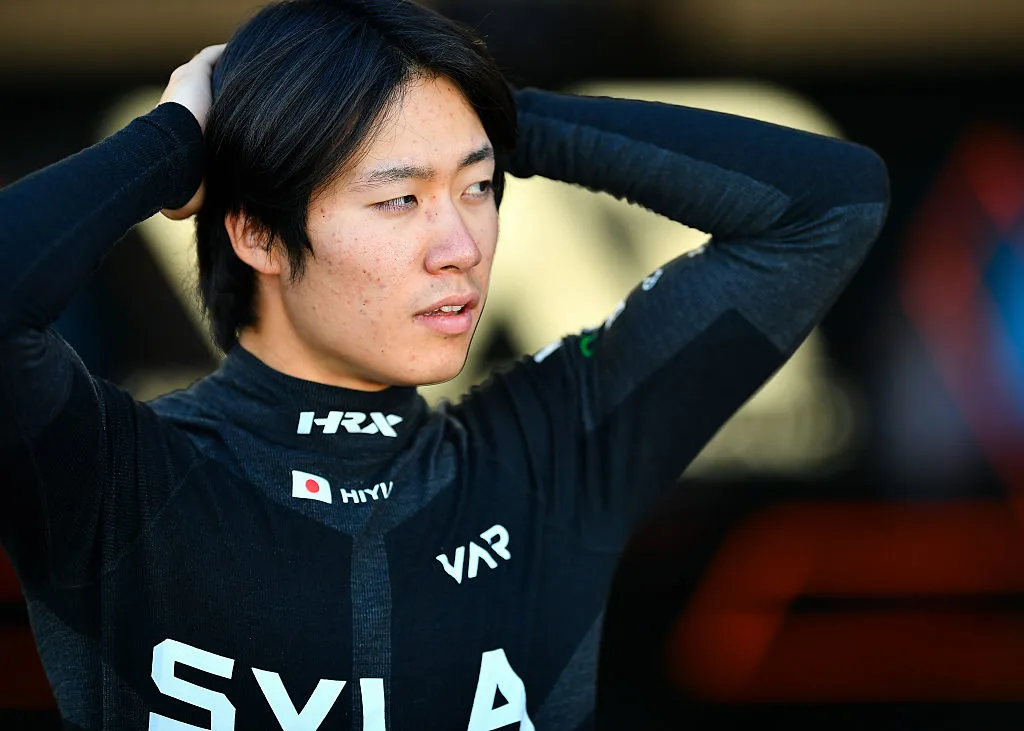
Hiyu Yamakoshi has rated his 2026 rookie F3 campaign a “9 out of 10” after exceeding his own expectations with three podiums, a maiden pole position and several challenges for Feature Race victories during 2026.
The Van Amersfoort Racing driver finished ninth in the Drivers’ Championship, scoring 71 points after a difficult Melbourne opener gave way to a much stronger European campaign. His season included second-place finishes in the Barcelona and Spa Feature Races, pole at the Red Bull Ring and a third podium in the Monza Sprint Race, while an apparent Monaco Sprint Race victory was lost through a post-race disqualification.
Those performances have already helped Yamakoshi take the next step in his career. The Japanese driver remains with VAR for his FIA Formula 2 debut at Baku, continuing a relationship with the Dutch operation that stretches back through Formula Regional and Formula 4. His promotion to F2 for the Azerbaijan round follows a rookie F3 campaign that ultimately surpassed what he believed was realistic before the season began.
Yamakoshi gives rookie campaign ‘9 out of 10’
Yamakoshi entered 2026 with deliberately measured expectations after stepping up from Formula Regional. Before the season, he had spoken about avoiding the excessive expectations he felt had affected him previously and instead concentrating on maximising each weekend and maintaining strong communication with VAR. Continuity with the team formed an important part of his preparations.
By the end of the campaign, however, the results had comfortably exceeded those initial expectations. Yamakoshi became a regular presence towards the front during the middle and later stages of the season and believes both he and VAR progressed considerably following the opening round.
“I think it’s like 9 out of 10, I’d say. Most of the things I achieved I didn’t expect before the season, especially after the first round.
“We had a three-month break and we learned a lot, we improved a lot from Monaco all the way to the end. For me, the results were way more than what we expected.”
Long break transforms understanding of F3
The unusually long gap between Melbourne and Monaco proved particularly important. Yamakoshi struggled at the Australian opener despite showing encouraging speed during pre-season testing, but he used the break to develop a much deeper understanding of how to approach an F3 race weekend.
Rather than concentrating solely on outright pace, his attention increasingly turned towards tyre management, track conditions and understanding when to attack or protect his position. Those lessons became particularly visible once the European portion of the season began, when Yamakoshi started consistently converting his pace into stronger race results.
“I think I understood the F3 car quite a lot during the break. I was obviously always thinking during the race about tyre management, how to manage our position with tyre strategy, the track conditions, the track temperatures. Everything like that is information that’s really crucial.
“That makes it different from what I’ve done last year. The strongest weekend was definitely Barcelona. My first time in the top three in the championship after the disqualification in the Monaco Sprint Race.
“We gained a lot, I think it was around 23 or something points. It was very crucial at that stage in the championship as well. So I’d say Barcelona.”
Monaco disappointment followed by Barcelona response
Monaco provided the first major indication of what Yamakoshi could achieve, but it also delivered one of the season’s most difficult moments. He crossed the line first in the Sprint Race before post-race scrutineering found that the left and right front push rods on his VAR car had been fitted to the opposite sides, resulting in his disqualification from the Monaco Sprint.
Yamakoshi responded immediately at Barcelona. He moved into second at the start of the Feature Race and remained inside Théophile Naël’s DRS range for much of the contest before ultimately securing his first official F3 podium. His second place in the Barcelona Feature Race also included the fastest lap and provided one of his largest points hauls of the season.
That weekend became Yamakoshi’s personal benchmark for the campaign, not simply because of the result but because it demonstrated that he could compete near the front over a Feature Race distance.
Feature Race pace provides biggest surprise
Yamakoshi had expected to be capable of fighting for Sprint Race podiums during his rookie season. What surprised him was how frequently he became a contender at the front of the longer Feature Races, where tyre management and race positioning place greater demands on drivers.
Barcelona was the first clear example, but it was not isolated. He later took pole at the Red Bull Ring and led the opening stages of the Feature Race before eventually losing the position, while Spa produced another sustained fight near the front. At Monza, he again found himself battling among the leaders before ending his F3 campaign with another podium during the Sprint Race.
“I expected I could fight in the sprint races, top three all the time. But I really didn’t expect I could fight in the Feature Race for the win.
“I think I’ve fought for the win four times in Barcelona, Spa, Red Bull Ring and Monza. But still, I really didn’t expect it. Everything was more than what we expected. The team was really impressed me and I impressed myself as well.”
Those races changed the overall complexion of his season. Rather than simply establishing himself during a rookie campaign, Yamakoshi showed that he could challenge drivers with considerably greater F3 experience and regularly place the VAR among the leading cars.
Red Bull Ring delivers maiden pole
The Red Bull Ring provided another major milestone as Yamakoshi secured his first F3 pole position. It was an achievement he had not expected to reach during his first year and reinforced the progress made since Melbourne.
Starting at the front also placed Yamakoshi in a different competitive situation. He retained the lead initially before Ugo Ugochukwu attacked on the opening lap and eventually moved ahead, while Noah Strømsted ultimately won the race. Even without converting pole into victory, the weekend demonstrated that Yamakoshi possessed the one-lap pace to compete with the strongest qualifiers in the championship.
His performances increasingly altered his own expectations. Earlier in the year, reaching a Feature Race podium had appeared a major target; by the second half of the season, running at the front was no longer unfamiliar.
Spa reinforces Feature Race progress
Spa-Francorchamps provided perhaps the clearest demonstration of how much Yamakoshi’s race management had developed. After starting near the front, he capitalised on a slow getaway from Freddie Slater and soon moved into the lead, remaining at the centre of the victory fight throughout the race.
Although Ernesto Rivera ultimately came through to win, Yamakoshi recovered second place late in the contest by passing Slater as the Briton’s tyres began to fade. His second-place finish at Spa became his second official podium and another example of the race-management improvements he identifies as his biggest development during 2026.
The result also came at an important stage of the wider championship and demonstrated that his Barcelona performance had not been an isolated breakthrough.
Monza provides final podium
Yamakoshi’s final visit to an F3 podium came during the Monza Sprint Race. He spent much of the chaotic contest fighting at the front before finishing third behind Taito Kato and Slater.
The result represented his third podium of the campaign and came on a weekend where Yamakoshi acknowledged that VAR did not possess the outright performance it had enjoyed at some earlier venues. He described the Monza podium as particularly special because it came from maximising the package available rather than dominating through raw speed.
His season ultimately concluded in Madrid without another points finish, but three podiums and a pole were enough to secure ninth in the championship and complete a rookie campaign that comfortably surpassed his original targets.
Race management becomes Yamakoshi’s biggest gain
When assessing where he improved most, Yamakoshi points towards race management rather than qualifying speed. Barcelona and Spa demonstrated how effectively he had learned to position himself within DRS range, preserve his tyres and judge when remaining patient offered a better opportunity than attacking immediately.
“I’d say race management is what I learned the most. That’s what happened in Barcelona, Spa. Got DRS before it was too late and managed the position when we wanted to.
“Qualifying is always difficult, it’s all about how we can put in a lap. It’s more about how much the driver can do. But in the race, it’s more about how we can manage the position and how we can manage the tyres.
“I think that’s my strong point. But the big lesson this year is from the start of the season. We were really fast in testing, always in the top 10. But suddenly, in Melbourne, we’re P20. Not the team, but for myself, I’m P22.
“My team-mates are P11, P12, and so we lost many points. I think the potential is that we could have got 10 points at least from that weekend.”
Melbourne therefore remains the clearest example of what Yamakoshi believes could have been improved. His testing pace suggested much stronger potential, but failing to convert it during the opening weekend left him playing catch-up immediately.
Melbourne lesson carries into F2 step
That experience is particularly relevant now that Yamakoshi has moved into Formula 2. Rather than having an entire pre-season to prepare for the step, he joins the championship at Baku and must learn a substantially more powerful car during the closing stages of the 2026 campaign.
VAR confirmed him in place of Nico Varrone for Round 12, keeping Yamakoshi within the same organisation for his latest promotion. His F2 debut at Baku therefore provides an immediate opportunity to apply the lessons he believes took too long to emerge at the beginning of his F3 season.
The step also illustrates how significantly his position changed during 2026. Yamakoshi began the season hoping to establish himself in F3 and believing Sprint Race podiums were a realistic ambition. He ended it with three podiums, a pole, multiple Feature Race victory challenges and a top-10 championship finish before moving directly into Formula 2.
For a campaign he admits delivered considerably more than expected, the next challenge has arrived quickly. The objective at Baku will be to ensure the biggest lesson from Melbourne — adapting immediately rather than allowing an opening weekend to slip away — follows him into the next stage of his career.