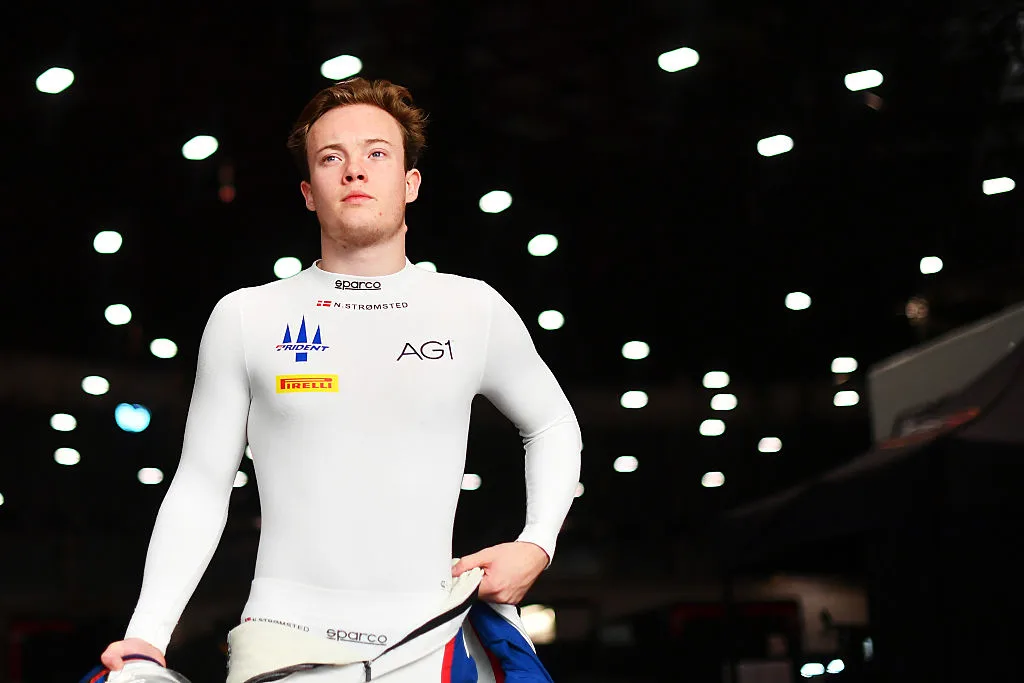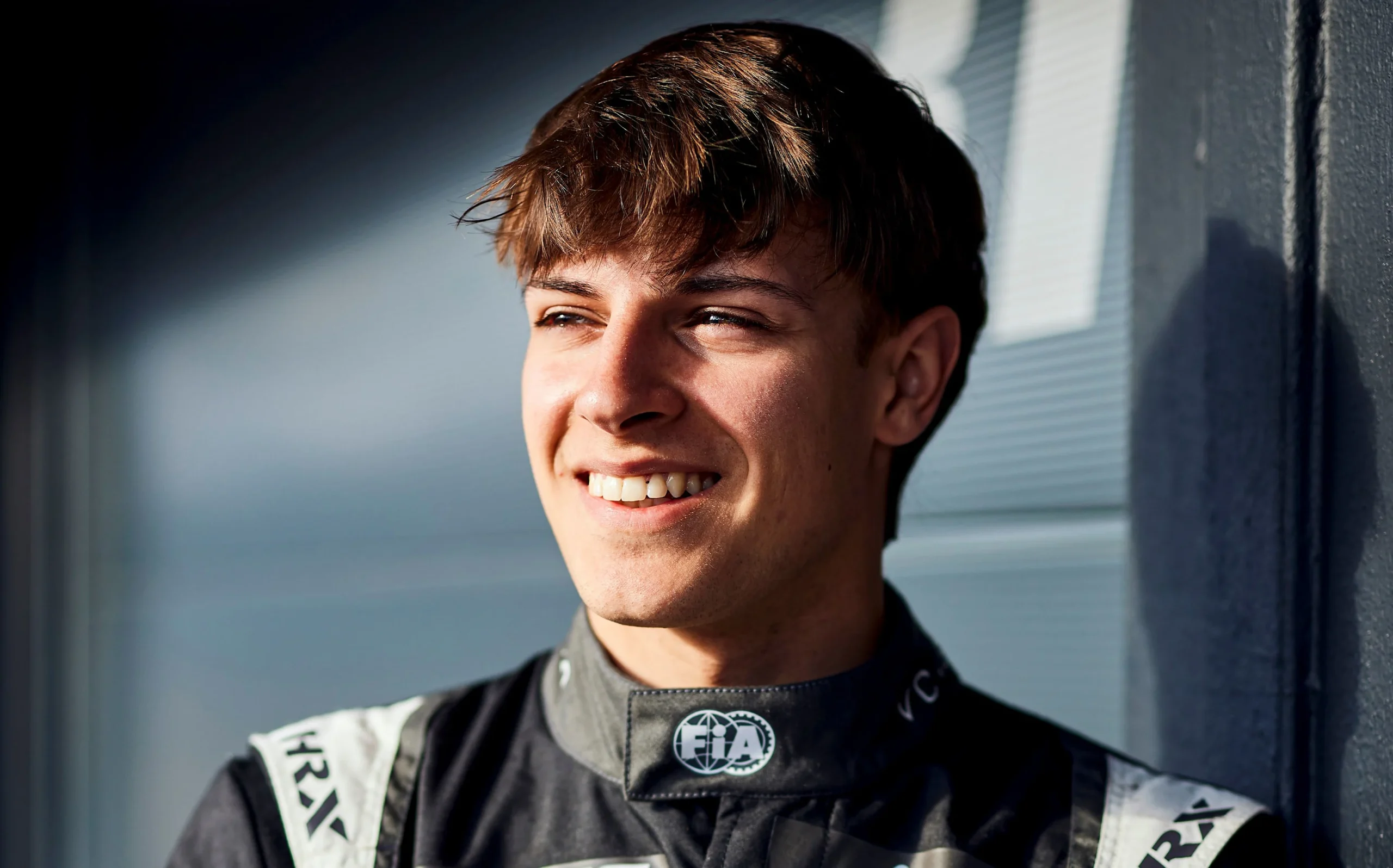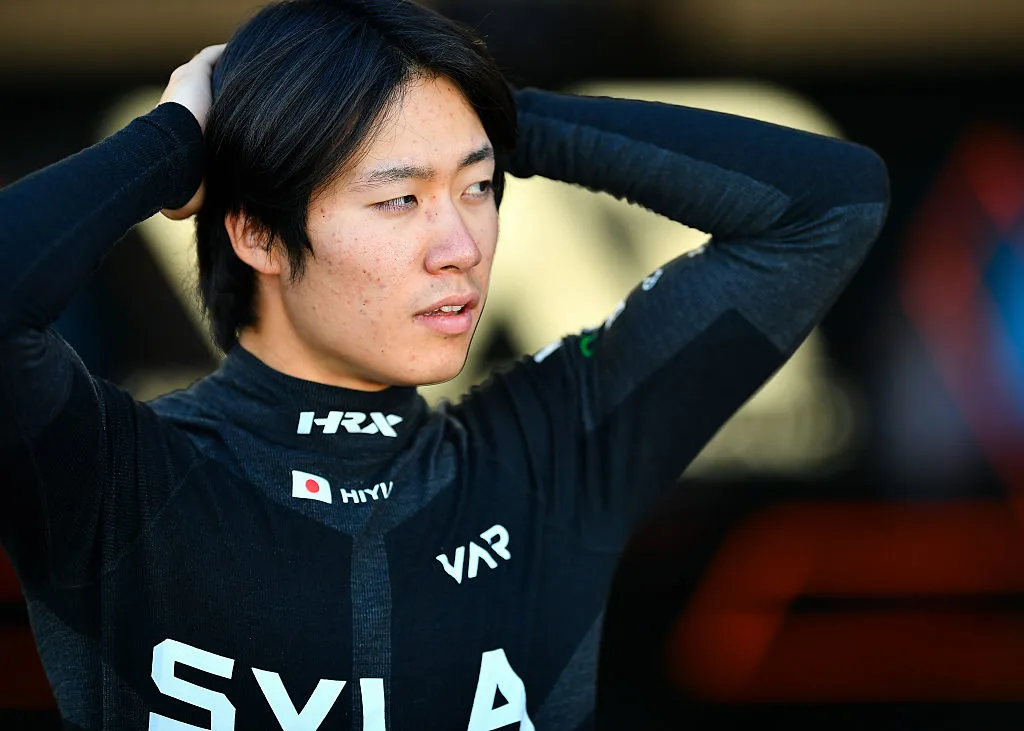
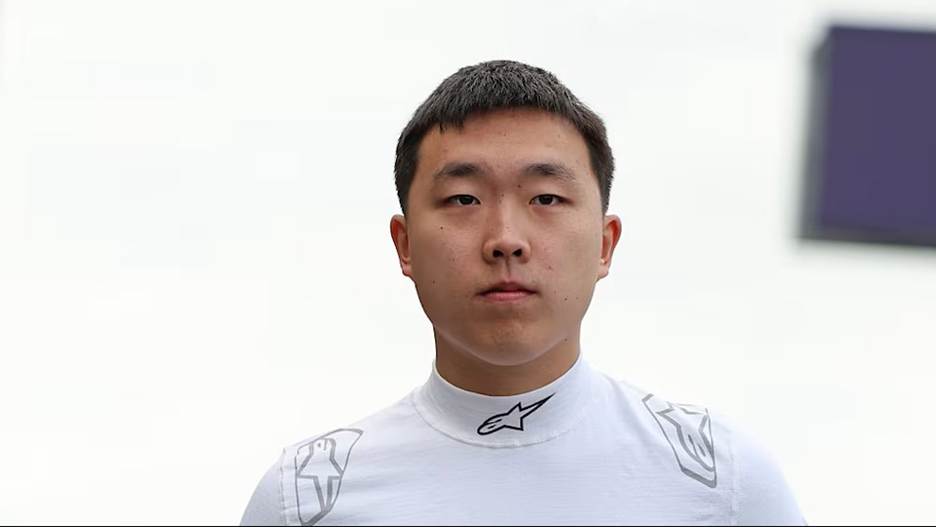
Woohyun Shin’s return to the FIA F3 grid promised an opportunity to put his previous experience to use and establish himself during a full campaign in 2026. Instead, the Hitech driver endured a difficult 2026 F3 season that never truly gathered momentum.
Shin, who previously raced under the name Michael Shin, entered the year with experience across F3, GB3 and Euroformula Open. However, a shoulder injury disrupted his preparations before the opening round and immediately placed him on the back foot. Although his recovery offered the chance to reset his campaign, persistent qualifying struggles, penalties and incidents prevented him from turning occasional flashes of pace into points.
Ultimately, Shin ended the year 33rd in the Drivers’ Championship without scoring.
Injury disrupts Shin’s F3 return before Melbourne
Shin arrived at Hitech with considerably more experience than the average F3 rookie. He had already contested six races with PHM Racing by Charouz in 2023 before returning to the championship following a successful 2025 Euroformula Open campaign.
His move to Hitech also reunited him with a familiar team. Shin had previously raced with the British outfit in GB3, and his return to F3 with Hitech offered him the chance to build on an existing relationship rather than start again with an unfamiliar operation.
However, his preparations suffered a significant setback before the season even began. A shoulder injury forced Shin to miss all three days of pre-season testing in Barcelona, with Tim Tramnitz stepping into the Hitech in his absence.
Shin still travelled to Melbourne and contested the opening round despite the injury. However, 25th in the Sprint Race and 26th in the Feature Race offered little reward from a weekend that he later viewed primarily as an opportunity to reacquaint himself with F3 machinery.
He subsequently underwent surgery in South Korea, leaving the lengthy gap between Melbourne and Monaco to recover and effectively restart his season.
Shin searches for 2026 F3 momentum after recovery
The Spielberg in-season test finally offered Shin the sustained running that he had missed during pre-season. Across two days, he completed 150 laps and focused on rebuilding his confidence ahead of Monaco.
As a result, Shin approached the second round with measured expectations. Rather than targeting immediate results, he stressed the importance of finishing races and continuing to learn as he prepared to resume his F3 campaign in Monaco.
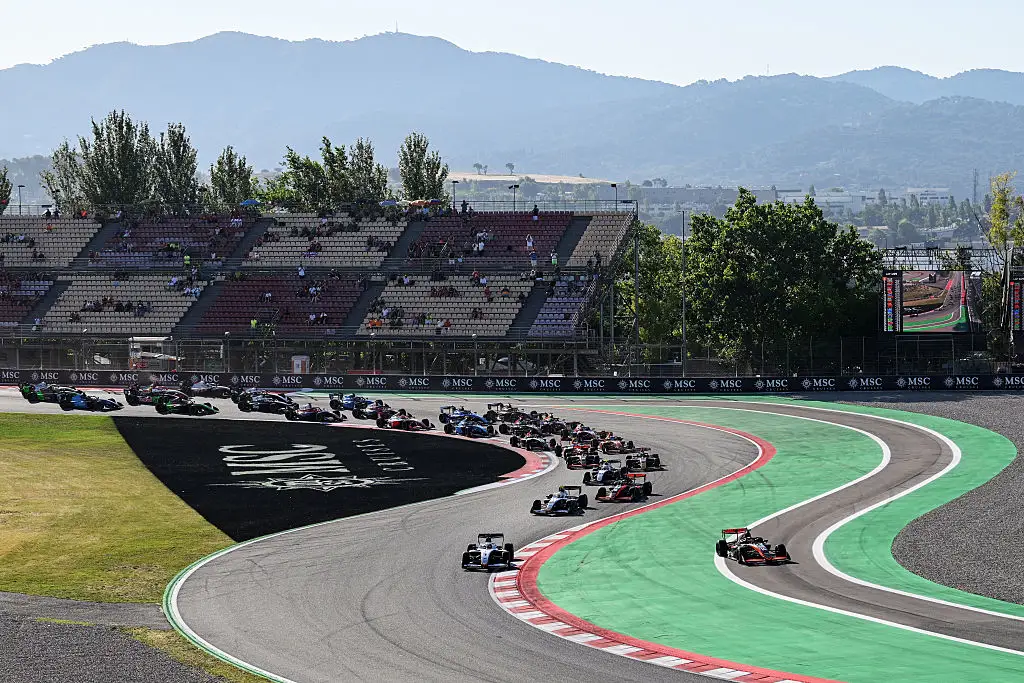
However, the return failed to spark the turnaround he needed. Shin remained outside the points in Monaco before another challenging weekend followed in Barcelona.
There, an avoidable collision with Yevan David in the Feature Race compounded his struggles. The stewards held Shin wholly responsible for the incident and handed him a 10-second penalty alongside two penalty points. With Shin already fighting from the lower reaches of the field, mistakes such as these left even less room to recover.
Qualifying struggles leave too much work to do
As the season progressed, qualifying emerged as one of the clearest obstacles to Shin’s pursuit of points.
Starting deep in a 30-car F3 field repeatedly forced him into recovery drives, while the reverse-grid format offered little assistance when he qualified outside the top 12. Consequently, Shin rarely put himself in a position to capitalise when opportunities emerged.
Spa-Francorchamps highlighted the problem. Shin qualified 28th while teammate Jin Nakamura secured 12th, leaving the Korean driver with another sizeable deficit to overcome before racing even began.
Silverstone brought another difficult weekend, while a five-second penalty for speeding in the pit lane further compromised his Feature Race and contributed to a 24th-place finish. Budapest similarly produced no breakthrough, despite Shin attracting attention by becoming the only driver to immediately take to the circuit at the beginning of Free Practice at the Hungaroring.
By that stage, the challenge extended beyond recovering from his early injury. Shin had accumulated significant mileage after surgery, but he still struggled to put together complete weekends.
Flashes of pace from Shin fail to translate into 2026 F3 points
Nevertheless, Shin occasionally showed signs that his underlying pace exceeded what his championship position suggested.
Testing provided some of the clearest examples. During the Madrid in-season test, he climbed to sixth in one session and finished ahead of both Nakamura and Fionn McLaughlin. However, those performances rarely carried across to competitive weekends.
The comparison with his teammates further underlined the opportunities Shin missed. Nakamura scored 53 points on his way to 14th in the Drivers’ Championship, while McLaughlin managed two points. Hitech therefore faced its own difficulties during the campaign, but Nakamura demonstrated that the car could compete for points when circumstances aligned.
For Shin, they rarely did. Poor starting positions frequently limited his races before they developed, while penalties and incidents added another layer of difficulty. Contact with Gerrard Xie ended his Monza weekend prematurely before Shin became caught in a multi-car incident during the season finale in Madrid.
A difficult season offers lessons beyond the results
Shin’s final position of 33rd and a zero-point tally make for difficult reading, but they require some context. Missing pre-season testing through injury represented a considerable disadvantage, while racing in Melbourne before undergoing surgery made an already demanding return to F3 even harder.
However, his early injury cannot account for everything that followed.
Once Shin returned to full running, qualifying remained a persistent weakness and several avoidable penalties further reduced his opportunities. While occasional testing performances hinted at greater potential, he could not consistently reproduce that pace when points were available.
Ultimately, Shin’s 2026 campaign became a season of missed opportunities rather than the comeback he had envisioned. His disrupted preparation shaped its opening stages, but his inability to build sustained momentum after recovering proved equally significant. In a championship where small margins can transform an entire weekend, Shin too often found himself trying to recover ground rather than fighting from a position of strength.