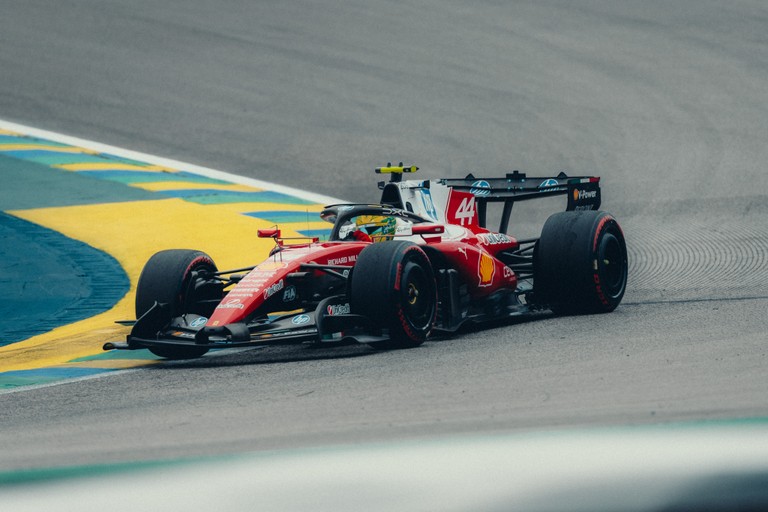
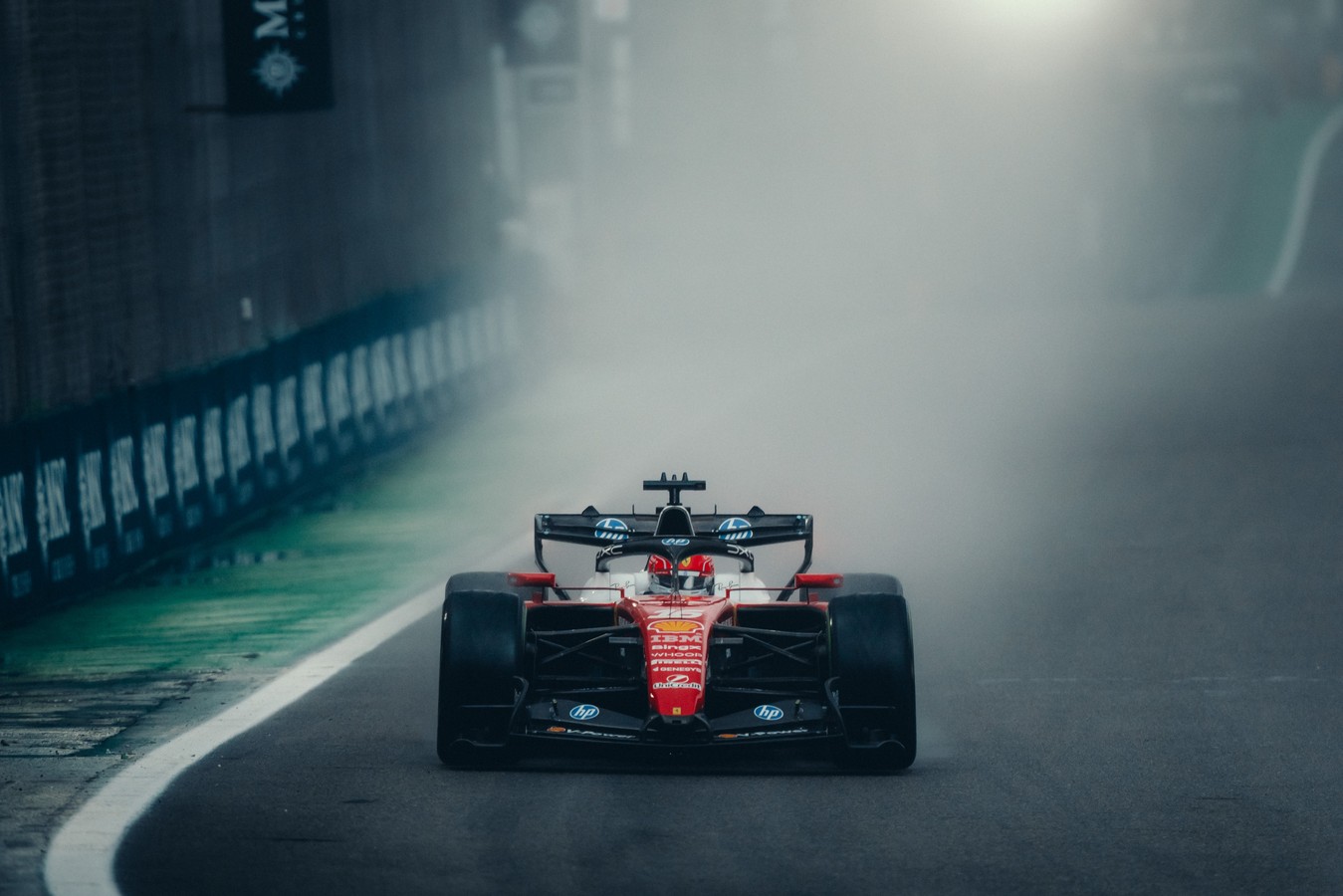
Charles Leclerc admitted that Ferrari’s fourth-place finish in the 2026 F1 São Paulo GP Qualifying left him disappointed, but believes the rain-hit session provided valuable insights into a long-standing weakness in the team’s wet-weather performance.
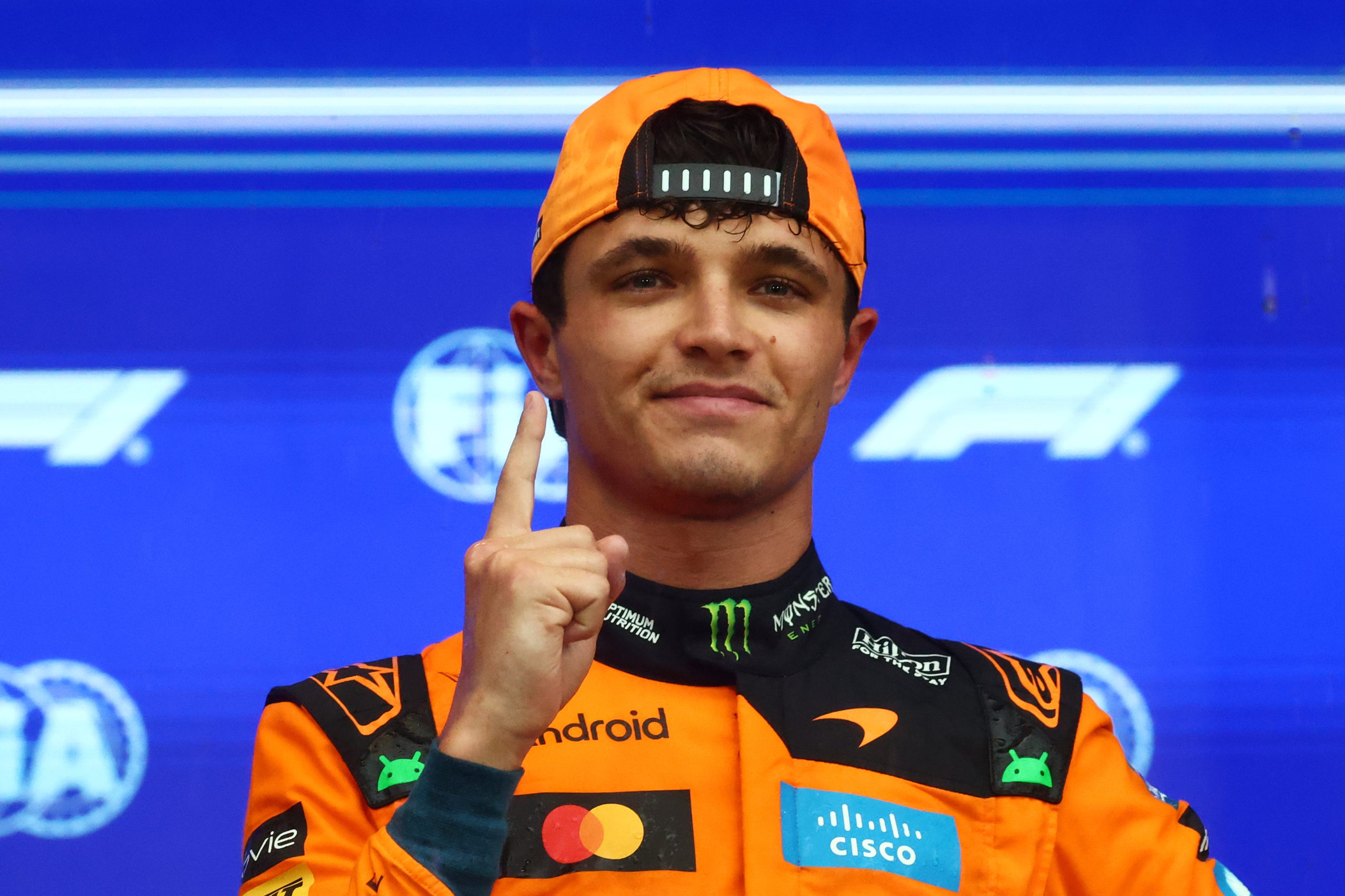
The Monégasque driver secured fourth on the timesheets at Interlagos, behind pole-sitter Lando Norris and Mercedes drivers George Russell and Kimi Antonelli. However, a ten-place grid penalty for exceeding his power unit allocation will drop him to 14th for Sunday’s race.
Ferrari introduced another internal combustion engine for Leclerc ahead of the weekend, exceeding the permitted seasonal allocation. Teammate Lewis Hamilton also received a ten-place penalty before further power unit changes following problems in FP3 left him facing a back-of-grid start.
Despite the setback, Leclerc believes Ferrari made progress in understanding its difficulties in wet conditions. He also confirmed that discussions following his controversial battle with Hamilton in Mexico City had helped the team move forward.
Leclerc finds positives despite qualifying disappointment
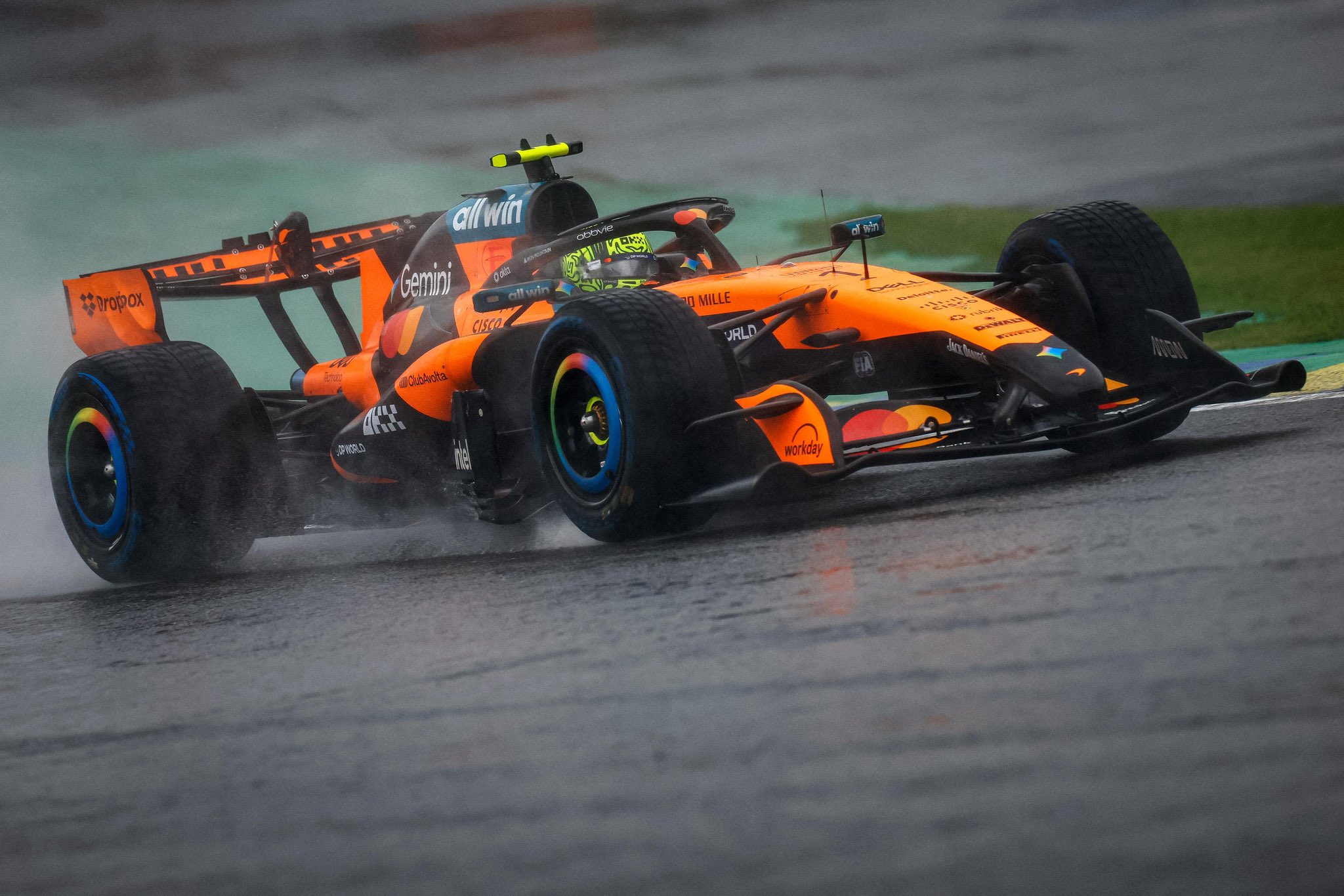
Saturday’s qualifying session presented considerable challenges as rain and changing grip levels forced teams to adapt their strategies throughout the afternoon.
Although Leclerc progressed into Q3, he struggled to extract the same performance from his Ferrari in the final segment. Nevertheless, the 28-year-old believes the session provided valuable information that could prove useful beyond the São Paulo weekend.
Ferrari approached qualifying differently because of the grid penalty, allowing the team to experiment with its set-up and better understand how changes affected the car.
“Yes, however it’s a very strange feeling because of course I’m not happy with P4 and I think the end result is a little bit disappointing. However, I believe that this has been a very, very interesting session and a session where we’ve learnt and that we will learn from a lot going forward,” he said.
“Having the 10 grid-place penalty, I think we allowed ourselves to be a bit more experimental on various different things.”
“And I think there was a very good correlation on when we were strong during this session and when we were not strong and what we were doing in the background. So I think it’s going to be very helpful going forward.”
Ferrari’s long-standing wet-weather struggles
Leclerc believes Ferrari’s difficulties in wet conditions extend far beyond its current machinery, having experienced similar problems throughout his time with the Italian team.
Despite enjoying strong wet-weather performances during his junior career, he has frequently struggled to find the same confidence in Formula 1.
“In nine years with the team, I think the weakness and the biggest weakness I think has always been wet sessions in general,” he admitted.
“Whereas in the junior categories, that was probably my biggest strength. And today there has been moments of qualifying where I’ve had a very good feeling with the car. And by continuing experiencing, unfortunately we didn’t do a good job in Q3.”
“But that doesn’t matter too much to me because starting 11th, 12th, 13th, 14th, honestly it’s not a big change for tomorrow’s results.”
Looking back at previous struggles
Leclerc suggested that Ferrari’s persistent problems reflect a broader approach to car development rather than a weakness specific to the 2026 regulations.
“No, because I think it’s kind of a philosophy thing where we’ve been struggling no matter what generation of cars we’ve been to. In 2019, we were struggling, in 2023 we were struggling and with these ones we are struggling as well. So I don’t think that it’s down to these cars in particular.”
“But today there are a few things that have been very interesting. I think whether we can carry those learnings into a race where you’ve got to do multiple laps is another thing. But in qualifying at least, I thought it was a good one.”
Although the fourth-place result after the F1 São Paulo GP Qualifying session failed to reflect the progress Leclerc felt Ferrari had made, the opportunity to experiment could benefit the team as it works to address a problem that has persisted across several generations of Formula 1 cars.
Leclerc hopes São Paulo’s unpredictable weather pays off
Leclerc now faces a recovery drive from 14th, with the possibility of further rain adding another variable to the race.
Interlagos has historically offered overtaking opportunities, but Leclerc acknowledged that passing could prove more difficult with the current generation of machinery.
Nevertheless, Ferrari considered the unpredictable Brazilian weather when deciding to accept its power unit penalty this weekend.
“I think it’s going to be tricky. But if we’ve got the pace and particularly if I’ve got the right feeling with the car, I think everything is to play for.”
“We came here knowing that obviously Brazil is always a bit of a casino when you speak about the weather.”
“And so we knew that taking a penalty there maybe gives us a good opportunity on race day. Which I hope it will and I hope this will pay off.”
With several leading drivers also carrying power unit penalties, including Hamilton and Max Verstappen, the starting grid could produce an unpredictable race. Leclerc will hope to capitalise on any opportunities as Ferrari looks to recover from its qualifying setback.
Leclerc considers Ferrari discussions a closed chapter
Away from the track, Leclerc also addressed the tensions surrounding Ferrari following his battle with Hamilton at the previous round in Mexico City.
The two drivers fought for position on the opening lap, with their wheel-to-wheel encounter allowing Verstappen to take advantage and ultimately claim victory. Leclerc received a five-second penalty for leaving the track during the incident, while Ferrari missed an opportunity to secure a stronger result.
Hamilton subsequently called for discussions over how the teammates should race each other, prompting Ferrari team principal Frédéric Vasseur to bring both drivers together ahead of the São Paulo weekend.
Vasseur confirmed that the meeting had taken place and stressed the importance of both drivers putting Ferrari’s interests first.
Speaking about those discussions, Leclerc explained that he had approached the situation directly, although he believed the controversy had attracted excessive attention.
“From my perspective, I was very straightforward, of course. And I think it was good to speak. I think this is always needed after a moment like this.”
“I think it took proportions that are way too big. But it has been around also for way too long. At the same time, it was a very special week for me, so I couldn’t really have those discussions before.”
“And it was important to have those discussions, but now I consider that a closed chapter. And I think it will be important to look ahead.”
Leclerc acknowledges rivalry with Hamilton
Despite the recent disagreements, Leclerc insisted that his relationship with Hamilton remained positive.
The Ferrari teammates have found themselves fighting closely on several occasions throughout the season, with both drivers determined to establish themselves ahead of the other.
However, Leclerc believes open communication remains essential to managing that competitive relationship.
“Yes, of course. I really believe that when we speak, things are much better straight away. Of course, there is tension. Of course, we want to finish ahead of each other.”
“And sometimes we are not going to do things right. And it’s okay sometimes to disagree on the way you see things. But at the same time, discussing about those then helps a whole lot.”
Asked whether such disagreements could sometimes benefit a team by bringing underlying tensions into the open, Leclerc acknowledged that difficult conversations may prove necessary.
“I mean, history speaks for itself. And maybe looking back, it’s maybe something needed. At the same time, as I said, sometimes you disagree and you’ve got to find a common ground.”
However, the Monégasque driver refused to discuss Hamilton’s suggestion that Leclerc had raced him harder than other competitors, making clear that he wanted to move beyond the controversy.
“I wouldn’t want to comment that.”
“Honestly, there’s been way too many comments and again way too many fuss about it for way too long. So I don’t really want to get into those kind of comments.”
Ferrari faces a challenging race from the back
With both Ferrari drivers facing substantial grid penalties, the race will present a different challenge from the team’s recent front-running performances.
Leclerc will start 14th, while Hamilton must recover from the back of the grid after Ferrari changed additional power unit components following his FP3 problems.
Although the circumstances leave both drivers facing difficult recovery drives, Leclerc remains encouraged by what Ferrari learned during the F1 São Paulo GP Qualifying session.
The team must now determine whether the improvements it identified over a single lap can translate into consistent performance across a race distance, particularly if São Paulo experiences further rain.
For Leclerc, the weekend has also offered an opportunity to put Ferrari’s recent internal tensions behind him. With discussions complete and the focus returning to racing, he will hope the team’s experimental approach and its decision to take the engine penalty ultimately pay off at Interlagos.