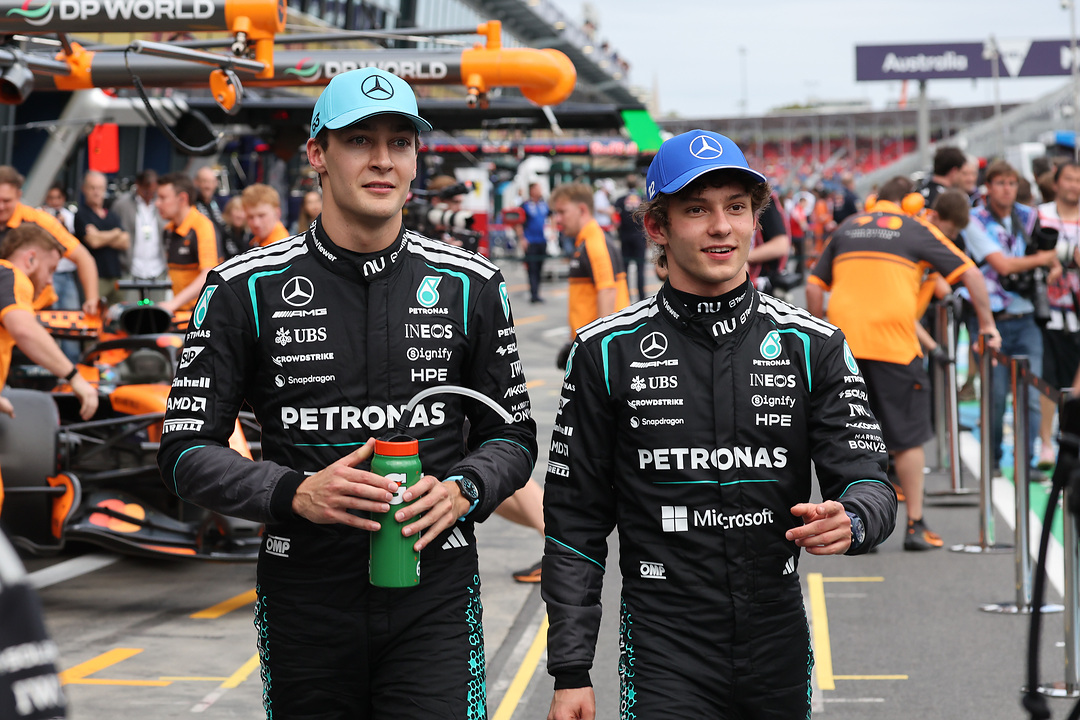
Mercedes have wasted little time establishing themselves as the team to beat under Formula 1’s new technical regulations in 2026, but their commanding position at the summer break does not tell the full story.
The W17 has delivered eight victories across the opening eleven rounds, with Kimi Antonelli leading the Drivers’ Championship and George Russell sitting third. Yet both drivers have endured setbacks that have prevented the Silver Arrows from fully capitalising on their advantage.
Antonelli has emerged as one of the standout performers of the season, building a 59-point advantage over his teammate. Russell, meanwhile, has endured his own share of frustrations, including a costly retirement in Canada and a difficult weekend at Spa-Francorchamps.
Despite Mercedes holding a 72-point lead over Ferrari in the Constructors’ Championship in 2026, the team have left points on the table through reliability issues and operational setbacks.
Mercedes 2026 F1 Mid-Season Review: 9/10
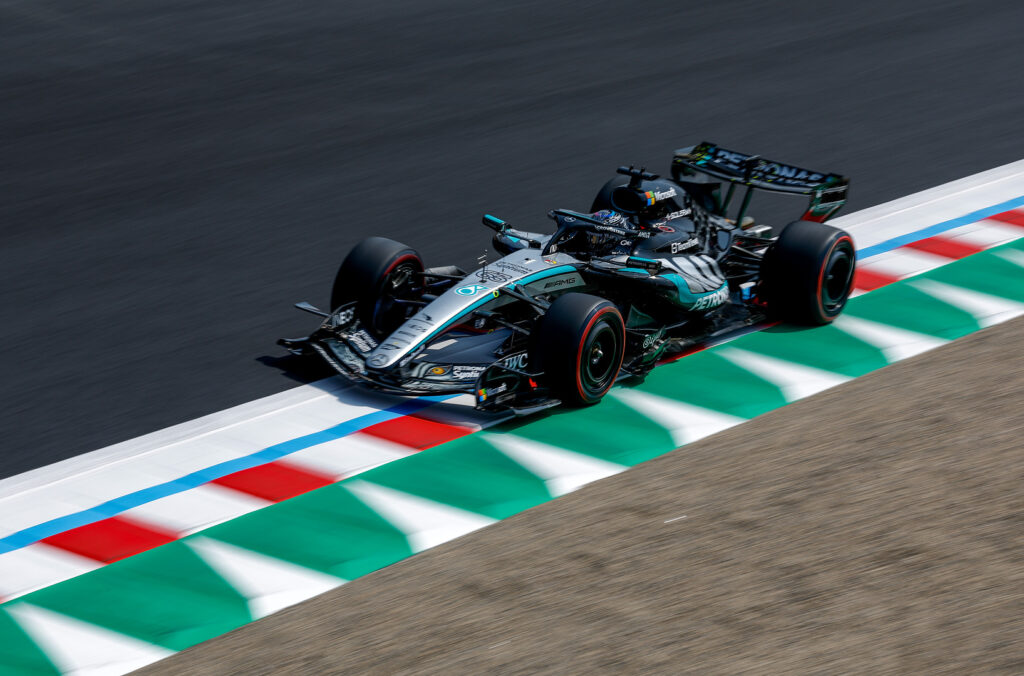
Mercedes could hardly have asked for a better start to the new regulatory era in 2026. George Russell converted pole position into victory at the season-opening Australian GP, leading Antonelli home for a Mercedes 1-2. The result immediately confirmed that the Silver Arrows had produced the strongest package under the new regulations.
Antonelli then took over. The Italian followed Russell’s victory with wins in China and Japan before completing a hat-trick in Miami. His victory in Canada made it four consecutive wins, before he added a fifth in Monaco. By that point, the 19-year-old had established a sizeable championship advantage over his teammate and the rest of the field.
Mercedes’ dominance was briefly interrupted in Barcelona, where Ferrari took its first win of the season. Even then, Russell finished second while Antonelli was running in podium contention before a late mechanical failure brought his race to an end.
Russell responds
Russell responded in Austria, taking his second victory of the season from pole position and leading Antonelli home in third. The result reduced his championship deficit to 40 points and offered a reminder that Antonelli’s advantage had not been entirely representative of the performance gap between the two Mercedes drivers.
Silverstone was another mixed weekend. Russell inherited second place after a race full of incidents, while Antonelli appeared on course to challenge Charles Leclerc for victory before a wheel-shield failure forced him into two additional pit stops and ultimately dropped him outside the points.
Antonelli bounced back at Spa-Francorchamps, claiming his sixth Grand Prix victory of the campaign. Russell, meanwhile, retired on the opening lap following contact with Lewis Hamilton.
Mercedes then struggled for outright pace in Budapest, with Russell finishing seventh and Antonelli third as McLaren’s Lando Norris claimed victory.
Despite those recent difficulties, Mercedes’ overall record is difficult to argue with. Eight wins from eleven races, 379 points in the Constructors’ Championship and a 72-point advantage over Ferrari make the Silver Arrows the clear benchmark heading into the second half of 2026.
Positives to take away from the first half
Mercedes deserve enormous credit for getting the new regulations right from the outset. The W17 has consistently demonstrated strong overall performance, allowing both drivers to fight for victories and poles across a variety of circuits. Mercedes have also shown that their advantage is not restricted to a single type of track, with victories coming in Australia, China, Japan, Miami, Canada, Monaco, Austria and Belgium.
The driver pairing has also been one of the team’s biggest strengths. Russell has continued to provide the consistency and experience expected of a driver entering his fifth season with the works team, while Antonelli has taken another enormous step forward in only his second year in Formula 1.
The teenager’s six victories and nine podiums are particularly impressive. More importantly, his performances have not simply been the result of Mercedes having the quickest car. Antonelli has repeatedly produced the kind of controlled, mature drives normally associated with much more experienced championship contenders.
Mercedes have also managed the increasingly intense intra-team rivalry relatively well. Toto Wolff made it clear early in the season that Russell and Antonelli would be allowed to race each other, provided that the team’s interests remained the priority.
That approach has produced some spectacular racing, particularly in Canada, where the two Mercedes drivers repeatedly fought for the lead.
Areas of improvement
For all of Mercedes’ success in 2026, there is a growing sense that they could have been even further ahead. The biggest concern is reliability.
Russell’s Canadian GP retirement was particularly costly. He was fighting Antonelli for the lead when a power unit issue forced him to stop on Lap 30, handing his teammate a straightforward route to victory and costing Russell a potential 25 points. Mercedes later identified a battery failure as being at the heart of the problem.
Antonelli suffered a similarly painful failure in Barcelona. The Italian had moved ahead of Russell and looked set to finish second when his Mercedes suffered a mechanical problem with only a handful of laps remaining. Toto Wolff subsequently admitted that Mercedes’ reliability was “just not good enough“.
The problems did not stop there. Antonelli’s Silverstone weekend unravelled because of the front-left wheel-shield failure, while Russell endured a pair of difficult weekends in Monaco and Belgium for very different reasons.
When a team is this dominant, every lost point becomes more significant. Mercedes can afford occasional mistakes with a 72-point Constructors’ advantage, but their drivers cannot afford the same level of attrition if they are both serious about the Drivers’ Championship in 2026.
The reliability problem
The W17’s pace has never really been in question. Its ability to finish races reliably has been much less convincing.
Russell and Antonelli have both lost significant points through technical failures, and the consequences have been particularly severe because they are fighting each other for the championship.
The Canadian GP is perhaps the clearest example. Russell was leading the race battle before his power unit issue brought his afternoon to a premature end. Antonelli went on to win, meaning Mercedes still secured the maximum team result possible from the circumstances. But from Russell’s perspective, the failure transformed what could have been a second victory of the season into a zero-point Sunday.
Just three weeks later, Antonelli experienced his own heartbreak in Barcelona. The timing was particularly painful because he had already demonstrated the pace required to beat Russell and was closing in on Ferrari’s Lewis Hamilton before his W17 stopped. Mercedes subsequently identified a battery problem behind a run of reliability failures affecting both Russell and Antonelli.
Then came Silverstone. Antonelli was rapidly closing on Leclerc for the victory when his front-left wheel shield detached. Two additional pit stops followed, and the resulting difficulties with the car ultimately left him classified 15th. A five-second penalty for exceeding track limits while struggling with the damaged car compounded the problem.
These incidents have not stopped Mercedes from dominating the championship in 2026, but they have made the title fight considerably closer than it otherwise might have been.
George Russell Mid-Season Review: 8.5/10
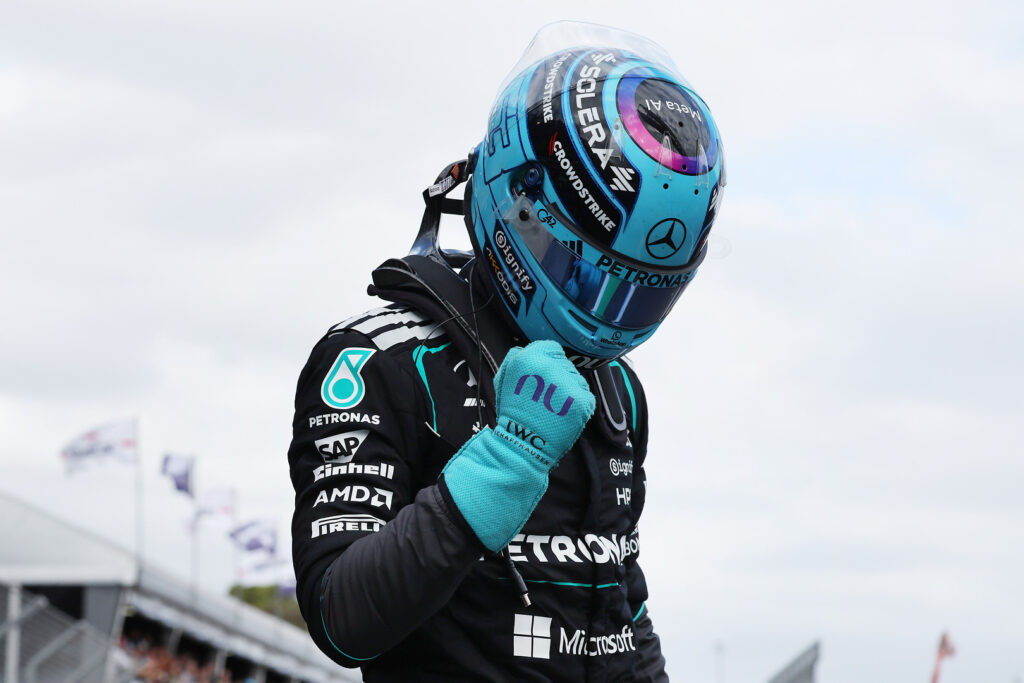
Russell’s 2026 campaign has been far more competitive than his championship position initially suggests. The Briton opened the season perfectly by taking pole and converting it into victory in Melbourne before following it up with second place in China. He remained a consistent front-runner through the early rounds, finishing fourth in both Japan and Miami.
His Canadian GP retirement was the first major turning point. Russell had started from pole and won the Sprint before fighting Antonelli for the lead in Sunday’s race. Their battle was eventually ended by Russell’s power unit failure, costing him a potential victory and allowing Antonelli to extend his championship advantage.
Monaco was another weekend he will want to forget. After a difficult qualifying session, Russell received a five-second penalty for speeding in the pit lane. He then failed to serve the penalty correctly, resulting in a drive-through that dropped him to 12th and left him scoreless. However, a glitch in the system ultimately meant he should never have been penalised.
He responded strongly in Barcelona with pole position and second place before taking another victory in Austria. The Austrian GP was arguably Russell’s most complete weekend of the season. He controlled the race from pole, resisted pressure from Max Verstappen and secured his second victory of the campaign.
On home ground
Silverstone then delivered another podium, with Russell finishing second, although his result owed something to the chaos around him. A slow puncture forced an additional pit stop before the late Safety Car allowed him to inherit second place.
Belgium was much more frustrating. Russell had already been struggling with a mysterious straight-line speed deficit throughout the weekend before his race ended on the opening lap following contact with Hamilton. Mercedes later acknowledged that some of the performance deficit was not Russell’s fault, with Wolff admitting that he was losing significant top speed compared with Antonelli.
By Hungary, Russell’s championship challenge had taken another hit. He qualified only seventh and ultimately finished the race in the same position, leaving him 59 points behind his teammate at the summer break.
Russell has won twice, taken four poles and stood on the podium five times across the opening eleven Grands Prix. More importantly, several of his biggest setbacks have been caused by circumstances outside his control.
Kimi Antonelli Mid-Season Review: 9.5/10
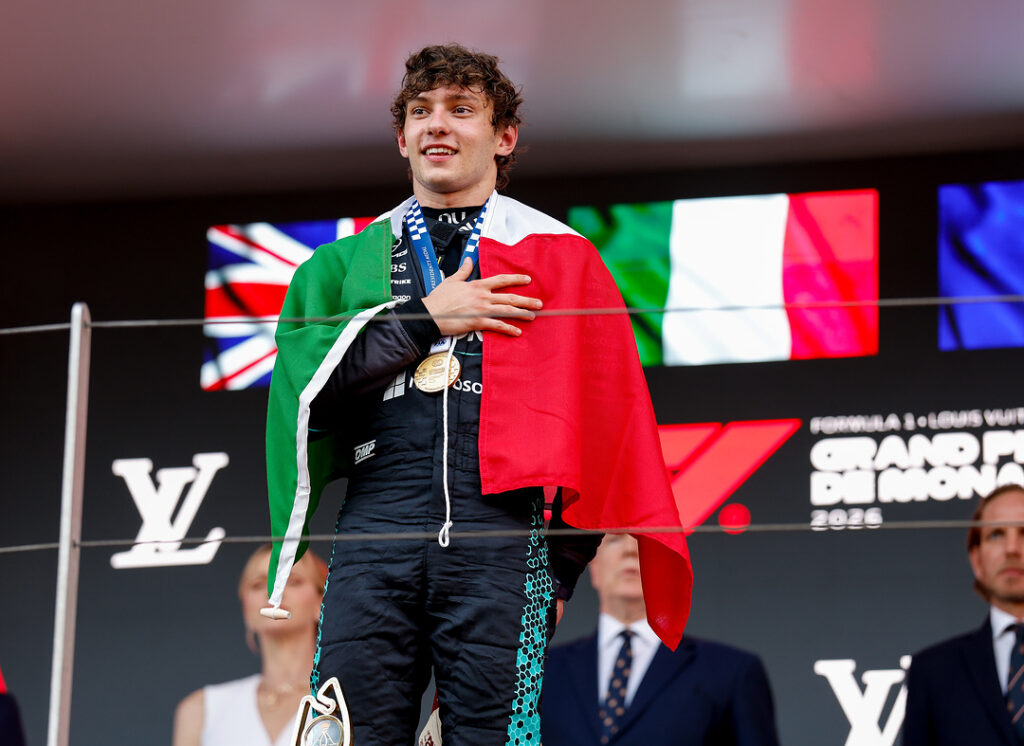
Kimi Antonelli’s first half of 2026 has been nothing short of remarkable. After finishing second to Russell in Australia, the Italian took his maiden F1 victory in China before immediately following it with another win in Japan. He then completed a hat-trick in Miami, becoming only the 23rd driver in F1 history to win three consecutive Grands Prix.
Canada made it four in a row. His victory came at Russell’s expense after the Briton’s power unit failure, but Antonelli still had to manage a chaotic opening stint that saw the two Mercedes drivers repeatedly fight for position. He eventually crossed the line more than ten seconds clear of Lewis Hamilton.
Then came Monaco. Antonelli produced a superb pole lap before converting it into a controlled lights-to-flag victory. It was his fifth consecutive Grand Prix win and extended his championship advantage to 66 points over Hamilton and 68 over Russell.
End of the streak
That streak inevitably came to an end in Barcelona. Antonelli was on course for another podium before a late mechanical failure brought his race to an abrupt conclusion. His subsequent third place in Austria demonstrated that the setback had done little to damage his confidence.
Silverstone was arguably the most painful weekend of his season. Antonelli started from pole and had recovered to second before closing rapidly on Leclerc. Victory looked increasingly realistic until the front-left wheel-shield failure derailed his race. The resulting pit stops and penalty left him outside the points, costing him what could have been another major haul.
He bounced back at Spa. Starting from pole, Antonelli resisted pressure from Leclerc and claimed his sixth Grand Prix victory of the season. His teammate’s retirement only magnified the importance of the result in the championship battle.
After eleven rounds, Antonelli has 219 points, six wins and nine podiums. His only real blemishes have come when reliability has intervened, making his current championship position all the more impressive.
Has Mercedes created its own title fight?
Perhaps the biggest question heading into the second half of the 2026 season is whether Mercedes can keep both sides of the garage happy while allowing Russell and Antonelli to fight for the World Championship.
The team has already shown a willingness to let them race, but Canada demonstrated the risks involved.
The two drivers fought aggressively for the lead, even making contact at the final chicane. The battle ended with Russell’s retirement, although the failure itself was unrelated to their wheel-to-wheel fight.
With Antonelli now holding a 59-point advantage, Mercedes has a difficult balancing act ahead. The Italian has clearly been the stronger driver over the opening eleven rounds, but Russell remains close enough that a few victories could dramatically change the picture.
More importantly, both drivers have legitimate reasons to feel that their championship campaigns could look very different without reliability problems.
Looking ahead to the second half of the 2026 F1 season
When Formula 1 returns from the summer break at Zandvoort, Mercedes will enter the second half of the 2026 campaign as the overwhelming favourite for both championships.
The W17 has already proved itself capable of winning at almost every type of circuit, while Antonelli and Russell have combined for eight victories and eight Grand Prix pole positions.
The priority now is simple: finish the races. Mercedes cannot afford another sequence of technical failures like those seen in Canada, Barcelona and Silverstone. At the same time, the team must continue to improve its operational execution and investigate the performance issues that have occasionally left Russell at a disadvantage compared with his teammate.
For Antonelli, the objective is to protect a championship lead that has already grown to 50 points over Hamilton and 59 over Russell. For Russell, the challenge is considerably greater. He needs to turn his strong underlying pace into a sustained run of victories while hoping that Antonelli suffers no further reliability setbacks.
And for Mercedes in 2026, the equation is perhaps the simplest of all. They have the fastest overall package, two drivers capable of winning races and a substantial advantage in both championships.
If they can eliminate the reliability problems and avoid allowing their intra-team rivalry to become a liability, the Silver Arrows could find themselves celebrating both World Championships at the end of 2026.