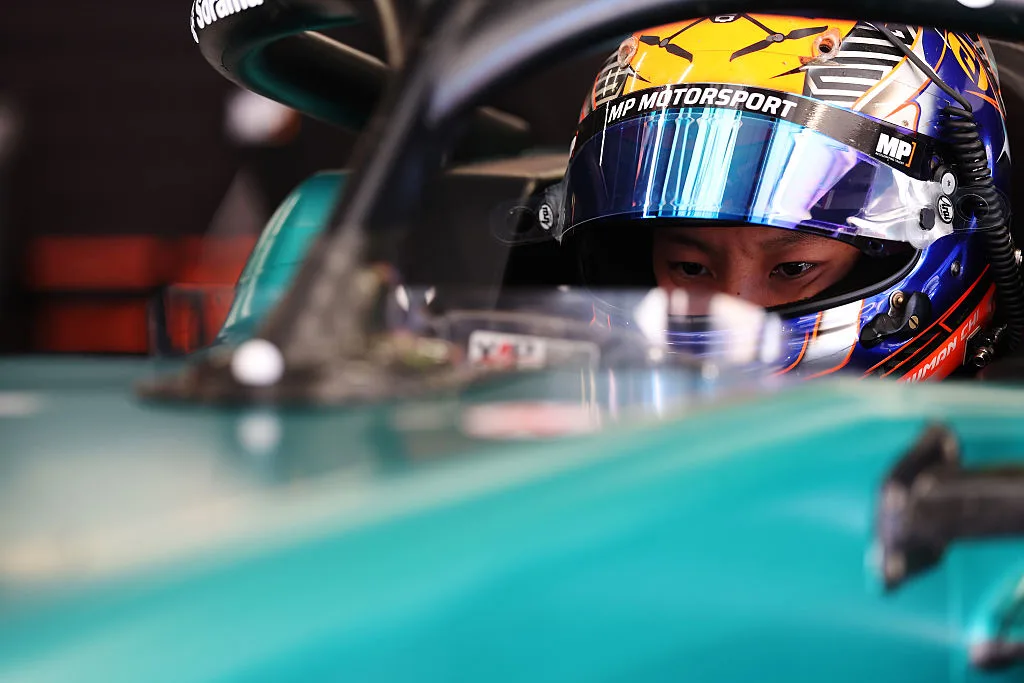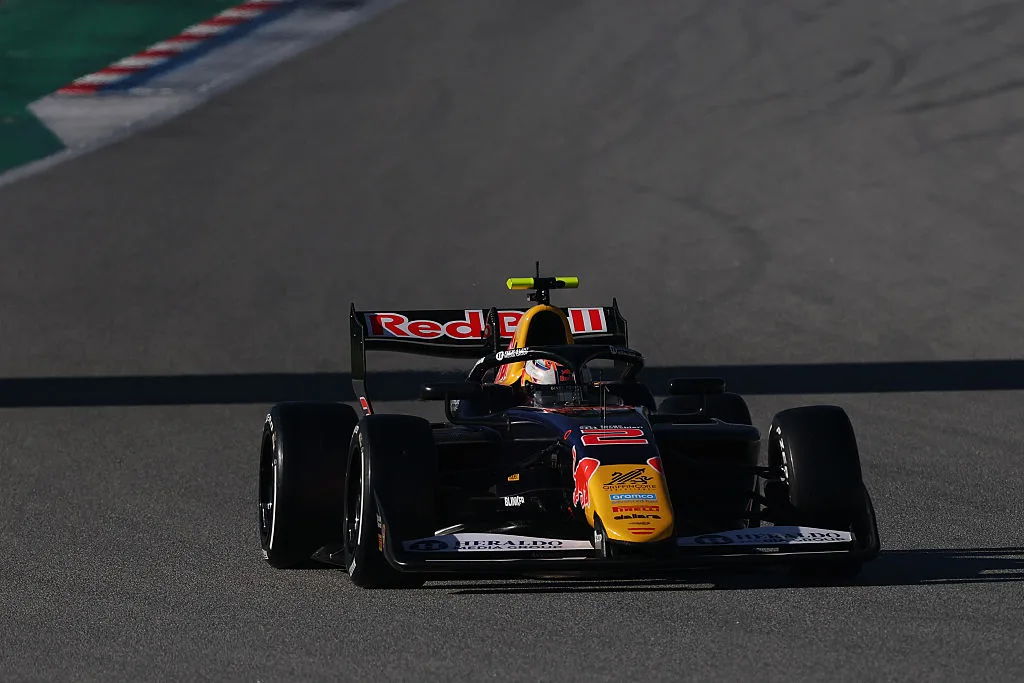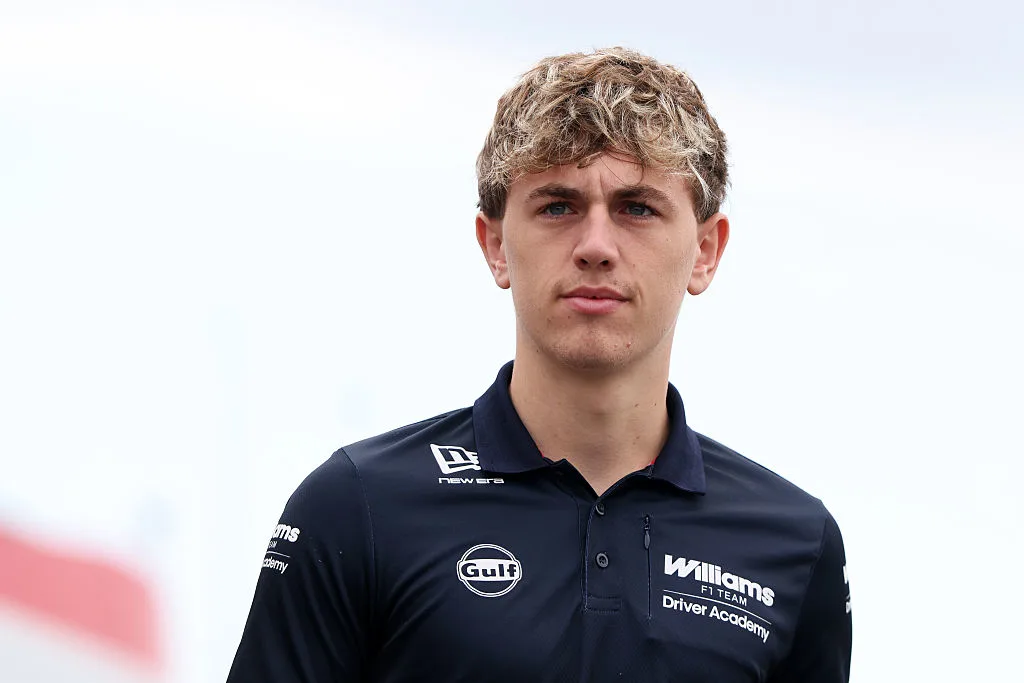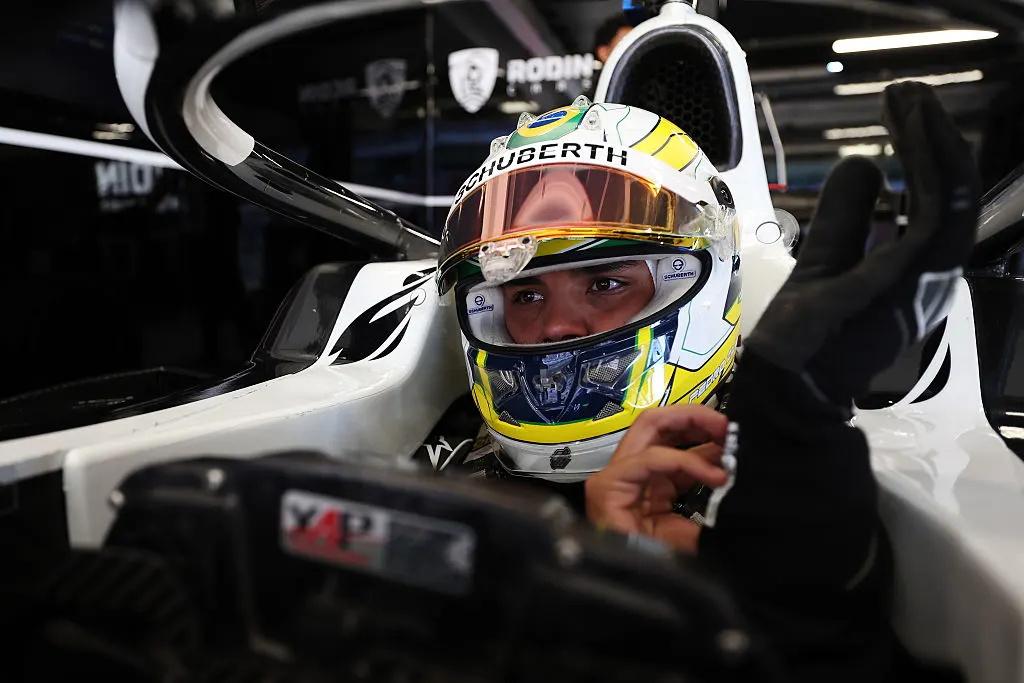
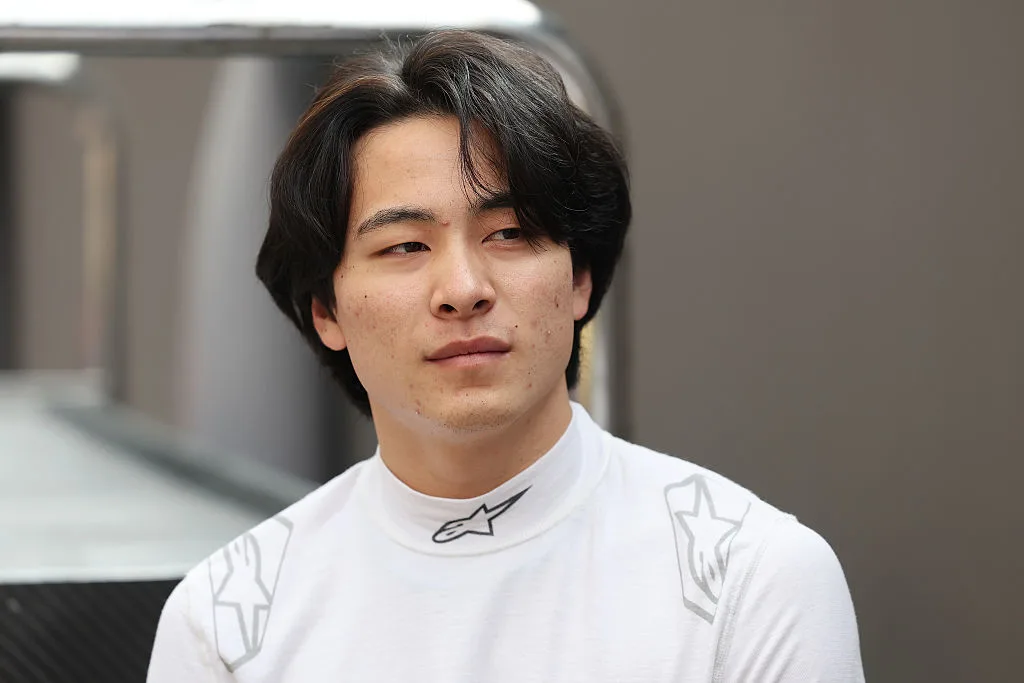
Jin Nakamura entered his rookie FIA Formula 3 season with an extensive racing background and quickly established himself as the Hitech F3 team’s strongest performer. The Japanese driver finished 14th in the Drivers’ Championship with 53 points, claimed his maiden podium at Spielberg and converted that progress into a first F3 victory at Spa-Francorchamps.
However, his season also featured long stretches without reward. Nakamura scored 47 of his 53 points across just three weekends — Spielberg, Spa and Madrid — while Barcelona, Silverstone, Budapest and Monza produced nothing. His rookie campaign therefore combined clear front-running potential with the inconsistency that prevented him from climbing further up the standings.
Nakamura brings varied experience to his 2026 F3 debut
Nakamura followed a less conventional route to F3 than many of his European rivals. He began his single-seater career in Japanese F4 before progressing into Super Formula Lights, while also gaining experience in Super GT and winning the ST-2 class of the Super Taikyu Series. He only moved into full-time European competition in 2025, when he raced in both Formula Regional Middle East and Formula Regional Europe.
Hitech added him to its 2026 F3 line-up and gave him further preparation through the Formula Regional Oceania Trophy over the winter. Nakamura finished fourth in New Zealand with six podiums and showed particularly strong one-lap pace. He entered the F3 season convinced that Hitech already possessed the speed to compete strongly, but recognised that consistently converting that pace into results would prove more difficult.
That assessment ultimately defined his season. Nakamura rarely lacked flashes of competitiveness, but he needed several rounds before he consistently put qualifying and race execution together.
Melbourne offers points but exposes a weakness
Nakamura opened his F3 career with a solid recovery in Melbourne. He qualified 15th after mistakes compromised his quickest lap, leaving him outside the reverse-grid positions and with more ground to recover than he wanted. He still worked his way forward in the Feature Race and finished ninth to collect his first two points.
Rather than treating ninth as a complete success, Nakamura focused on what he had lost during Qualifying. He believed he had enough underlying pace to start further forward and used the lengthy break before Monaco to work on extracting more from the car over one lap. His Melbourne assessment centred on improving execution rather than simply celebrating his first points.
Monaco brought another four points through eighth in the Sprint Race, but Barcelona produced nothing. After three rounds, Nakamura had scored six points without yet producing a weekend that fully reflected his pace.
Spielberg delivers Nakamura’s first major breakthrough
Spielberg changed the complexion of Nakamura’s season. He qualified ninth after finding an important improvement on his final lap, which placed him fourth on the reverse-grid Sprint Race start and inside the top 10 for Sunday’s Feature Race.
Nakamura converted that opportunity into his first F3 podium. He spent much of the Sprint Race defending from Pedro Clerot before the Rodin driver found a way past, but James Wharton’s late mistake gave Nakamura another opportunity. He attacked around the outside on the final lap and reclaimed third, securing a breakthrough result and leaving Spielberg determined to maintain the momentum.
The Feature Race strengthened his weekend further. Nakamura remained inside the leading group and eventually finished fifth after Clerot passed him during the closing stages. His 18-point haul from Spielberg more than tripled his championship total and showed what he could achieve when he combined stronger qualifying with clean race execution.
Spa 2026 turns progress into a maiden F3 victory for Nakamura
Silverstone immediately interrupted that momentum as Nakamura left Britain without points, but Spa-Francorchamps produced an even bigger breakthrough. Wet conditions played a major role in the weekend, and Nakamura placed himself fourth on the reverse-grid Sprint Race start.
He attacked immediately. Nakamura moved ahead of Mattia Colnaghi at the start before passing Clerot around the outside at Les Combes for second. He then closed on Brando Badoer and took the lead, putting himself in control of the race.
A late Safety Car created one final challenge. Nakamura almost lost the rear at the final chicane while preparing for the restart, allowing Badoer to close, but he recovered quickly and rebuilt the gap on the final lap. He crossed the line first to claim his maiden F3 victory in the Spa Sprint Race and Hitech’s first win of the season.
Nakamura backed up that victory with eighth in the Feature Race, adding another four points. His 15-point weekend confirmed that Spielberg had not represented an isolated peak and moved him firmly into the midfield championship battle.
Budapest and Monza halt his strongest run
Budapest brought a sharp reversal. Contact with Gerrard Xie ended Nakamura’s Sprint Race, and the stewards judged him predominantly responsible for the collision. Because he retired, they converted his five-second penalty into a three-place grid drop for the Feature Race, leaving him with an even more difficult recovery task.
He failed to score in Budapest and again left Monza empty-handed. Those two rounds highlighted the main weakness of his campaign. Nakamura had now shown that he could fight for podiums and victories, but he struggled to sustain that level across consecutive weekends.
The contrast within Hitech nevertheless remained significant. Woohyun Shin continued to search for his first points, while Fionn McLaughlin only added two across the full season. Even when Nakamura endured difficult weekends, he still clearly set the benchmark within the team.
Madrid provides a strong conclusion
Madrid gave Nakamura the chance to finish his rookie campaign on a stronger note, and he took advantage immediately. He topped Free Practice at the new Madring circuit, leading Taito Kato and Enzo Deligny and demonstrating strong pace at a venue where every driver faced a relatively unfamiliar challenge.
Nakamura added four points in the Sprint Race before producing one of his strongest Feature Race performances of the year. He finished fifth in Madrid Feature Race 1, behind Pedro Clerot, Kato, Tuukka Taponen and Ugo Ugochukwu, and collected another 10 points.
He failed to add to his tally in the final race, but his 14-point weekend still provided an encouraging conclusion. Madrid also repeated the pattern that had characterised much of his season: when Nakamura found the right window, he could accumulate points quickly.
Nakamura clearly leads Hitech’s 2026 F3 campaign
Nakamura finished the 2026 F3 season 14th with 53 points, only one point behind Maciej Gładysz and Mattia Colnaghi. More significantly, he scored 53 of Hitech’s 55 points. McLaughlin contributed two, while Shin finished the year without scoring.
That gap makes Nakamura’s rookie campaign particularly impressive within the context of his team. He delivered Hitech’s only victory, claimed its strongest podiums and repeatedly demonstrated the pace required to fight near the front. Spielberg showed his ability to attack under pressure, while Spa demonstrated that he could control a race once he reached the lead.
However, the distribution of those results also shows how much he left on the table. Spielberg, Spa and Madrid produced 47 of his 53 points, meaning almost 89 per cent of his total came from just three rounds. Four weekends produced nothing at all.
Nakamura therefore ended 2026 with clear evidence of both his potential and the main area he needs to improve. He established himself as Hitech’s benchmark and proved that he could win at F3 level, but he rarely sustained that performance across several consecutive rounds. His strongest weekends showed that the pace already exists. Turning those peaks into a more consistent baseline would make him a considerably stronger championship threat.